Quick Answer
Okay so here's the quick version. You spent good money on insulation, but now your attic can't breathe. Nine times out of ten, the new insulation has blocked your soffit vents, which are the 'intake' for your attic's airflow. Without that, you're trapping heat and moisture, which leads to higher energy bills, moisture damage, and premature roof aging. The fix? You gotta get up there and clear those vents and install baffles—they're simple channels that keep insulation away from the soffit vents and ensure airflow. You can do it yourself for under $200 in parts and materials, but if you're not comfortable or equipped for attic work, a pro will charge you $400-1200 to sort it out and address any related issues.
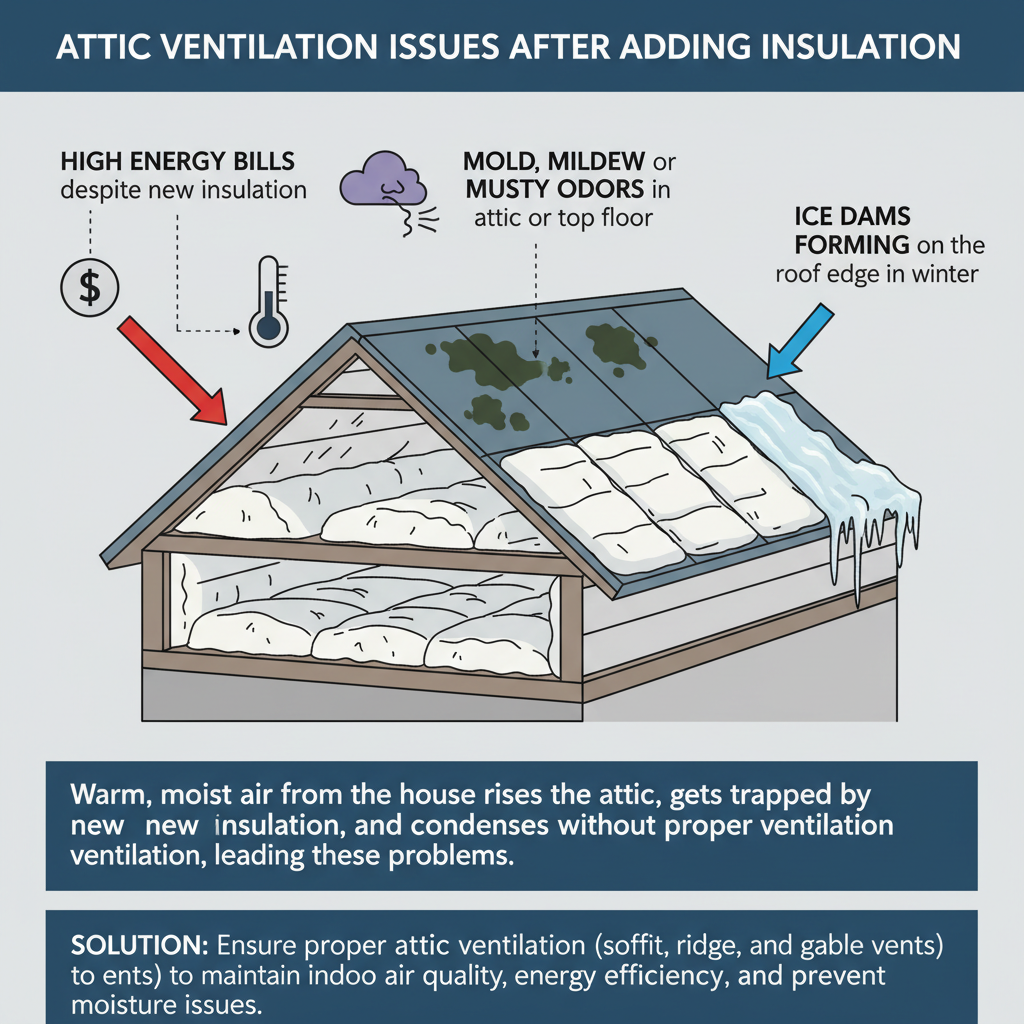
Common Symptoms
Possible Causes
Step-by-Step Diagnosis
Step 1
Visually inspect exterior soffit vents for blockages like paint, debris, or insulation.
Step 2
Safely enter the attic and check the eaves to see if insulation is piled up against the roof deck, blocking airflow.
Step 3
Look for the presence and condition of vent baffles (insulation stops) at the eaves.
Step 4
Examine the underside of the roof sheathing for moisture stains, mold, or frost on nail heads.
Step 5
Check exhaust vents (ridge, gable, or box vents) for any obstructions.
Step 6
Use an incense stick or smoke pen to find air leaks from the living space around fixtures, pipes, and the attic hatch.
DIY vs Professional Costs
| Repair Type | DIY Cost | Professional Cost | Time Required |
|---|---|---|---|
Clear Vents & Install Baffles | $50 - $200 | $400 - $1,200 | 4-8 hours |
Seal Air Leaks from Living Space | $20 - $50 | $200 - $600 | 2-4 hours |
Add Basic Roof Vents (box vents) | $150 - $400 | $500 - $1,500 | 5-10 hours |
Full Ventilation Overhaul (Soffit & Ridge) | Not Recommended | $2,500 - $8,000+ | 1-3 days |
When to Call a Professional Insulation
- You discover extensive mold growth, not just a few small spots.
- The roof sheathing or trusses show signs of rot, softness, or sagging.
- You identify the insulation as vermiculite, which may contain asbestos and should not be disturbed.
- The attic is too difficult or dangerous to work in due to a low-pitched roof, extreme heat, or limited access.
- You're unsure how to calculate your ventilation needs or what type of vents to install.
- You need to cut new openings in the roof, which carries a high risk of causing leaks if not done correctly.
Prevention Tips
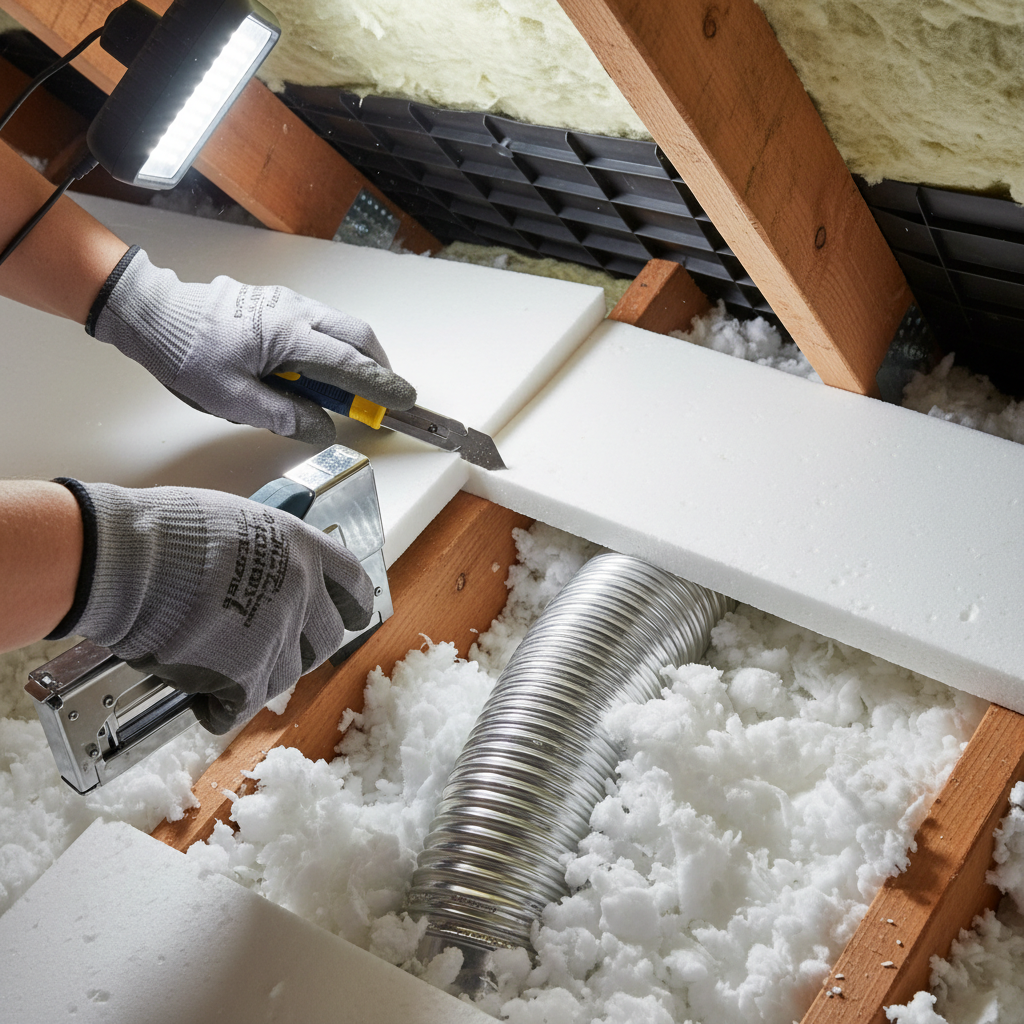
- Always install attic baffles/insulation stops in each rafter bay before adding new insulation.
- Air seal all penetrations between your living space and attic (lights, pipes, hatches) before insulating.
- Ensure you have a balanced system of intake (soffit) and exhaust (ridge/roof) vents.
- Regularly walk around your home to check that exterior vents are clear of debris, paint, and nests.
- Verify that all bathroom and kitchen exhaust fans vent all the way to the outside, never into the attic.
Frequently Asked Questions
Related Guides
House Remains Cold After Insulation? Troubleshooting Drafts & Hidden Leaks (A Pro's Guide)
Still freezing after adding more insulation? Your problem isn't the insulation, it's hidden air leaks. A 25-year vet explains how to find and fix them.
Ineffective Insulation Troubleshooting & Fixes (2024 Guide)
Feeling cold drafts or seeing huge energy bills? Your home's insulation is probably failing. Here’s a vet tech's guide to finding and fixing the problem.
Ensuring proper attic ventilation after adding insulation to maintain indoor air quality, energy efficiency, and prevent moisture issues. Troubleshooting & Fixes (2024 Guide)
Just added insulation and now have issues? I'll show you how to fix attic ventilation problems, prevent mold, and lower your energy bills. A veteran tech's guide.
Crawl Space Issues Troubleshooting & Fixes (2024 Guide from a Pro)
A veteran tech explains crawl space moisture, mold, and damage. Learn the real causes of musty smells and high energy bills, and how to fix them for good.
Ineffective or insufficient home insulation leading to high energy bills, drafts, and uncomfortable indoor temperatures, often due to aging, improper installation, or inadequate R-value for the climate. Troubleshooting & Fixes
Feeling high energy bills & uncomfortable rooms? Your home insulation might be failing. A veteran tech's guide to diagnosing and fixing it for good.
Identifying insulation gaps and air leaks through a home energy audit to improve energy efficiency, leading to higher utility bills and reduced comfort. Troubleshooting & Fixes
Feeling drafts or seeing high energy bills? Learn to identify and fix insulation gaps and air leaks with our comprehensive home energy audit troubleshooting guide.
Need Professional Help?
Find top-rated insulation experts in your area