Quick Answer
Okay, so here's the skinny on your crawl space problems. That musty smell, the dampness, pests... it's all from one thing: moisture. Outside air and ground water are getting in where they shouldn't. The real, permanent fix is a full encapsulation—sealing the vents, putting down a thick vapor barrier, and installing a dehumidifier. You're looking at maybe $5,000 to $15,000 for a pro job, depending on size and how bad it is. Anything less is honestly just a temporary patch. Don't let anyone tell you different.
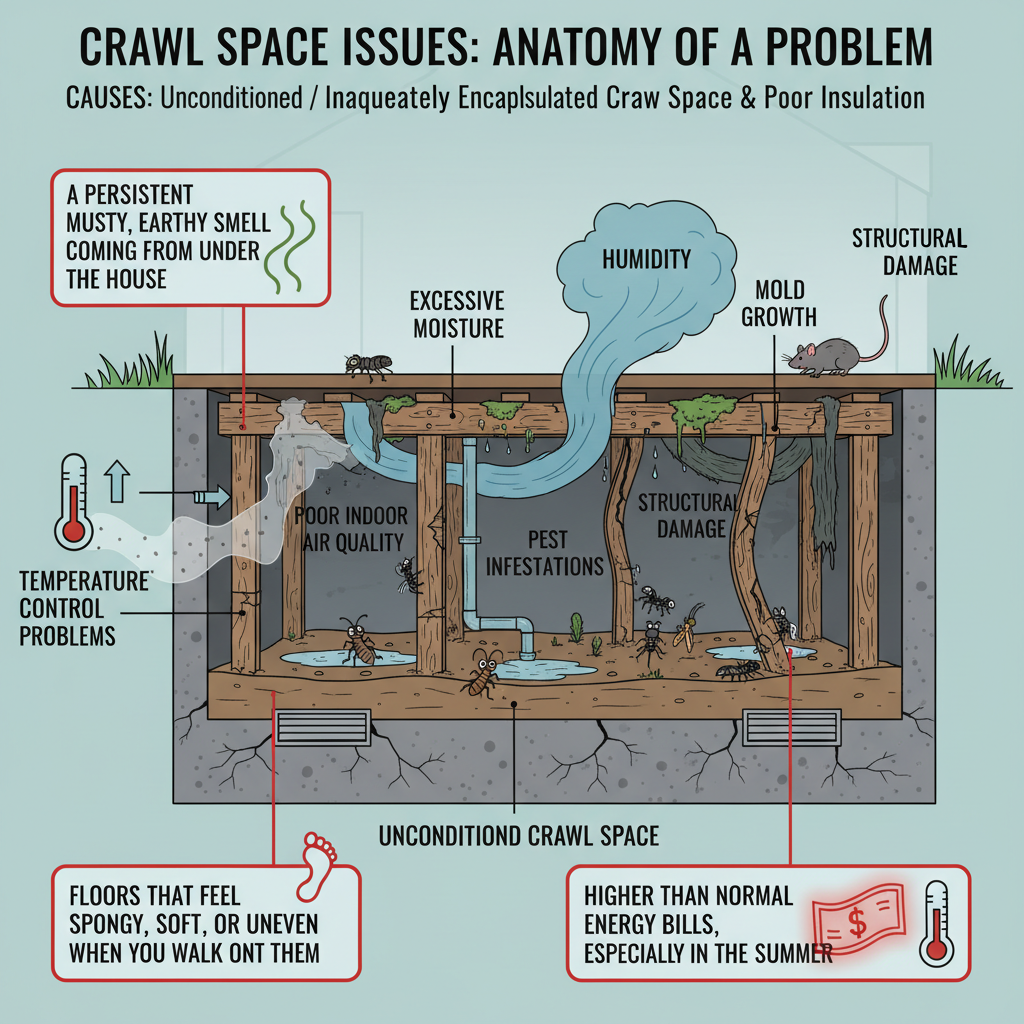
Common Symptoms
Possible Causes
Step-by-Step Diagnosis
Step 1
Get suited up with proper safety gear like an N95 respirator, goggles, and gloves. You don't know what's down there.
Step 2
Open the crawl space access and do a 'smell test'. A strong musty odor is your first big clue.
Step 3
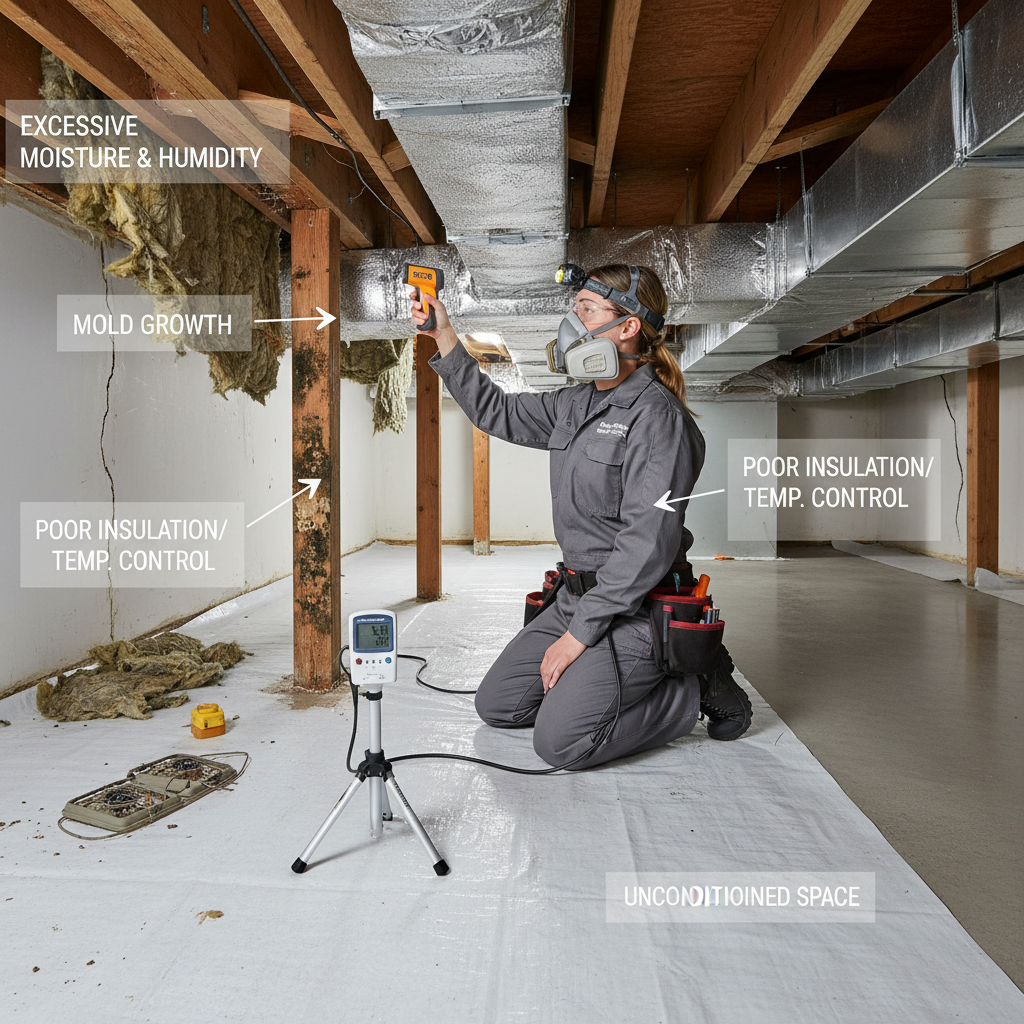
Do a thorough visual inspection with a powerful flashlight. Look for standing water, wet spots, mold on wood, and damaged insulation.
Step 4
If there's wood that looks discolored or wet, give it a firm poke with a screwdriver. If it's soft, it's rotting.
Step 5
Check any existing vapor barrier for rips, tears, or areas where it's not covering the dirt floor.
Step 6
Use a hygrometer to get a real measurement of the relative humidity. Anything consistently over 60% is a problem zone for mold.
Step 7
Inspect the foundation walls for cracks or a white, powdery substance called efflorescence, which indicates water intrusion.
DIY vs Professional Costs
| Repair Type | DIY Cost | Professional Cost | Time Required |
|---|---|---|---|
Minor Mold Cleanup | $20-100 | $500-2,000+ | 4-8 hours |
Laying a Vapor Barrier Only | $200-500 | $1,500-5,000 | 1-2 weekends |
Improving Yard Drainage | $50-200 | $500-2,500 | 2-5 hours |
Full Crawl Space Encapsulation | N/A | $5,000-15,000+ | 2-4 days |
Structural Wood Repair | N/A | $2,000-10,000+ | 1-5 days |
When to Call a Professional Insulation
- When you see widespread mold covering multiple areas; don't try to clean this yourself.
- If your floors are sagging, bouncing, or feel soft, indicating structural wood rot.
- When you have standing water that doesn't go away, as you need an expert to find the source.
- If you want a full encapsulation, as this is a specialized job that's very difficult to DIY correctly.
- If you're physically unable or uncomfortable working in a tight, dirty space.
Prevention Tips
- Get a full encapsulation. It's the only permanent solution I trust.
- Make sure any vapor barrier is at least 12-mil thick (I prefer 20-mil) and covers 100% of the floor and goes up the walls.
- Seal all crawl space vents permanently to stop humid air from getting in.
- Install a commercial-grade, self-draining dehumidifier (like Santa Fe or AprilAire) and set it below 55% humidity.
- Ensure your gutters are clean and downspouts extend at least 6 feet away from the foundation.
- Do a quick inspection once or twice a year to catch any new issues early.
Frequently Asked Questions
Related Guides
House Remains Cold After Insulation? Troubleshooting Drafts & Hidden Leaks (A Pro's Guide)
Still freezing after adding more insulation? Your problem isn't the insulation, it's hidden air leaks. A 25-year vet explains how to find and fix them.
Ineffective Insulation Troubleshooting & Fixes (2024 Guide)
Feeling cold drafts or seeing huge energy bills? Your home's insulation is probably failing. Here’s a vet tech's guide to finding and fixing the problem.
Ensuring proper attic ventilation after adding insulation to maintain indoor air quality, energy efficiency, and prevent moisture issues. Troubleshooting & Fixes (2024 Guide)
Just added insulation and now have issues? I'll show you how to fix attic ventilation problems, prevent mold, and lower your energy bills. A veteran tech's guide.
Crawl Space Issues Troubleshooting & Fixes (2024 Guide from a Pro)
A veteran tech explains crawl space moisture, mold, and damage. Learn the real causes of musty smells and high energy bills, and how to fix them for good.
Ineffective or insufficient home insulation leading to high energy bills, drafts, and uncomfortable indoor temperatures, often due to aging, improper installation, or inadequate R-value for the climate. Troubleshooting & Fixes
Feeling high energy bills & uncomfortable rooms? Your home insulation might be failing. A veteran tech's guide to diagnosing and fixing it for good.
Identifying insulation gaps and air leaks through a home energy audit to improve energy efficiency, leading to higher utility bills and reduced comfort. Troubleshooting & Fixes
Feeling drafts or seeing high energy bills? Learn to identify and fix insulation gaps and air leaks with our comprehensive home energy audit troubleshooting guide.
Need Professional Help?
Find top-rated insulation experts in your area