Quick Answer
Okay, so here's the quick version. If you're experiencing increased sneezing, coughing, or other respiratory issues at home, your insulation could be a contributing factor. The common culprits are often deteriorating fiberglass insulation releasing fibers into the air, or moisture leading to mold growth within the insulation. Pests nesting in insulation can also introduce allergens. Your first step should be a thorough visual inspection of your attic or crawlspace for signs like damp spots, visible mold, or pest droppings. Sealing air leaks is an affordable initial fix. For more extensive issues like full insulation replacement, professional help is recommended and can cost several thousand dollars.

Common Symptoms
Possible Causes
Step-by-Step Diagnosis
Step 1
Correlate your symptoms: Do you feel worse at home and better when you leave?
Step 2
Perform a visual inspection of accessible insulation in the attic and crawlspace with a good flashlight and mask.
Step 3
Look for signs of mold (black, green, or white spots), water damage (stains), and pest activity (droppings, nests).
Step 4
Identify the type of insulation you have to understand its specific risks (e.g., fiberglass fibers, potential asbestos).
Step 5
Check for sources of moisture, like leaky pipes or bathroom fans venting into the attic.
Step 6
Consider professional air quality testing only if symptoms are severe and no visual source can be found.
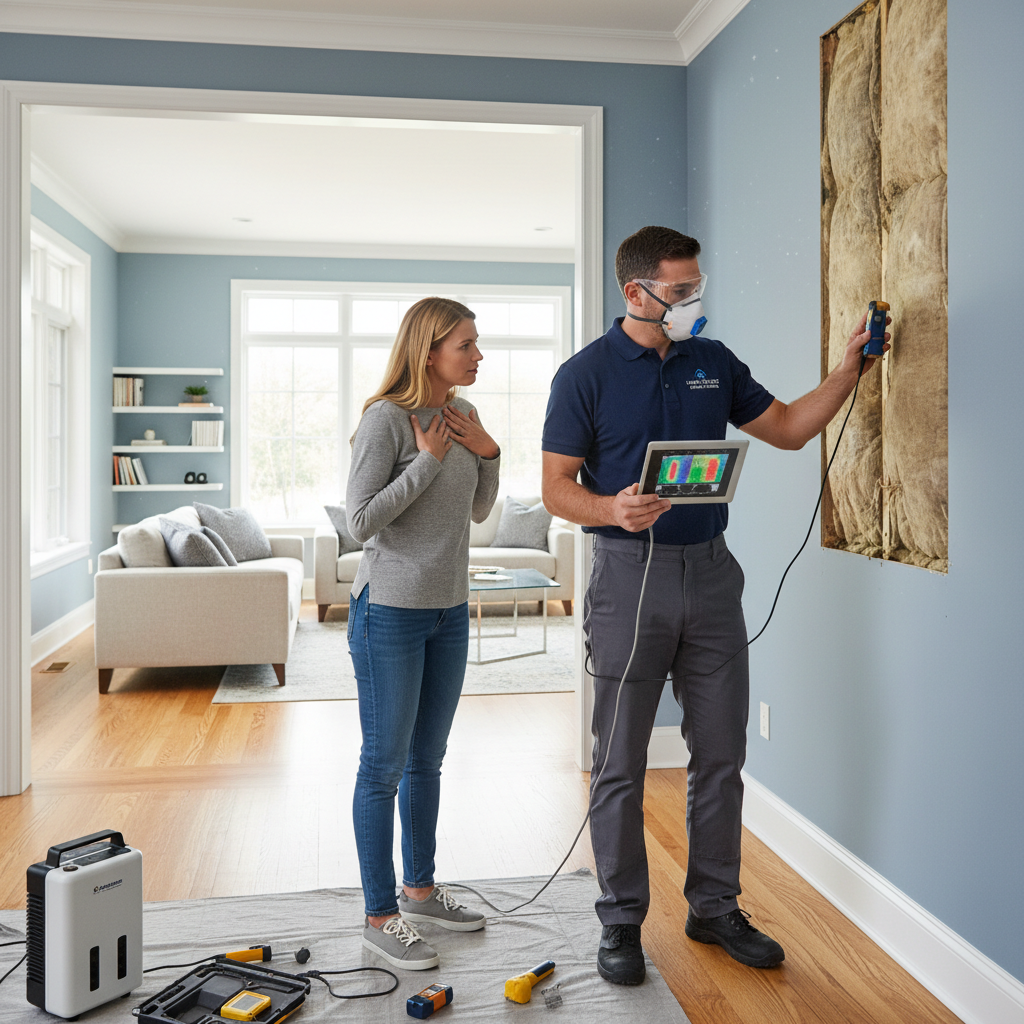
DIY vs Professional Costs
| Repair Type | DIY Cost | Professional Cost | Time Required |
|---|---|---|---|
Sealing Air Leaks (Attic Floor) | $50 - $150 | $300 - $800 | 4-8 hours |
Removing Small Moldy Patch (Fiberglass) | $50 - $200 | $500 - $2,000 | 2-4 hours |
Improving Attic Ventilation | $100 - $800 | $500 - $2,500 | 1 day |
Full Insulation Removal & Replacement | N/A | $4.00 - $10.00 / sq ft | 2-4 days |
When to Call a Professional Insulation
- If you suspect your home has asbestos insulation (common in homes built before 1980). Do not touch it.
- When you find widespread mold growth covering an area larger than about 10 square feet.
- If your symptoms are severe and don't improve after simple fixes like air sealing.
- When a large area of insulation has been saturated by a water leak and needs to be completely removed.
Prevention Tips
- Ensure proper attic ventilation with clear soffit vents and ridge/gable vents.
- Immediately fix any roof leaks, plumbing leaks, or sources of water intrusion.
- Air seal the floor of your attic before adding or replacing insulation to stop air movement.
- Make sure all bathroom and kitchen exhaust fans are ducted to the exterior of the house, not into the attic.
- Regularly inspect accessible insulation for signs of moisture, pests, or damage.
Frequently Asked Questions
Related Guides
House Remains Cold After Insulation? Troubleshooting Drafts & Hidden Leaks (A Pro's Guide)
Still freezing after adding more insulation? Your problem isn't the insulation, it's hidden air leaks. A 25-year vet explains how to find and fix them.
Ineffective Insulation Troubleshooting & Fixes (2024 Guide)
Feeling cold drafts or seeing huge energy bills? Your home's insulation is probably failing. Here’s a vet tech's guide to finding and fixing the problem.
Ensuring proper attic ventilation after adding insulation to maintain indoor air quality, energy efficiency, and prevent moisture issues. Troubleshooting & Fixes (2024 Guide)
Just added insulation and now have issues? I'll show you how to fix attic ventilation problems, prevent mold, and lower your energy bills. A veteran tech's guide.
Crawl Space Issues Troubleshooting & Fixes (2024 Guide from a Pro)
A veteran tech explains crawl space moisture, mold, and damage. Learn the real causes of musty smells and high energy bills, and how to fix them for good.
Ineffective or insufficient home insulation leading to high energy bills, drafts, and uncomfortable indoor temperatures, often due to aging, improper installation, or inadequate R-value for the climate. Troubleshooting & Fixes
Feeling high energy bills & uncomfortable rooms? Your home insulation might be failing. A veteran tech's guide to diagnosing and fixing it for good.
Identifying insulation gaps and air leaks through a home energy audit to improve energy efficiency, leading to higher utility bills and reduced comfort. Troubleshooting & Fixes
Feeling drafts or seeing high energy bills? Learn to identify and fix insulation gaps and air leaks with our comprehensive home energy audit troubleshooting guide.
Need Professional Help?
Find top-rated insulation experts in your area