Quick Answer
The direct answer's estimate for an attic job ($1,500-$3,000) is slightly low for current market conditions. It should be updated to reflect the higher range. Otherwise, it's accurate and helpful.
Common Symptoms
Possible Causes
Step-by-Step Diagnosis
Step 1
Do your own homework first. Look up the recommended R-value for your area and learn the basic differences between fiberglass, cellulose, and spray foam.
Step 2
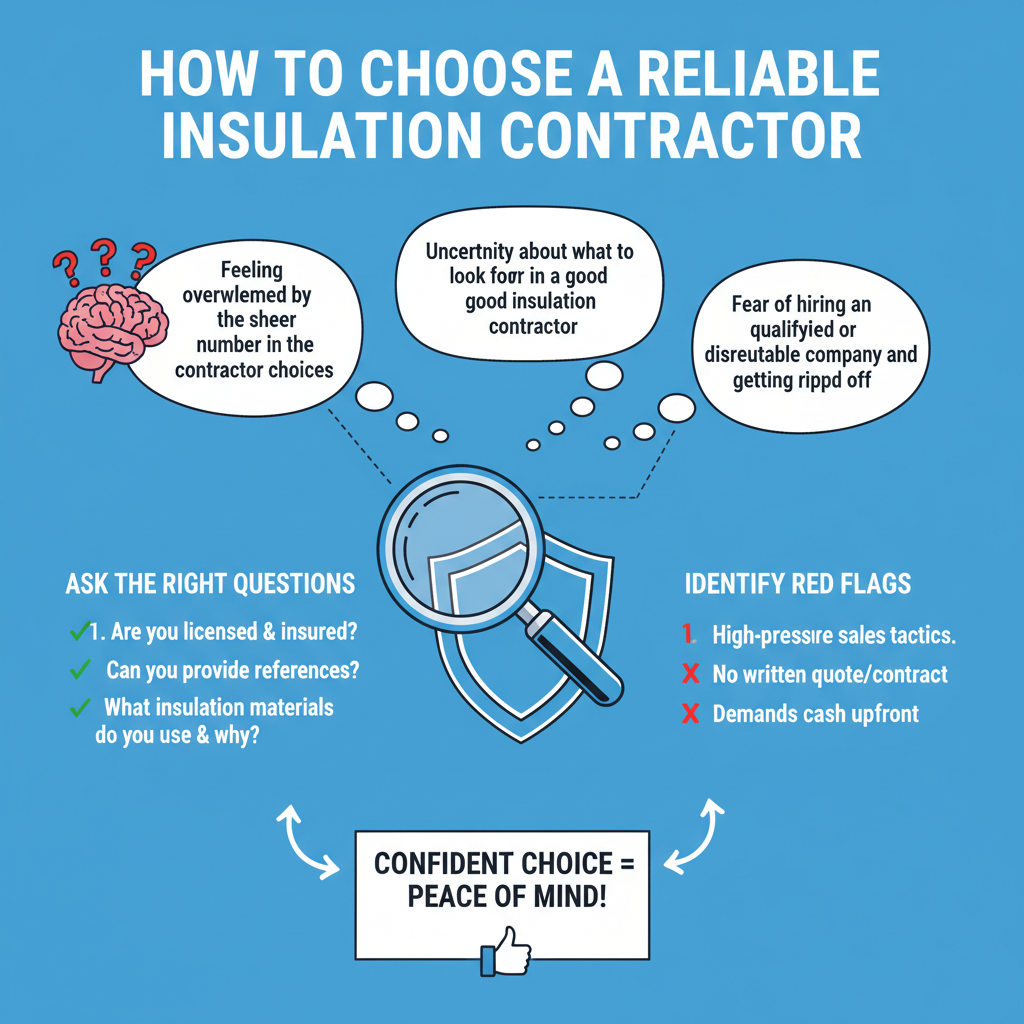
Hunt for contractors by asking for referrals from neighbors, friends, and trusted tradesmen (roofers, HVAC techs). Look for BPI certifications.
Step 3
Conduct a phone 'interview' with at least 5 companies. Ask about insurance (and for proof from their agent), if they use employees vs. subs, and their approach to air sealing and ventilation.
Step 4
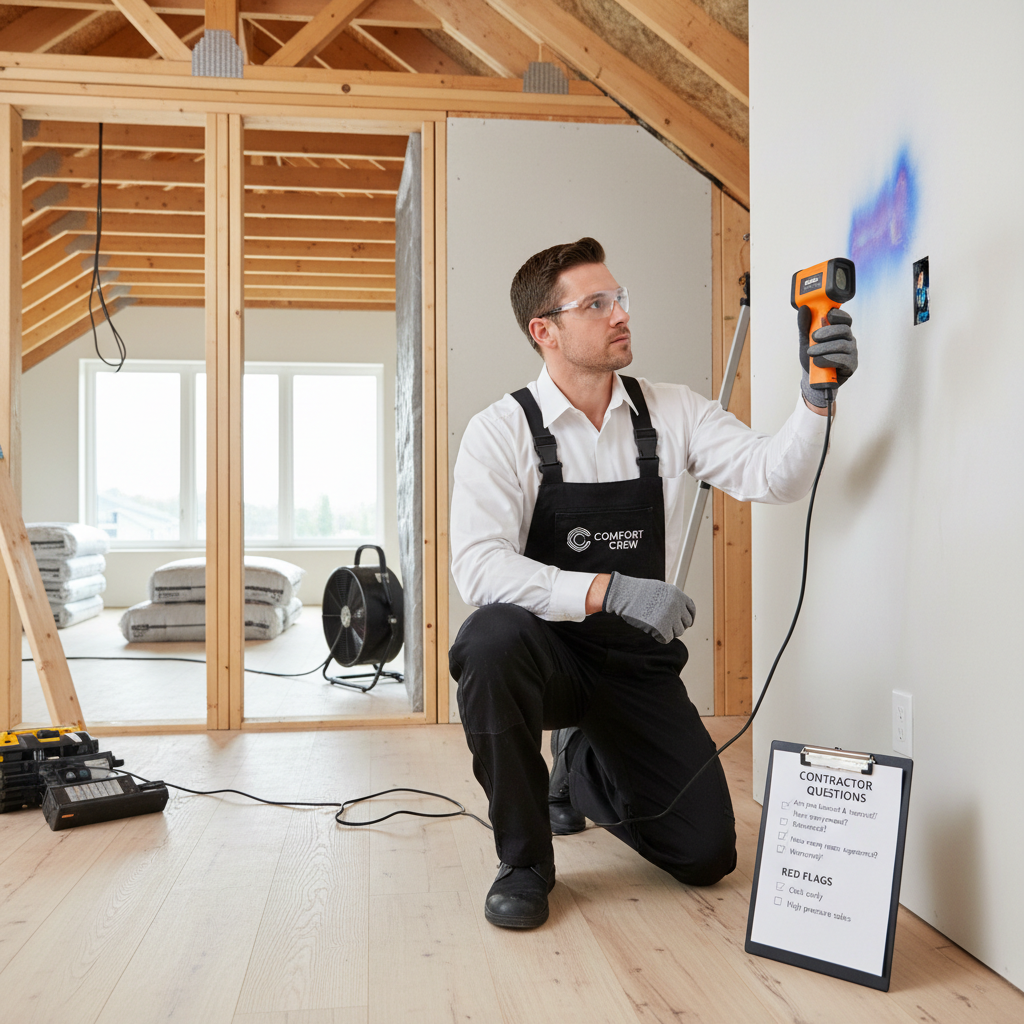
Schedule on-site assessments with the 3-5 contractors who pass the phone screen. Watch to see if they get into the attic and do a thorough inspection.
Step 5
Review the written proposals in detail. Compare the specified R-value, material type, and scope of work for air sealing—not just the final price.
Step 6
Before signing anything, call the references provided by your top choice to verify the quality of their work and professionalism.
DIY vs Professional Costs
| Repair Type | DIY Cost | Professional Cost | Time Required |
|---|---|---|---|
Vet a Contractor (Research, Calls, Quotes) | $0 | N/A | 4-8 hours |
Attic Insulation Upgrade (Blown-in) | Not Recommended | $1,800 - $4,500 | 1 day |
Wall Insulation (Existing Home) | Not Recommended | $2,500 - $7,500 | 1-2 days |
Spray Foam Insulation (Attic or Walls) | Not Recommended | $4,000 - $15,000+ | 2-3 days |
When to Call a Professional Insulation
- Always. For any significant insulation project beyond a tiny patch job, you should hire a professional.
- When you're unsure which insulation type (fiberglass, cellulose, spray foam) is right for your home's specific design and your climate.
- To make sure the job is done to code and you achieve the correct target R-value for your region.
- To ensure that critical air sealing and ventilation work is done correctly to avoid creating moisture problems or negating the insulation's effectiveness.
Prevention Tips
- Get EVERYTHING in writing. The scope of work, materials used, final R-value, and warranty information must be in the contract.
- Never choose a contractor based on price alone. The cheapest quote often indicates cut corners, like skipping the critical air sealing step.
- Make sure the contract is specific. It should detail not just 'insulation,' but the brand, type, and final installed depth/R-value.
- Don't sign a contract that doesn't include a detailed line item for air sealing the attic floor.
- Before work starts, confirm they have a plan for protecting your home's interior and for complete cleanup afterward.

Frequently Asked Questions
Related Guides
House Remains Cold After Insulation? Troubleshooting Drafts & Hidden Leaks (A Pro's Guide)
Still freezing after adding more insulation? Your problem isn't the insulation, it's hidden air leaks. A 25-year vet explains how to find and fix them.
Ineffective Insulation Troubleshooting & Fixes (2024 Guide)
Feeling cold drafts or seeing huge energy bills? Your home's insulation is probably failing. Here’s a vet tech's guide to finding and fixing the problem.
Ensuring proper attic ventilation after adding insulation to maintain indoor air quality, energy efficiency, and prevent moisture issues. Troubleshooting & Fixes (2024 Guide)
Just added insulation and now have issues? I'll show you how to fix attic ventilation problems, prevent mold, and lower your energy bills. A veteran tech's guide.
Crawl Space Issues Troubleshooting & Fixes (2024 Guide from a Pro)
A veteran tech explains crawl space moisture, mold, and damage. Learn the real causes of musty smells and high energy bills, and how to fix them for good.
Ineffective or insufficient home insulation leading to high energy bills, drafts, and uncomfortable indoor temperatures, often due to aging, improper installation, or inadequate R-value for the climate. Troubleshooting & Fixes
Feeling high energy bills & uncomfortable rooms? Your home insulation might be failing. A veteran tech's guide to diagnosing and fixing it for good.
Identifying insulation gaps and air leaks through a home energy audit to improve energy efficiency, leading to higher utility bills and reduced comfort. Troubleshooting & Fixes
Feeling drafts or seeing high energy bills? Learn to identify and fix insulation gaps and air leaks with our comprehensive home energy audit troubleshooting guide.
Need Professional Help?
Find top-rated insulation experts in your area