Quick Answer
Okay, so here's the quick version. If your recessed lights are leaking air and jacking up your energy bills, it's because they're basically holes in your ceiling. Nine times out of ten, they aren't sealed right. The fix is to figure out if your lights are IC-rated (meaning insulation can touch them) or not. If they are, you seal the gaps with fire-rated foam or caulk, and ensure insulation is properly placed around them. If they're not, you need to either build a protective, airtight box (often called an 'airtight recessed light cover' or 'hat') above the fixture in the attic, or, more simply, replace them with modern IC-rated LED fixtures. You might spend $15-$50 on foam yourself or a few hundred bucks to have a pro swap out a few lights with new IC-rated LEDs (which are also more energy-efficient).

Common Symptoms
Possible Causes
Step-by-Step Diagnosis
Step 1
First and foremost, turn off the power to the lighting circuit at the breaker panel before any inspection.
Step 2
Visually inspect the attic space above the recessed lights for the presence and type of insulation (batts, blown-in, or spray foam). Look for where it's been pulled away or disturbed.
Step 3
Carefully clear insulation from around the light housing to check for any gaps, compressed insulation, or scorched areas on the housing or nearby wood joists.
Step 4
Locate the label on the fixture housing to identify if it's IC-rated (Insulation Contact) or non-IC rated. If no label is found, assume it is non-IC.
Step 5
From below, remove the trim and bulb to assess the type of lighting (old incandescent, halogen, or a modern LED retrofit) to understand its heat output.
Step 6
From the attic, check for any attempts at air sealing, like caulk or foam, where the fixture's housing meets the ceiling drywall. The absence of sealing indicates a definite air leak.

DIY vs Professional Costs
| Repair Type | DIY Cost | Professional Cost | Time Required |
|---|---|---|---|
Air Sealing IC-Rated Lights (with Fire-Rated Foam) | $15-50 | $100-250 per light | 1-2 hours |
Installing Recessed Light Insulation Covers ('Hats') | $20-50 per cover | $100-200 per light | 2-3 hours |
Replacing a Non-IC Fixture with an IC-Rated LED Fixture | $30-100 per fixture (for the fixture itself) | $150-400 per fixture (including labor and fixture) | 3-5 hours |
When to Call a Professional Insulation
- If you discover scorching, browning, or any signs of burning around the fixtures or wiring. This is an immediate fire hazard that needs an expert.
- If you are unsure about the electrical work involved in replacing non-IC rated fixtures with new IC-rated ones.
- If attic access is difficult, unsafe, or you're not comfortable navigating the space and balancing on joists.
- If you want to perform a comprehensive attic insulation upgrade and want to ensure all penetrations, including lights, are handled to current building codes.
Prevention Tips
- Always choose IC (Insulation Contact) and Airtight (AT) rated recessed light fixtures for new installations or replacements. It's the simplest way to prevent future problems.
- Use recessed light insulation covers, often called 'hats,' over fixtures in attic spaces to create a perfect air and thermal barrier.
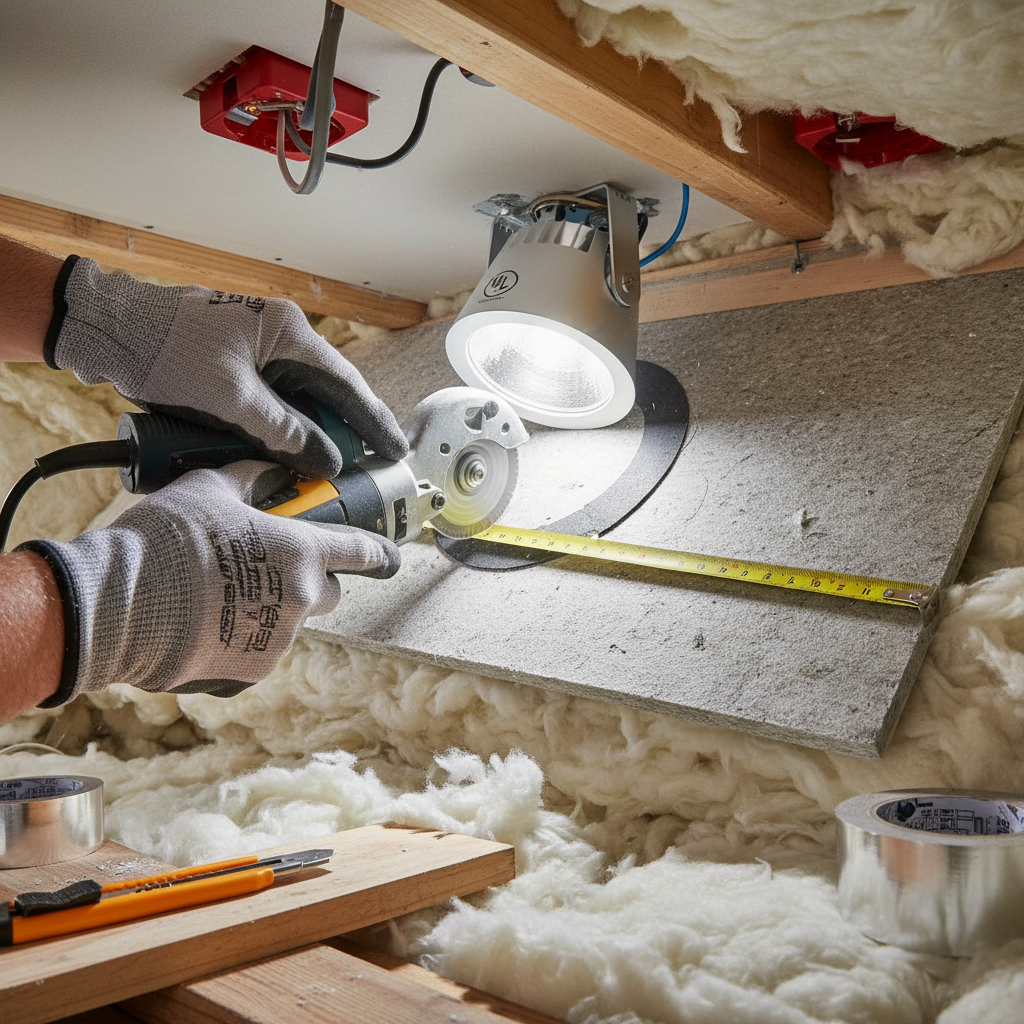
- Seal every gap around the recessed fixture's housing where it meets the ceiling drywall using fire-rated caulk or spray foam (like Great Stuff Fireblock). Do this from the attic side.
- If you must keep non-IC rated fixtures, strictly maintain the required 3-inch clearance on all sides and top. Consider building a protective, fire-rated box around it.
- Retrofit existing hot-burning incandescent or halogen recessed fixtures with cooler LED inserts to significantly reduce heat generation and fire risk.
Frequently Asked Questions
Related Guides
House Remains Cold After Insulation? Troubleshooting Drafts & Hidden Leaks (A Pro's Guide)
Still freezing after adding more insulation? Your problem isn't the insulation, it's hidden air leaks. A 25-year vet explains how to find and fix them.
Ineffective Insulation Troubleshooting & Fixes (2024 Guide)
Feeling cold drafts or seeing huge energy bills? Your home's insulation is probably failing. Here’s a vet tech's guide to finding and fixing the problem.
Ensuring proper attic ventilation after adding insulation to maintain indoor air quality, energy efficiency, and prevent moisture issues. Troubleshooting & Fixes (2024 Guide)
Just added insulation and now have issues? I'll show you how to fix attic ventilation problems, prevent mold, and lower your energy bills. A veteran tech's guide.
Crawl Space Issues Troubleshooting & Fixes (2024 Guide from a Pro)
A veteran tech explains crawl space moisture, mold, and damage. Learn the real causes of musty smells and high energy bills, and how to fix them for good.
Ineffective or insufficient home insulation leading to high energy bills, drafts, and uncomfortable indoor temperatures, often due to aging, improper installation, or inadequate R-value for the climate. Troubleshooting & Fixes
Feeling high energy bills & uncomfortable rooms? Your home insulation might be failing. A veteran tech's guide to diagnosing and fixing it for good.
Identifying insulation gaps and air leaks through a home energy audit to improve energy efficiency, leading to higher utility bills and reduced comfort. Troubleshooting & Fixes
Feeling drafts or seeing high energy bills? Learn to identify and fix insulation gaps and air leaks with our comprehensive home energy audit troubleshooting guide.
Need Professional Help?
Find top-rated insulation experts in your area