Quick Answer
null
Common Symptoms
Possible Causes
Step-by-Step Diagnosis
Step 1
Assess the door and frame. Knock on the door to see if it's solid core or hollow. Check the frame for any cracks, splits, or signs of rot, especially around the current lock area.
Step 2
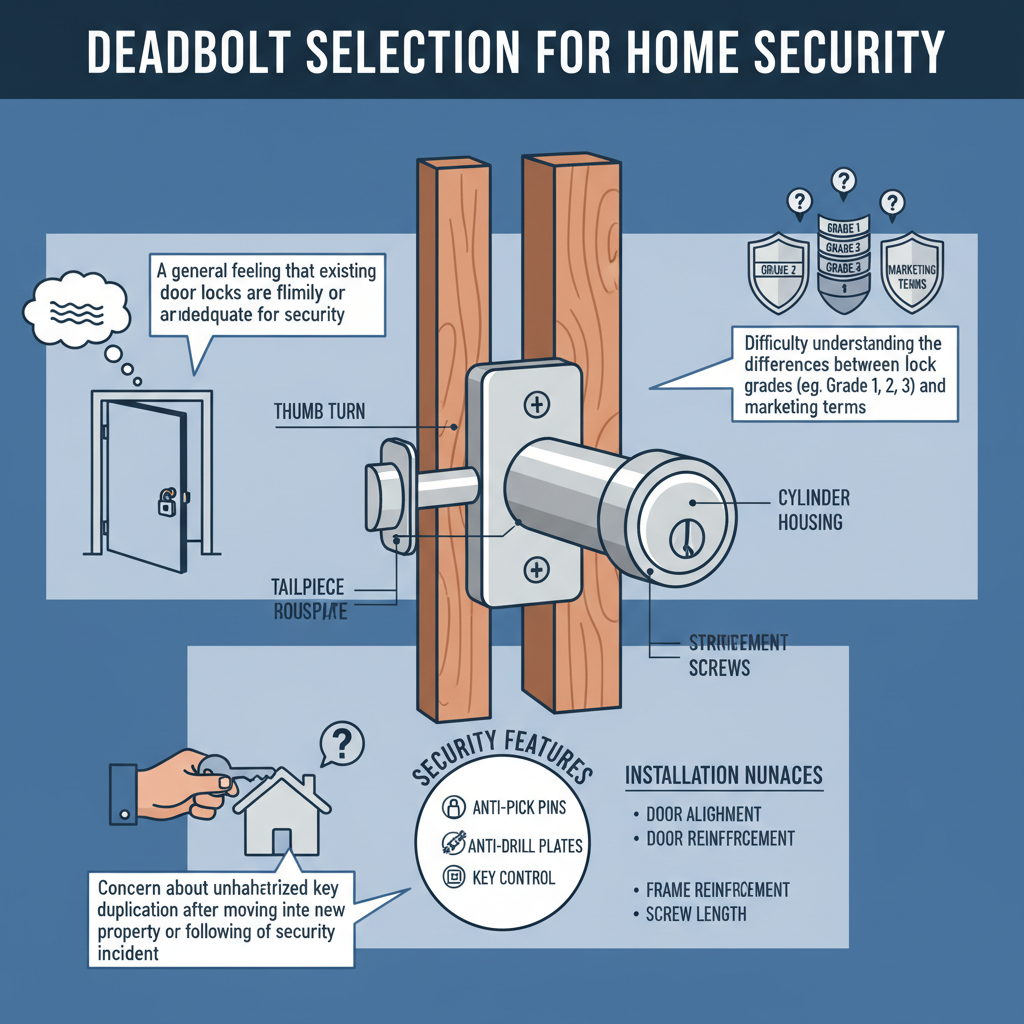
Identify your current lock. Look for a brand name (Schlage, Kwikset, etc.) and a grade number on the latch plate. Extend the bolt and measure it; it needs to be at least 1 inch long.
Step 3
Evaluate your real security needs. Consider if your door has glass panels nearby, which might necessitate a double-cylinder deadbolt (while being mindful of fire codes).
Step 4
Research ANSI/BHMA grades. Understand that Grade 1 is the highest security classification, designed for commercial use and heavy abuse, and is the only grade that should be used for exterior residential doors.
Step 5
Inspect the strike plate installation. Open the door and check the screws holding the strike plate to the frame. If they are shorter than 3 inches, they are inadequate and need to be replaced.
Step 6
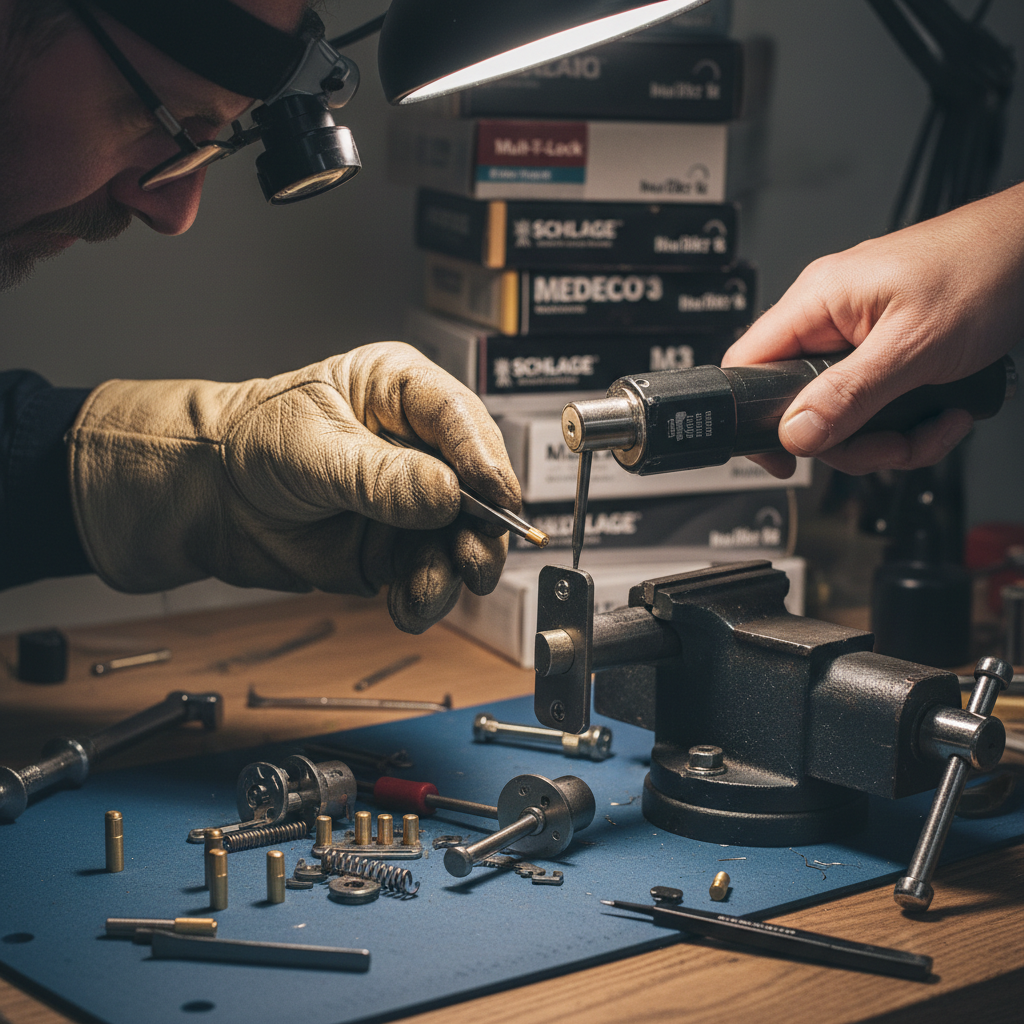
Consider advanced features if needed. Decide if your risk profile warrants investing in high-security locks with controlled keys and anti-drill/pick features, like those from Medeco or Mul-T-Lock.
Step 7
Check compatibility. Before buying a new lock, measure your door's backset (distance from door edge to center of lock hole) and thickness to ensure a new deadbolt will fit without major modifications.
DIY vs Professional Costs
| Repair Type | DIY Cost | Professional Cost | Time Required |
|---|---|---|---|
Replacing a lock with the same size/type | $40-$200 | $100-$250 | 1-2 hours |
Upgrading Strike Plate with 3" Screws | $5-$10 | $75-$150 (if a standalone job) | 15 minutes |
Installing a new deadbolt (requires drilling) | $50-$250 | $150-$400 | 2-4 hours |
When to Call a Professional Locksmith
- When you need to install a deadbolt on a door that has never had one, which requires precise drilling of large holes.
- When you want to install a true high-security lock system with restricted, patented keys (like Medeco or Mul-T-Lock).
- If your door frame is damaged, split, or rotted and needs more than just longer screws to be secure.
- For installing a double-cylinder deadbolt, to ensure it's done correctly and in compliance with local fire safety regulations.
- If you're simply unsure about the process and want the peace of mind that comes with knowing the job was done right by an experienced professional.
Prevention Tips
- Always choose a deadbolt with an ANSI/BHMA Grade 1 rating for all exterior doors. Don't even consider Grade 2 or 3.
- Make sure the deadbolt has a throw bolt that is at least 1 inch long to ensure a solid connection with the door frame.
- Throw away the short screws that come with the lock's strike plate and replace them with 3-inch screws that anchor the plate securely to the house's wall studs.
- For doors with glass panels near the lock, consider a double-cylinder deadbolt but be absolutely certain a key is always accessible nearby for emergency fire escape.
- If you opt for a smart deadbolt, choose a reputable brand, change all default codes, and keep its firmware regularly updated to protect against digital vulnerabilities.
- Reinforce the door frame itself with a metal reinforcement kit if it feels weak; this strengthens the entire entry point against kick-in attacks.
- Ensure the door itself is solid core wood or metal. A strong deadbolt on a weak, hollow door provides a false sense of security.
Frequently Asked Questions
Related Guides
Keyless entry pad / Electronic lock keypad unresponsive or malfunctioning (no power, incorrect code not recognized, flashing lights) Troubleshooting & Fixes
Key is stiff to turn or hard to turn in a door lock, potentially indicating internal mechanism issues, lubrication needs, or foreign object interference. Troubleshooting & Fixes
Key Stuck In Car Ignition Troubleshooting & Fixes (2024 Guide)
Key stuck in your car's ignition and won't turn or come out? Our expert guide covers symptoms, causes, and step-by-step fixes for a stuck ignition key.
Key fob or car remote not working, including failure to lock/unlock doors, remote start malfunction, or vehicle not recognizing the key fob, often stemming from electronic or programming issues. Troubleshooting & Fixes
Car key fob not working? Learn how to fix lock, unlock, or remote start issues. Our guide covers battery replacement, reprogramming, and when to call a pro.
Basement Window Lock is Busted? Here's How to Fix It (The Real Way)
Basement window lock broken or just stuck? A 25-year vet locksmith shows you the real-world fixes, from simple lubricant to full replacement. Know when to DIY and when to call a pro.
Master Key Systems for Your House? (A Real Locksmith's Guide)
Thinking about a master key system for your home? A veteran locksmith explains the real-world pros, cons, and costs of getting rid of that giant key ring.
Need Professional Help?
Find top-rated locksmith experts in your area