Quick Answer
null
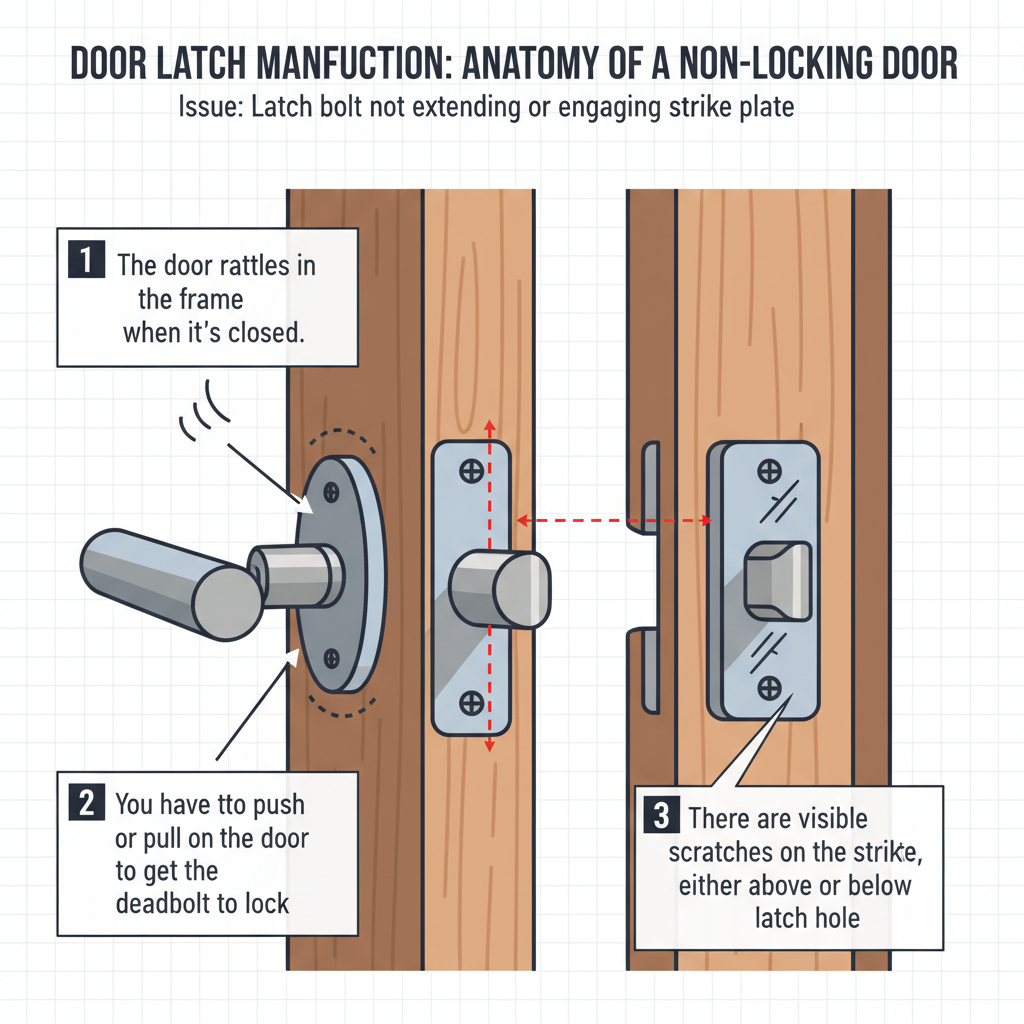
Common Symptoms
Possible Causes
Step-by-Step Diagnosis
Step 1
Visually inspect the door's alignment. Open and close it slowly, watching the gap between the door and the frame to see if it's consistent or if the door sags.
Step 2
Use the 'marker trick.' Color the end of the latch bolt with a dry-erase marker, close the door, and then open it to see exactly where the ink transferred onto the strike plate.
Step 3
Check all hinge and strike plate screws with a screwdriver. Tighten any that are loose. For a sagging door, try replacing a short top-hinge screw with a 3-inch screw to pull the frame tighter.
Step 4
Examine the strike plate. See if the hole needs to be slightly enlarged with a metal file in the direction indicated by the marker trick. Check if the small metal tab is bent and needs to be pried out.
Step 5
Test the lock with the door open. Operate the latch and deadbolt to see if they extend and retract smoothly. If they stick when the door is open, the problem is inside the lock mechanism itself.
DIY vs Professional Costs
| Repair Type | DIY Cost | Professional Cost | Time Required |
|---|---|---|---|
Tighten Hinge/Strike Plate Screws | $0 - $5 | $75 - $150 | 15-30 minutes |
File/Adjust Strike Plate Opening | $10 - $20 | $100 - $175 | 30-60 minutes |
Deep Hinge Adjustment (Shimming/Bending) | $5 - $15 | $150 - $250 | 1-2 hours |
Replace Standard Latch/Lockset | $25 - $75 | $150 - $350 | 1 hour |
When to Call a Professional Locksmith
- If you have adjusted the strike plate and hinges but the lock still won't engage.
- If the door is visibly warped (no longer flat).
- If the issue is with a high-security lock (like Medeco, Mul-T-Lock) or a complex smart lock.
- If the key has broken off in the lock or the internal mechanism feels shattered and gritty even when the door is open.
- If you're simply not comfortable performing the repair and want to ensure your door is secure.
Prevention Tips
- Once a year, check and tighten all the screws on your door hinges and strike plates.
- Annually lubricate your lock mechanism (latch, deadbolt, and keyway) with a dry lubricant like graphite or a silicone-based spray. Do not use WD-40.
- For heavy exterior doors, replace one of the short screws in the top hinge with a 3-inch screw to anchor it securely to the wall stud and prevent sagging.
- Ensure your weatherstripping is in good condition to create a proper seal, which helps prevent the door and frame from swelling due to moisture.
Frequently Asked Questions
Related Guides
Keyless entry pad / Electronic lock keypad unresponsive or malfunctioning (no power, incorrect code not recognized, flashing lights) Troubleshooting & Fixes
Key is stiff to turn or hard to turn in a door lock, potentially indicating internal mechanism issues, lubrication needs, or foreign object interference. Troubleshooting & Fixes
Key Stuck In Car Ignition Troubleshooting & Fixes (2024 Guide)
Key stuck in your car's ignition and won't turn or come out? Our expert guide covers symptoms, causes, and step-by-step fixes for a stuck ignition key.
Key fob or car remote not working, including failure to lock/unlock doors, remote start malfunction, or vehicle not recognizing the key fob, often stemming from electronic or programming issues. Troubleshooting & Fixes
Car key fob not working? Learn how to fix lock, unlock, or remote start issues. Our guide covers battery replacement, reprogramming, and when to call a pro.
Basement Window Lock is Busted? Here's How to Fix It (The Real Way)
Basement window lock broken or just stuck? A 25-year vet locksmith shows you the real-world fixes, from simple lubricant to full replacement. Know when to DIY and when to call a pro.
Master Key Systems for Your House? (A Real Locksmith's Guide)
Thinking about a master key system for your home? A veteran locksmith explains the real-world pros, cons, and costs of getting rid of that giant key ring.
Need Professional Help?
Find top-rated locksmith experts in your area