Quick Answer
Okay, so here's the quick version. If your key won't go in or turn, nine times out of ten it's either debris in the keyway or a badly worn-out key. First, grab some powdered graphite or silicone-based lubricant—NOT WD-40 or oil-based lubricants, as they can attract dirt and gum up the mechanism—and give it a little puff into the keyhole. Wiggle the key gently. Don't force it. If that doesn't work, it could be a bad key copy, a manufacturing defect, or a worn pin inside the lock. A simple lube job is a $10-20 DIY fix, but if you need a locksmith for a service call, you're looking at $75-$150 just for the visit, plus parts and labor for any repairs.
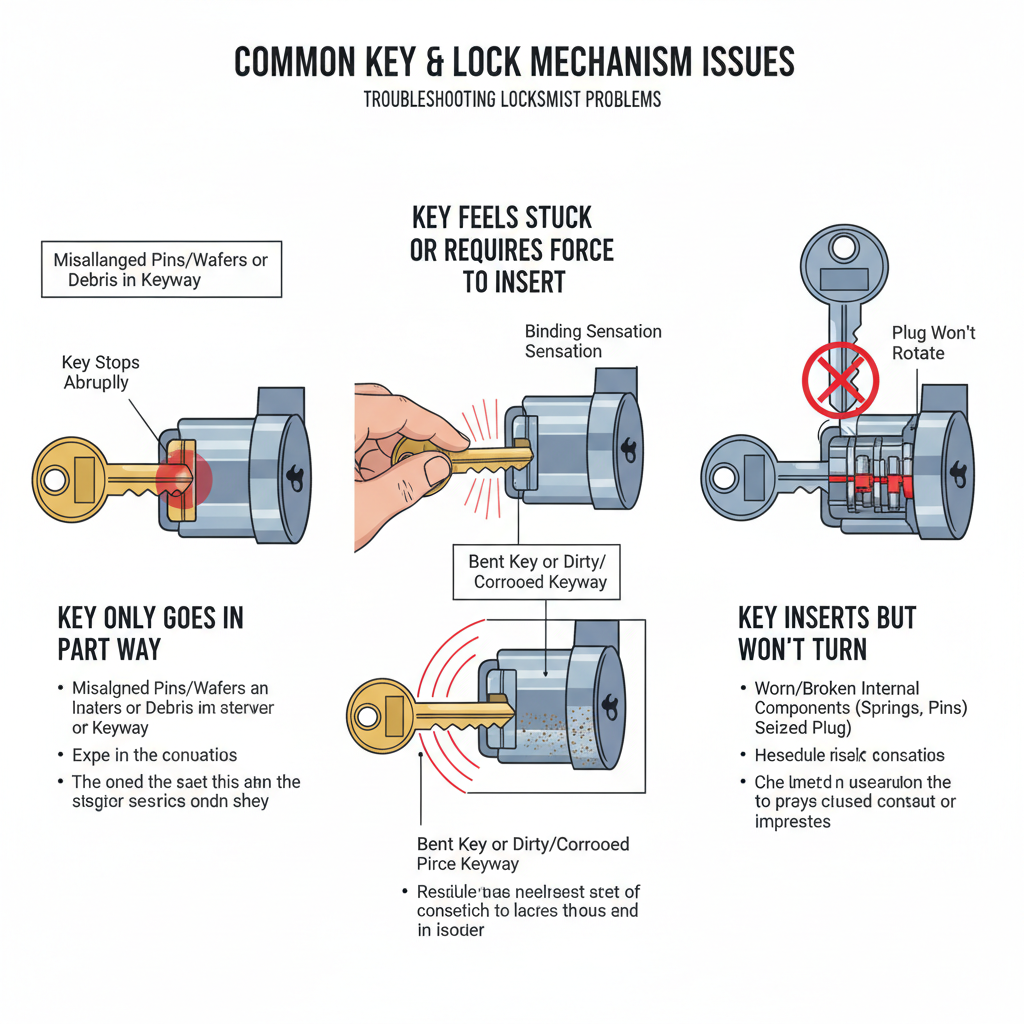
Common Symptoms
Possible Causes
Step-by-Step Diagnosis
Step 1
Inspect the key for any visible damage like bends, burrs, or wear. Try a spare key.
Step 2
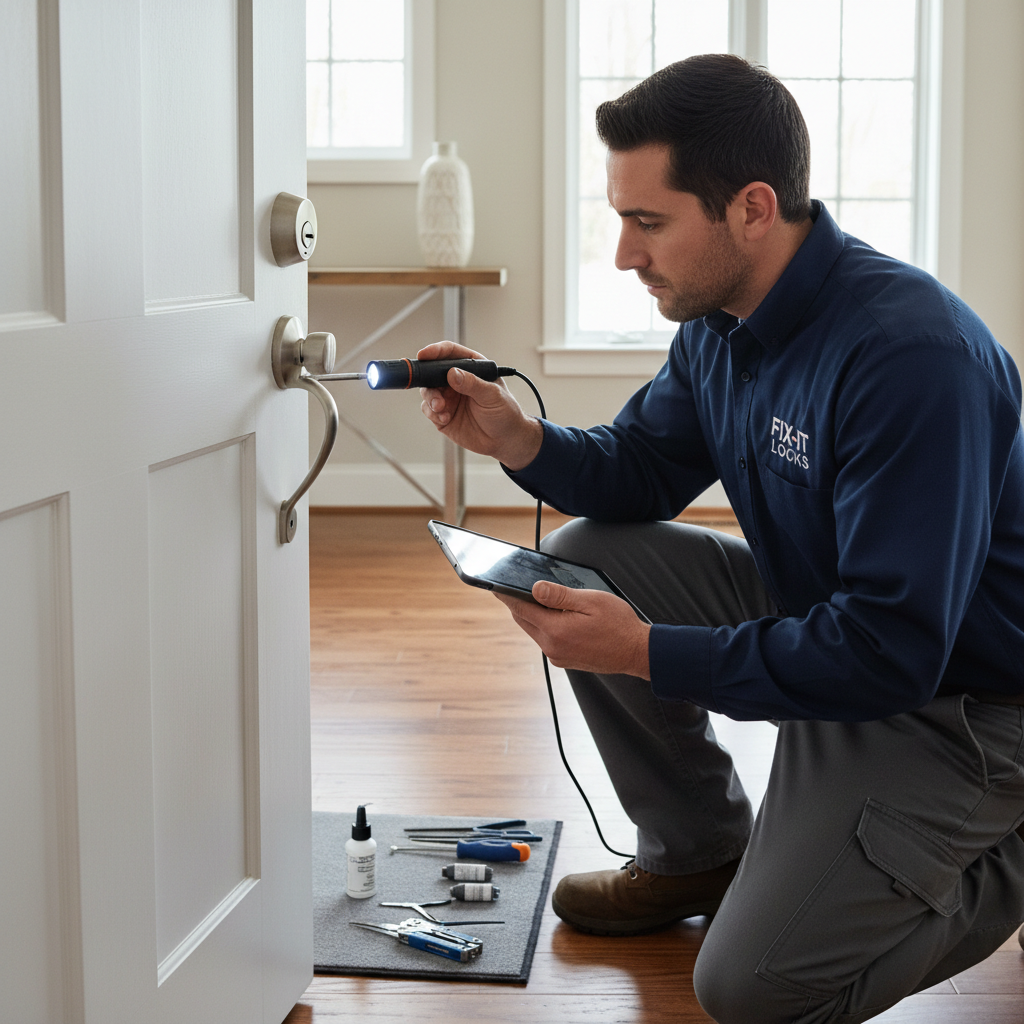
Visually inspect the keyway of the lock with a flashlight for any visible obstructions or debris.
Step 3
Use a can of compressed air to blow out any loose debris from the keyway.
Step 4
Apply a small amount of powdered graphite or a silicone-based lock lubricant into the keyway.
Step 5
Gently insert the key while wiggling it up and down slightly to help distribute the lubricant and align the pins.
Step 6
If the key inserts but won't turn, check if the door is aligned properly by trying the lock with the door open.
DIY vs Professional Costs
| Repair Type | DIY Cost | Professional Cost | Time Required |
|---|---|---|---|
Debris Removal & Lubrication | $10-20 | $75 - $150 | 15 mins |
Lock Rekeying (for bad key) | $20-40 (kit) | $80 - $250 | 1-2 hours (DIY) / 1 hr (Pro) |
Lock Cylinder Replacement | $30-100+ | $120 - $350 | 1-2 hours |
When to Call a Professional Locksmith
- If the key is broken off inside the lock.
- If the lock mechanism feels completely seized or damaged internally after you've tried lubrication.
- If you have a high-security lock (e.g., Medeco, Mul-T-Lock).
- If the key turns 360 degrees without engaging the bolt, indicating a broken tailpiece.
- If you suspect the lock has been tampered with or see drill marks.
Prevention Tips
- Lubricate locks annually with graphite powder or a silicone-based lock lubricant. Avoid oil-based lubricants like WD-40.
- Do not use keys for anything other than opening locks (e.g., prying, scraping).
- Get new keys cut by a reputable locksmith, not a big-box store, for precise duplicates.
- Replace severely worn or bent keys immediately to prevent damage to the lock's internal pins.
Frequently Asked Questions
Related Guides
Keyless entry pad / Electronic lock keypad unresponsive or malfunctioning (no power, incorrect code not recognized, flashing lights) Troubleshooting & Fixes
Key is stiff to turn or hard to turn in a door lock, potentially indicating internal mechanism issues, lubrication needs, or foreign object interference. Troubleshooting & Fixes
Key Stuck In Car Ignition Troubleshooting & Fixes (2024 Guide)
Key stuck in your car's ignition and won't turn or come out? Our expert guide covers symptoms, causes, and step-by-step fixes for a stuck ignition key.
Key fob or car remote not working, including failure to lock/unlock doors, remote start malfunction, or vehicle not recognizing the key fob, often stemming from electronic or programming issues. Troubleshooting & Fixes
Car key fob not working? Learn how to fix lock, unlock, or remote start issues. Our guide covers battery replacement, reprogramming, and when to call a pro.
Basement Window Lock is Busted? Here's How to Fix It (The Real Way)
Basement window lock broken or just stuck? A 25-year vet locksmith shows you the real-world fixes, from simple lubricant to full replacement. Know when to DIY and when to call a pro.
Master Key Systems for Your House? (A Real Locksmith's Guide)
Thinking about a master key system for your home? A veteran locksmith explains the real-world pros, cons, and costs of getting rid of that giant key ring.
Need Professional Help?
Find top-rated locksmith experts in your area