Quick Answer
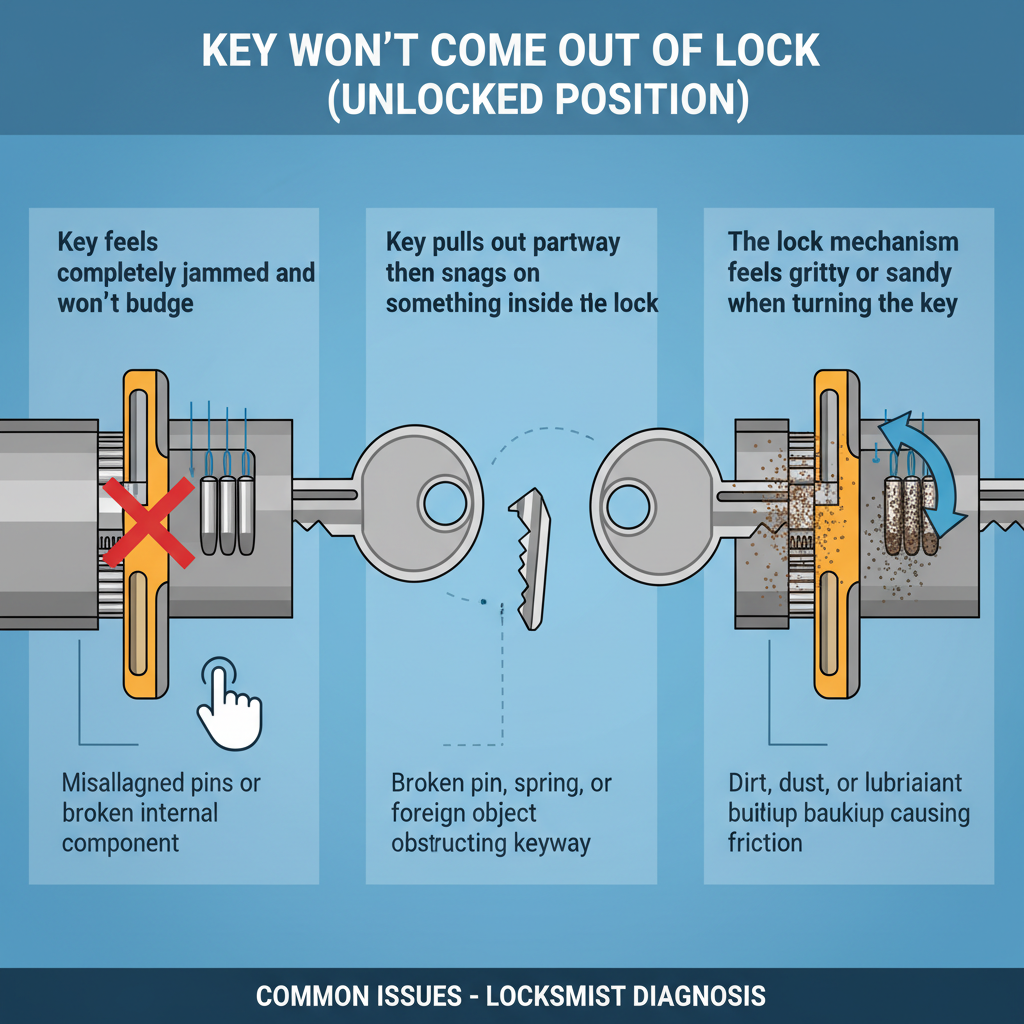
Okay, so here's the quick version. Your key is stuck because the pins inside the lock aren't lined up perfectly to release it. Nine times out of ten, it's either because the key itself is worn down, or the lock is full of gunk and grime. First, stop yanking on it. You'll just make it worse. Try wiggling it gently—up, down, side to side—while pulling lightly. If that doesn't work, get some powdered graphite lubricant (NOT WD-40!) and puff it in the keyhole. Usually, that's enough. If not, you might have a bigger issue. A service call will probably run you $75-$150.
Common Symptoms
Possible Causes
Step-by-Step Diagnosis
Step 1
Jiggle & Wiggle Gently. Apply light, steady pressure pulling the key out while wiggling it gently up, down, and side-to-side to try and coax the pins into alignment.
Step 2
Lubricate the Lock Properly. Use a powdered graphite lubricant or a dry silicone/PTFE spray. Puff or spray it directly into the keyway and onto the key. Avoid oil-based products.
Step 3
Check Key Position. Ensure the key is in the exact vertical (or horizontal, depending on the lock) position for removal. Try turning it a degree or two in either direction and pulling.
Step 4
Inspect for Debris. Use a flashlight to look inside the keyway for any visible obstructions that could be blocking the key.
Step 5
Use Pliers with Extreme Caution. If the key is partially out, grip the head with needle-nose pliers and attempt to pull it straight out while wiggling. If it resists, stop immediately to avoid breaking it.
DIY vs Professional Costs
| Repair Type | DIY Cost | Professional Cost | Time Required |
|---|---|---|---|
Gentle Wiggling & Lubrication | $5-15 (for lubricant) | $75-150 (for service call & extraction) | 15-30 mins |
Key Extraction (Broken Key) | Not Recommended (specialized tools required) | $100-250 | 30-60 mins |
Lock Cylinder Rekeying | $20-40 (for a kit) | $100-350 (includes service call, per cylinder) | 1-2 hours (DIY) / 30 mins (Pro) |
Lock Cylinder Replacement | $25-100 (for new cylinder) | $150-450 (parts & labor, depends on lock type) | 30-60 mins |
When to Call a Professional Locksmith
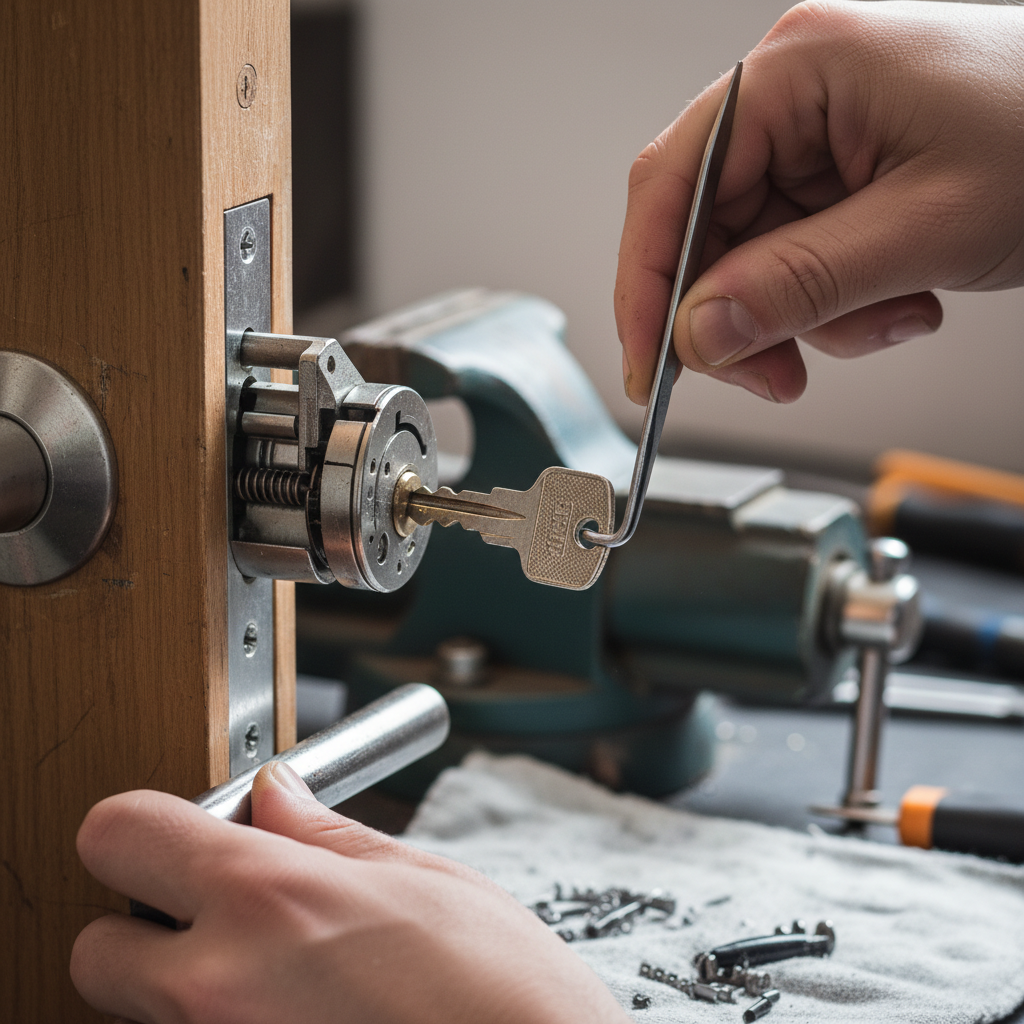
- The key has broken off inside the lock. Do not try to dig it out yourself.
- You have a high-security lock (like Medeco or Mul-T-Lock), as these require special tools and expertise.
- You've already tried lubrication and gentle wiggling with no success.
- The lock feels completely frozen or seized, suggesting a broken internal component.
- You are not comfortable with DIY repairs and want to avoid the risk of making the problem worse.
Prevention Tips
- Lubricate your primary door locks annually with a powdered graphite or dry silicone-based lubricant.
- Never use your keys as tools for prying, scraping, or opening things.
- If a key starts to look very worn or bent, get a new one cut by a professional locksmith, not a big-box store kiosk.
- Don't force a key that resists. If it feels gritty or stiff, address the issue before it gets worse.
Frequently Asked Questions
Related Guides
Sliding Patio Door Lock Troubleshooting & Fixes (2024 Guide by a Pro)
A veteran locksmith's guide to fixing a sliding patio door lock that won't engage, is sticky, or broken. Learn DIY fixes and when to call a pro.
Mailbox Lock Not Working? Fix Broken, Jammed, or Lost Key Issues
Can't open your mailbox? Learn how to fix a broken, jammed, or lost key mailbox lock. This guide covers DIY solutions, when to replace your lock, and how to know if your HOA or the Post Office is responsible.
Loose or wobbly door handles and knobs, specifically addressing issues with internal mechanisms or mounting. Troubleshooting & Fixes (2024 Guide)
Fed up with a wobbly door handle? I've been a locksmith for over 25 years, and here's my no-BS guide to fixing that annoying jiggle yourself before you call a pro.
Safe Lock Not Opening & Forgot Combination (Troubleshooting & Fixes)
Can't open your safe? Learn to troubleshoot a forgotten combination, dead batteries, or a stuck lock. See DIY fixes and when to call a locksmith.
Key Stuck In Car Ignition Troubleshooting & Fixes (2024 Guide)
Key stuck in your car ignition? Get step-by-step troubleshooting for common causes like steering wheel lock, worn keys, or debris. Learn DIY fixes and when to call a professional for a safe solution.
How to Effectively Lubricate Your Door Lock: Solve Sticking, Freezing, and Malfunctions
Learn how to effectively lubricate door locks to prevent sticking, freezing, and malfunctions. This guide covers the best lubricants (graphite powder, PTFE dry spray, silicone spray) for various lock parts, important lubricants to avoid (WD-40, oils), and step-by-step instructions for popular lock types. Keep your home secure and your locks operating smoothly through every season.
Need Professional Help?
Find top-rated locksmith experts in your area