Quick Answer
Okay, so here's the quick version. If your lock is just a little sticky or a screw is loose, you can probably handle it with some graphite lubricant and a screwdriver. That's a $15 fix. But if your key is broken off *inside* the lock, you're locked out of the house, or the lock was damaged in a break-in, just stop. Don't make it worse. Call a pro. A simple lockout will cost you $75 to $250, but a DIY attempt gone wrong could multiply repair costs or even require a new door.
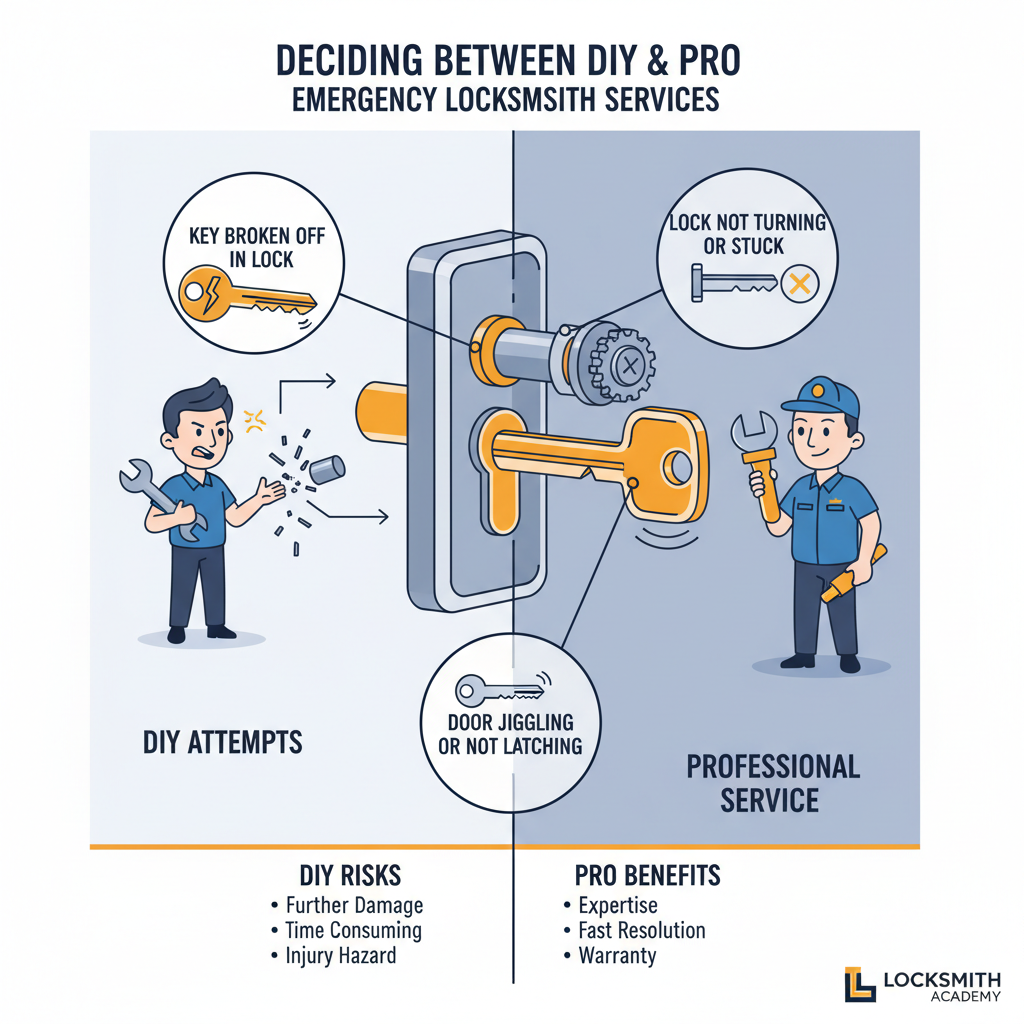
Common Symptoms
Possible Causes
Step-by-Step Diagnosis
Step 1
Identify the type of lock (e.g., deadbolt, doorknob, smart lock).
Step 2
Visually inspect the lock and surrounding door for obvious damage (bent parts, loose screws, debris).
Step 3
Test the key – does it insert smoothly? Does it turn? Does it feel gritty?
Step 4
Lubricate the lock mechanism with a suitable lubricant (e.g., graphite powder, silicone spray) and re-test.
Step 5
Check the door and frame alignment – ensure the door isn't sagging or rubbing, affecting the latch.
Step 6
Gently jiggle the door while attempting to turn the key to see if alignment is the issue.
Step 7
If accessible, remove the lock from the door to inspect internal components for wear or breakage.
DIY vs Professional Costs
| Repair Type | DIY Cost | Professional Cost | Time Required |
|---|---|---|---|
Simple Lock Maintenance (lubricating, tightening screws) | $5-20 | $75-150 | 5 minutes |
Adjusting strike plate alignment | $0-10 | $80-175 | 15-30 minutes |
Replacing a basic lock cylinder or knob | $20-100 | $100-250 | 30-60 minutes |
Broken key extraction | $10-50 | $80-250 | 10-20 minutes (Pro) |
Rekeying locks (per cylinder) | $15-30 per kit | $25-75 per lock | 30+ mins (DIY), 10 mins (Pro) |
When to Call a Professional Locksmith
- You are locked out of your home, car, or business. Don't be a hero; just call.
- The lock is severely damaged, especially from an attempted break-in. Your security is compromised.
- It's a high-security lock (like Medeco), a smart lock, or a complex commercial system that requires special tools.
- You've tried the simple fixes like lubrication and tightening screws, and it's still not working.
- You need to rekey your locks because you lost your keys or moved into a new place.
- The repair involves taking apart the complex guts of the lock. Those tiny springs will disappear, I promise.
Prevention Tips
- Regularly lubricate locks with graphite-based lubricant or silicone spray (avoid WD-40).
- Tighten loose screws on door handles, lock plates, and strike plates as needed.
- Avoid forcing a key that doesn't turn easily; investigate the cause.
- Ensure your doors and frames are properly aligned to prevent stress on the lock mechanism.
- Use keys correctly – don't use them for prying or opening packages.
- Inspect locks periodically for signs of wear, rust, or damage.
- Consider upgrading to higher-quality, more durable locks for critical entry points.

Frequently Asked Questions
Related Guides
Keyless entry pad / Electronic lock keypad unresponsive or malfunctioning (no power, incorrect code not recognized, flashing lights) Troubleshooting & Fixes
Key is stiff to turn or hard to turn in a door lock, potentially indicating internal mechanism issues, lubrication needs, or foreign object interference. Troubleshooting & Fixes
Key Stuck In Car Ignition Troubleshooting & Fixes (2024 Guide)
Key stuck in your car's ignition and won't turn or come out? Our expert guide covers symptoms, causes, and step-by-step fixes for a stuck ignition key.
Key fob or car remote not working, including failure to lock/unlock doors, remote start malfunction, or vehicle not recognizing the key fob, often stemming from electronic or programming issues. Troubleshooting & Fixes
Car key fob not working? Learn how to fix lock, unlock, or remote start issues. Our guide covers battery replacement, reprogramming, and when to call a pro.
Basement Window Lock is Busted? Here's How to Fix It (The Real Way)
Basement window lock broken or just stuck? A 25-year vet locksmith shows you the real-world fixes, from simple lubricant to full replacement. Know when to DIY and when to call a pro.
Master Key Systems for Your House? (A Real Locksmith's Guide)
Thinking about a master key system for your home? A veteran locksmith explains the real-world pros, cons, and costs of getting rid of that giant key ring.
Need Professional Help?
Find top-rated locksmith experts in your area