Quick Answer
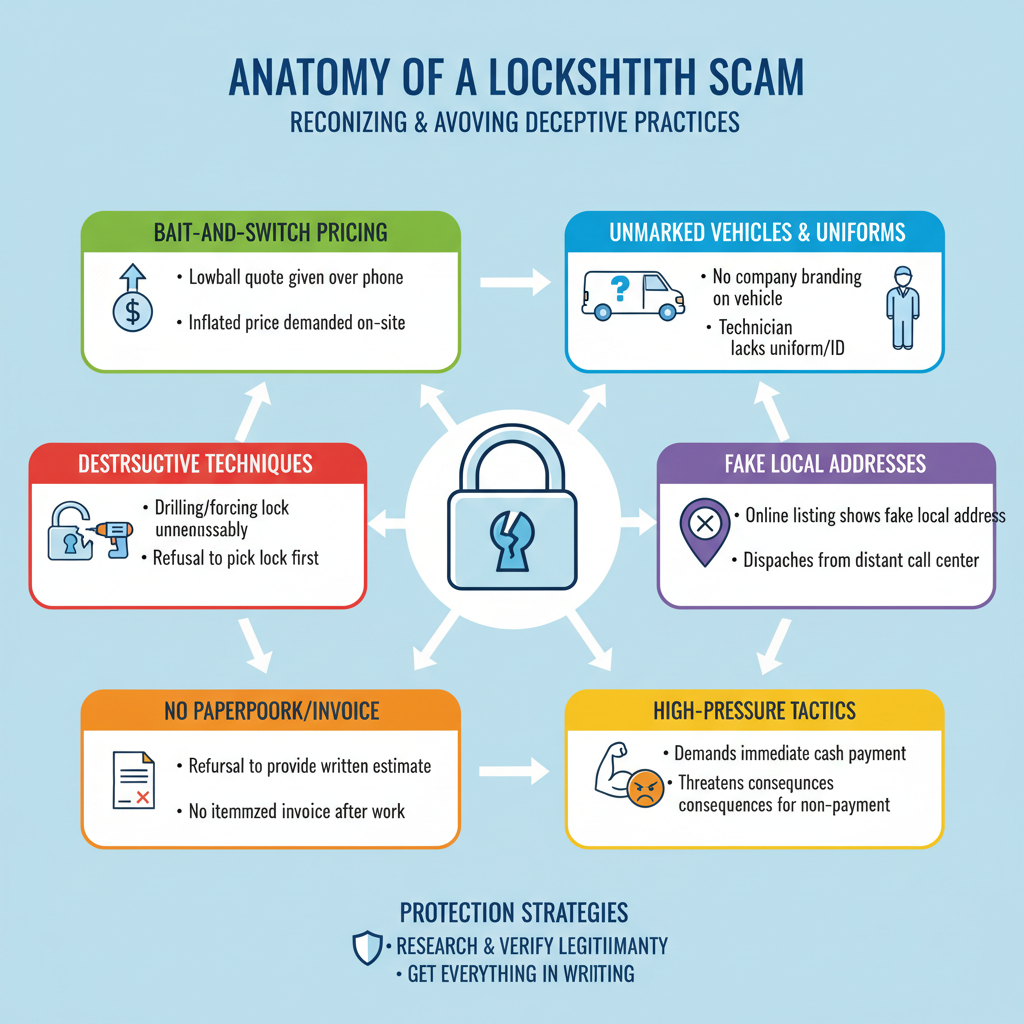
To avoid locksmith scams, proactively research and save contacts for reputable local locksmiths. Always get a firm, all-inclusive written estimate before work begins. Verify the technician's ID and company-branded vehicle upon arrival. Be wary of unusually low phone quotes, demands for cash-only payment, or aggressive pressure for unnecessary lock replacements. Trust your instincts and walk away if anything feels suspicious.
Common Symptoms
Possible Causes
Step-by-Step Diagnosis
Step 1
**Before Calling (Proactive Research):** Identify and save the contact details for 2-3 highly-rated, licensed, and insured local locksmiths. Look for companies with a physical address, professional website, and consistent positive reviews. This eliminates last-minute emergency searching.
Step 2
**During the Initial Call:** Clearly describe your exact situation (e.g., "locked keys in car," "need front door rekeyed"). Ask for the **full legal name of the company** and their **physical street address**. Request a **firm, all-inclusive quote** covering service call, labor, and all parts. Do not accept vague ranges. Ask about any potential extra charges (after-hours, mileage).
Step 3
**Verify Credentials Over the Phone:** Ask if they are licensed (if required in your state) and insured, and confirm they dispatch their own vetted technicians, not just a random subcontractor.
Step 4
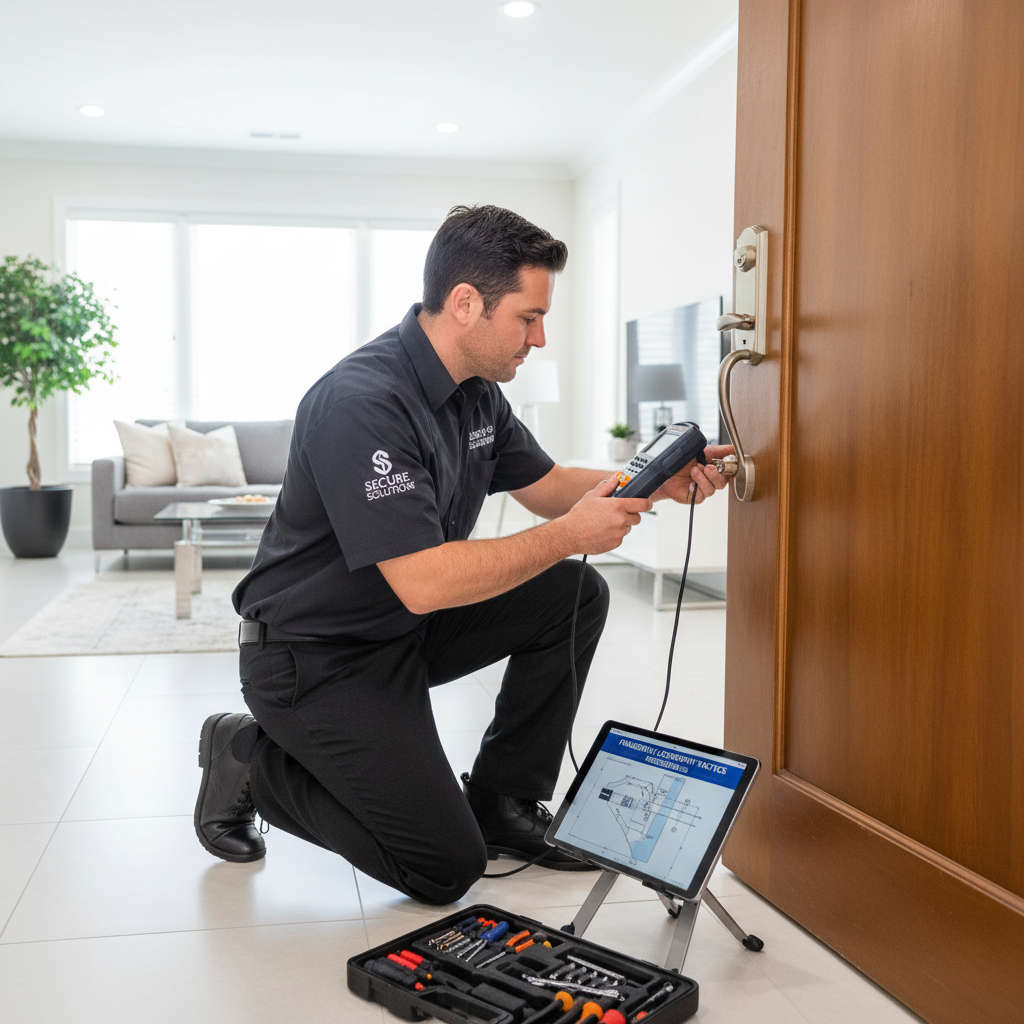
**Upon Arrival - Observe and Confirm:** Before allowing any work, observe the locksmith's vehicle: it should be **clearly marked with the company's branding**. Request to see their **photo ID** and, if applicable, their **state-issued locksmith license**, ensuring it matches the company you called. A uniform is also a good sign of professionalism.
Step 5
**Demand a Detailed Written Estimate:** Insist on a **firm, detailed, itemized written estimate** before *any* work begins. Review it carefully to ensure all charges match the phone quote and are fully explained. If the estimate differs significantly without a clear, justifiable reason, or if they refuse a written estimate, politely decline service.
Step 6
**Question Recommendations:** If the locksmith proposes expensive work, like a complete lock replacement, ask for a clear explanation of *why* repair or rekeying isn't a viable, less expensive option. Do not immediately agree to work you don't fully understand or feel is unjustified.
Step 7
**Before Payment - Itemized Invoice:** Once work is completed, ensure you receive a **detailed, itemized invoice** listing all services performed, specific parts used (with costs), and the final agreed-upon total. Confirm accepted payment methods and avoid any pressure for cash-only payment. Keep this invoice for your records.
Step 8
**Trust Your Instincts:** If at any point the situation feels suspicious – the technician is aggressive, unclear about pricing, reluctant to show ID, or the price suddenly inflates significantly – politely decline further service. It's better to pay a small agreed-upon service call fee than to be significantly overcharged or receive poor, insecure work.
When to Call a Professional Locksmith
- You are locked out of your home, car, or business and cannot regain entry safely on your own.
- You need locks rekeyed for security reasons (e.g., after losing keys, moving into a new property, or a breakup).
- You require new lock installation, upgrades for enhanced security, or smart lock integration.
- You have a damaged, malfunctioning, or broken lock that needs expert repair or replacement.
- You need emergency lock services, such as immediately after a break-in, to secure your property.
- You want a professional security assessment of your home or business's existing locking systems.
- You need duplicate keys made for specialty, high-security, or proprietary lock systems that cannot be duplicated at standard key-cutting kiosks.
Prevention Tips
- **Proactively Research & Vet Locksmiths (Pre-Emergency):** This is the single most important step. Identify and store contacts for 2-3 reputable, licensed, and insured local locksmiths. Look for established businesses with a physical address, professional website, and genuine positive reviews across multiple platforms. Save their numbers in your phone.
- **Verify Company Identity During Call:** Always call a specific, named locksmith company. If they answer generically (e.g., "locksmith service"), hang up. Ask for the company's full legal name, physical address, and confirm they are local to your area.
- **Get a Firm, All-Inclusive Written Quote:** Insist on a detailed, itemized, all-inclusive quote over the phone for the precise service needed before they dispatch anyone. This quote should cover service call, labor, and parts. Be highly skeptical of extremely low initial quotes (e.g., $19 to $39), which are classic bait-and-switch tactics.
- **Confirm Professional Appearance & ID On-Site:** A legitimate locksmith typically arrives in a clearly marked company vehicle with branding. Before allowing any work to start, ask to see their photo ID and, if applicable in your state, their locksmith license. Ensure the names and company match what you were told.
- **Question Unnecessary Work or Replacements:** A trustworthy locksmith will always prioritize repairing or rekeying existing locks if possible, as it's often more cost-effective. Be wary of anyone immediately pushing for expensive, full lock replacements without clear, justifiable reasons. Get a second opinion if unsure.
- **Avoid Cash-Only Demands:** An insistence on cash-only payment, especially without providing a detailed, itemized invoice, is a major red flag. Reputable businesses accept various payment methods (credit cards, checks) and provide proper documentation.
- **Educate Yourself on Basic Locksmith Costs:** Having a general idea of what common locksmith services (lockout, rekey, new deadbolt installation) typically cost in your region can help you spot grossly inflated or deceptively low quotes.
- **Trust Your Gut Instincts:** If the situation feels uncomfortable, the locksmith is aggressive, their story changes, or they seem evasive, politely decline service. Your safety, security, and financial well-being are paramount.
- **Read Online Reviews Carefully:** Go beyond just the star rating. Read the content of recent reviews for consistent patterns related to pricing, professionalism, and any red flags like sudden price increases or unnecessary work. Be suspicious of an excessive number of generic 5-star reviews or reviews that seem mass-produced.
- **Be Cautious with "Local" Online Ads:** Many top-ranking locksmith ads in search results are for national call centers that dispatch unvetted subcontractors, not genuinely local businesses. Scroll past these ads and look for established, well-reviewed local businesses with physical addresses.
Frequently Asked Questions
Related Guides
Sliding Patio Door Lock Troubleshooting & Fixes (2024 Guide by a Pro)
A veteran locksmith's guide to fixing a sliding patio door lock that won't engage, is sticky, or broken. Learn DIY fixes and when to call a pro.
Mailbox Lock Not Working? Fix Broken, Jammed, or Lost Key Issues
Can't open your mailbox? Learn how to fix a broken, jammed, or lost key mailbox lock. This guide covers DIY solutions, when to replace your lock, and how to know if your HOA or the Post Office is responsible.
Loose or wobbly door handles and knobs, specifically addressing issues with internal mechanisms or mounting. Troubleshooting & Fixes (2024 Guide)
Fed up with a wobbly door handle? I've been a locksmith for over 25 years, and here's my no-BS guide to fixing that annoying jiggle yourself before you call a pro.
Safe Lock Not Opening & Forgot Combination (Troubleshooting & Fixes)
Can't open your safe? Learn to troubleshoot a forgotten combination, dead batteries, or a stuck lock. See DIY fixes and when to call a locksmith.
Key Stuck In Car Ignition Troubleshooting & Fixes (2024 Guide)
Key stuck in your car ignition? Get step-by-step troubleshooting for common causes like steering wheel lock, worn keys, or debris. Learn DIY fixes and when to call a professional for a safe solution.
How to Effectively Lubricate Your Door Lock: Solve Sticking, Freezing, and Malfunctions
Learn how to effectively lubricate door locks to prevent sticking, freezing, and malfunctions. This guide covers the best lubricants (graphite powder, PTFE dry spray, silicone spray) for various lock parts, important lubricants to avoid (WD-40, oils), and step-by-step instructions for popular lock types. Keep your home secure and your locks operating smoothly through every season.
Need Professional Help?
Find top-rated locksmith experts in your area