Quick Answer
Okay, so here's the quick version. Your lock's all rusted up and fighting ya, right? I see this every day, especially in damp climates. Nine times out of ten, it’s just neglect and moisture. You might get away with a simple clean and lube for under $20 if you do it yourself. But if it's really seized or the key's broke, you're looking at calling a guy like me. That could run anywhere from $150 for a repair to maybe $400 for a full replacement, depending on the lock. Don't let it get that bad.
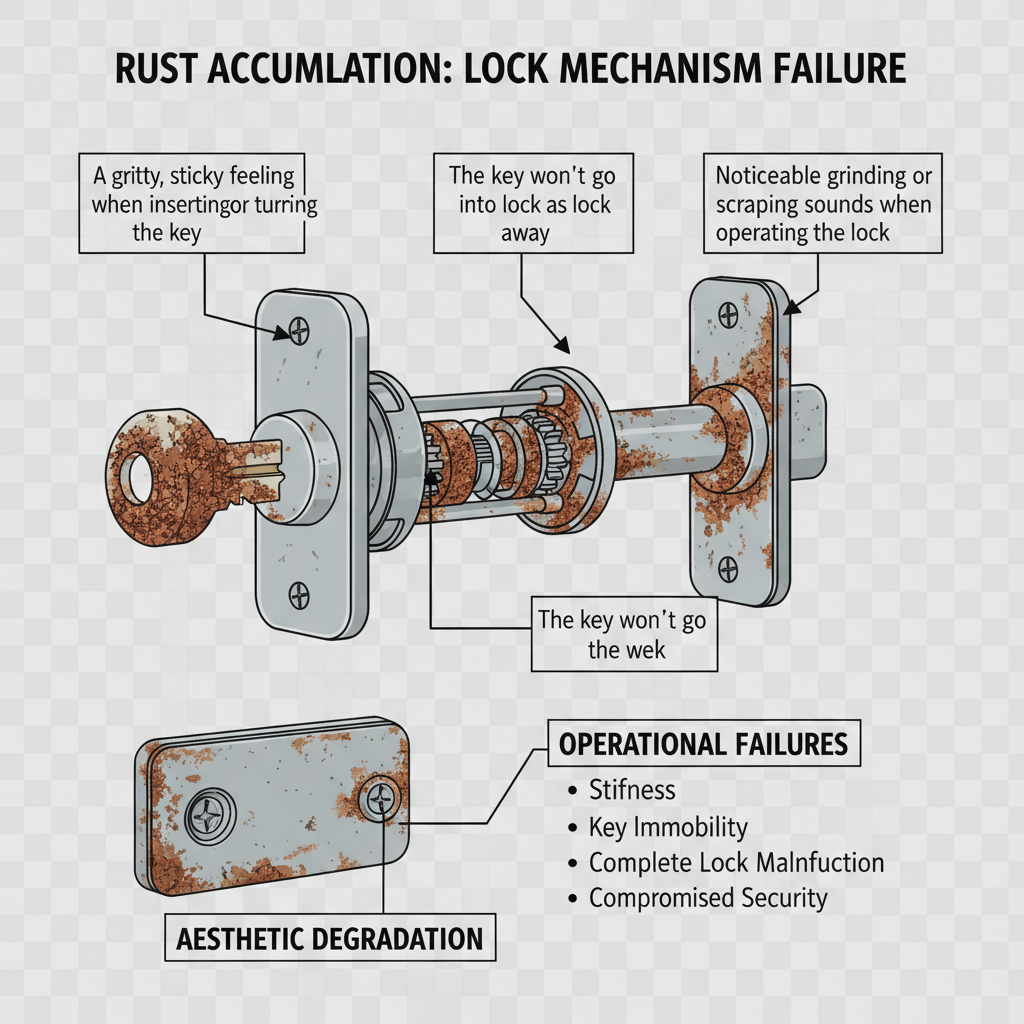
Common Symptoms
Possible Causes
Step-by-Step Diagnosis
Step 1
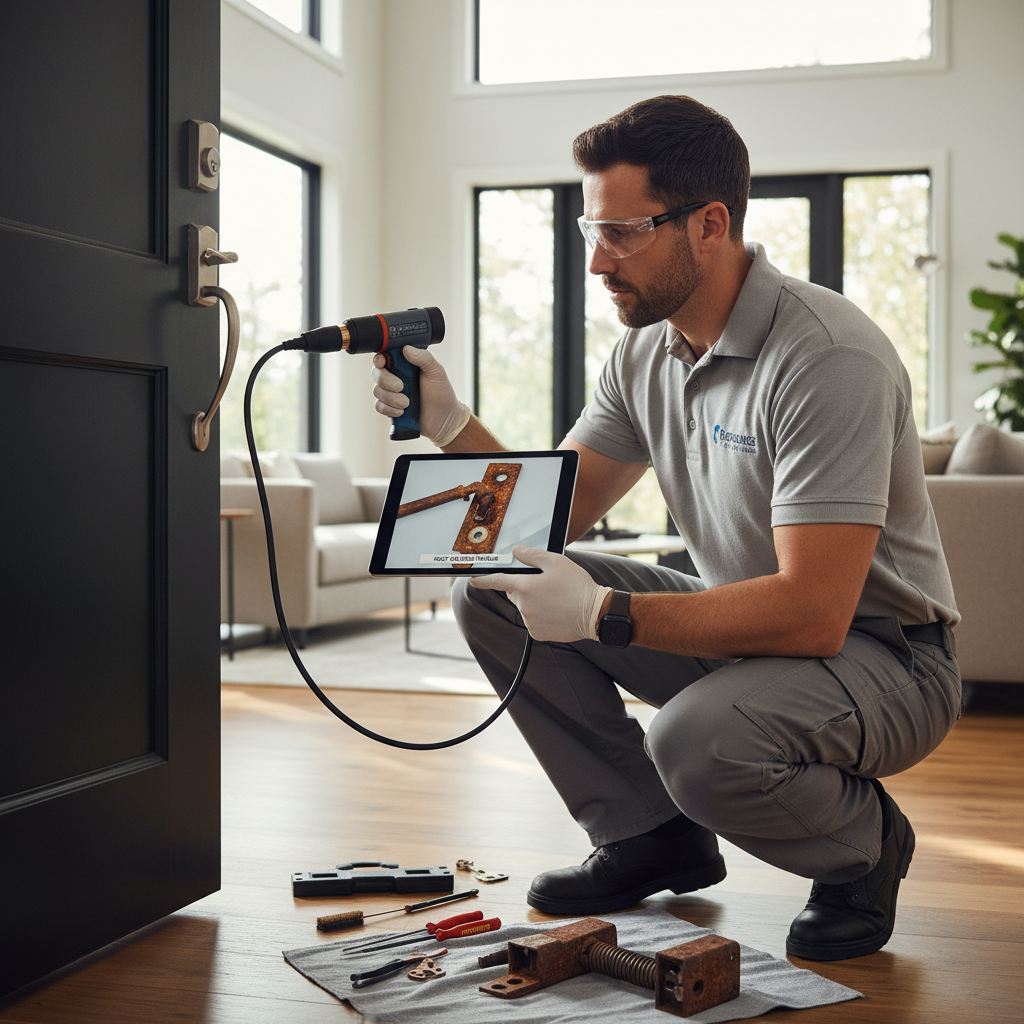
Perform a careful visual inspection of the entire lock—handle, cylinder, faceplate, and latch bolt. Look for bubbling paint, flaking finish, and obvious orange or brown rust stains.
Step 2
Gently insert the key. Feel for any grit, resistance, or points where it catches. Do not force it.
Step 3
Attempt to turn the key. Note if the resistance is smooth and heavy (indicating gunk/old lube) or if it's sharp and catchy (indicating sticking pins or a mechanical issue).
Step 4
Operate the lock from the inside using the thumbturn or knob. If it's also stiff, the problem is likely in the bolt mechanism itself, not just the key cylinder.
Step 5
Listen closely while operating the lock. Squeaks mean it's dry; scrapes and clunks mean internal components are corroded and failing.
Step 6
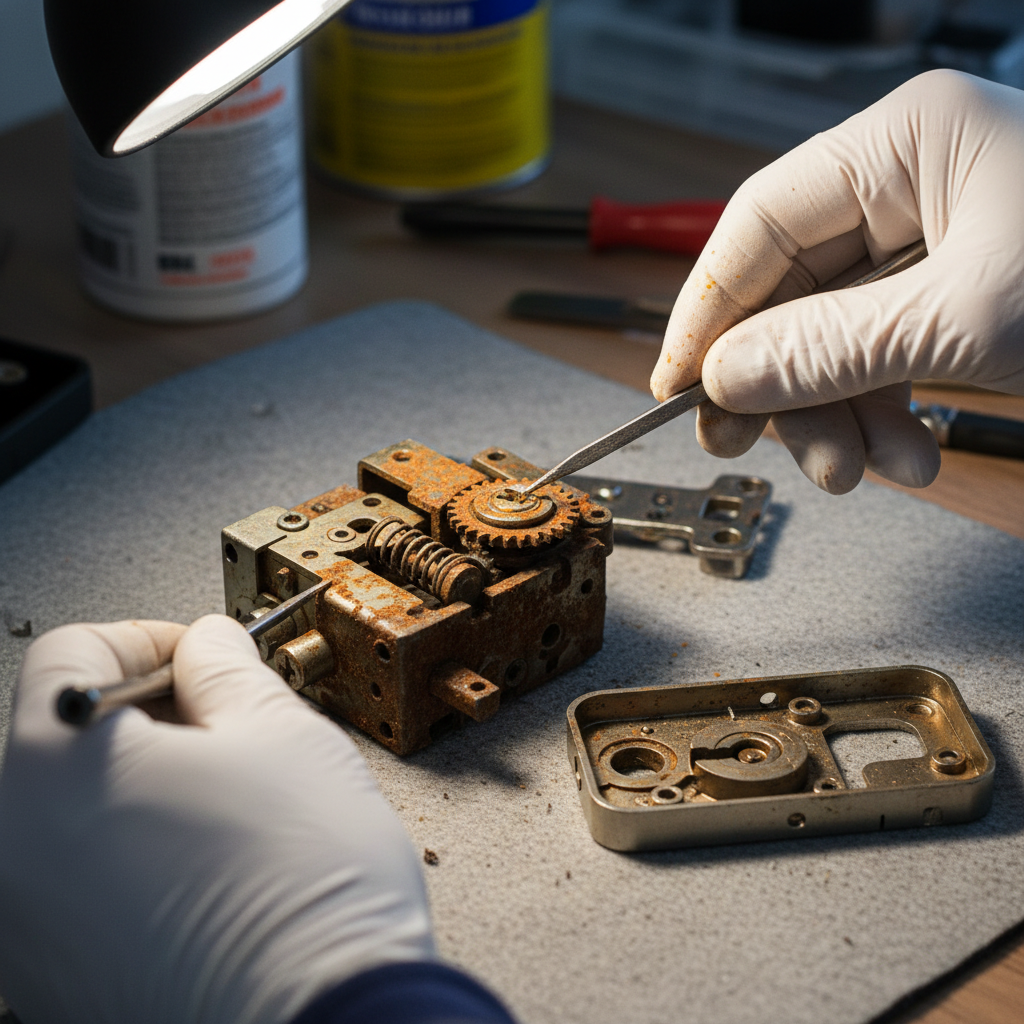
If you're comfortable, remove the two screws on the inside of the door and pull the lock apart to inspect the internal mechanism for visible rust.
DIY vs Professional Costs
| Repair Type | DIY Cost | Professional Cost | Time Required |
|---|---|---|---|
Cleaning & Lubrication | $10-20 | $75-150 | 30 minutes |
Lock Disassembly & Full Rebuild | $20-50 | $150-350 | 2-4 hours |
Full Lock Replacement | $50-400 (for parts) | $200-500+ | 1 hour |
Emergency Call (Drill Out) | N/A | $250-450+ | 1-2 hours |
When to Call a Professional Locksmith
- Your key breaks off inside the lock cylinder. Don't try to dig it out; you'll make it worse.
- The lock is completely seized and won't move at all, even after you've tried lubricating it.
- The deadbolt will not fully extend or retract, leaving your home unsecured.
- You can see that the internal mechanism is severely rusted and compromised.
- You aren't comfortable disassembling a lock with many small, complex parts.
Prevention Tips
- Lubricate your locks twice a year with a dry lubricant like graphite powder or a PTFE-based spray. Do not use WD-40 in the keyway.
- Regularly wipe down the exterior of your locks with a soft cloth to remove dirt, salt, and grime before it can cause damage.
- If you live in a coastal or very wet climate, invest in locks made from rust-resistant materials like stainless steel or solid brass.
- Ensure your door has proper weatherstripping to prevent rain and moisture from getting inside the door and into the lock mechanism.
- Address any small scratches or chips in the lock's finish immediately with touch-up paint to prevent rust from getting a foothold.
Frequently Asked Questions
Related Guides
Keyless entry pad / Electronic lock keypad unresponsive or malfunctioning (no power, incorrect code not recognized, flashing lights) Troubleshooting & Fixes
Key is stiff to turn or hard to turn in a door lock, potentially indicating internal mechanism issues, lubrication needs, or foreign object interference. Troubleshooting & Fixes
Key Stuck In Car Ignition Troubleshooting & Fixes (2024 Guide)
Key stuck in your car's ignition and won't turn or come out? Our expert guide covers symptoms, causes, and step-by-step fixes for a stuck ignition key.
Key fob or car remote not working, including failure to lock/unlock doors, remote start malfunction, or vehicle not recognizing the key fob, often stemming from electronic or programming issues. Troubleshooting & Fixes
Car key fob not working? Learn how to fix lock, unlock, or remote start issues. Our guide covers battery replacement, reprogramming, and when to call a pro.
Basement Window Lock is Busted? Here's How to Fix It (The Real Way)
Basement window lock broken or just stuck? A 25-year vet locksmith shows you the real-world fixes, from simple lubricant to full replacement. Know when to DIY and when to call a pro.
Master Key Systems for Your House? (A Real Locksmith's Guide)
Thinking about a master key system for your home? A veteran locksmith explains the real-world pros, cons, and costs of getting rid of that giant key ring.
Need Professional Help?
Find top-rated locksmith experts in your area