Quick Answer
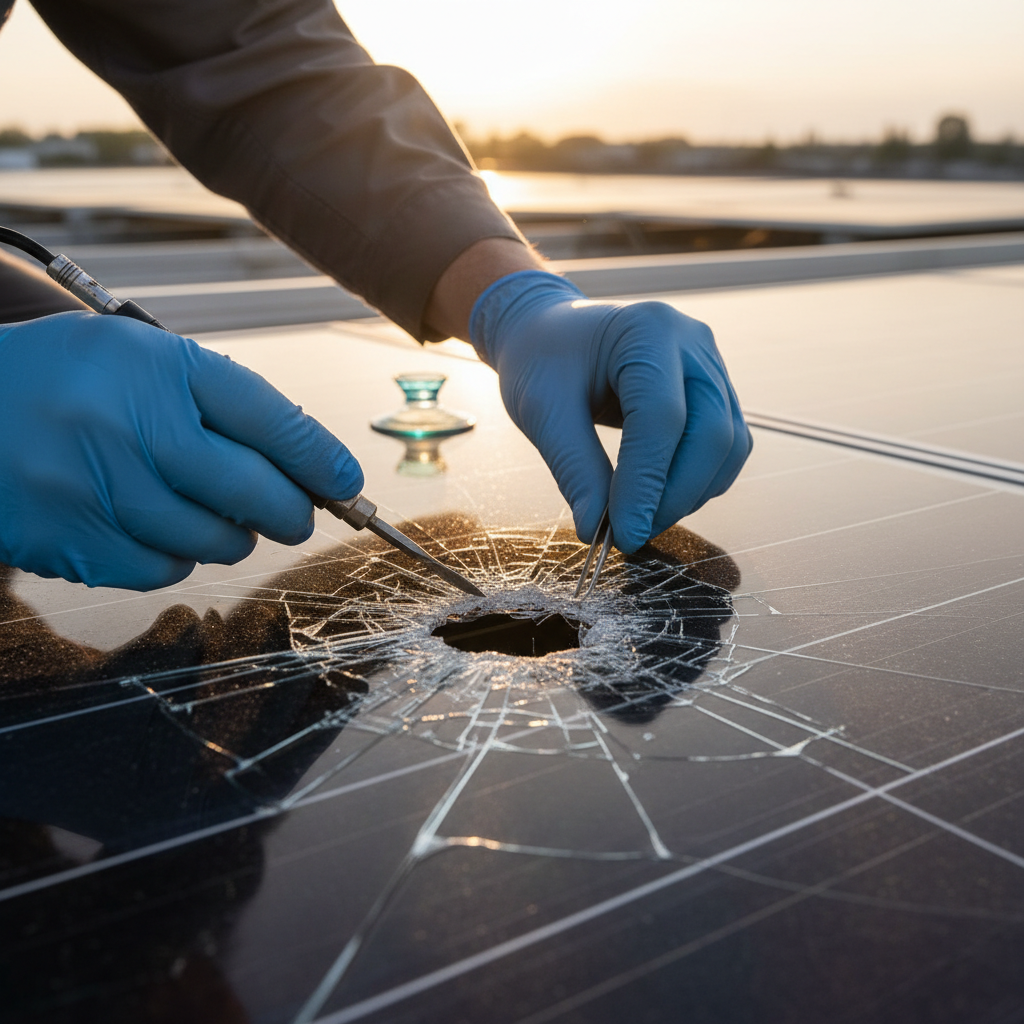
Okay so here's the quick version. You see a crack in your solar panel glass. First off, don't panic, but don't ignore it either. A tiny chip? You can put a dab of clear, UV-resistant silicone on it as a temporary patch to keep water out. But honestly? Anything bigger is a problem. Water gets in, production drops, and you create a real safety hazard. You're not really 'fixing' the glass, you're managing the problem until you can get the panel replaced. A single panel replacement will probably run you $300 to $600+, parts and labor.
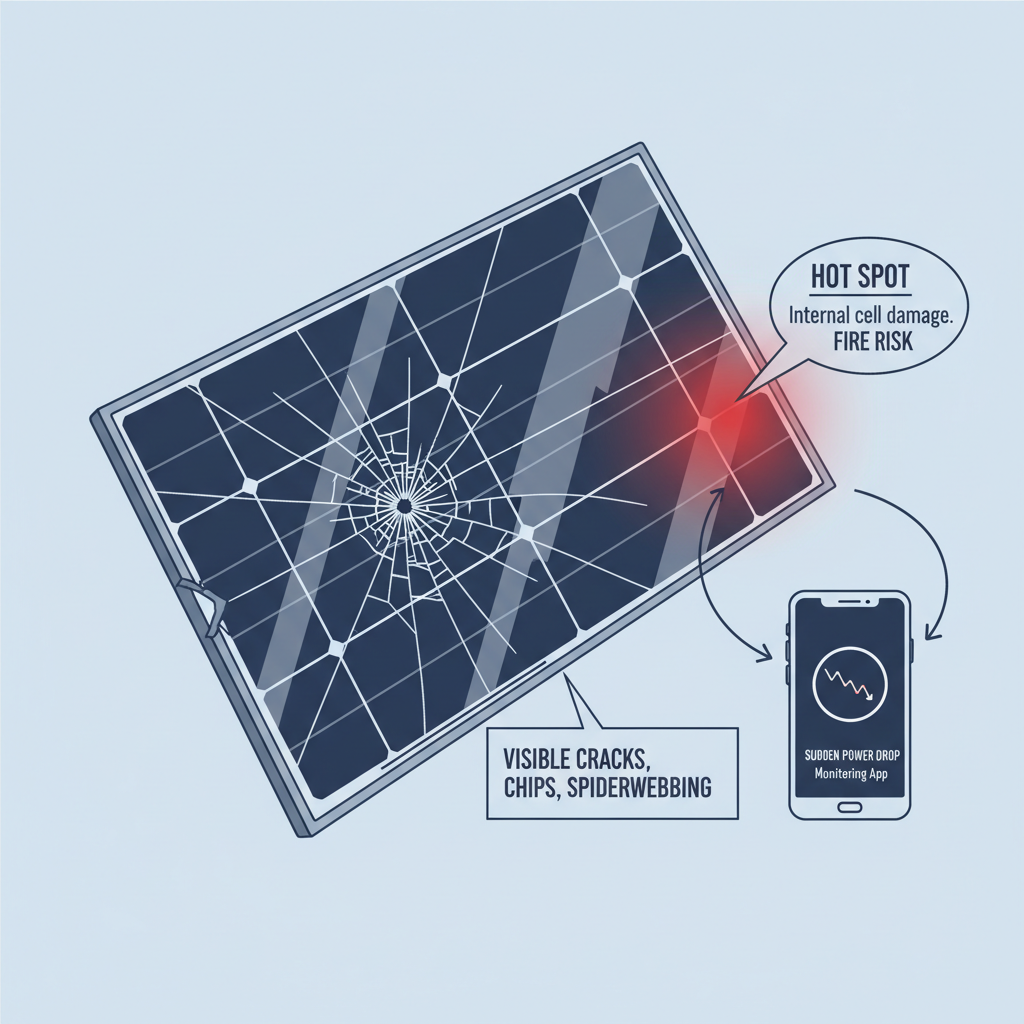
Common Symptoms
Possible Causes
Step-by-Step Diagnosis
Step 1
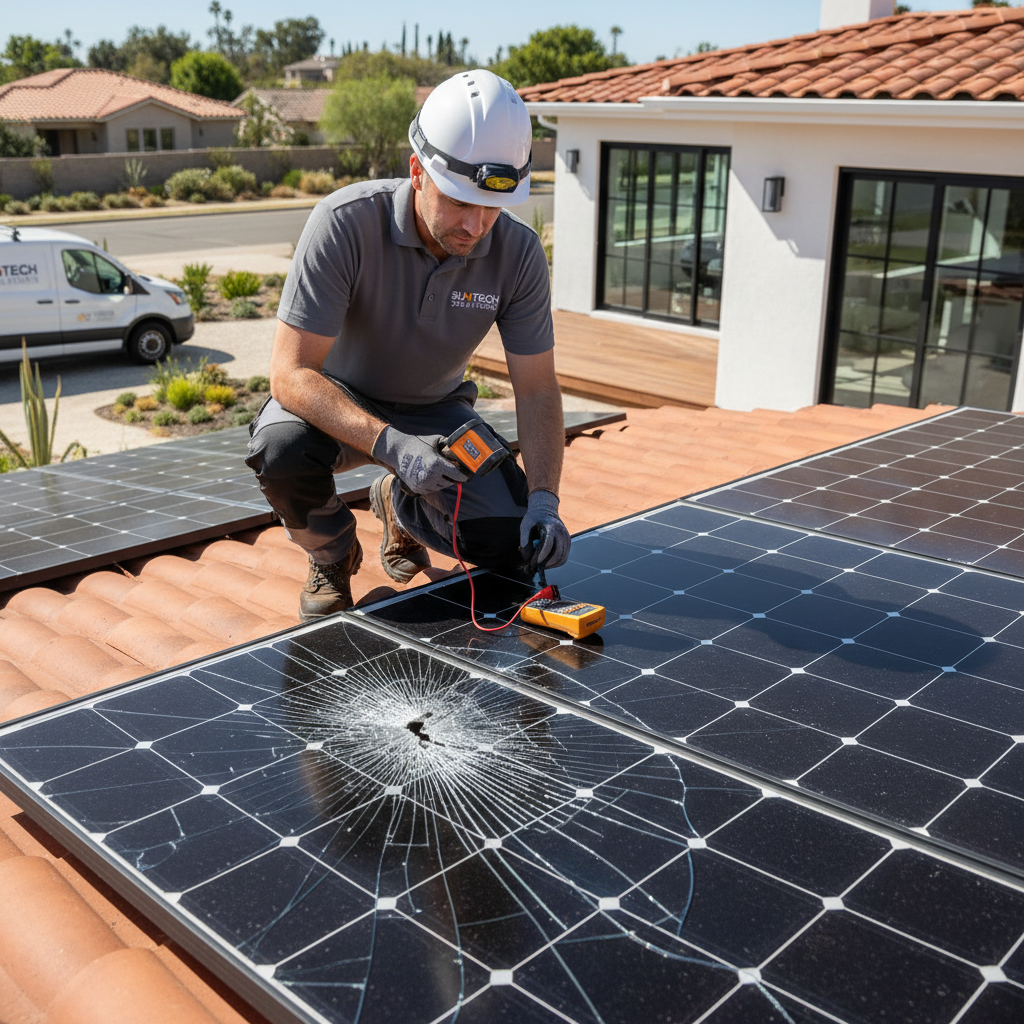
Start with a safe, thorough visual inspection of every panel on the roof, looking for obvious cracks or impact marks.
Step 2
Analyze your solar monitoring system's data for performance drops specific to one panel or a string of panels.
Step 3
If possible, use a thermal imaging camera on a sunny day to scan for hot spots, which indicate hidden internal damage.
Step 4
For advanced diagnosis, shut down the system and use a multimeter to check the panel's open-circuit voltage (Voc) and short-circuit current (Isc) against its factory specs.
DIY vs Professional Costs
| Repair Type | DIY Cost | Professional Cost | Time Required |
|---|---|---|---|
Temporary Chip Seal | $15-30 | N/A | < 1 hour |
Full Panel Replacement | $200-500+ (panel only) | $300 - $800+ | 2-3 hours |
System Diagnosis & Inspection | $0 (if you have tools) | $150 - $500 | 1-2 hours |
When to Call a Professional Solar
- If the crack is larger than a quarter or spiderwebs across the panel.
- When your monitoring system shows a noticeable drop in power production that you can't explain.
- If you see any burn marks, browning, or signs of melting on the panel.
- If your system is still under warranty, as a DIY repair will void it.
- Anytime you're not completely comfortable and equipped to work safely on your roof.
Prevention Tips
- Regularly trim tree branches that hang over or near your solar array to prevent them from falling during storms.
- Clean your panels annually and use that opportunity to visually inspect each one for small chips or developing cracks.
- Actively monitor your system's performance via the provided app; it's the best early-warning system you have.
- Ensure your system was installed by a reputable professional who uses a torque wrench to set clamps to the manufacturer's specifications.
Frequently Asked Questions
Related Guides
Your Solar App is Lying to You? (How to Manually Check Your Solar Production)
Solar monitoring app inaccurate? Your bill is high? A 25+ year tech shows you how to manually check your solar panels and inverter to find the real problem.
Solar battery backup fails to activate or provide electricity to a home during a utility grid outage, leading to a complete loss of power despite a solar-plus-storage system being installed and expected to operate during an outage. Troubleshooting & Fixes (2024 Guide)
Solar battery failed during a power outage? You're not alone. A veteran tech with 25+ years in the field shows you the common causes—from simple tripped breakers to a failed transfer switch—and what you can actually fix yourself.
Solar Panel Damage from Hail or Storms (Troubleshooting & Fixes)
Seeing hail damage on your solar panels or a drop in power? A 25+ year vet explains how to spot the problem, what to do, and when to call a pro.
Solar Monitoring App Not Working: Troubleshooting Communication Errors (2024 Guide)
Solar app not showing data? Get a veteran tech's guide to fixing communication errors yourself. Learn to reboot your system and fix connectivity issues fast.
Solar hot water system not heating water adequately, resulting in lukewarm or cold water. Troubleshooting & Fixes
Solar Inverter Error Code (Troubleshooting & Fixes)
Getting an error code on your solar inverter? A veteran tech with 25+ years of experience shows you how to troubleshoot the issue and figure out if it's a DIY fix or time to call a pro.
Need Professional Help?
Find top-rated solar experts in your area