Quick Answer
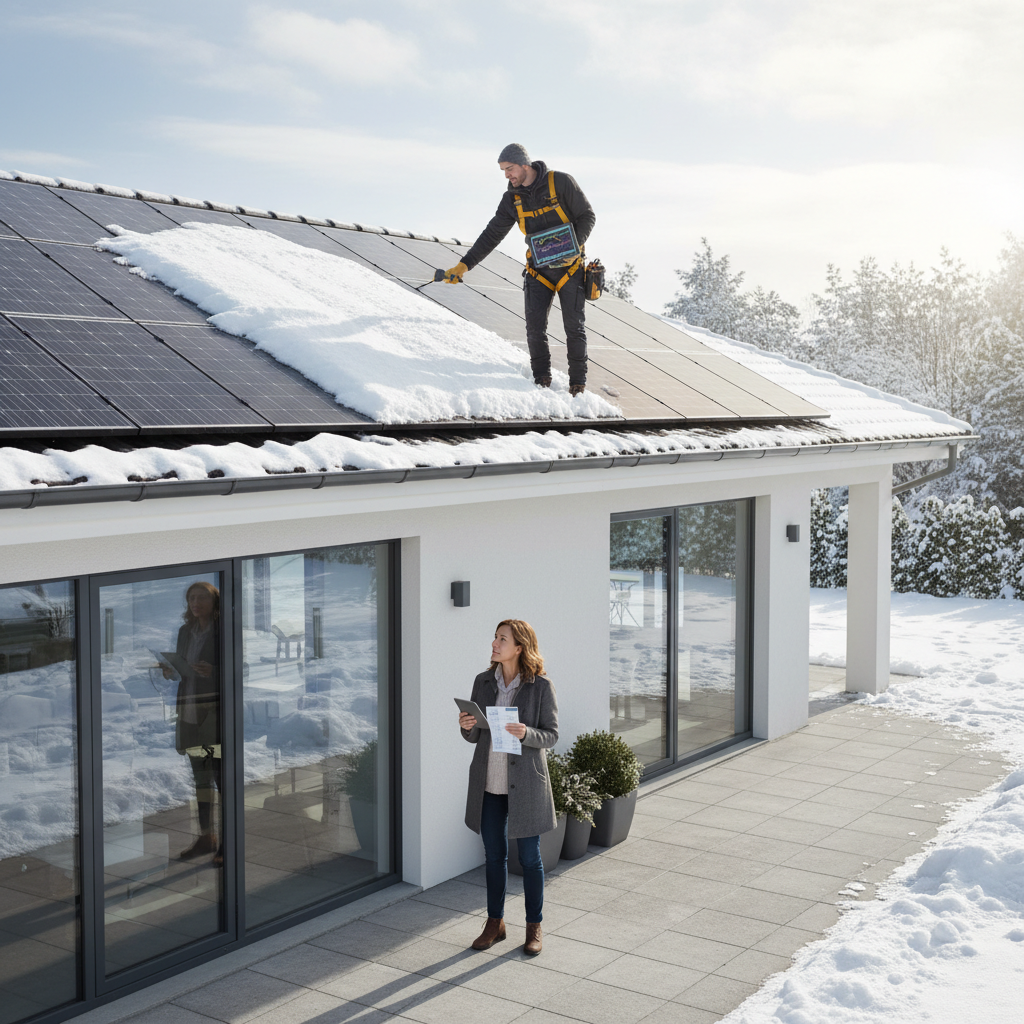
Okay, so here's the quick version. Snow on your solar panels is like a blackout curtain – no sun gets in, no power comes out. Most of the time, especially with a light dusting on a sunny day, they'll clear themselves. For heavier stuff, you can use a long-handled, soft-bristle brush, NOT a hard rake, to clear them from the ground. Be careful, a roof rake (the best tool for DIY snow removal) might cost you $50-$100. Calling a pro will run you $150-$450, but honestly, it’s the only safe bet for a steep or icy roof.
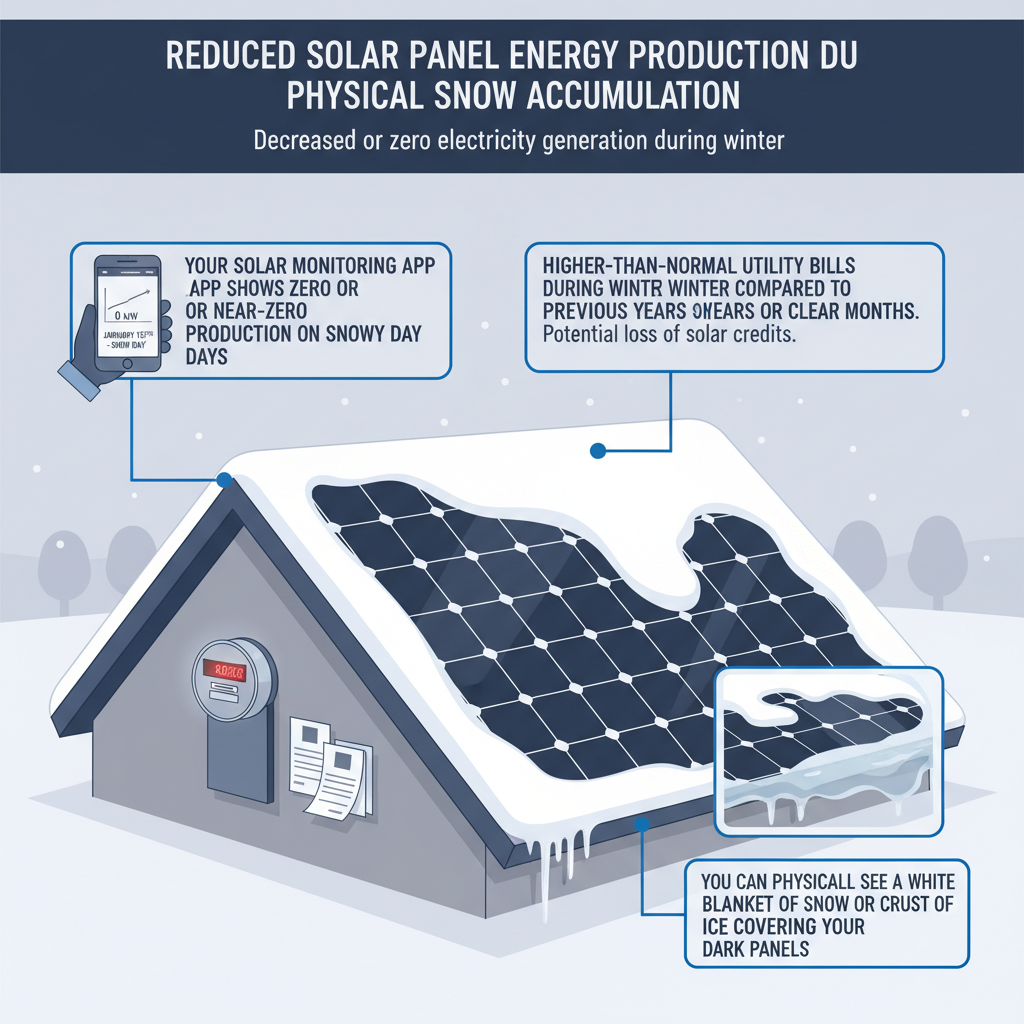
Common Symptoms
Possible Causes
Step-by-Step Diagnosis
Step 1
Open your solar monitoring app and compare the daily production graph from a snowy day to a recent clear, sunny day. A massive drop is your smoking gun.
Step 2
Walk outside and visually inspect the panels. Confirm that they are actually covered in snow. Note if it's the whole array or just the bottom edge.
Step 3
Check your main inverter (if you have a string inverter) for any red or orange fault lights. This ensures the problem isn't an unrelated equipment failure.
Step 4
Note the type of snow. Is it light powder you could blow off, or a heavy, icy mess? This determines your next move.
DIY vs Professional Costs
| Repair Type | DIY Cost | Professional Cost | Time Required |
|---|---|---|---|
Manual Removal (Light Snow, from Ground) | $0 - $50 | $100 - $250 | < 1 hour |
Manual Removal (Heavy Snow / Roof Access) | $100 - $300 (for GOOD safety gear) | $150 - $450 per visit | 1-3 hours |
Using a Leaf Blower (Powdery Snow) | $0 - $200 (if you need a blower) | N/A | < 30 mins |
When to Call a Professional Solar
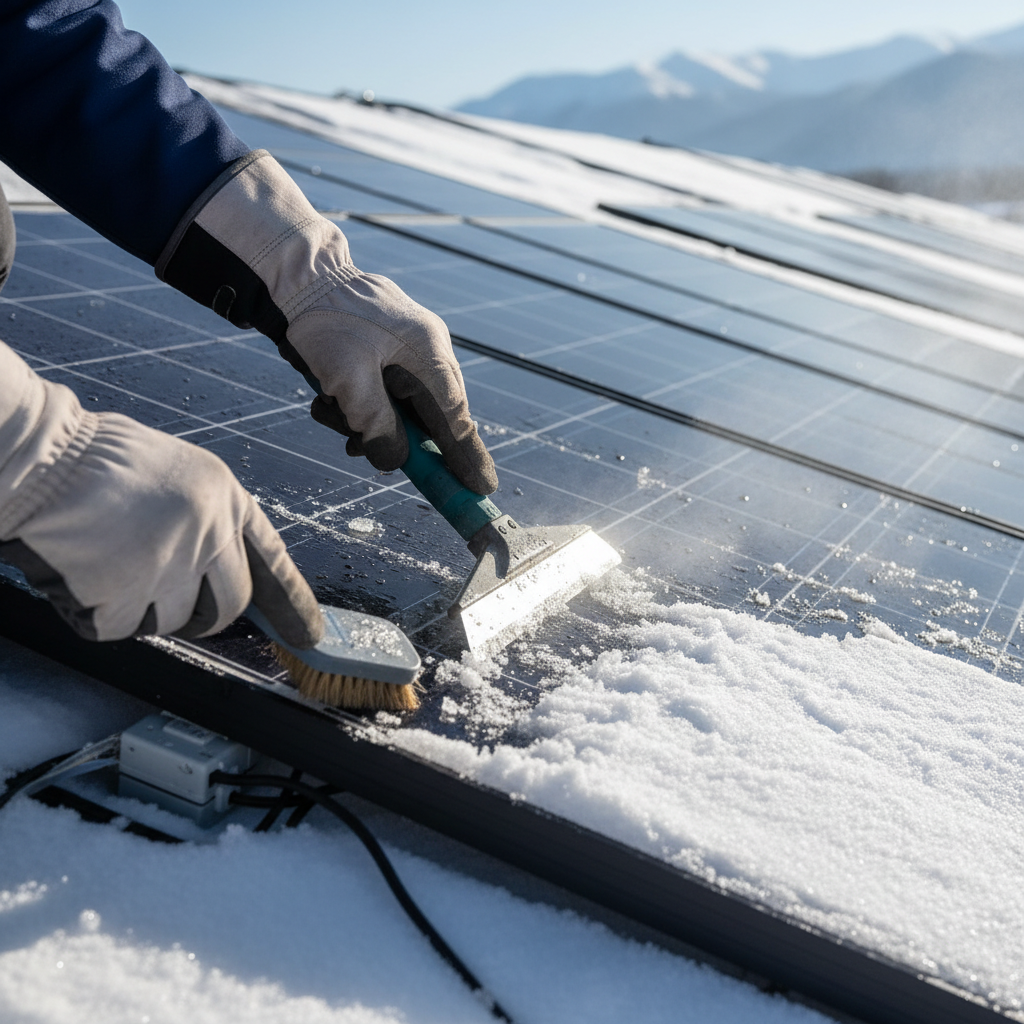
- The minute you see ice mixed in with the snow. Do not try to chip or scrape ice off your panels.
- If your house is two or more stories tall, making safe removal from the ground impossible.
- If you don't own or know how to properly use a fall-arrest safety harness and ladder stabilizers.
- If you clear the snow and your system still isn't producing power; this indicates a problem beyond just the snow cover.
Prevention Tips
- During installation, insist on the steepest tilt angle your roof and local regulations allow, preferably 30-45 degrees, to encourage snow to slide off.
- If you live in a region with heavy snowfall, seriously consider a ground-mounted system for incredibly easy and safe cleaning.
- Ensure the installer leaves at least a 6-inch gap between the bottom of the panels and the roof deck to prevent snow dams from forming.
- Monitor weather forecasts. If you're expecting a big storm, it's easier to clear a few inches of fresh snow than a foot of compacted, icy snow later.
Frequently Asked Questions
Related Guides
Your Solar App is Lying to You? (How to Manually Check Your Solar Production)
Solar monitoring app inaccurate? Your bill is high? A 25+ year tech shows you how to manually check your solar panels and inverter to find the real problem.
Solar battery backup fails to activate or provide electricity to a home during a utility grid outage, leading to a complete loss of power despite a solar-plus-storage system being installed and expected to operate during an outage. Troubleshooting & Fixes (2024 Guide)
Solar battery failed during a power outage? You're not alone. A veteran tech with 25+ years in the field shows you the common causes—from simple tripped breakers to a failed transfer switch—and what you can actually fix yourself.
Solar Panel Damage from Hail or Storms (Troubleshooting & Fixes)
Seeing hail damage on your solar panels or a drop in power? A 25+ year vet explains how to spot the problem, what to do, and when to call a pro.
Solar Monitoring App Not Working: Troubleshooting Communication Errors (2024 Guide)
Solar app not showing data? Get a veteran tech's guide to fixing communication errors yourself. Learn to reboot your system and fix connectivity issues fast.
Solar hot water system not heating water adequately, resulting in lukewarm or cold water. Troubleshooting & Fixes
Solar Inverter Error Code (Troubleshooting & Fixes)
Getting an error code on your solar inverter? A veteran tech with 25+ years of experience shows you how to troubleshoot the issue and figure out if it's a DIY fix or time to call a pro.
Need Professional Help?
Find top-rated solar experts in your area