Quick Answer
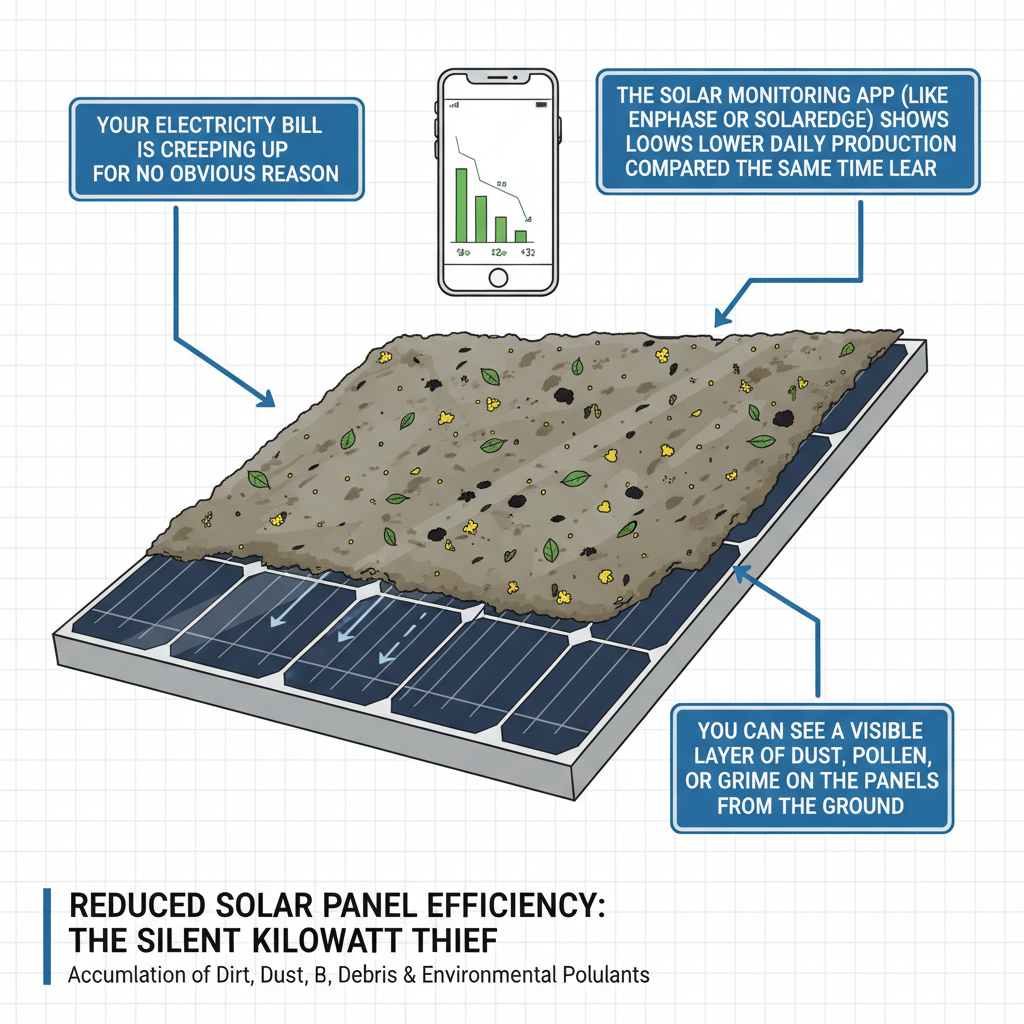
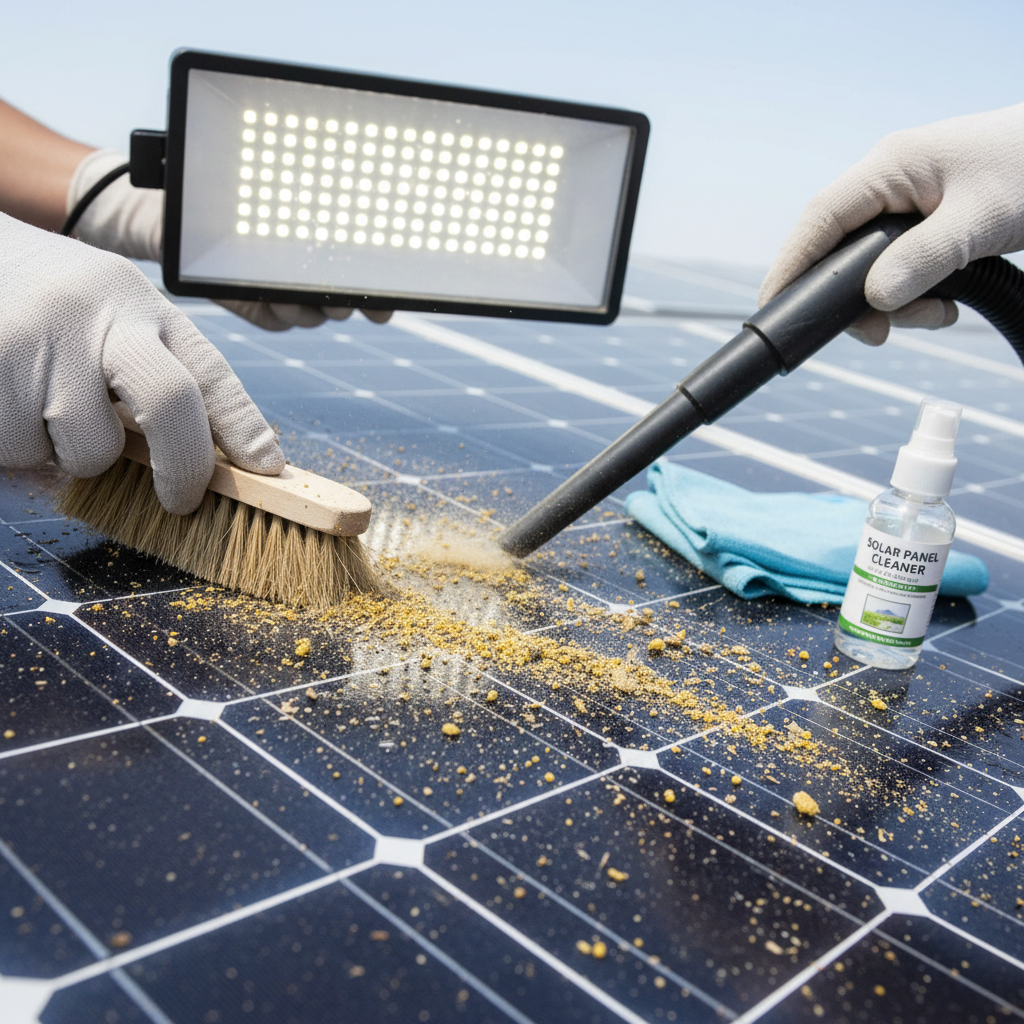
All that dust, pollen, and bird gunk is blocking light and costing you money. Most of the time, a good cleaning is all you need. If you can reach 'em safely from the ground, you can do it yourself for under $50 with a hose and a soft brush. If they're on a steep roof or require specialized equipment, you're better off paying a pro, which'll run you typically $100 to $400 for a standard residential system, depending on access and system size.
Common Symptoms
Possible Causes
Step-by-Step Diagnosis
Step 1
Compare current energy production in your monitoring app to historical data from the same period in a previous year. A drop of 10% or more is a red flag.
Step 2
Visually inspect the panels from the ground. Look for a hazy film, obvious streaks, bird droppings, or leaf litter.
Step 3
Check your system's output on a sunny day before a forecasted heavy rain, and then again on the sunny day after the rain. A significant jump in production confirms that cleaning helps.
Step 4
Take note of any new environmental factors like nearby construction, increased traffic, or seasonal pollen that could be the source of the grime.
DIY vs Professional Costs
| Repair Type | DIY Cost | Professional Cost | Time Required |
|---|---|---|---|
Manual cleaning with water and soft brush (ground accessible panels) | $0-$50 | $100-$200 | 1-2 hours |
Cleaning using a soft brush extension pole with water (for higher panels) | $30-$100 | $200-$400 | 2-3 hours |
Professional cleaning for difficult access or baked-on grime | Not Recommended | $300-$600+ | 3-4 hours |
When to Call a Professional Solar
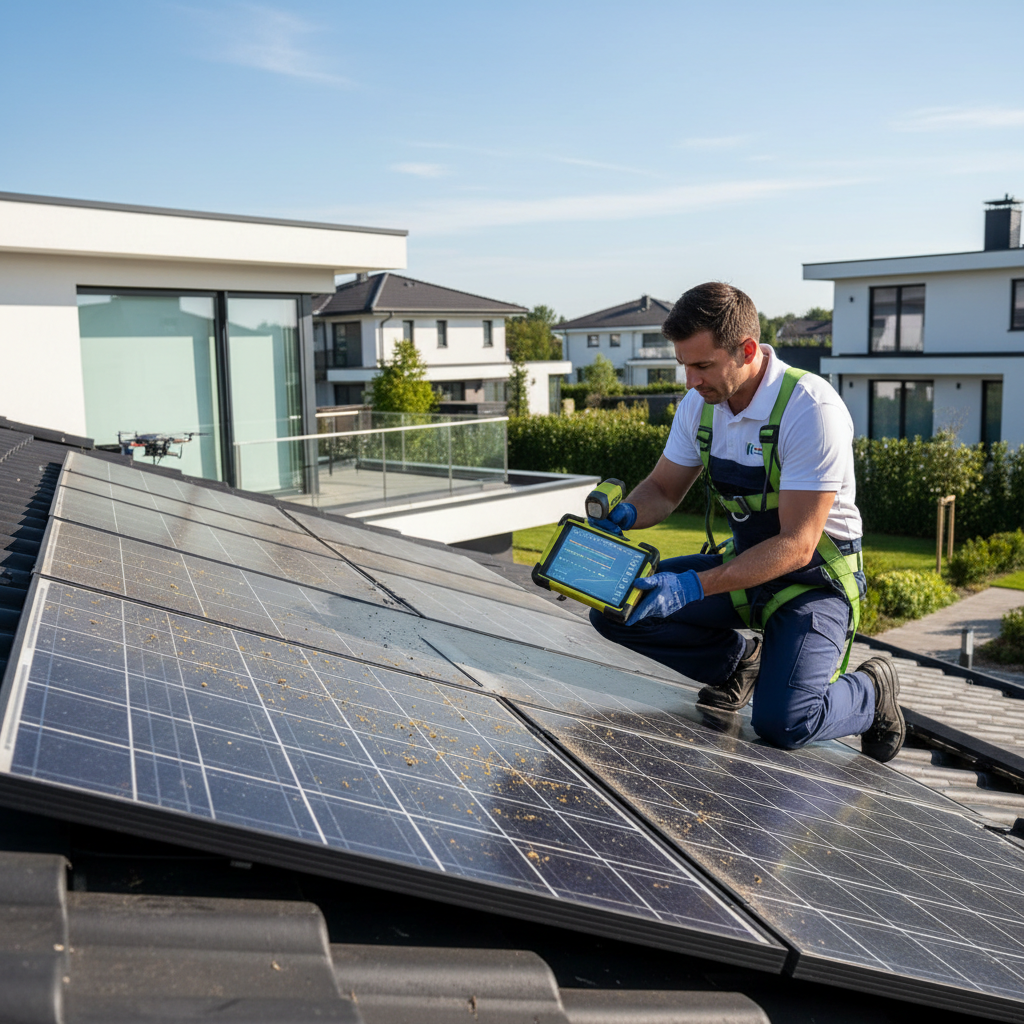
- Your panels are on a second story or a steep-pitched roof that is unsafe to walk on without proper safety equipment.
- You've tried cleaning them yourself but the production numbers on your monitoring app are still lower than they should be.
- The grime is thick, oily, or baked-on (like from industrial soot or heavy, old bird droppings) and a simple rinse isn't working.
- You don't own or feel comfortable using a long extension pole and don't have the proper safety gear for working at heights.
Prevention Tips
- Do a quick visual inspection of your panels from the ground once a month.
- Trim back any tree branches that hang over or near your solar array to reduce debris and bird perching spots.
- Regularly check your solar monitoring app to get a feel for baseline production and spot dips early.
- If you live in a very dusty or polluted area, plan for a cleaning right after the worst part of the season (e.g., after spring pollen season).
Frequently Asked Questions
Related Guides
Your Solar App is Lying to You? (How to Manually Check Your Solar Production)
Solar monitoring app inaccurate? Your bill is high? A 25+ year tech shows you how to manually check your solar panels and inverter to find the real problem.
Solar battery backup fails to activate or provide electricity to a home during a utility grid outage, leading to a complete loss of power despite a solar-plus-storage system being installed and expected to operate during an outage. Troubleshooting & Fixes (2024 Guide)
Solar battery failed during a power outage? You're not alone. A veteran tech with 25+ years in the field shows you the common causes—from simple tripped breakers to a failed transfer switch—and what you can actually fix yourself.
Solar Panel Damage from Hail or Storms (Troubleshooting & Fixes)
Seeing hail damage on your solar panels or a drop in power? A 25+ year vet explains how to spot the problem, what to do, and when to call a pro.
Solar Monitoring App Not Working: Troubleshooting Communication Errors (2024 Guide)
Solar app not showing data? Get a veteran tech's guide to fixing communication errors yourself. Learn to reboot your system and fix connectivity issues fast.
Solar hot water system not heating water adequately, resulting in lukewarm or cold water. Troubleshooting & Fixes
Solar Inverter Error Code (Troubleshooting & Fixes)
Getting an error code on your solar inverter? A veteran tech with 25+ years of experience shows you how to troubleshoot the issue and figure out if it's a DIY fix or time to call a pro.
Need Professional Help?
Find top-rated solar experts in your area