Quick Answer
Okay, so here's the quick version. Your concrete countertop is acting like a sponge 'cause the sealer is shot. It's either worn off or maybe the installer cheaped out and barely put any on. The fix is to clean it real good and re-seal it. You can do it yourself for probably $50 to $130 in materials and a weekend of your time. If you mess it up, though, it can look blotchy. Hiring a pro will run you anywhere from $200 to $500, but they'll get it right the first time. It's your call.
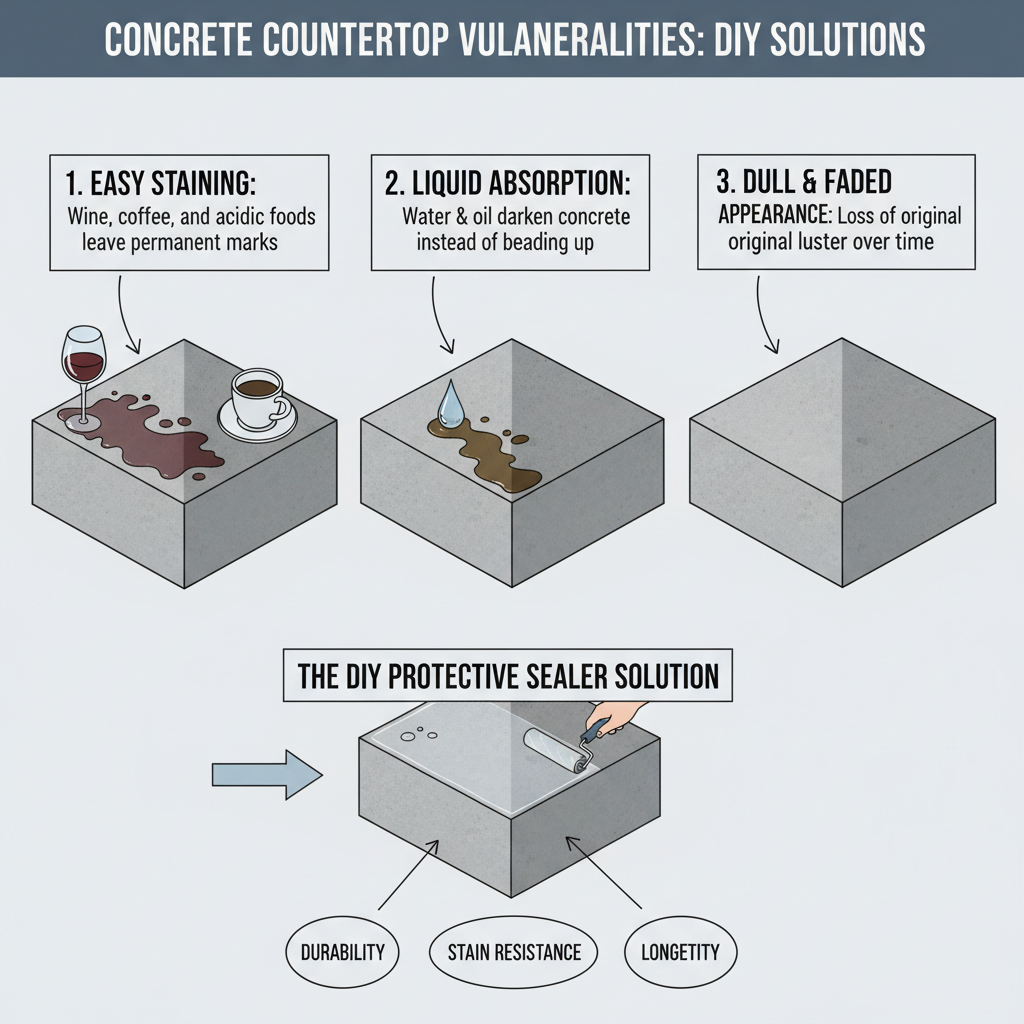
Common Symptoms
Possible Causes
Step-by-Step Diagnosis
Step 1
Visual Inspection - Examine the countertop for visible stains, dull spots, etching, or areas where the color appears uneven or darker than others.
Step 2
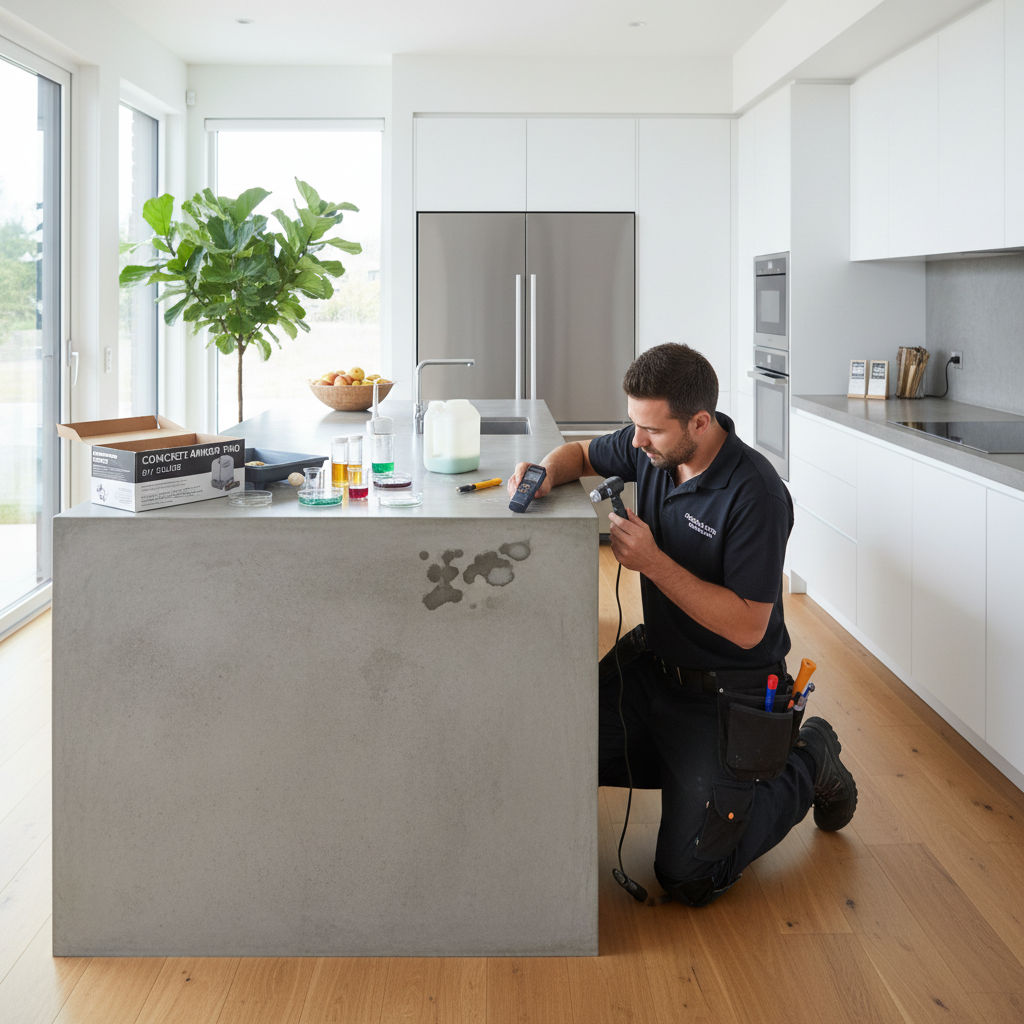
Water Bead Test - Sprinkle a few drops of water onto different areas of the countertop surface. Observe if the water beads up (indicating an effective seal) or if it soaks into the concrete and darkens the surface within a few minutes (indicating the need for re-sealing).
Step 3
Oil Absorption Test - In a discreet area, apply a small drop of cooking oil. If the oil quickly darkens the concrete, it confirms high porosity and a compromised or absent seal.
Step 4
Assess Usage - Consider the age of the existing sealer (if any) and the frequency of use and cleaning to estimate sealer wear.
DIY vs Professional Costs
| Repair Type | DIY Cost | Professional Cost | Time Required |
|---|---|---|---|
Sealing Concrete Countertops | $43 - $135 | $200 - $500 | 2 days (mostly drying) |
When to Call a Professional Countertops
- If the concrete countertop has significant existing damage such as deep stains, extensive etching, or cracks that require repair before sealing.
- If you are uncomfortable with DIY tasks, lack the necessary tools or time, or prefer the assurance of professional workmanship.
- If a specialized, high-performance, or industrial-grade food-safe sealer is desired that may require specific application techniques.
- For very large or complex countertop installations where precise, even application is critical and difficult for a DIYer.
- If the countertop is newly installed and professional sealing is required to maintain a warranty.
Prevention Tips
- Regularly clean spills immediately, especially acidic liquids (e.g., lemon juice, vinegar, wine, coffee) to prevent etching and staining.
- Use pH-neutral cleaners designed for sealed surfaces; avoid harsh chemicals, abrasive pads, or ammonia/bleach-based products that can degrade the sealer.
- Always use cutting boards for chopping and trivets or hot pads for hot pots and pans to protect against scratches and heat damage.
- Perform the water bead test periodically (e.g., every 6-12 months) and reapply sealer as needed, typically every 1-3 years depending on usage and sealer type.
- Consider applying a food-safe wax or polish periodically for an extra layer of protection and to enhance the shine of the countertop.
Frequently Asked Questions
Related Guides
Sealing Porous Concrete Countertops (Troubleshooting & Fixes)
A veteran tech's guide to fixing porous concrete countertops. Learn how to diagnose a bad seal and apply a new one to prevent stains and etching.
Failure to adequately prepare the kitchen space and existing infrastructure before the arrival and installation of new countertops, leading to delays, complications, and potential additional costs. Troubleshooting & Fixes (2024 Guide)
New countertops coming? Don't let your installer walk out. Here's my 25-year guide on prepping your kitchen right to avoid delays, extra fees, and headaches.
Ripping Out Old Countertop Caulk & Grout (Troubleshooting & Fixes)
Tired of that ugly, cracked caulk around your countertops? A 25-year vet shows you how to rip that old stuff out the right way and stop water damage cold.
Need Professional Help?
Find top-rated countertops experts in your area