Quick Answer
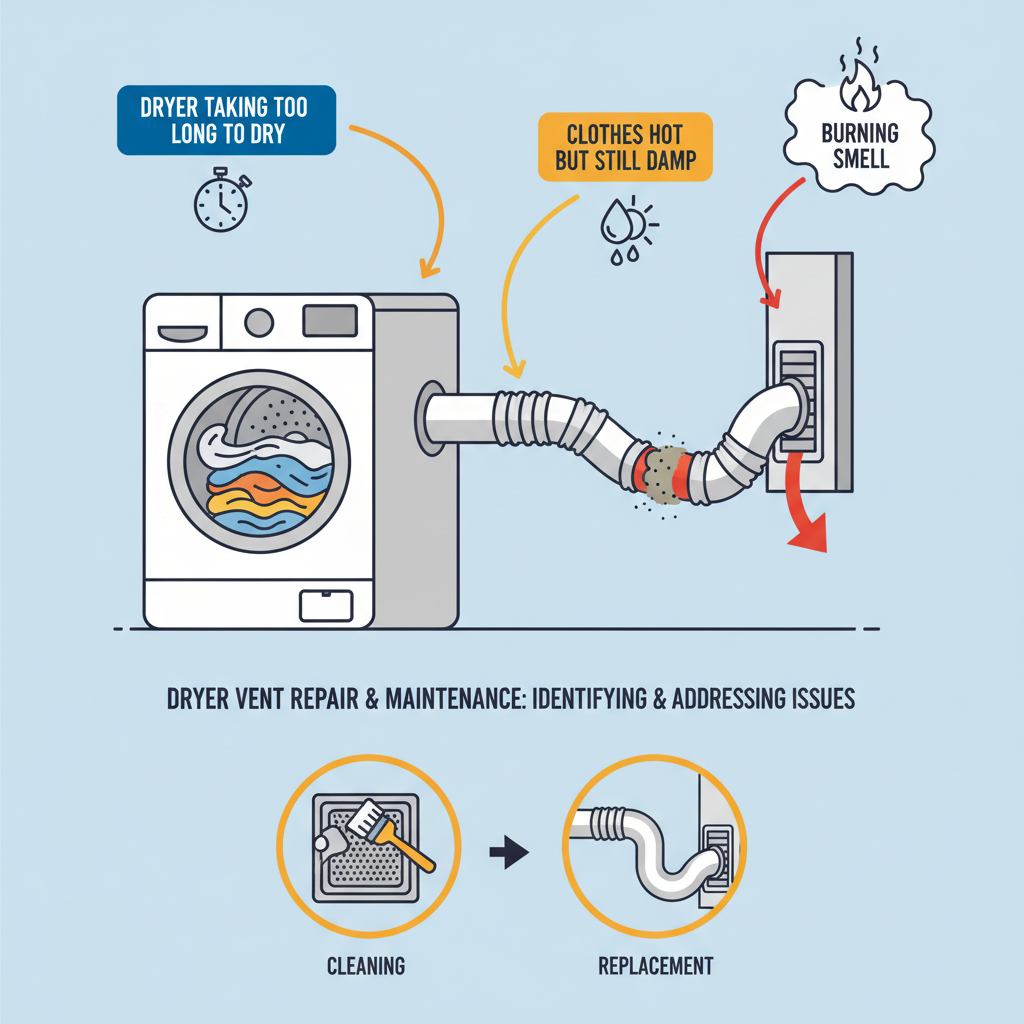
Okay, so here's the quick version. Your dryer's not drying right, and you're probably getting worried. Good. You should be. Nine times out of ten, it's just a dryer vent clogged solid with lint, which is a massive fire hazard. You can try cleaning the easy parts yourself for maybe $20-50 for a brush kit and some proper UL-listed foil tape. But if the clog is deep, the vent is crushed, or it's a long, complicated run, you're looking at calling a pro. That'll run you anywhere from $100 for a cleaning to $800+ if we have to replace the whole line, depending on complexity. Don't mess around with this; a clogged dryer vent is a serious fire risk.
Common Symptoms
Possible Causes
Step-by-Step Diagnosis
Step 1
Clean your lint trap thoroughly. Not just pulling the lint off, but washing it with soap and water to remove invisible residue from dryer sheets.
Step 2
Unplug the dryer and pull it out from the wall. Inspect the flexible hose for any kinks, crushes, or holes. Disconnect it and check for blockages inside both the hose and the dryer's exhaust port.
Step 3
Go outside while the dryer is running. Check the exterior vent cap to see if the flap is opening and if you feel strong, warm airflow. Weak or no airflow means you have a blockage.
Step 4
If you can see the ductwork in your basement or attic, visually inspect the entire length for sags, disconnected joints, or damage like screws driven through the pipe.
Step 5
For a more aggressive DIY approach, use a leaf blower on the indoor side of the duct to try and force the clog out the exterior vent. A large burst of lint means you've found the issue.

DIY vs Professional Costs
| Repair Type | DIY Cost | Professional Cost | Time Required |
|---|---|---|---|
Basic Cleaning (Lint Trap, visible hose) | $0 - $10 | Not applicable | 15 minutes |
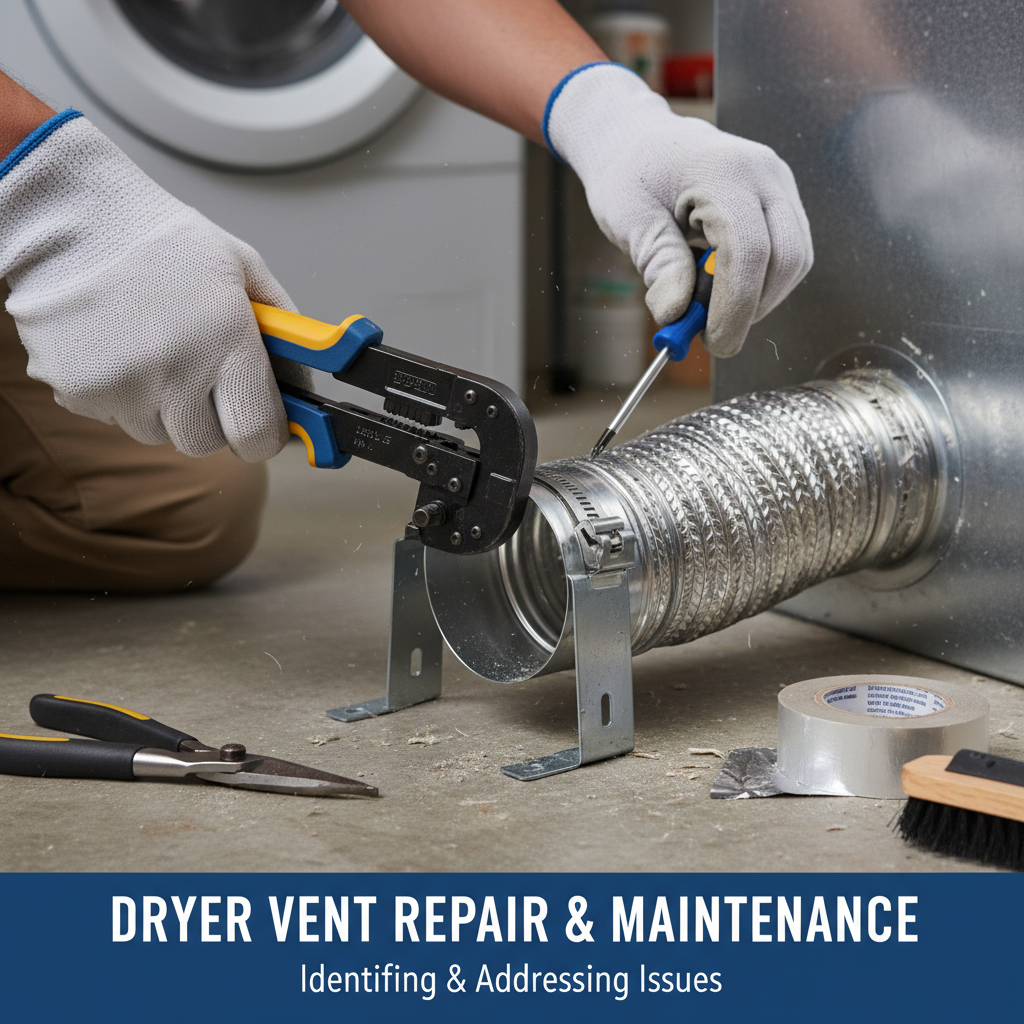
Replacing flexible hose w/ semi-rigid metal | $20 - $40 | $100 - $200 | 1 hour |
Full Vent Cleaning (with rotary brush kit) | $30 - $70 | $100 - $250 | 1-2 hours |
Repairing a disconnected/damaged section | $15 - $50 | $150 - $350 | 1-3 hours |
Full vent replacement or re-routing | Not Recommended | $300 - $800+ | 4-8+ hours |
When to Call a Professional Dryer Vent
- If the vent run is long and inaccessible, going through an attic, crawlspace, or inside walls.
- If the vent exits through the roof. Don't risk a fall; call someone with the right equipment and insurance.
- If you've tried using a DIY brush kit and it gets stuck in the vent line.
- If you have a gas dryer and smell gas, which could indicate a serious problem with the appliance or venting.
- When a strong burning smell continues even after you've cleaned the accessible parts of the vent.
- If you suspect a pest infestation, like a bird's nest, is deep inside the line and requires removal.
Prevention Tips
- Clean the lint filter after every single load. No excuses. It's the single most important thing you can do.
- Replace any white vinyl or flimsy foil flexible ducting with a proper semi-rigid or rigid metal vent system.
- Once a month, go outside and check your exterior vent cap. Clear away any accumulated lint and make sure the damper flap moves freely.
- Ensure your dryer vent run is as short and has as few bends as possible for optimal airflow.
- Schedule a professional cleaning every 1-2 years, especially if you have a long vent run or a large family that does a lot of laundry.
- Pull your dryer away from the wall every six months to inspect the transition duct for kinks and ensure it's securely connected.
Frequently Asked Questions
Related Guides
Clogged Dryer Vent? Signs, Fixes & Fire Prevention (2024 Homeowner's Guide)
Is your dryer taking too long or getting too hot? Learn to identify a clogged dryer vent, diagnose common issues, and implement DIY fixes or know when to call a pro to prevent fire hazards and save energy. Your ultimate guide to a safe and efficient dryer.
Dryer Vent Blockage: Troubleshooting, Cleaning, and Fire Prevention Guide
Is your dryer taking too long or getting too hot? Learn how to identify, diagnose, and fix dryer vent blockages to improve efficiency, save energy, and crucially, prevent house fires. This comprehensive guide covers symptoms, causes, cleaning tips, and when to call a pro for home dryer vent maintenance.
Dryer Vent Troubleshooting: Fix Slow Drying, Overheating, & Fire Hazards
Troubleshoot common dryer vent problems like slow drying times and overheating. This expert guide offers DIY fixes for clogged vents, tips for preventing lint buildup, and advice on when to call a professional for dryer vent cleaning and repairs to ensure home safety and appliance efficiency.
Dryer Vent Making Unusual Noises (Thumping, Rumbling, Squealing, Grinding) Troubleshooting & Fixes (2024 Guide)
A veteran tech explains why your dryer vent is thumping, rumbling, or squealing. Learn the causes, how to fix it, and when to call a pro before it gets worse.
Troubleshooting & Fixing a Damaged Dryer Vent Hose & Ducting
Comprehensive guide to troubleshooting, repairing, and replacing a damaged dryer vent hose or ducting. Learn how to diagnose symptoms, identify causes, perform DIY repairs using the right materials, and implement critical prevention tips to enhance dryer efficiency, reduce energy costs, and prevent dangerous fire and carbon monoxide hazards.
Dryer Vent Nightmares: A Veteran Tech's Guide to Troubleshooting & Fixes (2024)
Are your clothes still damp after an hour? A clogged dryer vent is a serious fire hazard. Here's a veteran tech's no-nonsense guide to finding and fixing the problem.
Need Professional Help?
Find top-rated dryer vent experts in your area