Quick Answer
If your indoor or outdoor fan isn't spinning, check these common issues. First, a tripped circuit breaker. Resetting it might be all you need. Second, a severely clogged air filter can restrict airflow and overheat the blower motor, potentially shutting it down. Check and replace your filter if it's dirty. Third, and most frequently, a faulty run capacitor. This component helps start and run the motor. A new capacitor is typically $15-50. Be very cautious when handling a capacitor as it can store a dangerous electrical charge even after power is off. Professional replacement usually costs $150-350, including parts and labor. These three issues account for a large majority of fan-related problems.
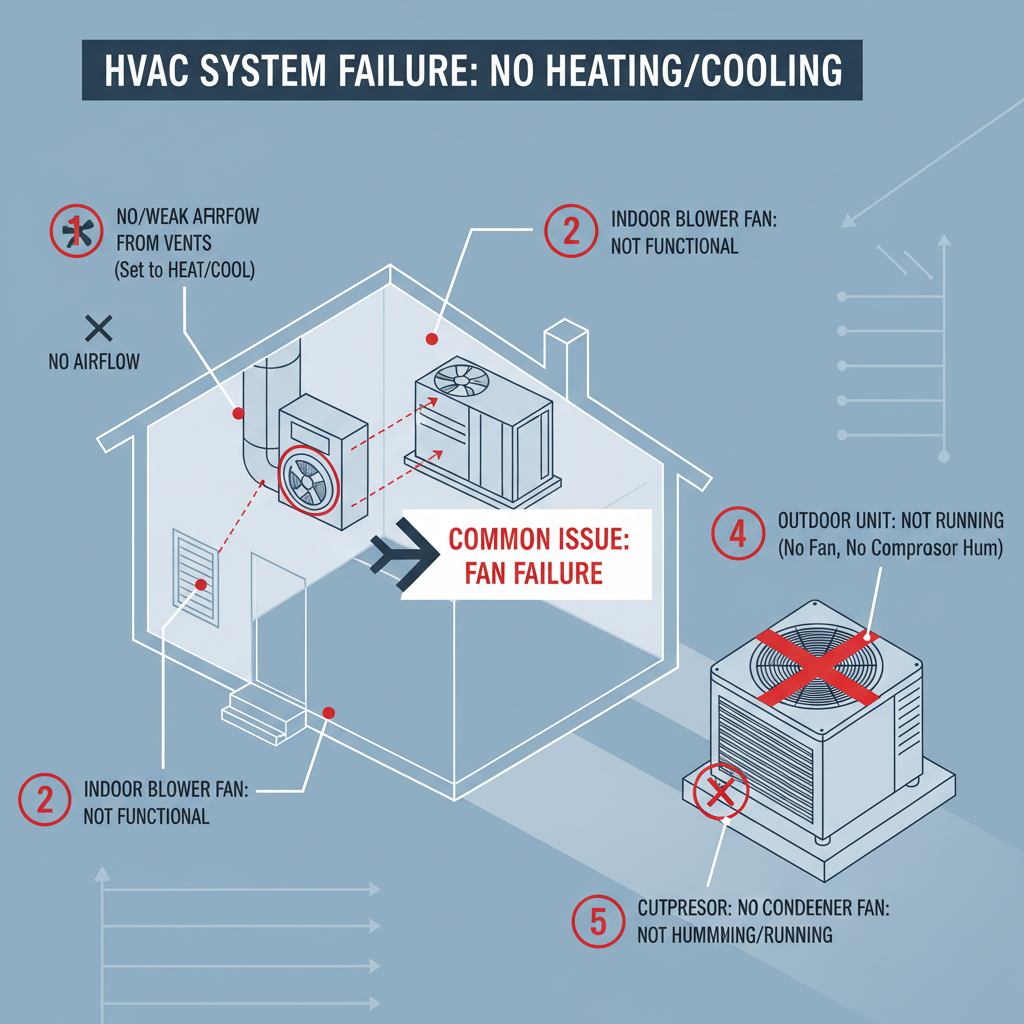
Common Symptoms
Possible Causes
Step-by-Step Diagnosis
Step 1
Check Thermostat Settings: Ensure it's set to 'Cool' or 'Heat' and 'Auto' or 'On' for the fan, with temperature set appropriately. Replace thermostat batteries if applicable.
Step 2
Check Circuit Breakers: Locate your electrical panel and verify that the breakers for your indoor and outdoor HVAC units are not tripped. Reset if necessary (once only).
Step 3
Inspect Air Filter: Locate and inspect the air filter. A severely clogged filter can restrict airflow and strain the blower motor, causing it to overheat. Replace if dirty.
Step 4
Listen to the System: With power restored, listen for hums, clicks, or any sounds indicating power is reaching components, especially a loud hum from the outdoor unit without fan movement.
Step 5
Power Cycle the System: Turn off all power to the HVAC system at the main breaker for 5-10 minutes, then restore power to reset control boards.
Step 6
Visually Inspect Outdoor Unit (POWER OFF): LATCH OFF the power at the breaker. Remove the access panel. Look for obvious signs of damage, blockages (debris, leaves), or a swollen/leaking capacitor.
Step 7
Manually Spin Outdoor Fan (POWER OFF): With power LATCHED OFF, use a stick or gloved hand to gently try and spin the outdoor fan blades. If they don't spin freely, bearings may be seized or there's an obstruction.
Step 8
Visually Inspect Indoor Blower (POWER OFF): LATCH OFF the power. Open the access panel to the air handler/furnace. Inspect the blower wheel for excessive dirt/debris and look for any obstructions or burnt wires.
Step 9
Test Capacitor (REQUIRES MULTIMETER & ELECTRICAL KNOWLEDGE, POWER OFF FIRST): With power off and capacitor safely discharged, use a multimeter to test its capacitance (µF) against the specified value. Replace if significantly out of tolerance.
DIY vs Professional Costs
| Repair Type | DIY Cost | Professional Cost | Time Required |
|---|---|---|---|
Changing Air Filter | $10 - $30 | $75 - $150 (part of service call) | 5 minutes |
Replacing a Fan Capacitor | $15 - $50 | $150 - $350 | 30-60 minutes |
Replacing a Contactor | $20 - $60 | $150 - $400 | 45-75 minutes |
Replacing an Outdoor Fan Motor | $150 - $300 | $300 - $700 | 1-2 hours |
Replacing an Indoor Blower Motor | $200 - $600+ | $400 - $1200+ | 2-4 hours |
When to Call a Professional Hvac
- You've checked the easy stuff (thermostat, filter, breaker) and the fans still won't run.
- You hear loud grinding, screeching, or banging noises from either unit. Shut it down immediately.
- You smell a distinct electrical burning odor, which could indicate a motor burning out.
- The circuit breaker trips immediately after you reset it.
- You are not comfortable or knowledgeable about safely discharging capacitors and working with high-voltage electricity.
- The fan motor is physically seized and won't turn by hand (with the power off).
Prevention Tips
- Regularly change or clean your HVAC air filter (every 1-3 months).
- Keep the outdoor condenser unit clear of debris, plants, and obstructions by at least two feet.
- Schedule annual professional HVAC maintenance (tune-ups) to catch issues like weak capacitors early.
- Ensure proper airflow around both indoor and outdoor units.
- Consider installing a surge protector specifically for your HVAC system to protect the electronics.

Frequently Asked Questions
Related Guides
Furnace Ignitor Not Glowing? Troubleshooting & Fixes from a 25-Year Pro
Furnace ignitor not glowing? A 25-year HVAC pro explains common causes, DIY diagnosis steps, and how to fix a faulty furnace ignitor. Learn to troubleshoot, replace the ignitor, and know when to call for professional furnace repair.
Furnace Making Various Strange Noises? Troubleshooting & Fixes from a 25-Year Vet
Furnace making strange noises? A veteran HVAC tech explains what banging, whistling, or rattling means and how to fix it. DIY tips and when to call a pro.
AC Unit Making Loud Noises? Identify the Sound & Fix It
Hearing banging, screeching, or rattling from your AC unit? A veteran tech explains the causes and how to fix it, from DIY tips to when to call a pro.
HVAC system short cycling (heat pump or AC unit starts and stops frequently, running for less than 15-20 minutes at a time) Troubleshooting & Fixes
Fix your HVAC system's short cycling problem! This comprehensive guide helps you diagnose and solve why your AC or heat pump turns on and off too frequently, preventing high energy bills and system damage. Learn DIY checks and when to call a pro.
AC Unit Leaking Water: Troubleshooting Guide & Real Fixes for Indoor & Outdoor Leaks
Is your AC unit leaking water indoors or outdoors? Discover common causes like clogged drains and frozen coils, and get expert troubleshooting steps & real fixes to stop the leak and prevent damage.
HVAC Fan Not Working? Troubleshooting Your Indoor Blower or Outdoor Condenser Fan (2024 Guide)
HVAC fan not spinning? This guide offers 25+ years of expert advice on troubleshooting and fixing non-functional indoor blower or outdoor condenser fans, covering common causes like bad capacitors or tripped breakers to restore your heating and cooling.
Need Professional Help?
Find top-rated hvac experts in your area