Quick Answer
Okay, so you got fillers and now you look like you went a few rounds in a boxing ring. Don't panic. It's almost always normal. Swelling and bruising happen when the needle nicks tiny blood vessels. Here's the quick version: Ice is your best friend. Get a soft cold compress on there for 10 minutes on, 10 minutes off. Pop some Arnica tablets, maybe some Bromelain from pineapple extract. And sleep with your head propped up on a couple pillows. It'll mostly clear up in a few days to a week. If it gets worse, looks weird, or hurts like hell, you call your injector. Immediately.
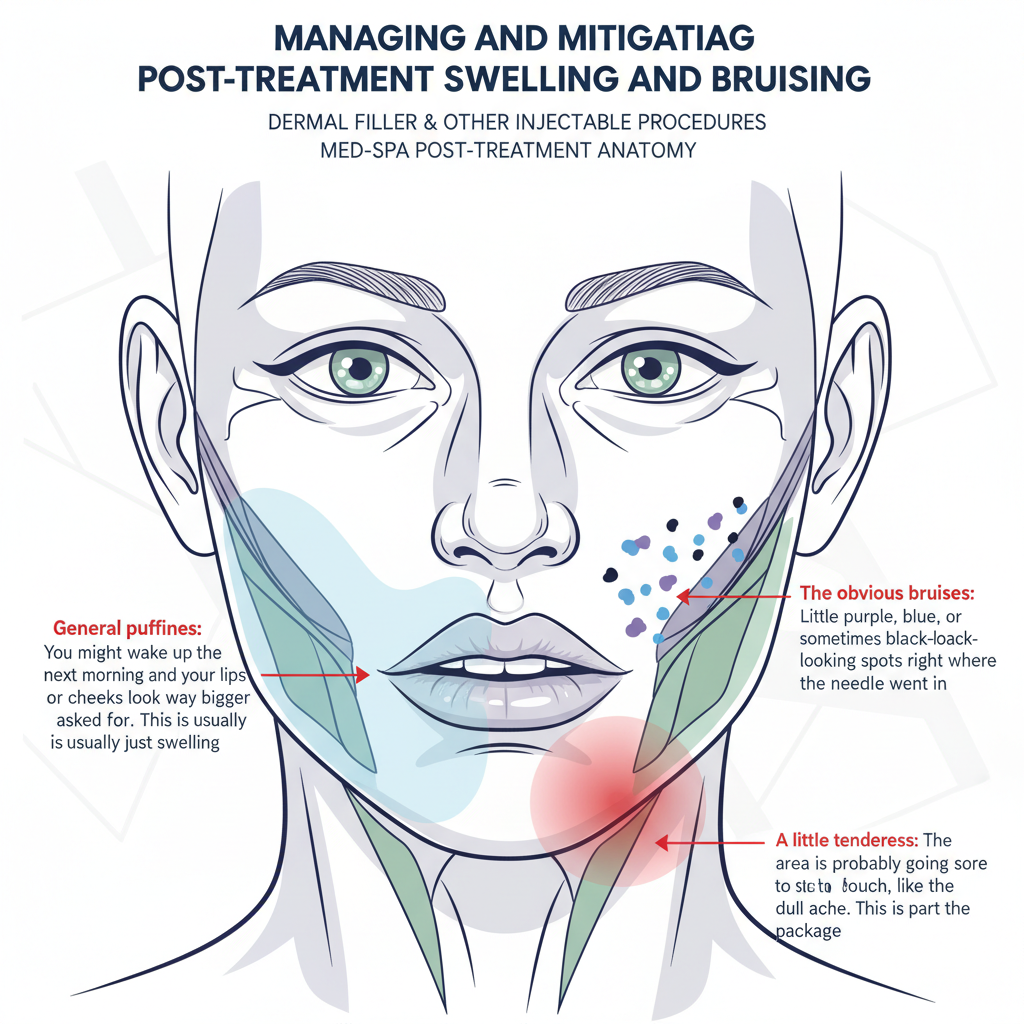
Common Symptoms
Possible Causes
Step-by-Step Diagnosis
Step 1
First, take a deep breath and a picture in good lighting. Use photos to track your progress day by day.
Step 2
Look at the area. Is it just blue/purple/yellowish bruising and some general puffiness? That's normal.
Step 3
Gently touch the area. If it's just tender, that's fine. If it's rock hard, very hot, or the pain is getting worse, that's a red flag.
Step 4
Be honest with yourself about your pre-care. Did you avoid all the blood thinners on the list you were given? If not, you're likely seeing the consequences.
Step 5
Critically, look for signs of vascular occlusion. Is the skin around the bruise turning pale, white, or into a dusky, web-like pattern? If so, call your injector's emergency line or go to the ER immediately.
DIY vs Professional Costs
| Repair Type | DIY Cost | Professional Cost | Time Required |
|---|---|---|---|
Cold Compress | $0 - $10 | N/A | On/off for 24-48 hrs |
Arnica & Bromelain Supplements | $15 - $40 | N/A | 5-7 days |
Follow-up Consultation | N/A | $0 - $75 | 15-30 mins |
Hyaluronidase (Filler Dissolver) | N/A | $200 - $800+ | 30-60 mins |
When to Call a Professional Med Spa
- If the bruising or swelling is getting significantly worse after day 3, instead of better.
- If the pain is severe or increasing each day instead of decreasing.
- If you see any signs of infection, like spreading redness, the skin feeling hot to the touch, pus, or if you develop a fever.
- If the skin color changes to pale, white, mottled, or a dusky, net-like purple pattern (this could be a vascular occlusion, which is a medical emergency).
- If you feel an extremely firm, painful, or irregular lump that doesn't soften after a couple of weeks.
- If you experience signs of a systemic allergic reaction, like hives all over, severe itching, or shortness of breath—go to the ER.
Prevention Tips
- Follow the 'No' List: For one week prior, stop all blood thinners like aspirin, ibuprofen, fish oil, vitamin E, and certain herbal supplements (with doctor's approval).
- Avoid alcohol for at least 24-48 hours before and after your appointment. It thins the blood and increases swelling.
- Be an open book with your injector. Tell them about every single medication and supplement you take.
- Choose your injector wisely based on experience and their complication protocols, not just on price.
- Start taking oral Arnica Montana and/or Bromelain a day or two before your appointment and continue for a few days after.
- Sleep on your back with your head elevated on two pillows for the first couple of nights to help gravity drain fluid.
- Keep cool. Avoid strenuous exercise, saunas, hot tubs, and direct sun for 48 hours post-treatment.
Frequently Asked Questions
Related Guides
Choosing a Med Spa: How to Spot the Hacks & Not Get Ripped Off (Troubleshooting & Fixes)
A veteran tech's guide to spotting med spa red flags. Learn how to tell a good clinic from a bad one and avoid unsafe treatments or getting scammed.
Managing and mitigating post-treatment swelling and bruising after dermal filler and other injectable procedures. Troubleshooting & Fixes (2024 Guide)
Worried about swelling and bruising after fillers? A veteran nurse injector explains what's normal, how to fix it fast with ice and arnica, and when you absolutely need to call your provider. Get real advice, not internet myths.
Microneedling Explained: What to Expect, The Real Risks, and Aftercare (From a Guy Who's Seen It All)
A no-BS guide to microneedling. Learn about what it fixes, the real risks of DIY, and what you should expect to pay a professional. Don't touch your face 'til you read this.
Choosing the Right Medical Spa for Personal Aesthetic and Wellness Goals Troubleshooting & Fixes (2024 Guide)
A veteran tech's guide to picking a med spa. Learn how to spot the pros, avoid the cons, and not get ripped off on cosmetic treatments. Read this first.
Getting Ready for Your First Botox Appointment (Troubleshooting & Fixes)
Nervous about your first Botox appointment? A veteran nurse injector explains how to prep to get the best results and avoid bruising. Your no-nonsense guide.
Keeping Your Botox & Fillers Looking Good: How to Make Them Last (A No-BS Guide)
Worried your Botox or fillers are fading too fast? Get no-nonsense tips from a 25-year industry vet on how to make your investment last longer.
Need Professional Help?
Find top-rated med spa experts in your area