Quick Answer
To properly close your pool for winter, you must prepare the water chemistry, thoroughly clean the pool, lower the water level, drain and blow out all plumbing lines and equipment to remove water that could freeze, and then securely install a winter cover. This prevents costly freeze damage to pipes and equipment, as well as algae growth and staining, ensuring an easier opening in spring. Expect to spend $100-$200 on supplies for DIY, or $300-$600+ for professional service.
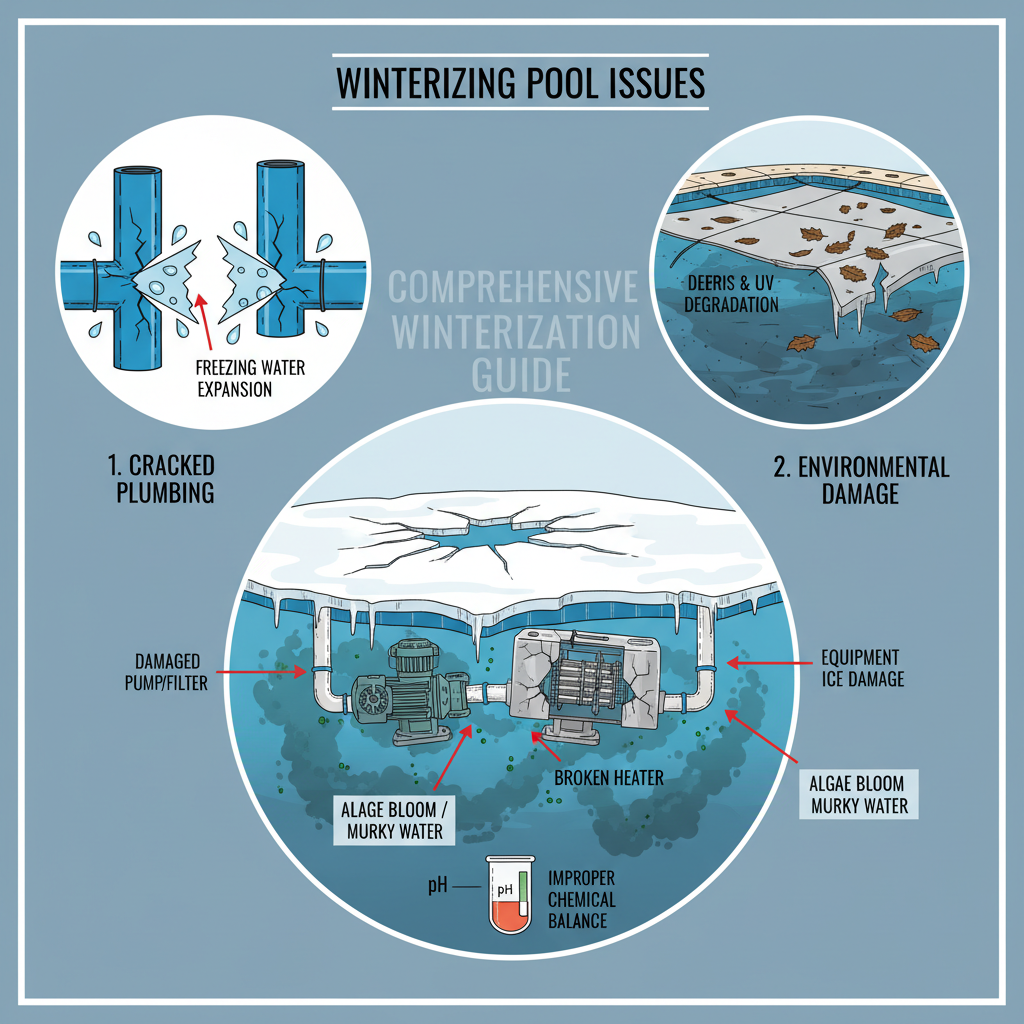
Common Symptoms
Possible Causes
Step-by-Step Diagnosis
Step 1
Thoroughly Clean the Pool - Skim, vacuum, and brush pool walls and floor to remove all debris, leaves, and organic matter. Ensure the water is as clean as possible.
Step 2
Balance Water Chemistry - Test pH, alkalinity, and calcium hardness. Adjust to recommended winterizing levels (e.g., pH 7.4-7.6, Alkalinity 80-120 ppm, Calcium Hardness 180-220 ppm) to prevent staining and corrosion.
Step 3
Add Winterizing Chemicals - Apply a pool shock treatment, a winter algaecide, and a stain/scale preventative. Allow chemicals to circulate through the system for several hours (4-8 hours recommended).
Step 4
Lower Water Level - Lower the water level of the pool below the skimmer mouth and all return jets (typically 4-6 inches below the lowest jet). For mesh covers, consult manufacturer guidelines.
Step 5
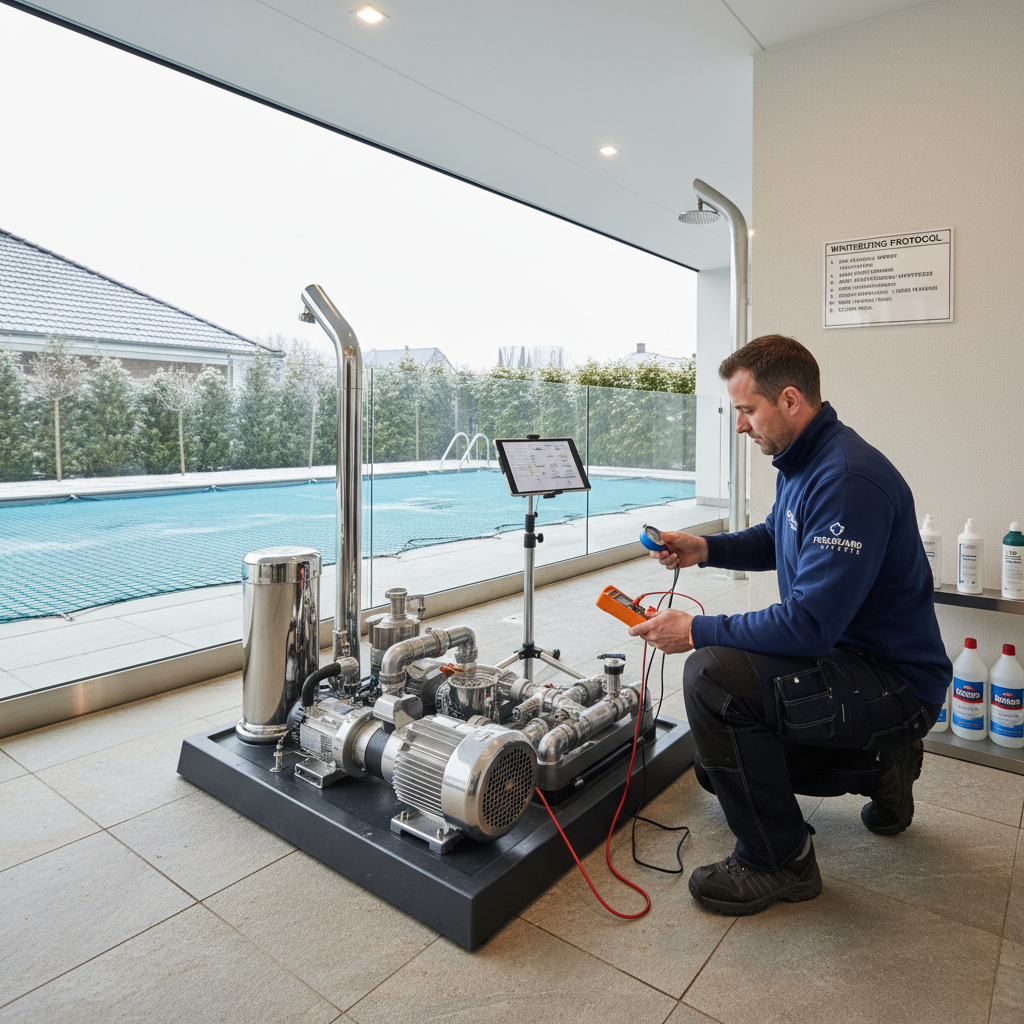
Drain and Winterize Equipment - Turn off all power to pool equipment at the breaker. Remove drain plugs from the pump, filter, heater, and any other equipment. Ensure all water is completely drained from these components. Store plugs safely and clean filter media if applicable.
Step 6
Blow Out Plumbing Lines - Use a powerful shop vacuum or air compressor to blow all water out of the skimmer lines, return lines, and main drain. As water is expelled, immediately plug the lines using expansion plugs or Gizzmos to prevent water from re-entering. Consider adding pool-specific antifreeze as an extra precaution into lines before plugging.
Step 7
Remove Accessories - Take out ladders, handrails, skimmer baskets, automatic cleaners, and any other removable accessories. Clean them and store them in a protected area.
Step 8
Install Winter Cover - Securely install your chosen winter cover (solid, mesh, or automatic) according to manufacturer instructions, ensuring it is properly anchored and tight to prevent debris and sunlight from entering.
DIY vs Professional Costs
| Repair Type | DIY Cost | Professional Cost | Time Required |
|---|---|---|---|
Standard Inground Pool Closing | $70 - $200 | $300 - $600 | 3-5 hours |
Standard Above-Ground Closing | $50 - $150 | $150 - $350 | 2-3 hours |
Complex Pool (spa, waterfall, etc.) | Not Recommended | $600 - $1200+ | 4-8 hours |
When to Call a Professional Pool
- If your pool has a complex plumbing system, attached spa, or intricate water features that require specialized knowledge.
- If you lack the time, tools (e.g., powerful air compressor or shop vac), or expertise to perform all steps correctly.
- If you are unsure about properly draining and protecting sensitive equipment like heaters, automation systems, or salt chlorinators.
- If you notice any pre-existing equipment issues or leaks that need repair before closing.
- If you prefer the peace of mind that comes with a professional, warrantied service.
Prevention Tips
- Always perform winterization when the pool water temperature is consistently below 65°F (18°C) to prevent algae growth, but before sustained freezing temperatures occur.
- Invest in a robust air compressor or a powerful shop vacuum for effectively blowing out plumbing lines; this is non-negotiable for freeze protection.
- Consider adding a small amount of pool antifreeze to plumbing lines after blowing them out for an extra layer of protection against residual moisture.
- Use high-quality, long-lasting winterizing chemicals that are appropriate for your pool's size and water chemistry.
- Inspect and maintain your winter cover regularly. Remove heavy snow, pump off standing water, and repair any tears or punctures promptly.
- Label all pipes and valves at the equipment pad to simplify the closing and opening processes each season.
- Take photos during your winterization process each year to serve as a visual guide and reference for future seasons.
- Store removed equipment and accessories in a dry, protected place over winter.
Frequently Asked Questions
Related Guides
Closing Your Pool for Winter (Troubleshooting & Fixes)
Comprehensive guide to winterizing your pool. Learn how to properly close your pool to prevent freeze damage, algae, and costly spring repairs. Includes step-by-step instructions and when to call a pro.
Pool Heater Not Working: Troubleshooting Common Issues, Error Codes, & Fixes (2024 Guide)
Pool heater not working? Diagnose common issues like no heat, error codes, strange noises, or unit not turning on. Expert troubleshooting guide offers DIY fixes & when to call a pro.
Swimming Pool Light Repair and Replacement: Troubleshooting, Fixes, & Safety (2024 Guide)
Comprehensive guide to troubleshooting and fixing common swimming pool light issues, including bulb replacement, water intrusion fixes, and when to call a pro. Learn to diagnose and repair dim, flickering, or non-functional pool lights for a safer and brighter swimming experience in 2024.
Pool's Losing Water? Let's Find That Leak (The Right Way)
Don't let a leaky pool drain your budget! This guide provides expert-backed methods for homeowners to accurately find and diagnose swimming pool leaks, distinguishing them from evaporation. Learn practical DIY steps and when to call a professional.
Pool Cartridge Filter Cleaning & Maintenance (Troubleshooting & Fixes)
Master pool cartridge filter cleaning and maintenance with this expert guide. Learn to diagnose clogged filters by symptoms, perform step-by-step cleaning, and know when to replace, ensuring crystal clear water and efficient pool operation.
Pool Pump Won't Shut Off? Troubleshooting & Fixes (From a Seasoned Expert)
Is your pool pump running 24/7? Learn why your pool pump won't shut off and discover effective troubleshooting steps. This expert guide covers common causes like faulty timers or stuck relays and provides actionable fixes to save energy and prevent costly damage. Know when to DIY and when to call a pro.
Need Professional Help?
Find top-rated pool experts in your area