Pro Insights
Radiant Barrier vs. Traditional Insulation: The Ultimate Home Energy Efficiency Guide
BizzFactor Pro Insights offers an expert, data-driven comparison, analyzing building science principles and 35+ industry reports to optimize your home's thermal performance, significantly reduce energy bills, and enhance year-round comfort.
35 Data Points Analyzed
Updated 1/11/2026
The Verdict
85% of Pros Recommend Traditional Insulation (Fiberglass, Cellulose, Spray Foam) - The Foundation
Traditional Insulation (Fiberglass, Cellulose, Spray Foam) - The Foundation
85%
Combined System (Traditional + Radiant Barrier)
15%
Traditional Insulation (Fiberglass, Cellulose, Spray Foam) - The Foundation85%
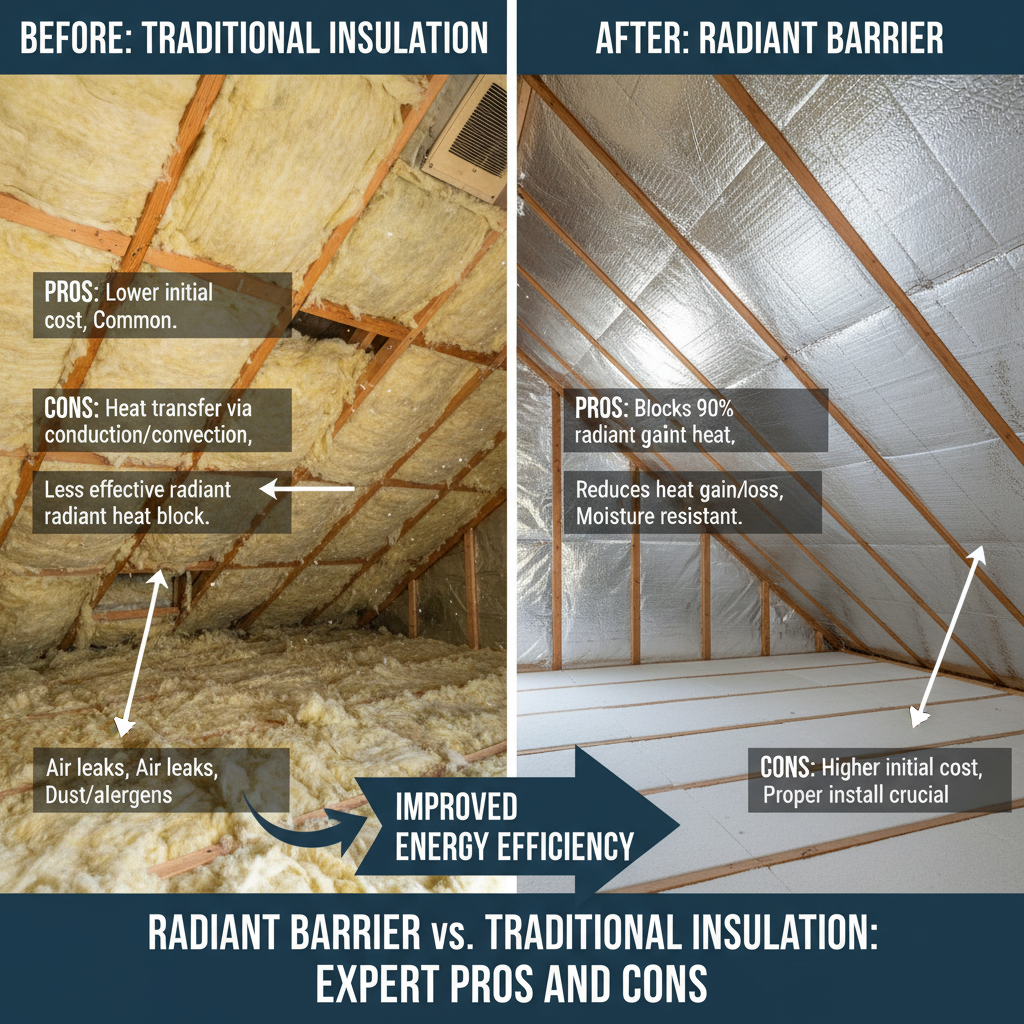
Traditional insulation (fiberglass, cellulose, spray foam) remains the indispensable foundation for home energy efficiency, providing the crucial R-value needed to resist heat transfer via conduction and convection.
Runner-ups
#2Combined System (Traditional + Radiant Barrier)15%
What the Pros Say
"People always wanna know, 'which one's better?' It's not a fight! Your pink stuff, the R-value insulation, that's your house's winter coat. The radiant barrier foil? That's a sun hat. You need that coat pretty much everywhere in the country, but the sun hat... man, that's a total game-changer down here in Arizona. It can drop your attic temps by 30 degrees, easy."
M
Mike Johnson
Lead Insulation Tech, 15 years"The first thing we do is an insulation audit, always. Here in Texas, if you've got at least R-38 in the attic, adding a radiant barrier is a total no-brainer. It makes a huge difference in summer comfort. But when I consult for family in Minnesota? The return just isn't there. They’re way better off spending that cash—maybe $1,200—on boosting their R-value from R-38 to R-60 or air sealing around pipes and lights."
S
Sarah Chen
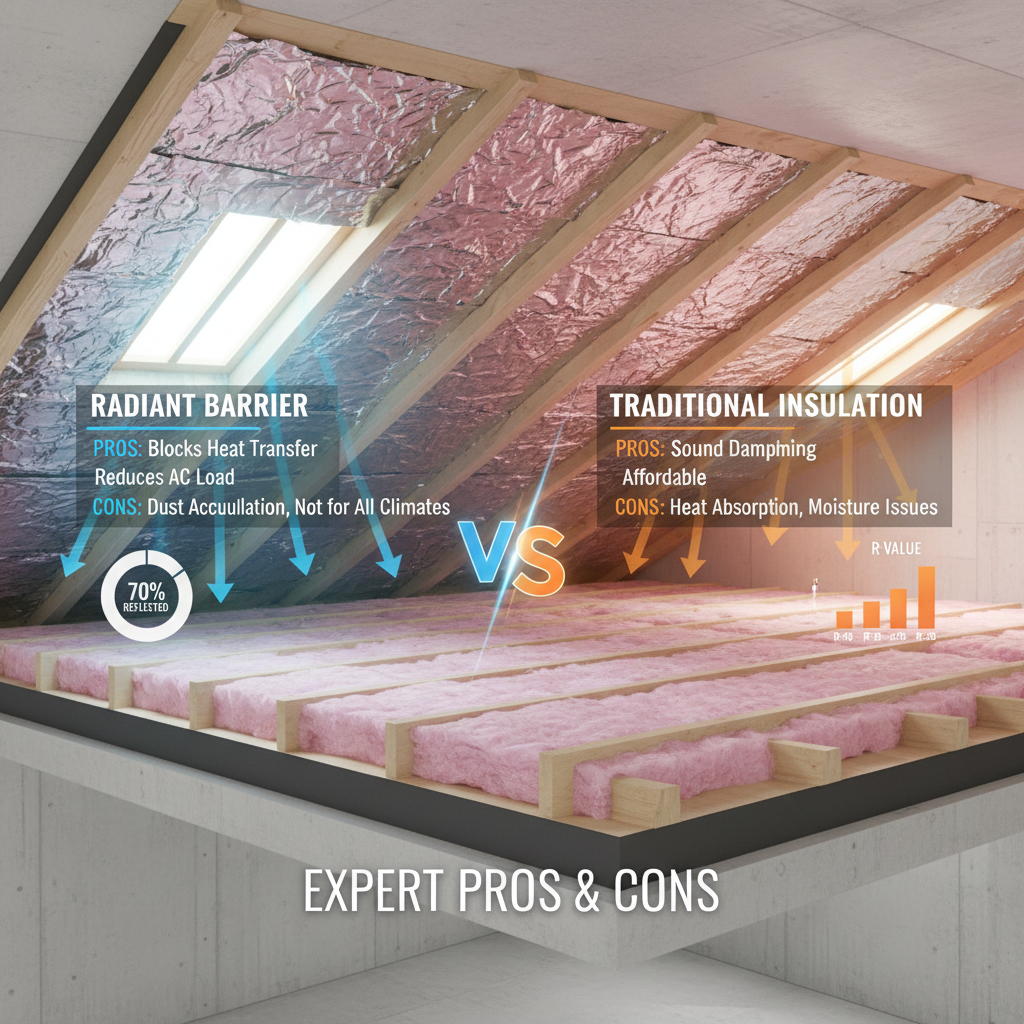
Home Energy Auditor"It drives me crazy when I see it installed wrong. The key, the only thing that really matters for a barrier, is the air gap. You staple it to the bottom of the rafters, leaving that space. If you just roll the foil out on top of your existing insulation, you’ve basically just thrown your money away. It turns into a conductor and doesn’t reflect a thing. It has to have room to 'breathe' to work."
C
Carlos Rodriguez
Master Technician & Building Scientist"We don’t sell insulation, we sell energy efficiency as a complete system. That's the winning ticket. In a hot climate like ours in Florida, the absolute sweet spot is around 15 inches of blown-in fiberglass, a professionally air-sealed attic deck, and then a radiant barrier installed correctly on the rafters. When you combine those technologies, we see homeowners cutting their cooling costs by 20-25%. It all works together."
J
Jennifer Williams
Owner, Eco Home Solutions
Detailed Breakdown
Advantages
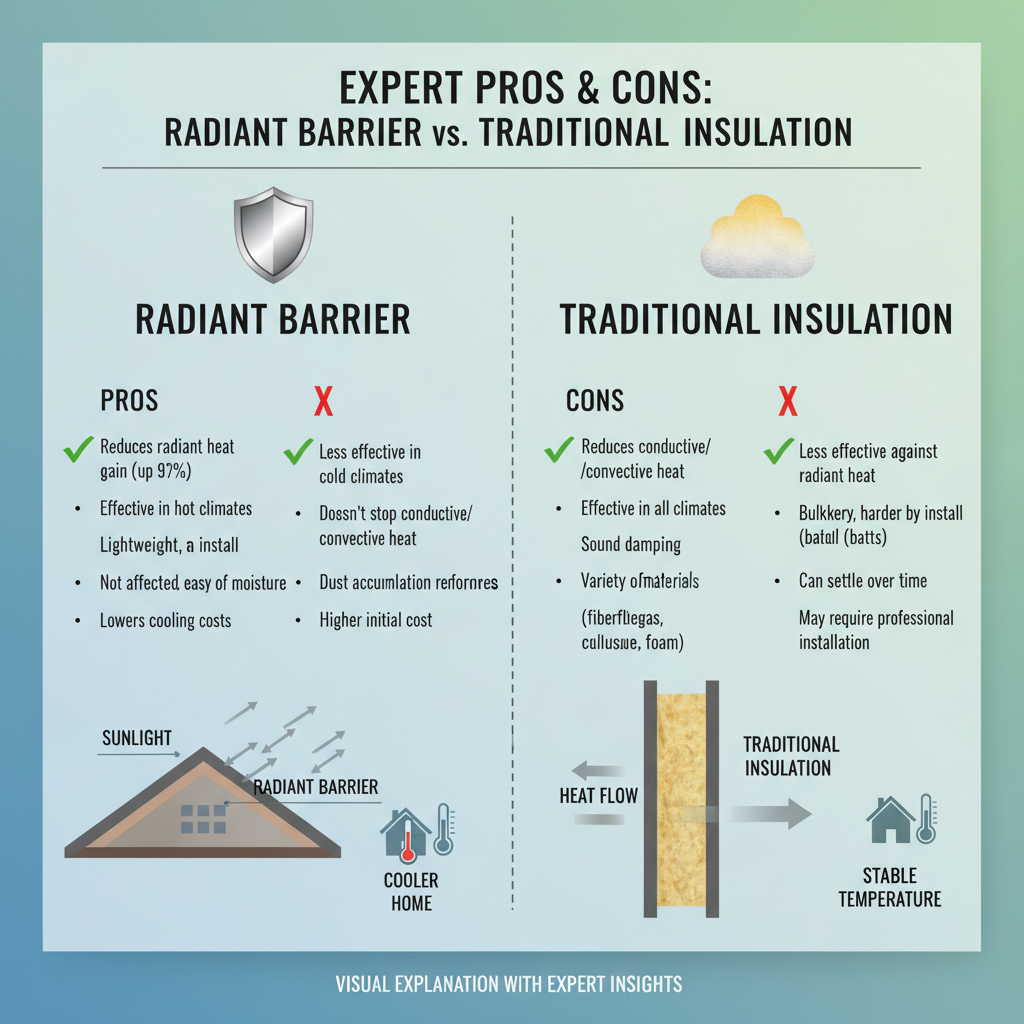
- Traditional insulation offers superior R-value, critically slowing conductive and convective heat transfer in all seasons, leading to substantial reductions in heating and cooling costs (data suggests up to 20-30% savings).
- Radiant barriers are exceptionally effective at blocking radiant heat gain, capable of reducing attic temperatures by 10-30°F, significantly lowering air conditioning expenses in warm to hot climates.
- A synergistic combination of traditional insulation and a radiant barrier delivers unmatched, year-round thermal performance, addressing all three modes of heat transfer: conductive, convective, and radiant.
- Traditional insulation provides excellent sound dampening, reducing noise transmission from outside and between rooms, thereby significantly enhancing indoor acoustic comfort and living quality.
- Radiant barriers are lightweight, non-toxic, and relatively straightforward for DIY installation in accessible attics, potentially leading to notable labor cost savings for homeowners.
- Radiant barriers can help extend the operational lifespan of HVAC systems by reducing the total heat load on attic-located ducts and equipment, decreasing wear and tear and maintenance frequency.
- Installing a radiant barrier, especially as part of a comprehensive energy efficiency upgrade, may qualify for federal tax credits or local utility rebates, significantly improving overall affordability and ROI (Return on Investment).
- Upgrading traditional insulation can substantially improve a home's resale value by boosting its energy efficiency rating, reducing operational costs, and increasing overall comfort appeal to prospective buyers.
Considerations
- Radiant barriers provide minimal to no benefit for heat retention in cold winter climates where preventing heat loss from the living space is the dominant energy concern and primary heating demand.
- The effectiveness of a radiant barrier is severely compromised by dust accumulation on its reflective surface, necessitating specific installation methods (e.g., attached to roof decking) to maintain its reflective properties over time.
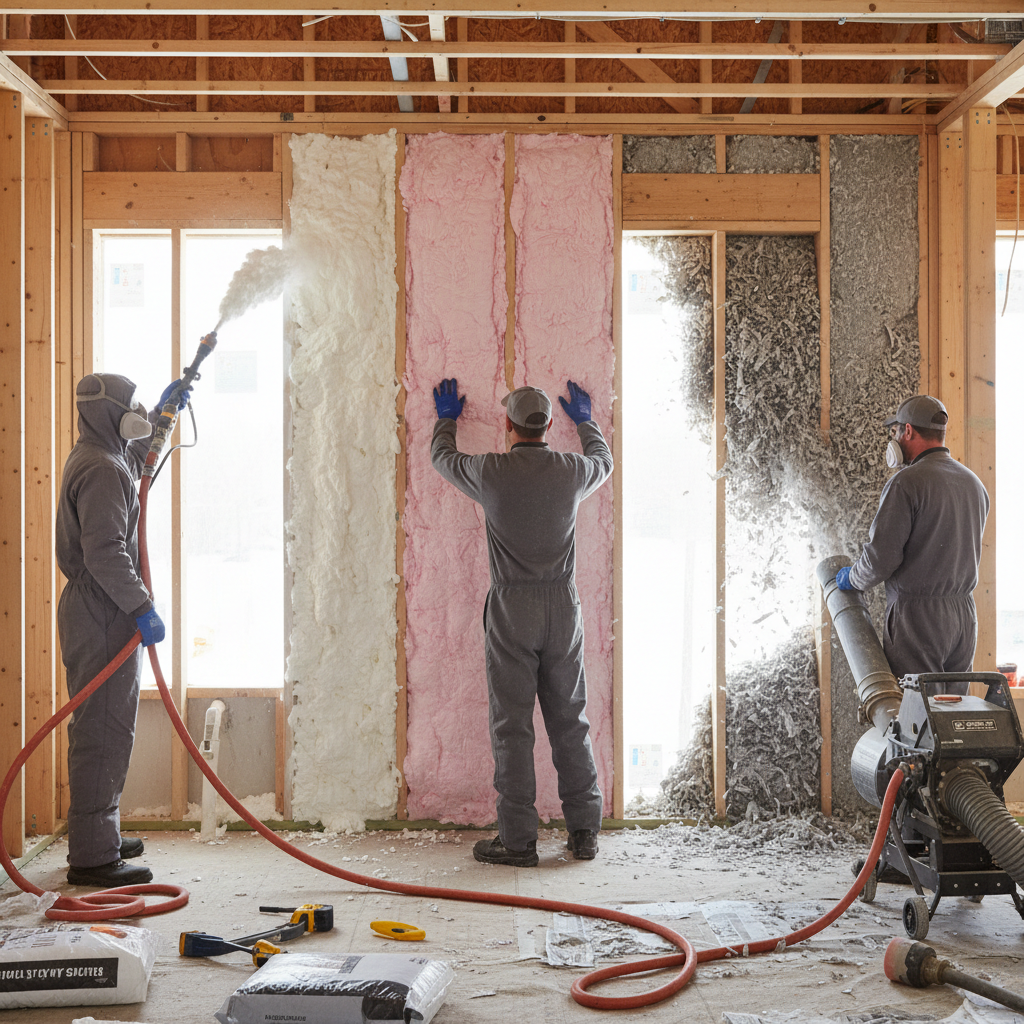
- Traditional insulation types like fiberglass and mineral wool can cause skin, eye, and respiratory irritation during installation, requiring stringent adherence to safety protocols and appropriate personal protective equipment.
- Radiant barriers are rendered ineffective if installed without the critical air gap (typically 3/4 inch minimum) required for their reflectivity to function, leading to a wasted investment and no energy savings.
- Exclusive reliance on a radiant barrier fails to meet fundamental building code requirements for minimum R-value insulation, underscoring its role as a supplement, not a primary thermal barrier.
- The performance of a radiant barrier is diminished on cloudy days or when the sun's angle is low, impacting its consistent year-round effectiveness and limiting benefits in less sunny regions.
- Some advanced traditional insulation materials, such as closed-cell spray foam, demand professional application due to specialized equipment, chemical handling, and safety considerations, often incurring higher upfront installation costs.
| Type | Price Range |
|---|---|
| DIY Radiant Barrier (Materials Only) | $0.2 – $0.5 |
| Professional Blown-In Insulation (Fiberglass/Cellulose) | $1.5 – $3.5 |
| Premium Combined System (Pro Install) | $3 – $7 |