Pro Insights
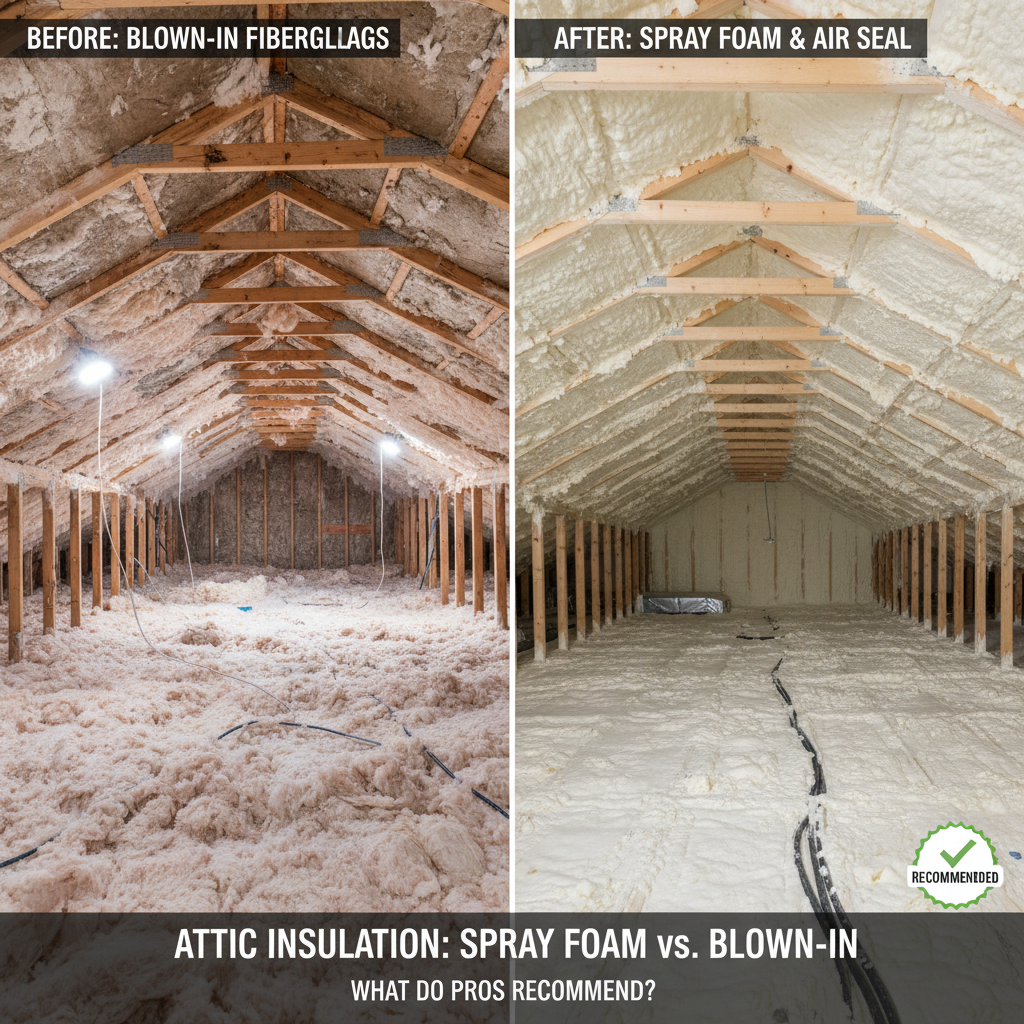
Attic Insulation Battle: Spray Foam vs. Blown-In – Maximize Energy Efficiency & Savings
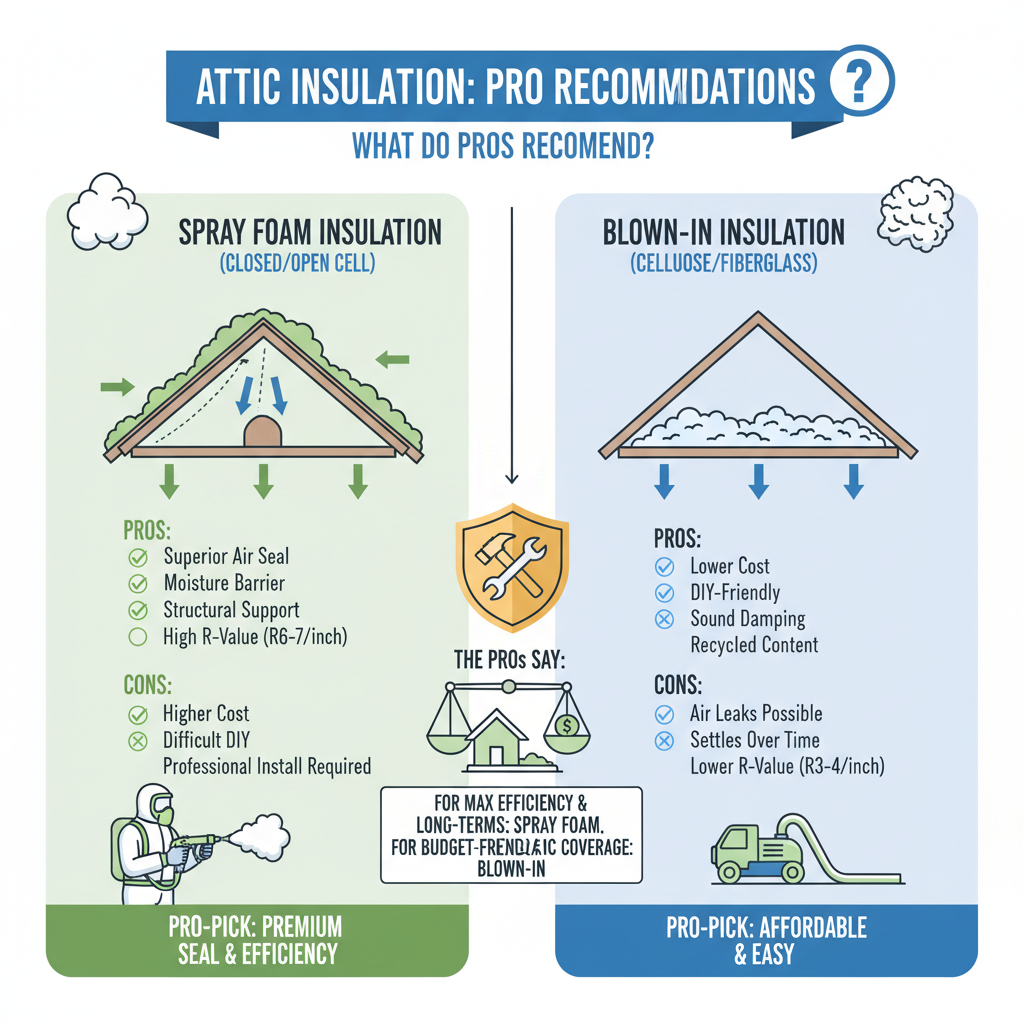
BizzFactor Pro Insights offers an in-depth, data-driven comparison of spray foam and blown-in attic insulation, expertly evaluating R-values, installation costs, long-term performance, environmental impact, and payback periods to guide homeowners toward optimal energy savings, superior comfort, and increased property value.
25 Data Points Analyzed
Updated 1/12/2026
The Verdict
92% of Pros Recommend Closed-Cell Spray Foam Insulation (Premium Choice & Overall Winner)
Closed-Cell Spray Foam Insulation (Premium Choice & Overall Winner)
92%
Blown-In Cellulose
25%
Open-Cell Spray Foam
10%
Closed-Cell Spray Foam Insulation (Premium Choice & Overall Winner)92%
For homeowners and property managers prioritizing an unparalleled combination of thermal performance, advanced air sealing, and superior moisture control, closed-cell spray foam insulation stands as BizzFactor Pro Insights' unequivocal professional r…
Runner-ups
#2Blown-In Cellulose25%
#3Open-Cell Spray Foam10%
What the Pros Say
"With spray foam, you're not just insulating, you're air sealing. I can see the difference immediately on a blower door test. Blown-in is good, but it can't stop air movement the way foam can."
M
Mike Johnson
Insulation Technician, 15 years"We often recommend blown-in for budget-driven projects; it's a huge improvement. But for customers who want the absolute best long-term solution and are tired of drafts and high energy bills, we guide them toward closed-cell spray foam. It's an investment that pays off."
S
Sarah Chen
Service Manager, Home Performance Co."The key benefit of closed-cell foam in an attic is creating an unvented, conditioned space. This protects HVAC equipment in the attic from extreme temperatures and drastically improves the home's overall building envelope performance."
C
Carlos Rodriguez
Master Technician"The upfront cost of spray foam is a hurdle for some, but it's a permanent solution. Unlike blown-in, it won't settle, get damaged by a small roof leak, or lose effectiveness over time. It's a 'do it once, do it right' product."
J
Jennifer Williams
Owner, Eco Insulation Pros
Detailed Breakdown
Advantages
- Highest R-value per inch (R-6 to R-7), delivering superior thermal resistance and allowing for maximum insulation in confined attic spaces, optimizing energy efficiency and potentially reducing energy bills by up to 30%.
- Creates an impermeable air barrier, drastically reducing air leaks, drafts, and uncontrolled ventilation, which can cut heating and cooling costs significantly and improve HVAC system efficiency.
- Functions as an exceptional moisture and vapor barrier, actively preventing condensation, mold growth, and mildew within the attic and roof assembly, protecting structural components and improving indoor air quality.
- Enhances the structural integrity and racking strength of the roof deck and wall cavities, providing added resilience against high winds, seismic activity, and severe weather.
- Maintains consistent R-value and performance over its entire lifespan; it will not settle, compact, or sag, ensuring enduring thermal protection and eliminating costly re-insulation needs.
- Contributes to substantial long-term reductions in both heating and cooling energy expenditures, often yielding a significant payback through utility savings over its operational life.
- Significantly reduces outside noise penetration from traffic, aircraft, and storms, creating a quieter, more peaceful indoor environment and enhancing acoustic comfort within the home.
- Can effectively deter pest infestations by sealing off common entry points for rodents, insects, and other unwanted wildlife, contributing to a healthier and more secure home environment.
Considerations
- Significantly higher upfront material and installation costs, often 2-3 times more expensive than traditional blown-in insulations like fiberglass or cellulose, potentially extending the return on investment period.
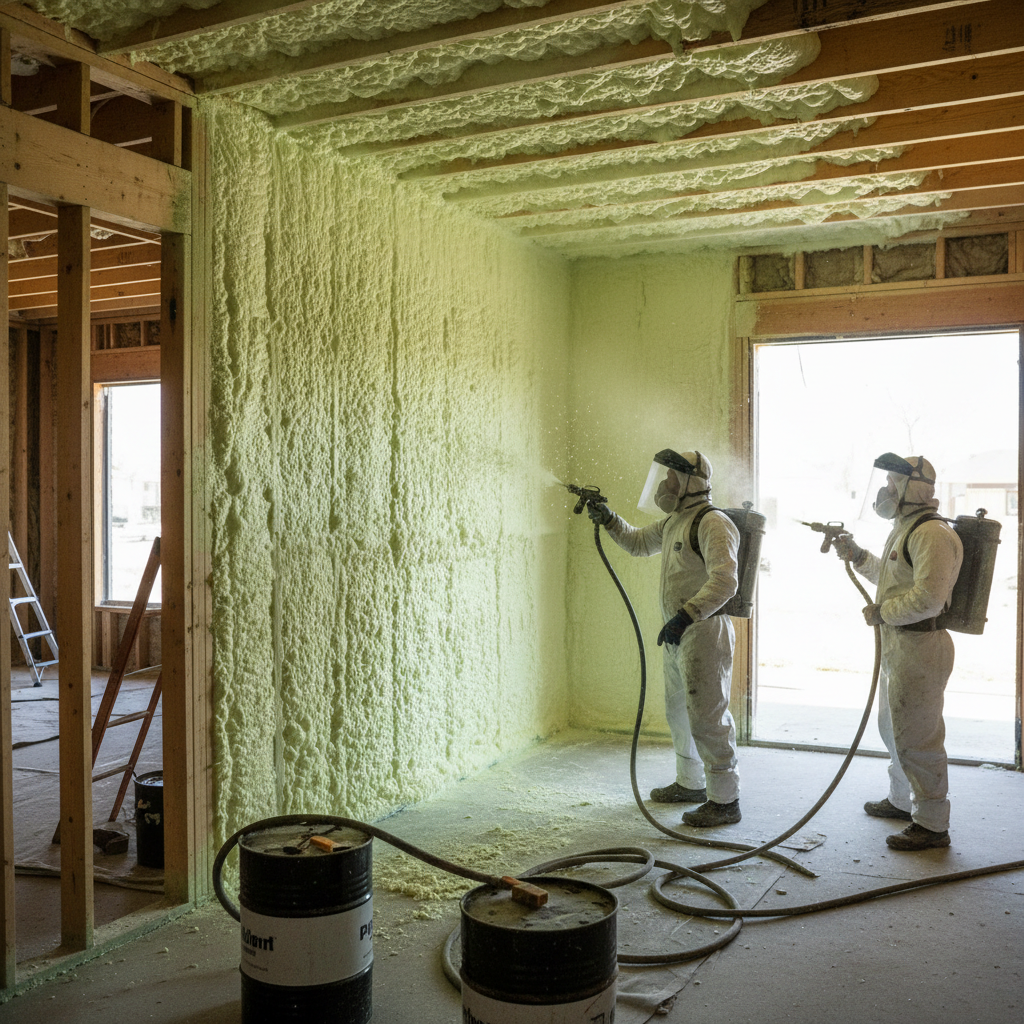
- Requires highly specialized, certified professional installation due to precise chemical mixing, sophisticated equipment, and specific application techniques; it is not a viable DIY project and improper installation can lead to performance issues.
- Potential for off-gassing of volatile organic compounds (VOCs) during and immediately after application, mandating strict ventilation protocols and typically requiring occupants to vacate the premises for 24-72 hours to ensure health and safety.
- Removal and replacement are considerably more complex, time-consuming, and costly if future attic alterations, such as electrical or plumbing upgrades, or HVAC modifications, become necessary, due to its adherence and density.
- Can create a 'conditioned attic' or 'hot roof' design, which may impact or potentially void specific roofing material warranties if not properly designed and vented according to local building codes and manufacturer specifications. Careful planning and professional consultation are essential to avoid warranty issues.
| Type | Price Range |
|---|---|
| Blown-In Insulation (Fiberglass/Cellulose) | $1.5 – $3.5 |
| Open-Cell Spray Foam | $2 – $4.5 |
| Closed-Cell Spray Foam | $3 – $7 |