Pro Insights
Air Sealing Before Insulating: Maximize Your Home's Energy Savings & Comfort | BizzFactor Pro Insights
Discover why energy experts universally recommend air sealing BEFORE insulation upgrades. This BizzFactor Pro Insights guide explains how this critical sequence maximizes R-value, slashes energy bills by 15-40%, enhances indoor air quality, and prevents moisture issues, leading to a truly high-performance, comfortable, and efficient home.
45 Data Points Analyzed
Updated 1/12/2026
The Verdict
95% of Pros Recommend Air Sealing: The Essential Foundation for Optimal Insulation Performance and Superior Energy Efficiency
Air Sealing: The Essential Foundation for Optimal Insulation Performance and Superior Energy Efficiency
95%
Combined Approach (Spray Foam)
5%
Insulate Only
0%
Air Sealing: The Essential Foundation for Optimal Insulation Performance and Superior Energy Efficiency95%
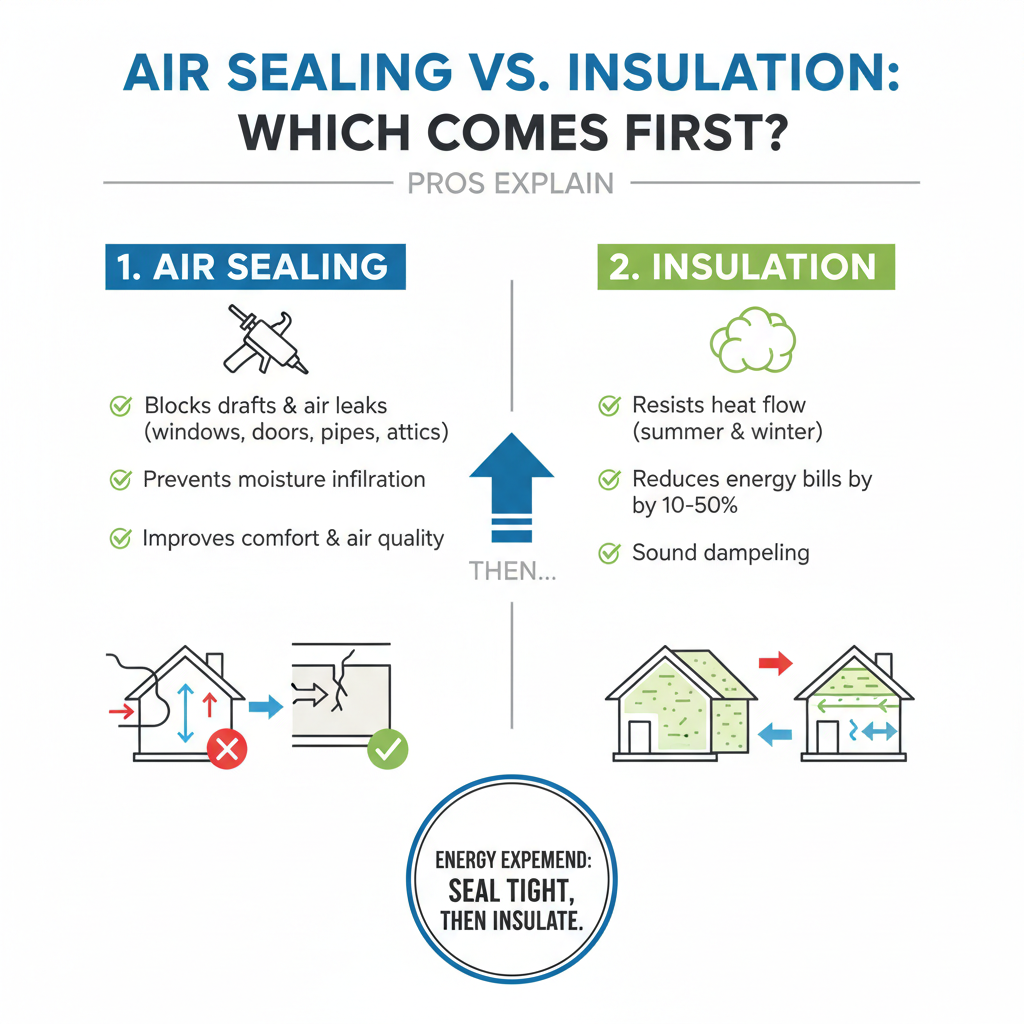
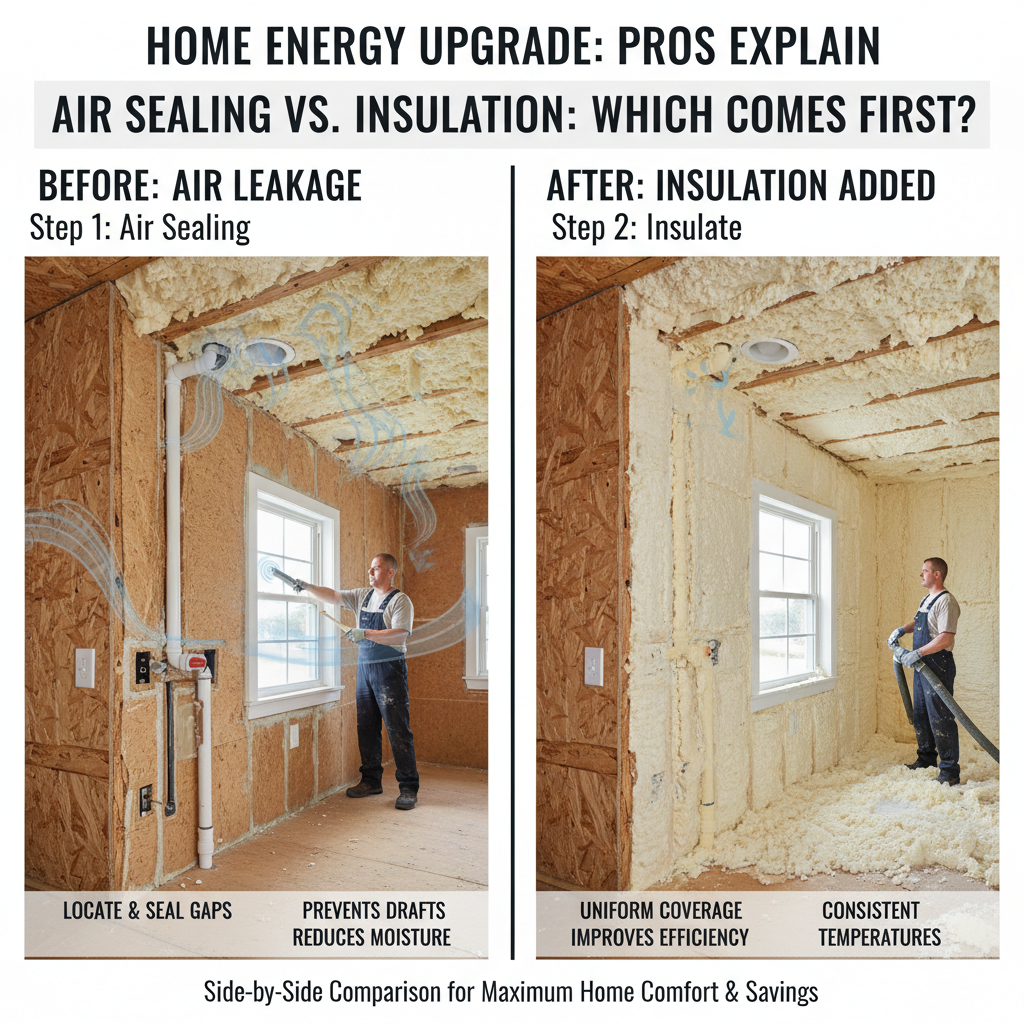
Building science and industry consensus are unequivocal: addressing uncontrolled air leakage is the fundamental prerequisite before any insulation upgrade.
Runner-ups
#2Combined Approach (Spray Foam)5%
#3Insulate Only0%
What the Pros Say
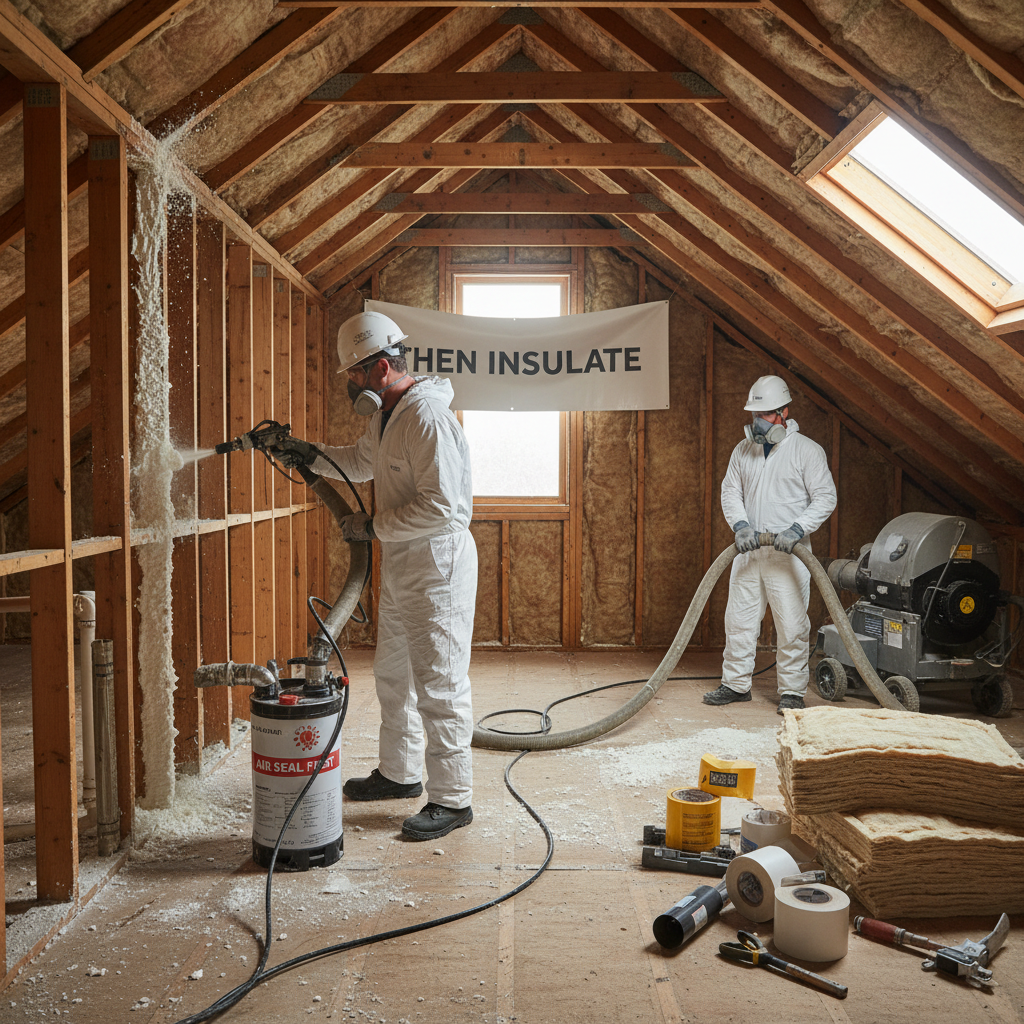
"I tell every homeowner the same thing: don't waste your money on new insulation if you haven't air sealed. We can blow 20 inches of fiberglass in your attic, but if you have air leaks, you're still just heating the sky. Seal the box first."
M
Mike Johnson
Building Performance Specialist, 15 years"The biggest complaints we get post-insulation are from homes that weren't properly air sealed. Customers still feel drafts or don't see the energy savings they expected. A thorough air sealing job is the foundation of a successful project."
S
Sarah Chen
Insulation Service Manager"From a building science perspective, air sealing is critical for durability. Air movement carries moisture, and when that moist air hits a cold surface inside your walls or attic, it condenses. That's how you get mold and rot. An air barrier stops that process."
C
Carlos Rodriguez
Master Technician"We view it as a complete thermal envelope system. Air sealing is step one. Insulation is step two. Doing them in the right order provides the best long-term value and return on investment for our clients. It's the difference between a job done and a job done right."
J
Jennifer Williams
Owner, Eco-Comfort Solutions
Detailed Breakdown
Advantages
- Optimizes insulation's effective R-value by eliminating uncontrolled airflow, ensuring materials perform to their full rated potential and deliver superior thermal resistance and heat flow reduction.
- Achieves significant reductions in heating and cooling costs, commonly 15% to 40%, by preventing conditioned air loss and unconditioned air infiltration, leading to substantial energy bill savings.
- Substantially elevates indoor air quality by blocking outdoor allergens, dust, pollutants, and pests, contributing to a healthier and cleaner home environment for occupants.
- Effectively mitigates moisture-related issues, including mold, mildew, and structural decay, by controlling unwanted air and moisture movement within building cavities, protecting your home's integrity and longevity.
- Enhances year-round home comfort by eliminating drafts, cold spots, and hot zones, promoting stable and consistent indoor temperatures throughout every room.
- Increases the efficiency and extends the operational lifespan of HVAC systems by reducing their workload, cycling, and overall run time, leading to fewer repairs and maintenance costs.
Considerations
- Requires thorough diagnostic testing, often involving specialized equipment like blower doors and thermal cameras, which might necessitate professional services and add to initial costs.
- Can be more labor-intensive and time-consuming than a simple insulation 'add-on' project due to the precision required for sealing numerous leakage pathways and penetrations.
- Improper air sealing, particularly without adequate mechanical ventilation (e.g., exhaust fans), could potentially lead to indoor air quality issues; careful planning and professional assessment are essential.
- Initial investment costs for professional air sealing may be higher than just adding insulation, ranging from hundreds to several thousands of dollars depending on home size and existing leakage, though long-term returns are significant.
- Identifying and sealing all air leaks, especially those hidden within wall cavities or complex structural elements, can be challenging without professional expertise and specialized tools.
| Type | Price Range |
|---|---|
| DIY Air Sealing | $100 – $400 |
| Professional Air Sealing | $500 – $2,000 |
| Comprehensive Air Sealing & Insulation | $2,500 – $8,000 |