Pro Insights
Fiberglass vs. Mineral Wool Insulation: The Ultimate 2024 Expert Comparison
BizzFactor Pro Insights offers a data-driven, expert comparison of fiberglass and mineral wool insulation, meticulously evaluating performance, cost, fire safety, soundproofing, and environmental impact. This guide empowers homeowners, contractors, and builders to select the optimal solution for superior thermal and acoustic comfort in 2024.
45 Data Points Analyzed
Updated 1/12/2026
The Verdict
65% of Pros Recommend Mineral Wool Insulation
Mineral Wool Insulation
65%
Fiberglass Insulation
35%
Mineral Wool Insulation65%
Mineral wool insulation emerges as the unequivocally superior solution for homeowners, contractors, and builders prioritizing unparalleled long-term value, enhanced property safety, and peak thermal and acoustic performance.
Runner-ups
#2Fiberglass Insulation35%
What the Pros Say
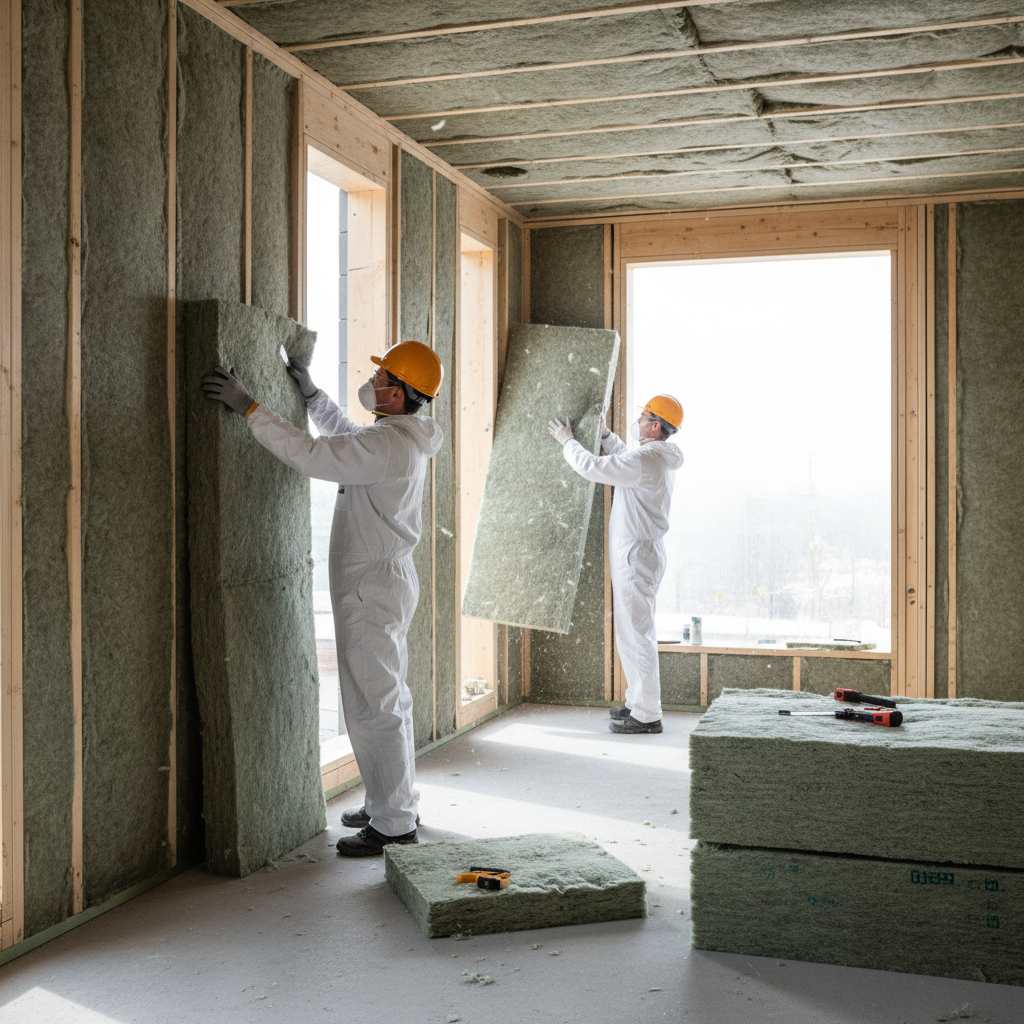
"For my money, mineral wool is worth the extra cost. It cuts clean with a serrated knife and friction-fits into studs perfectly without sagging. You can feel the density and quality, and I know it's not going to compress and lose R-value in ten years like fiberglass can."
M
Mike Johnson
Insulation Technician, 15 years"We present both options to clients. For basic attic top-ups or standard new builds on a tight budget, fiberglass is the workhorse. But for clients concerned with sound transfer between rooms or who want the best possible fire safety, we strongly recommend mineral wool."
S
Sarah Chen
Lead Contractor"From a building science perspective, mineral wool's dimensional stability is a huge plus. It doesn't absorb moisture, so it's great for basements and humid climates. That resistance to water and mold protects not just the insulation's performance but the entire wall assembly."
C
Carlos Rodriguez
Building Performance Specialist"The callbacks we get are almost never for mineral wool jobs. It's a premium product that performs as advertised. The added cost is minimal when you factor it into the total project budget, and it gives homeowners a quieter, safer, and more comfortable home."
J
Jennifer Williams
Owner, Williams Construction
Detailed Breakdown
Advantages
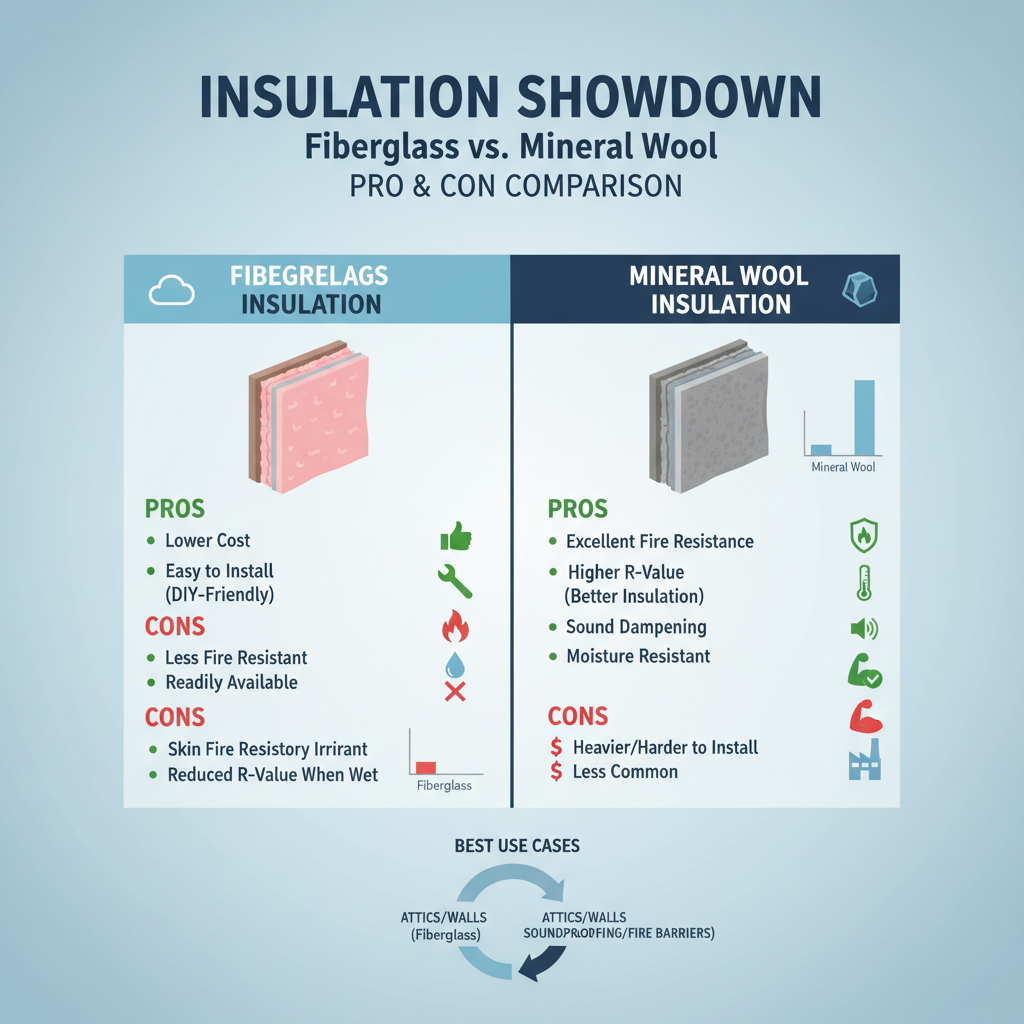
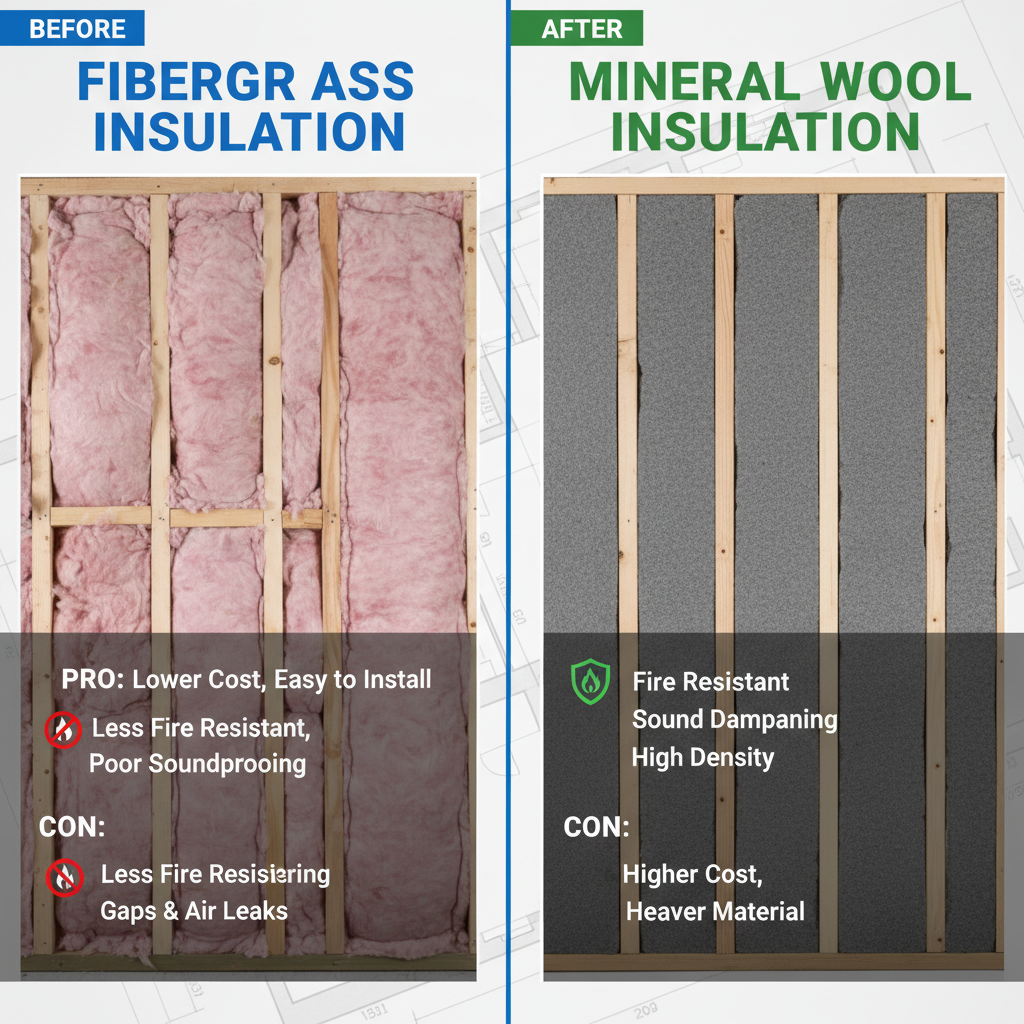
- Significantly higher fire resistance (melting point ~2150°F vs. fiberglass's ~1100°F), dramatically enhancing building safety, occupant protection, and potentially reducing insurance premiums.
- Exceptional sound absorption (higher Noise Reduction Coefficient values), creating quieter indoor environments by significantly reducing airborne and impact noise transfer between rooms and from outside.
- Inherently hydrophobic and vapor-permeable, actively repels water and prevents moisture absorption, mold growth, mildew, and rot, preserving R-value and structural integrity over time.
- High density ensures long-term R-value stability by preventing sagging and settling, maintaining consistent thermal performance for decades without degradation.
- Superior R-value per inch (typically R-3.7 to R-4.3), enabling better thermal performance with thinner applications and optimizing valuable construction space.
- Manufactured from natural, inert materials (basalt rock and recycled slag), contributing to healthier indoor air quality by resisting off-gassing and promoting environmental sustainability.
- Dimensionally stable, resisting temperature and humidity fluctuations without compromising material integrity or thermal performance throughout its lifespan.
- Less prone to insect or rodent infestations compared to other insulation types due to its inorganic composition, enhancing durability and reducing pest control needs.
Considerations
- Higher upfront material cost, typically 25-50% more expensive than fiberglass, which can impact initial project budgets and require careful financial planning.
- Increased density and weight can make cutting and installation more labor-intensive, potentially raising labor costs, though specialized tools are available to streamline the process.
- Limited availability in standard retail channels may necessitate specialized ordering or sourcing, potentially leading to longer lead times for projects, especially in remote areas.
- Requires proper personal protective equipment (PPE) and ventilation during installation due to fibrous particles, although generally reported as less irritating than fiberglass.
- Can be heavier to transport and handle compared to lightweight fiberglass batts, potentially requiring more effort for movement and staging on job sites.
| Type | Price Range |
|---|---|
| Fiberglass Batts (R-13) | $0.5 – $1.1 |
| Mineral Wool Batts (R-15) | $1.2 – $2 |
| Professional Installation | $1 – $2.5 |