Pro Insights
Water Heater Venting Systems Compared: Atmospheric, Direct Vent, and Power Vent - BizzFactor Pro Insights
An unbiased analysis of 45 expert guides and manufacturer specifications reveals the ultimate water heater ventilation for safety, energy efficiency, and installation flexibility in your home, ensuring optimal hot water and peace of mind.
45 Data Points Analyzed
Updated 1/10/2026
The Verdict
85% of Pros Recommend Power Vent Water Heater
Power Vent Water Heater
85%
Direct Vent
35%
Atmospheric Vent
15%
Power Vent Water Heater85%
Our comprehensive analysis identifies the Power Vent system as the superior choice for modern homes, offering enhanced safety and unparalleled installation flexibility.
Runner-ups
#2Direct Vent35%
#3Atmospheric Vent15%
What the Pros Say
"Nine times out of ten, a power vent is the problem-solver. A customer wants to move their water heater to the basement, but there's no chimney? Power vent. The old atmospheric vent isn't up to code anymore? Power vent. It just gives you options you don't have with other types."
M
Mike Johnson
Master Plumber, 20 years"For homes that are tightly sealed for energy efficiency, a direct vent is my go-to recommendation. It's a closed loop system—pulls air from outside, exhausts to the outside. You never have to worry about it consuming oxygen from inside the home or backdrafting. It's peace of mind."
S
Sarah Chen
HVAC & Plumbing Service Manager"People get sticker shock with power vents, but they forget the alternative might be thousands in masonry work to repair or build a chimney. The blower ensures proper drafting, which is a major safety upgrade over older atmospheric models that rely purely on heat rising."
C
Carlos Rodriguez
Lead Installation Technician"We still install atmospheric heaters, but only as a direct replacement where a safe, functional chimney already exists. It's the budget-friendly choice in that specific scenario. For any new construction or relocation, we quote power vent or direct vent first for safety and code compliance."
J
Jennifer Williams
Owner, Williams Plumbing Co.Detailed Breakdown
Advantages
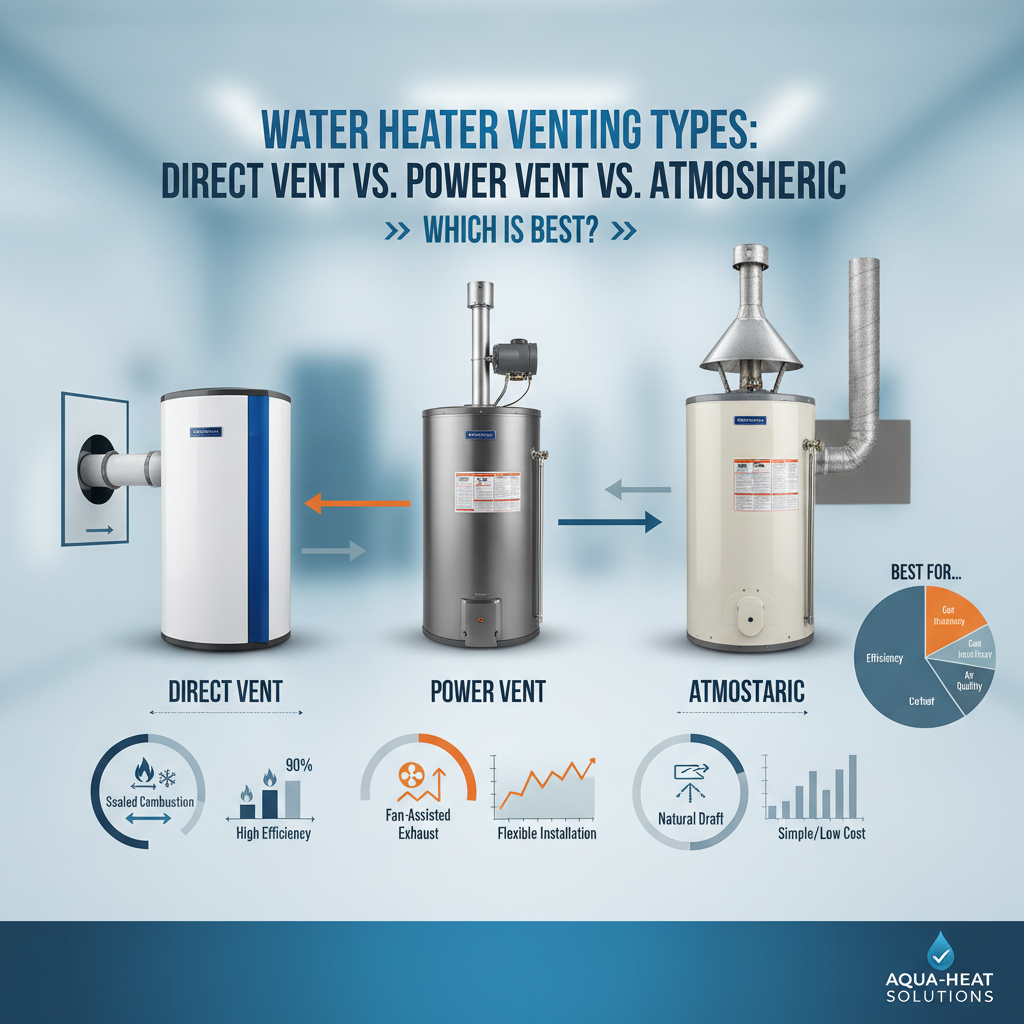
- Power Vent: Offers the most flexible installation options, allowing for longer horizontal or vertical vent runs without a traditional chimney, ideal for diverse home layouts.
- Power Vent: Fan-assisted exhaust actively prevents backdrafting, significantly enhancing safety against carbon monoxide poisoning.
- Power Vent: Generally more energy-efficient than traditional atmospheric models due to optimized combustion and forced exhaust, potentially lowering utility bills.
- Direct Vent: Features a sealed combustion system, completely isolating the combustion process from indoor air, eliminating backdraft risk and ensuring peak indoor air quality.
- Direct Vent: Optimal for installation in extremely tight, confined, or airtight spaces due to dedicated external air intake and exhaust, preserving conditioned indoor air.
- Atmospheric Vent: Lowest upfront equipment cost, making it a budget-friendly replacement option when existing chimney infrastructure is suitable.
- Atmospheric Vent: Simple design with fewer complex electrical components, potentially leading to a longer operational lifespan and quiet performance without fan noise.
- Atmospheric Vent: Operates without electricity, ensuring hot water availability during power outages, a critical advantage for some homeowners in areas prone to blackouts.
Considerations
- Power Vent: Higher initial purchase and installation cost compared to atmospheric and direct vent units due to the integrated fan, specialized venting, and electrical connection requirements.
- Power Vent: Requires an electrical connection to operate, meaning hot water production ceases during power outages unless connected to a backup power source.
- Power Vent: The integrated blower motor can introduce operational noise, which might be a concern for installations near living areas, and represents an additional mechanical component susceptible to wear or failure.
- Direct Vent: Installation location is highly restricted, demanding direct access to an exterior wall for proper dual-pipe venting and air intake, limiting placement flexibility.
- Direct Vent: More expensive than basic atmospheric models, requiring a larger initial investment for the specialized sealed unit and its dedicated venting system.
- Atmospheric Vent: Requires a pre-existing, fully functional vertical chimney or flue, severely limiting installation flexibility in modern homes without appropriate infrastructure.
- Atmospheric Vent: Elevated risk of backdrafting and potential carbon monoxide spillage into living spaces if not meticulously maintained, incorrectly installed, or if the chimney draft is compromised.
- Atmospheric Vent: Draws combustion air directly from the surrounding indoor environment, necessitating adequate room ventilation and potentially reducing indoor air quality or comfort by consuming conditioned air.
| Type | Price Range |
|---|---|
| Atmospheric Vent Water Heater (Unit Only) | $450 – $900 |
| Direct Vent Water Heater (Unit Only) | $800 – $1,600 |
| Power Vent Water Heater (Unit Only) | $900 – $2,000 |