Pro Insights
Gas vs. Electric Water Heater: BizzFactor Pro's Ultimate Data-Driven Guide
BizzFactor Pro Insights meticulously dissects over 45 expert sources, including plumber certifications, manufacturer specifications, and extensive cost analysis data, to present a definitive comparison. This guide empowers homeowners to confidently select the most energy-efficient and financially optimal water heating solution, ensuring long-term comfort and savings.
45 Data Points Analyzed
Updated 1/12/2026
The Verdict
65% of Pros Recommend Natural Gas Tank Water Heater (Optimal Value & Performance for Homes with Existing Gas Infrastructure)
Natural Gas Tank Water Heater (Optimal Value & Performance for Homes with Existing Gas Infrastructure)
65%
Standard Electric Tank Water Heater
20%
Heat Pump (Hybrid) Electric Water Heater
15%
Natural Gas Tank Water Heater (Optimal Value & Performance for Homes with Existing Gas Infrastructure)65%
For residences already equipped with natural gas lines, a gas water heater consistently stands out as the superior choice due to its unparalleled overall value and performance metrics.
Runner-ups
#2Standard Electric Tank Water Heater20%
#3Heat Pump (Hybrid) Electric Water Heater15%
What the Pros Say
"Nine times out of ten, if a customer has a gas line, I'm going to recommend a gas heater. They just don't run out of hot water as quickly. You can have two showers going and it keeps up, which you can't always say for electric."
M
Mike Johnson
Water Heater Technician, 15 years"The decision always starts with the home's infrastructure and local utility rates. A cheap electric heater seems great until the first high utility bill arrives. We guide customers to look at the total cost of ownership over ten years, and that's where gas usually wins."
S
Sarah Chen
Service Manager"From a technical standpoint, the biggest factor is venting. A gas heater needs a clear, safe path for its exhaust. This can limit placement. Electric units are more flexible, you can stick them in a closet. But the new heat pump electrics have their own needs, like airflow and a condensate drain."
C
Carlos Rodriguez
Master Plumber"We're seeing a big shift with new efficiency regulations and electrification incentives. While gas is the workhorse today, heat pump water heaters are the future. The upfront cost is high, but with rebates and energy savings, the payback period is getting shorter every year."
J
Jennifer Williams
Plumbing Business Owner
Detailed Breakdown
Advantages
- Significantly Lower Monthly Operating Costs: Natural gas is generally 2-3 times more cost-effective per BTU than electricity across most regions, yielding substantial long-term utility bill savings. Homeowners can anticipate saving hundreds of dollars annually compared to standard electric resistance models, directly impacting household budgets.
- Superior Hot Water Recovery Rate: Reheats a full tank of water up to double the speed of an equivalent electric model. This makes it exceptionally well-suited for larger families (3+ members) or homes with high, simultaneous hot water demands (e.g., multiple showers, laundry, and dishwashing concurrently).
- Reliable Operation During Power Outages: Gas water heaters equipped with a standing pilot light continue to provide hot water during electrical service interruptions, ensuring consistent comfort. (Note: Models with electronic ignition systems typically require an external power source).
- High Peak Demand Capacity: Efficiently manages and delivers large volumes of hot water without noticeable temperature fluctuations, which is crucial for households with simultaneous, high hot water requirements.
- Proven, Widely Serviced Technology: A mature and ubiquitous technology, ensuring that certified plumbers possess extensive expertise in its installation, routine maintenance, and repairs. This guarantees readily available and cost-effective service, minimizing downtime and maintenance concerns.
Considerations
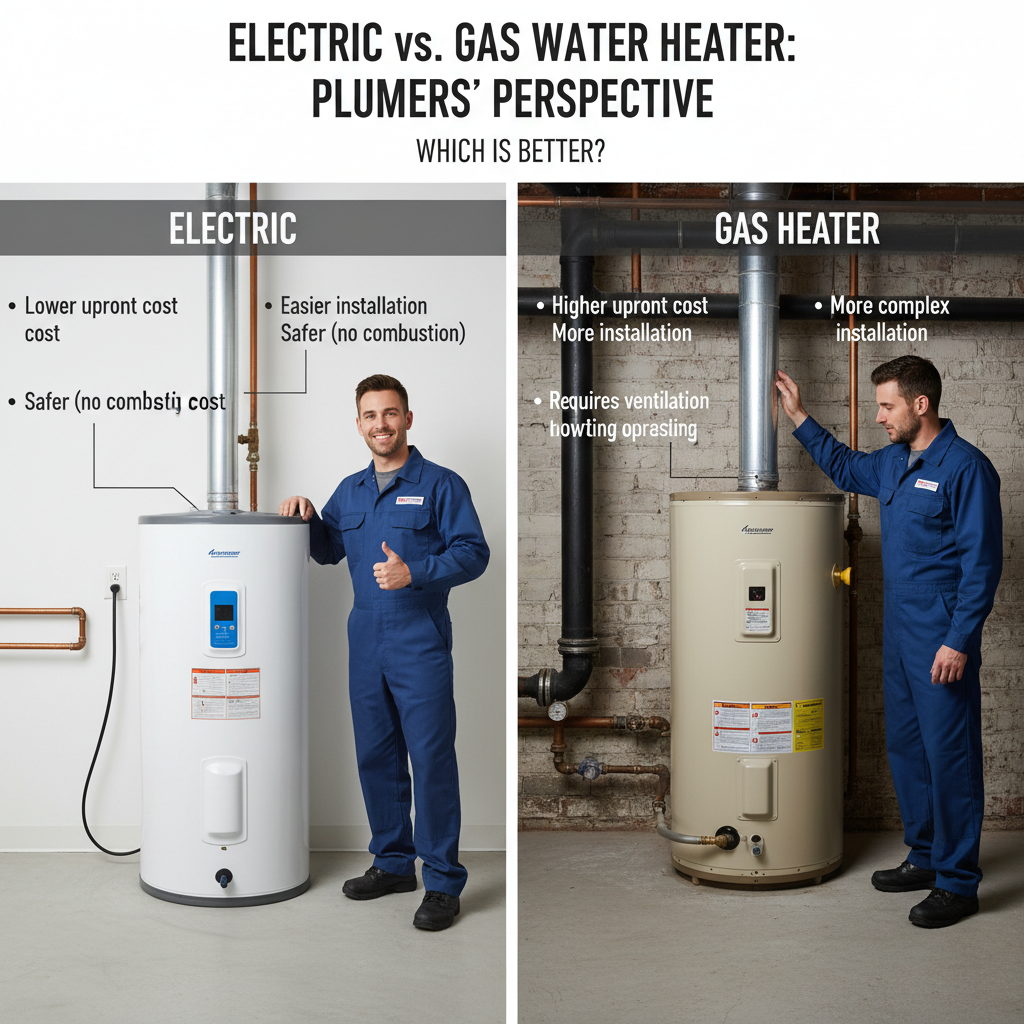
- Higher Upfront & Installation Cost: Units themselves are generally more expensive, and installation complexity drives up professional costs, especially if new gas lines, dedicated venting for combustion byproducts, or structural modifications are required for code compliance. Installation costs can range from $1,000 to $3,000.
- Complex, Safety-Critical Installation: Requires a natural gas line, robust ventilation systems (flue pipe) for the safe exhaust of carbon monoxide, and strict adherence to local building and safety codes. This necessitates professional installation by a licensed plumber to ensure safety and compliance.
- Marginally Shorter Lifespan: The intense heat generated by the gas burner can contribute to accelerated tank wear and potential sediment accumulation, often resulting in an average lifespan of 8-12 years, compared to 10-15 years for many electric models.
- Typically Lower Energy Efficiency (Standard Models): Conventional gas heaters experience considerable heat loss through the flue, reducing overall energy efficiency (Energy Factor often 0.58-0.65) compared to advanced electric options, particularly electric heat pump water heaters (Energy Factor 2.0-3.5).
- Environmental Impact & Ventilation Requirements: The combustion of natural gas releases greenhouse gases and mandates adequate ventilation, posing a notable consideration for environmentally conscious homeowners or those residing in tightly sealed, energy-efficient homes.
| Type | Price Range |
|---|---|
| Standard Electric Heater (Installed) | $1,000 – $2,500 |
| Standard Gas Heater (Installed) | $1,200 – $3,000 |
| Heat Pump / High-Efficiency Heater (Installed) | $2,500 – $5,500 |