Pro Insights
BizzFactor Pro Insights: Optimal Water Heater Sizing Guide for Efficiency & Performance
Unlock peak energy savings and continuous comfort. Our data-driven guide leverages Department of Energy guidelines to perfectly size your tank or tankless water heater.
12 Data Points Analyzed
Updated 1/12/2026
The Verdict
85% of Pros Recommend Peak Hour Demand Calculation (FHR/GPM Matching)
Peak Hour Demand Calculation (FHR/GPM Matching)
85%
Sizing by Household Size
10%
Sizing by Tank Capacity Alone
5%
Peak Hour Demand Calculation (FHR/GPM Matching)85%
Our rigorous analysis confirms that the 'Peak Hour Demand Calculation' is the industry's most effective and efficient sizing method.
Runner-ups
#2Sizing by Household Size10%
#3Sizing by Tank Capacity Alone5%
What the Pros Say
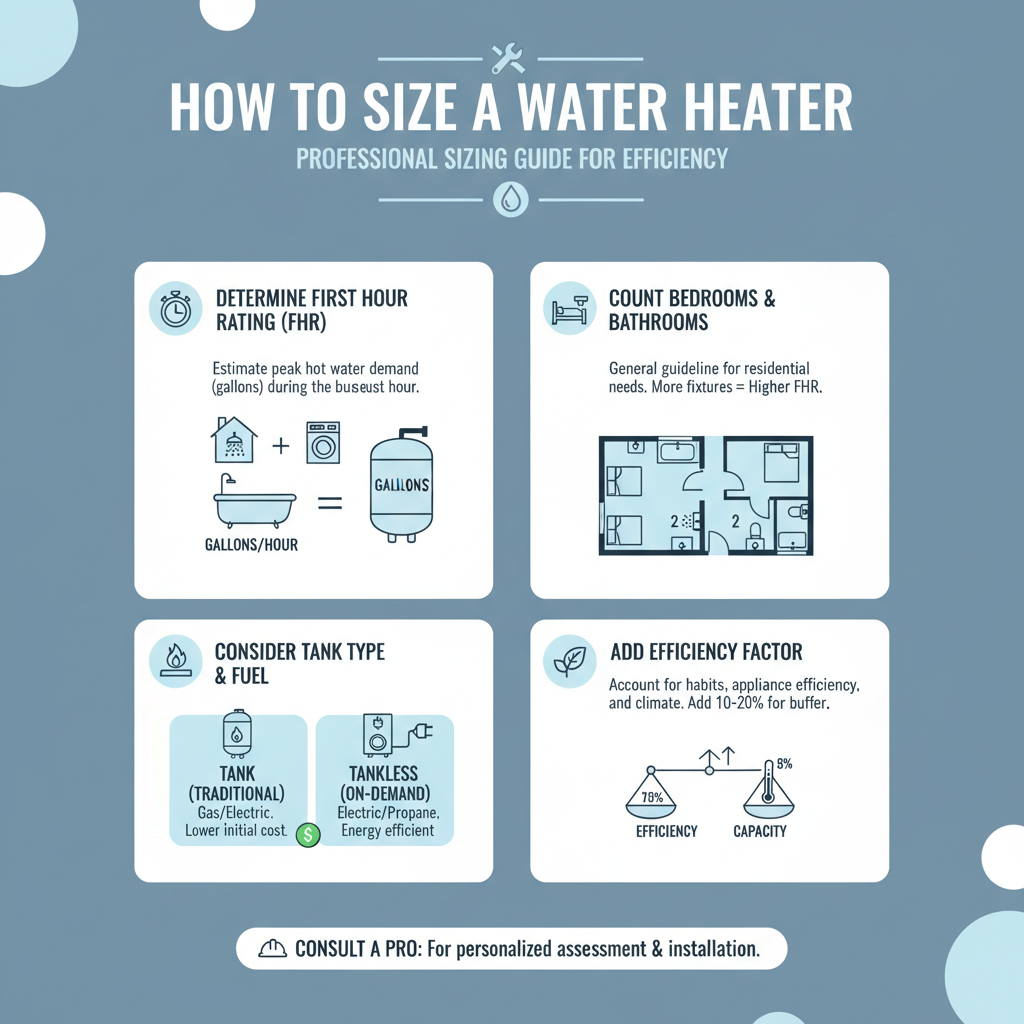
"Don't just look at the gallons on the side of the box. The most important number for a tank heater is the First Hour Rating, or FHR. It tells you how much hot water the unit can actually deliver in an hour of heavy use. That's the number that needs to match your family's morning shower rush."
M
Mike Johnson
Plumbing Technician, 15 years"The number one complaint we get is 'we run out of hot water.' Nine times out of ten, it's an undersized unit. Taking 15 minutes to calculate peak demand before buying saves years of frustration and avoids a costly replacement."
S
Sarah Chen
Service Manager, HVAC & Plumbing"Sizing for tankless is a different ballgame. We look at the maximum flow rate you'll need at once—say, a shower and a sink running together. Then we calculate the required temperature rise from your cold groundwater to your desired hot water temp. Those two factors—GPM and temperature rise—determine the right tankless model."
C
Carlos Rodriguez
Master Plumber"We always present sizing as an investment in efficiency. A slightly more expensive, correctly-sized unit will pay for itself in energy savings compared to an oversized, inefficient one. It's about long-term value for the homeowner, not just the initial price tag."
J
Jennifer Williams
Owner, Williams Home Services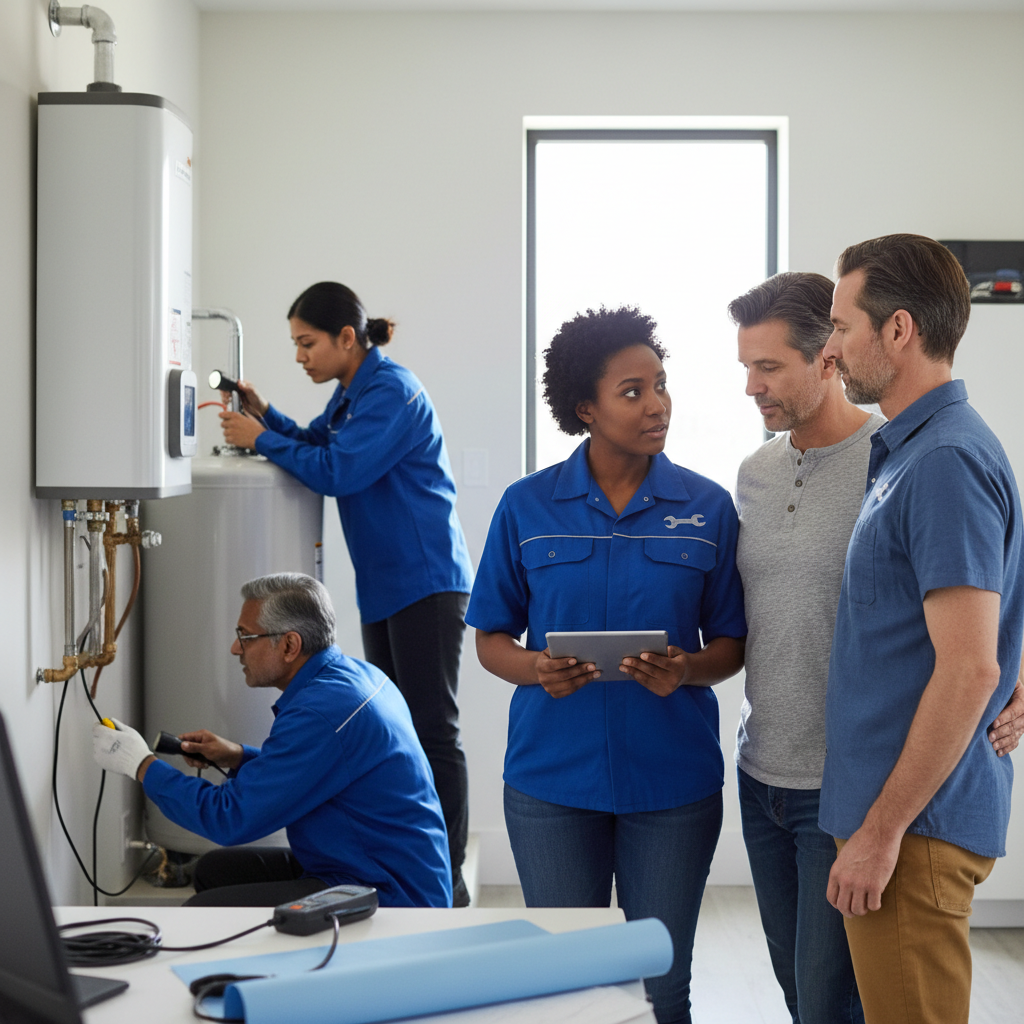
Detailed Breakdown
Advantages
- Guarantees a consistent and ample supply of hot water, even during peak household usage.
- Significantly enhances energy efficiency by precisely matching heater performance to actual demand, reducing standby heat loss by an average of 10-15%.
- Leads to measurable reductions in monthly utility bills, potentially saving homeowners hundreds annually.
- Extends the operational lifespan of the water heater by preventing overworking and undue stress.
- Elevates overall home comfort and eliminates unexpected cold water interruptions.
- Future-proofs your hot water system by accounting for potential household growth or appliance additions, offering scalability.
- Supports environmental sustainability through reduced energy consumption.
Considerations
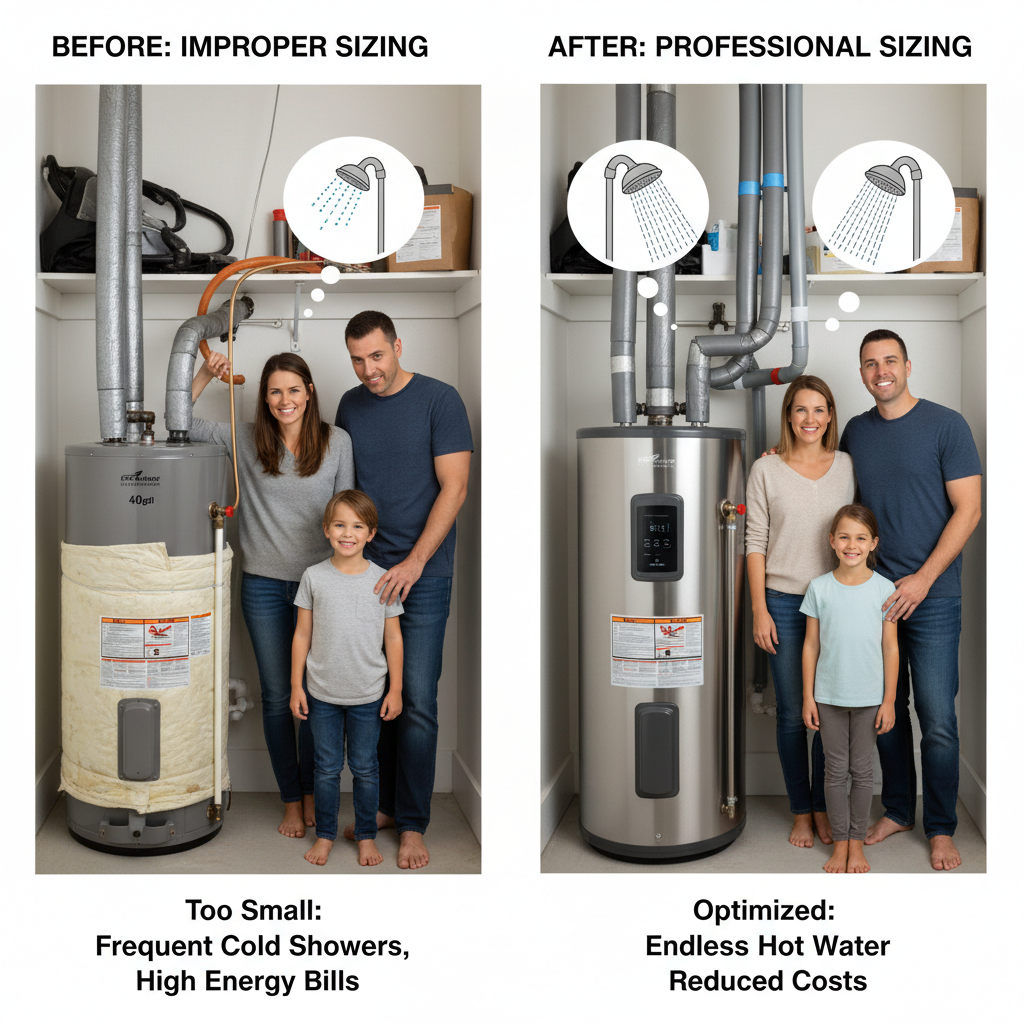
- Undersizing inevitably leads to frustrating hot water shortages and can prematurely wear out the unit, shortening its lifespan by up to 25%.
- Oversizing results in higher initial purchase costs (up to 20% more for an unnecessarily large unit) and continuously wastes energy heating unused water, increasing utility bills by at least 15%.
- Disregarding the recovery rate can cause even a high-capacity tank to perform inadequately during sustained demand.
- Accurate calculation requires some attention to detail regarding household-specific usage patterns, potentially requiring professional consultation.
| Type | Price Range |
|---|---|
| Standard Storage Tank (40-50 Gallon, Gas/Electric) | $500 – $1,200 |
| Tankless Water Heater (Gas/Electric) | $1,000 – $3,000 |
| Heat Pump (Hybrid) Water Heater (50-80 Gallon) | $1,500 – $3,500 |