Pro Insights
Tank vs. Tankless Water Heaters: 2024 Ultimate Guide to Efficiency, Performance & Smart Investment
BizzFactor Pro Insights offers a data-driven comparison of lifespan, energy savings, performance, and environmental impact to determine the best water heater for your home.
45 Data Points Analyzed
Updated 1/12/2026
The Verdict
70% of Pros Recommend Tankless Water Heaters (Overall Best for Long-Term ROI, Efficiency & Sustainability)
Tankless Water Heaters (Overall Best for Long-Term ROI, Efficiency & Sustainability)
70%
Conventional Storage Tank
25%
Heat Pump (Hybrid)
5%
Tankless Water Heaters (Overall Best for Long-Term ROI, Efficiency & Sustainability)70%
Despite a higher initial purchase and installation cost, tankless water heaters definitively emerge as the superior long-term investment, offering unparalleled efficiency and consistent performance.
Runner-ups
#2Conventional Storage Tank25%
#3Heat Pump (Hybrid)5%
What the Pros Say
"I tell my customers to think about it like this: a tank heater is a 10-year purchase, a tankless is a 20-year investment. If you're staying in your home, the math on energy savings and not having to replace it again in a decade almost always favors tankless."
M
Mike Johnson
Master Plumber, 15 years"The biggest factor we see shortening a water heater's life is water quality. If you have hard water, a tank heater's anode rod will get eaten away fast, and a tankless unit's heat exchanger will clog with scale. Maintenance isn't optional; it's essential."
S
Sarah Chen
HVAC & Plumbing Service Manager"Don't underestimate the installation cost for a tankless conversion. We often have to run a larger gas line or a new dedicated circuit. It's not a simple swap-out, which is why the initial price tag is higher than a standard tank replacement."
C
Carlos Rodriguez
Lead Installation Technician"We're seeing a clear trend towards tankless, especially in new construction and major remodels. Homebuyers are more educated about energy efficiency, and the endless hot water is a huge selling point for families. The upfront cost is becoming less of a barrier."
J
Jennifer Williams
Owner, Williams Home Services
Detailed Breakdown
Advantages
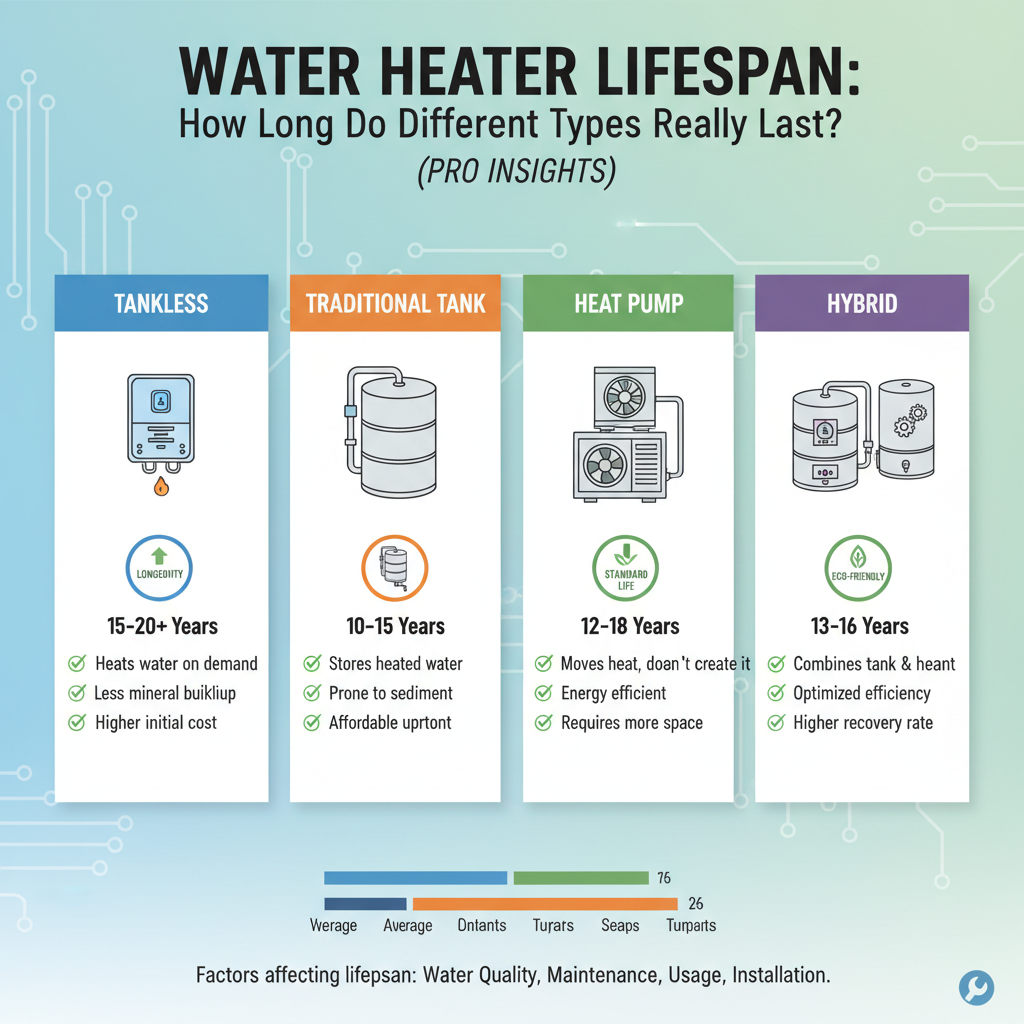
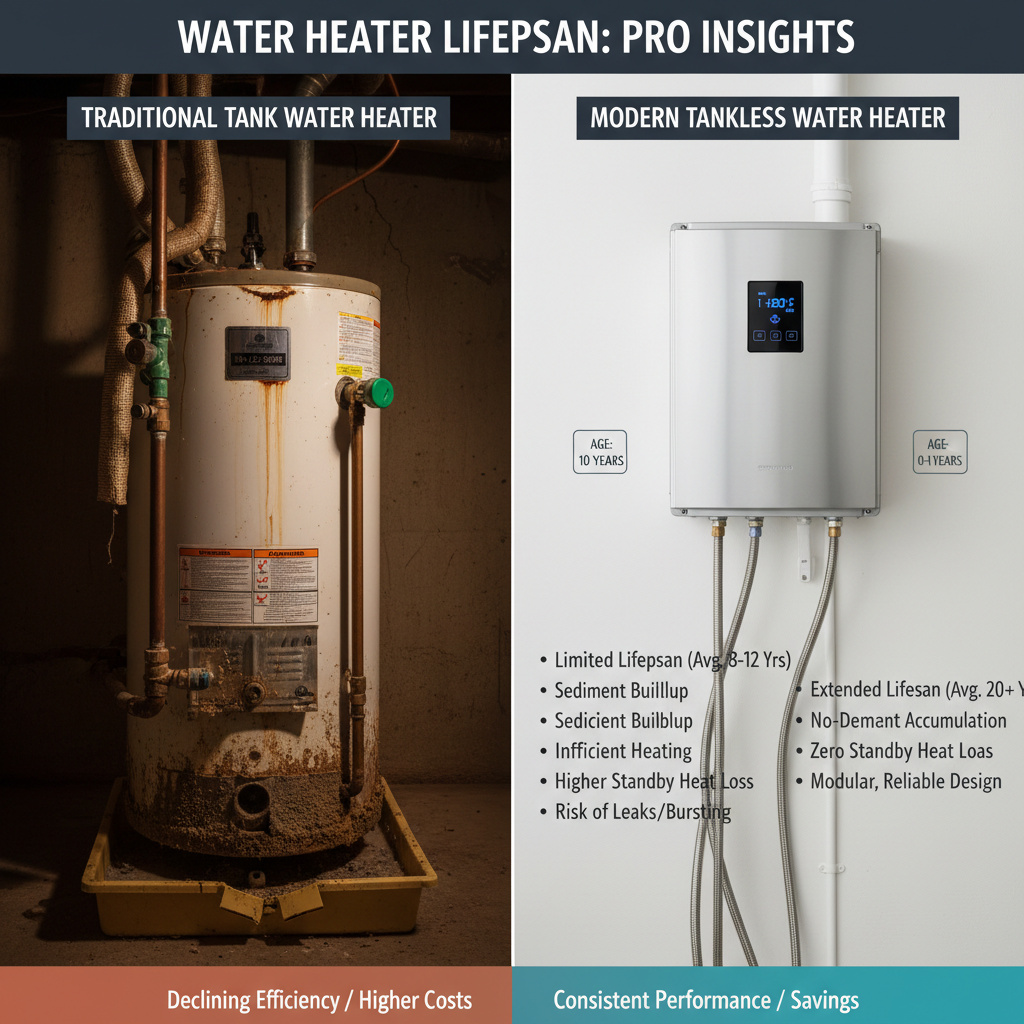
- Extended lifespan (20+ years with proper maintenance) offers a superior long-term return on investment (ROI) compared to tank heaters.
- Significant energy savings (24-34% for average families, up to 50% for low hot water usage) through on-demand heating, eliminating standby heat loss.
- Provides an endless, continuous supply of hot water, ideal for large families or simultaneous high-demand uses without interruption.
- Compact, wall-mounted design frees up valuable floor space, enhancing utility and storage options in your home.
- Eliminates the risk of catastrophic water damage from a ruptured storage tank, improving home safety and mitigating potential repair costs.
- Eligible for federal tax credits and local utility rebates on ENERGY STAR certified models, significantly reducing the net cost of installation.
- Reduced carbon footprint due to lower energy consumption, aligning with sustainable living practices.
Considerations
- Higher upfront purchase and installation costs compared to conventional tank models, requiring a larger initial budget allocation.
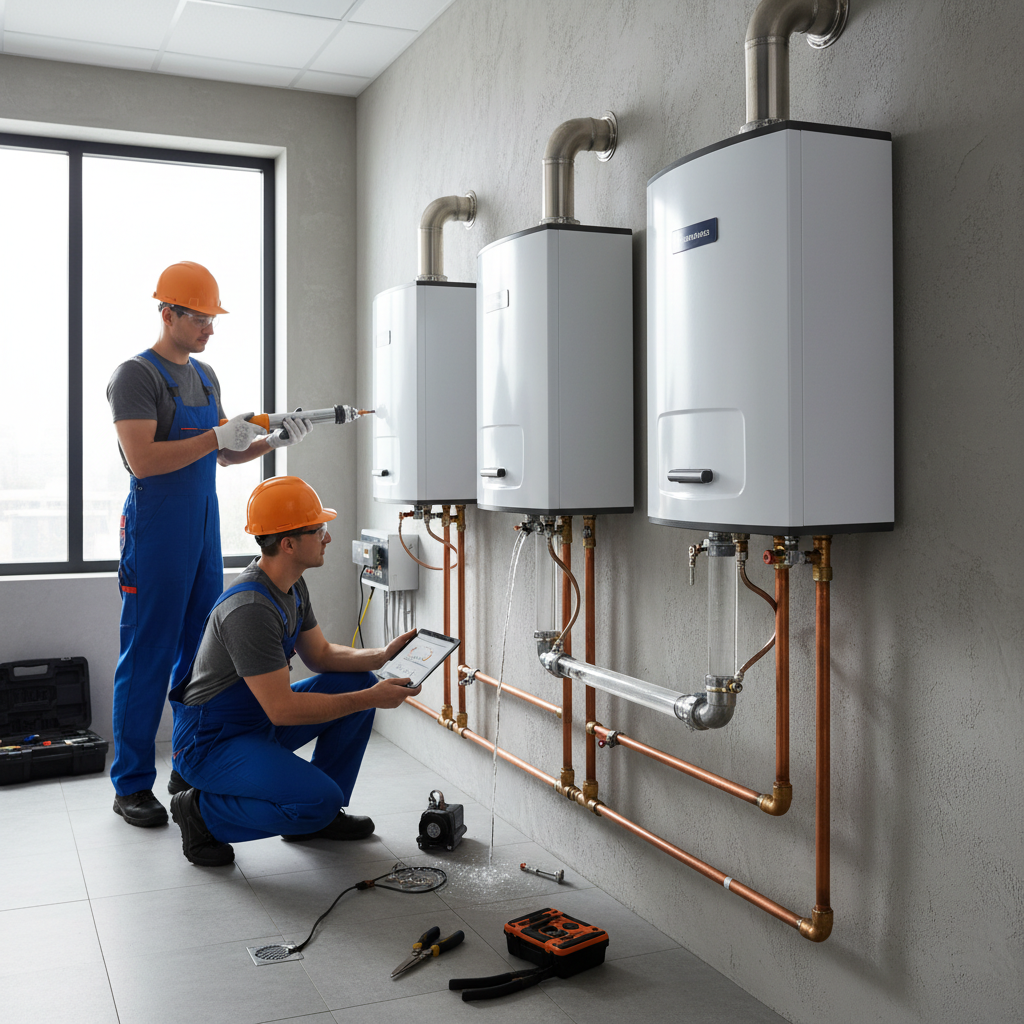
- Installation can be complex, often requiring professional upgrades to gas lines, dedicated electrical circuits, or ventilation systems, increasing project scope and cost.
- Requires annual descaling maintenance, particularly in hard water regions, to maintain efficiency, preserve warranty, and ensure unit longevity. Neglecting this can lead to diminished performance and voided warranties.
- Flow rate limitations can impact simultaneous high-demand hot water uses in larger homes if not properly sized, potentially causing temporary inconvenience.
- Potential for a slight delay (a few seconds) before hot water reaches distant faucets, a minor consideration in some home layouts that can be mitigated with point-of-use units or recirculation pumps.
- Some models may require a larger gas line or higher electrical amperage than existing infrastructure, adding to installation complexity and cost.
| Type | Price Range |
|---|---|
| Conventional Storage Tank (Installed) | $1,200 – $2,500 |
| Tankless Water Heater (Installed) | $3,000 – $6,500 |
| Heat Pump / Hybrid Water Heater (Installed) | $2,500 – $5,000 |