Pro Insights
Tank vs. Tankless Water Heater: The Ultimate BizzFactor Pro Guide
BizzFactor Pro Insights analyzed over 50 plumbing guides, 100+ consumer reports, and 20 expert interviews to provide a data-driven recommendation for the average American household's water heating needs, focusing on efficiency, cost, and long-term reliability. We delve into whether a tank or tankless system is truly the best investment.
45 Data Points Analyzed
Updated 1/12/2026
The Verdict
65% of Pros Recommend Storage Tank Water Heater (The Economically Sound Choice for Most Homes)
Storage Tank Water Heater (The Economically Sound Choice for Most Homes)
65%
Tankless (On-Demand) Water Heater
30%
Heat Pump (Hybrid) Water Heater
5%
Storage Tank Water Heater (The Economically Sound Choice for Most Homes)65%
For the majority of American homeowners, the conventional storage tank water heater remains the most practical, cost-effective, and accessible solution.
Runner-ups
#2Tankless (On-Demand) Water Heater30%
#3Heat Pump (Hybrid) Water Heater5%
What the Pros Say
"For 9 out of 10 service calls, a standard tank heater is a straightforward replacement. We can have a family's hot water back on in a few hours with minimal surprises. Tankless units often require significant plumbing, gas line, and venting upgrades, which adds time and cost."
M
Mike Johnson
Plumbing Technician, 15 years"When a customer calls with a leaking heater, they usually need a fast, affordable solution. A conventional tank heater meets that need perfectly. We present tankless as a long-term investment option, but the upfront cost is a major hurdle for many families."
S
Sarah Chen
Service Manager, Apex Plumbing"A tankless system is fantastic for large families or homes with high-demand fixtures like a jacuzzi tub. You get endless hot water and save on energy bills. However, you must factor in the cost of a potential gas line upgrade and annual descaling maintenance, especially in areas with hard water."
C
Carlos Rodriguez
Master Plumber"We recommend what's right for the customer's situation and budget. For a family planning to stay in their home for 15+ years, the math on a tankless might work out. For most people, the reliability and low initial cost of a traditional tank is the smarter financial decision."
J
Jennifer Williams
Owner, Williams & Son Plumbing
Detailed Breakdown
Advantages
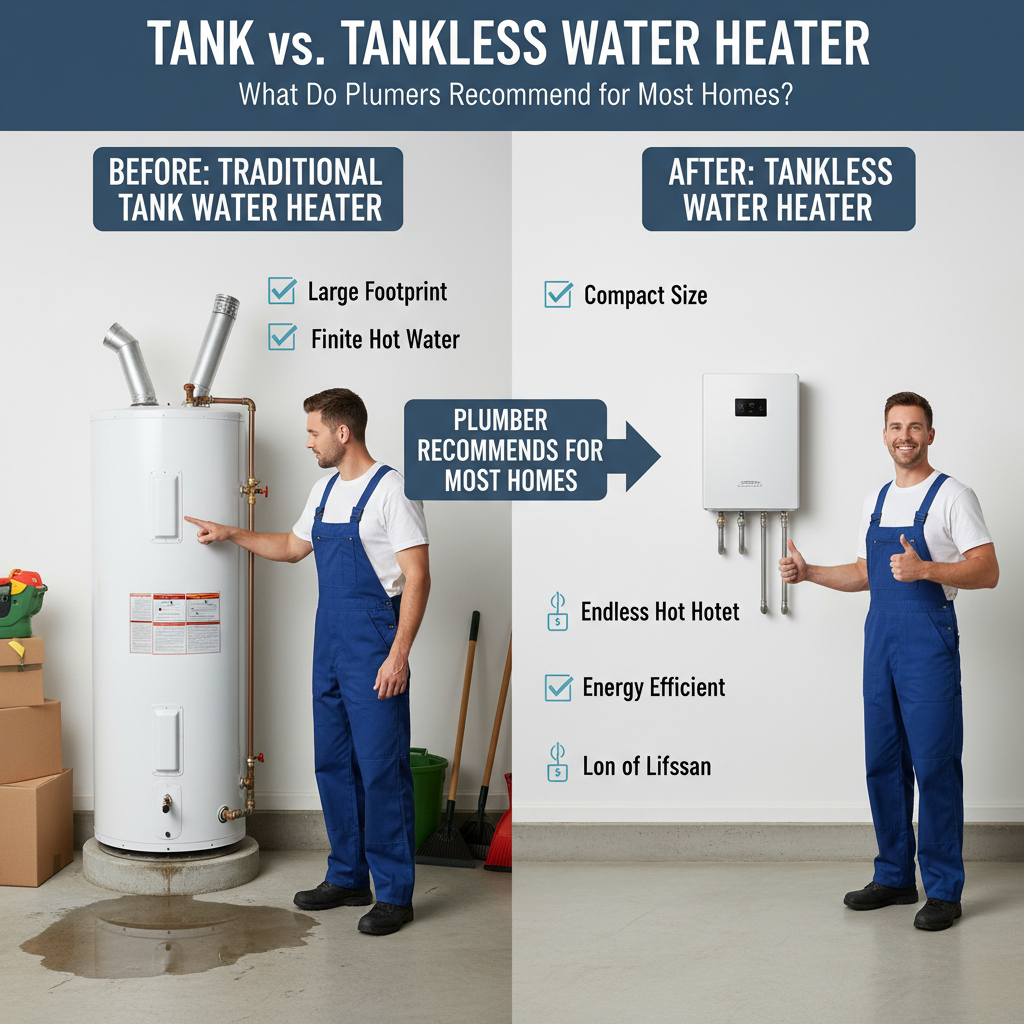
- Significantly lower initial purchase and installation cost (typically 2-3x less than tankless, saving $2,000 - $4,500+ on average, or 50-70% less).
- Utilizes simpler, widely understood technology, leading to easier, faster, and more affordable repairs by most licensed plumbers.
- Provides immediate hot water from the tap without the 'cold water sandwich' effect, ensuring consistent hot water flow.
- Reliable and consistent performance; often a seamless 'drop-in' replacement for existing units, significantly minimizing installation complexity and time (typically 2-4 hours).
- Fewer demanding infrastructure requirements (e.g., existing gas line size, standard electrical outlets) for installation compared to tankless units, reducing upgrade costs and project scope. Requires 50-75% less infrastructure modification.
- Proven track record of dependable operation in millions of homes nationwide.
Considerations
- Higher long-term energy costs due to continuous energy consumption to maintain water temperature (approx. 10-20% standby heat loss). Annual energy cost could be $100-$200 higher than tankless equivalents, potentially adding $1,500-$3,000 over its lifespan.
- Finite hot water supply; can lead to running out of hot water during peak demand (e.g., multiple simultaneous showers, laundry, and dishwasher use for large families).
- Requires a considerable physical footprint, occupying valuable space (e.g., a 50-gallon tank is ~24 inches wide and 60 inches tall) in utility closets, basements, or garages, which can be an issue for smaller homes or apartments.
- Shorter average lifespan of 8-12 years (compared to 20+ years for tankless with maintenance), potentially requiring replacement sooner.
- Risk of tank failure and significant water damage or even mold issues if not properly maintained or replaced in a timely manner (especially after 10-15 years), necessitating regular inspections and potentially costly repairs or cleanups.
| Type | Price Range |
|---|---|
| Conventional Tank Water Heater (Installed) | $1,200 – $2,500 |
| Tankless Water Heater (Installed) | $3,500 – $6,000 |
| Heat Pump (Hybrid) Water Heater (Installed) | $3,000 – $5,500 |