Troubleshooting & Fixing Deteriorated Countertop Caulk and Grout: A Comprehensive Guide
Comprehensive guide to diagnosing, safely removing, and preparing for new countertop caulk and grout. Learn the signs of failure, detailed step-by-step removal techniques, and crucial preparation tips for a perfect, lasting seal.
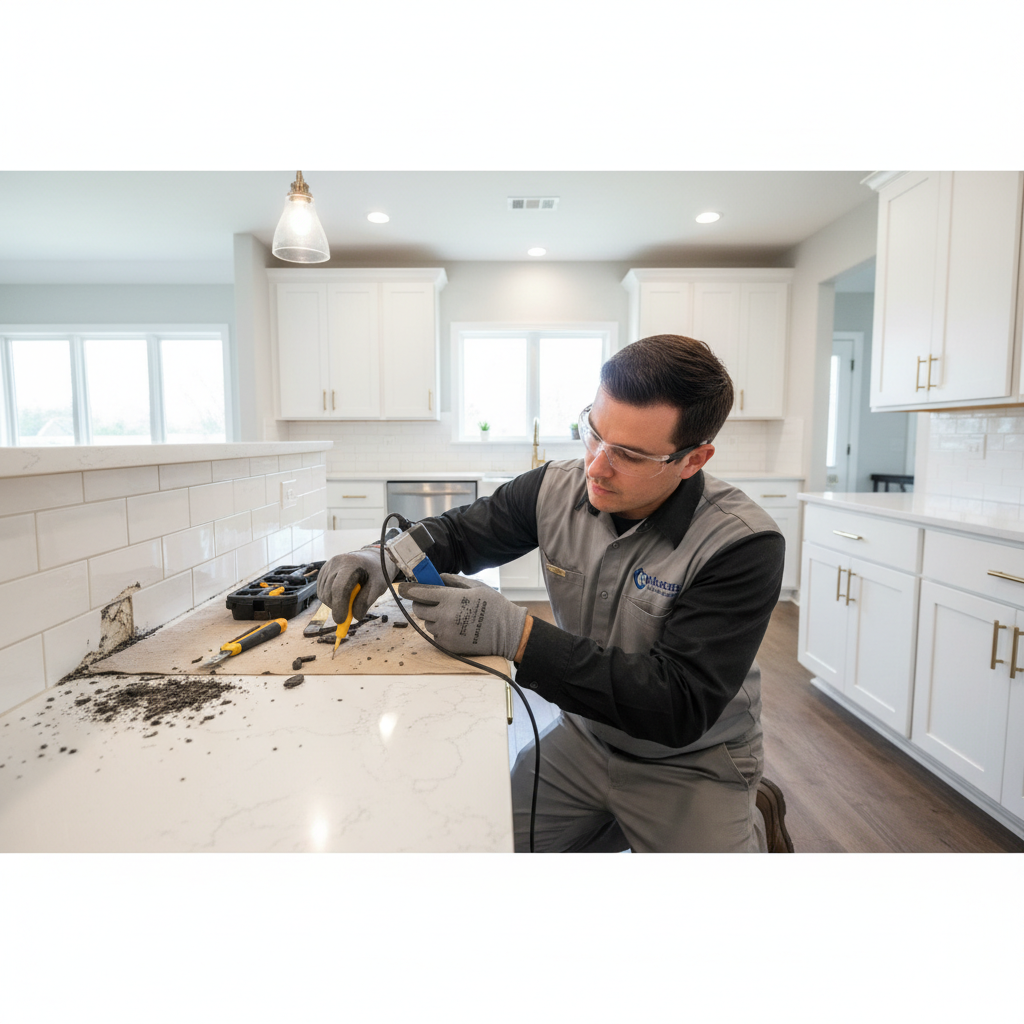
Quick Answer
To remove old countertop caulk and grout effectively, first identify the material by cracking (grout) or peeling/discoloration (caulk). For caulk, carefully score both edges with a utility knife, then use a dedicated caulk removal tool to scrape it out. Clean any residue with mineral spirits or alcohol. For grout, use a grout saw or an oscillating multi-tool with a grout blade to remove the old material, then vacuum thoroughly. Always ensure the area is completely clean and dry before applying new caulk (for flexible joints) or grout (for tile-to-tile seams) to establish a lasting, watertight seal.
Common Symptoms
- Cracking, crumbling, or flaking caulk/grout lines
- Discoloration (black, pink, orange stains) indicating mold or mildew growth
- Shrinking or pulling away from the countertop or backsplash surfaces, creating visible gaps
- Water leakage or staining on walls or inside cabinets around the countertop edges or sink
- Loose or missing sections of caulk/grout
- The caulk or grout feels soft, spongy, or moves when pressed
Possible Causes
- Age and wear: Caulk and grout naturally degrade over time, becoming brittle and losing their seal.
- Moisture exposure: Persistent dampness fosters mold and mildew, which breaks down the material from behind.
- Improper initial application: Poor surface prep, wrong material choice, or bad technique leads to premature failure.
- Expansion and contraction: Natural house movement causes rigid materials like grout to crack in flexible joints.
- Harsh cleaning chemicals: Abrasive or chemical-heavy cleaners can erode and weaken the seal over time.
- Lack of flexibility: Using rigid grout in a joint that needs to move (like where counter meets wall) instead of flexible caulk.
Step-by-Step Diagnosis
- Visual Inspection: Systematically examine all caulk and grout lines for cracks, gaps, or discoloration, paying close attention to corners and the sink area.
- Touch and Pressure Test: Gently press on the caulk/grout. If it feels soft, spongy, or moves, it indicates a loss of adhesion or water intrusion.
- Gentle Pry Test: Use a plastic scraper or dedicated tool to gently prod at the material. If it lifts or crumbles easily, it's compromised and needs removal.
- Water Penetration Check: For suspected leaks, dry the area completely, apply a small amount of water to the seam, and watch to see if it soaks in rather than beading up.
DIY vs Professional Costs
| Repair | DIY cost | Pro cost | Time |
|---|---|---|---|
| Manual Removal & Recaulk (Around a Sink) | $20-$40 | $250-$400 | 2-3 hours (DIY) |
| Manual Removal & Recaulk (Standard Backsplash) | $30-$50 | $300-$500 | 4-6 hours (DIY) |
| Chemical Softener + Removal (Stubborn Caulk) | $40-$70 | Included in Pro Fee | Adds 1-2 hours wait |
When to Call a Pro
- When the area is very large and would be too time-consuming for a DIY project.
- If you have delicate or expensive countertop materials like marble that you're afraid to damage.
- If the old caulk or grout is extremely hard and resistant to manual removal methods.
- When you discover signs of significant water damage, like soft drywall or rotting wood in the cabinets, which indicates a larger problem.
Prevention Tips
- Use High-Quality Materials: Always use 100% silicone caulk for flexible joints (counter-to-wall) and quality grout for tile-to-tile seams.
- Ensure Proper Application: Make sure surfaces are perfectly clean and bone-dry before applying new material for a strong, lasting bond.
- Regular, Gentle Cleaning: Clean caulk and grout lines regularly with mild, non-abrasive, pH-neutral cleaners to prevent buildup.
- Promptly Address Small Issues: Fix small cracks or peeling sections as soon as you see them to prevent a small problem from becoming a big one.
- Maintain Good Ventilation: Reduce humidity in kitchens and bathrooms to discourage mold and mildew growth.
- Wipe Down Surfaces: Don't let water pool against caulk lines for extended periods, especially around the sink.
FAQs
What are the essential tools needed to remove old caulk or grout?
For caulk, you need a sharp utility knife, a dedicated caulk removal tool (scraper/hook), and painter's tape for clean lines. For grout, a manual grout saw or an oscillating multi-tool with a grout blade is essential. A shop vac and safety glasses are recommended for both for cleanup and protection.
Can I apply new caulk over old caulk, or do I always need to remove it first?
You *must* always remove all the old caulk first. Applying new caulk over old will result in a weak bond, will trap moisture and mold underneath the new layer, and will fail very quickly. It's a complete waste of time and only exacerbates the problem.
How much does it cost to DIY versus hiring a professional for caulk/grout replacement?
DIY costs can be as low as $30-$50 for tools and materials (caulk, knives, maybe a simple scraper). Hiring a professional for caulk removal and replacement typically costs between $150-$500 for a small area like a sink, up to $1000 or more for an entire kitchen or complex bathroom, depending on the extent of removal and the type of materials.
What kind of caulk should I use for my countertops?
For countertop-to-wall or countertop-to-backsplash joints (areas that need flexibility), always use 100% silicone caulk. It offers superior water resistance, flexibility, and mold/mildew resistance. For tile-to-tile grout lines, if replacing caulk that matches grout, you can use a siliconized acrylic caulk that matches your existing grout color.
How long does new caulk or grout typically last?
High-quality 100% silicone caulk can last 5-15 years, depending on the environment, application quality, and maintenance. Grout, when properly installed and sealed, can last 10-20 years or more in low-movement areas. Regular cleaning and prompt attention to minor issues can extend their lifespan significantly.
Is it safe to use harsh chemical removers for caulk or grout?
While there are chemical caulk and grout removers available, they often contain strong solvents or acids. These can damage your countertop material (especially natural stone), irritate skin and eyes, and release strong fumes. Mechanical removal with the right tools is generally safer and just as effective, if not more so. If you choose to use chemicals, always test in an inconspicuous area, follow manufacturer instructions precisely, and ensure excellent ventilation.
How soon can I use my countertop after replacing caulk or grout?
This depends on the specific product used. Most silicone caulks require 24-48 hours to fully cure before exposure to moisture. Grout cure times also vary, but typically, light use can resume after 24 hours, with full curing taking several days. Always check the manufacturer's instructions on the product packaging for precise drying and curing times to ensure durability and a lasting seal.
Related guides
- Troubleshooting & Fixing Deteriorated Countertop Caulk and Grout: A Comprehensive Guide
- Granite Countertop Sealing: Your Guide to Preventing Stains and Water Damage (2024)
- Troubleshooting & Fixing Porous Concrete Countertops (Sealing Guide)
- Kitchen Countertop Installation Prep Checklist: Avoid Delays & Extra Costs (2024 Guide)