Quick Answer
Okay, so here's the quick version. Your AC is humming or just plain dead? Nine times out of ten, it’s a failed capacitor. It’s a little metal can inside your outdoor unit that gives the big motors the jolt they need to get going. You can usually spot a bad one 'cause the top is puffed up, or it's leaking oily gunk. Replacing it yourself is a $15-$50 part and maybe 30 minutes of your time if you're careful. A pro will set you back $150-$400 for the same job. Just be dead serious about shutting off all the power first.
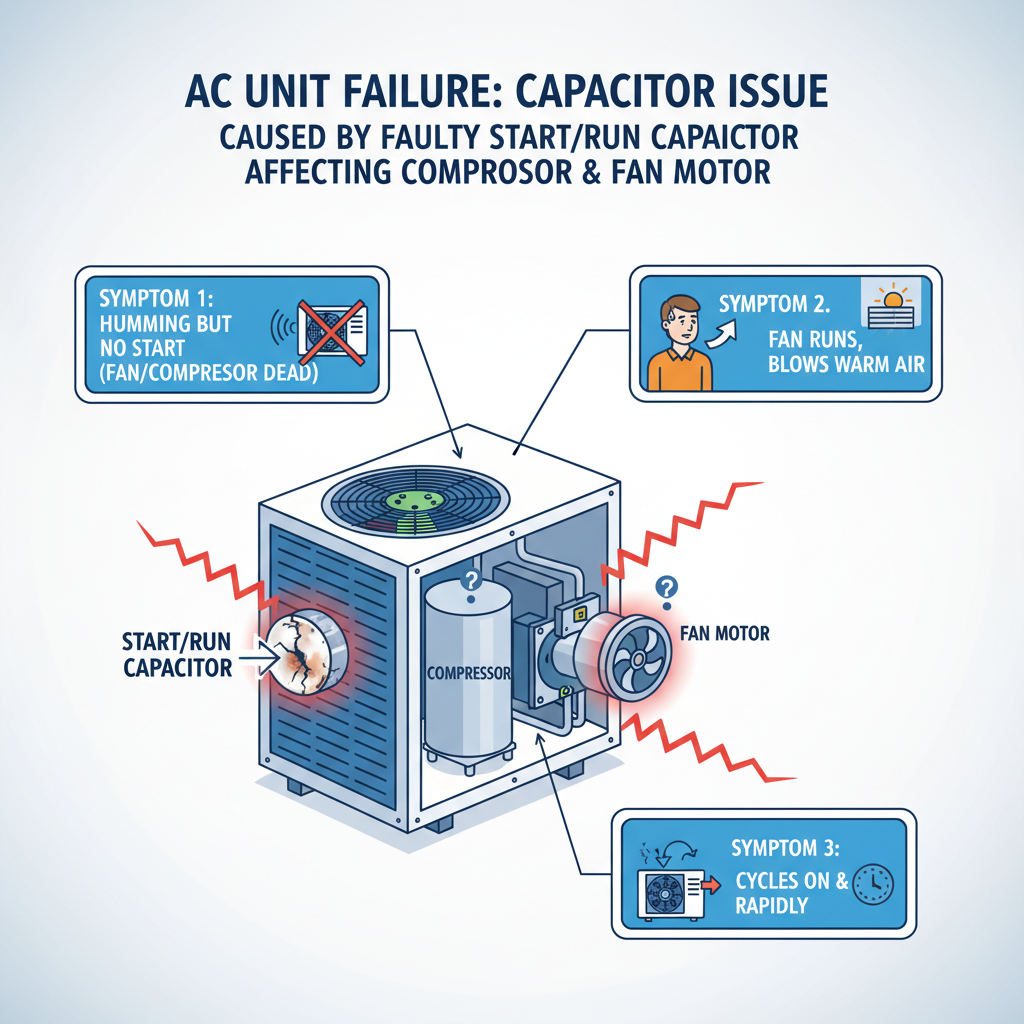
Common Symptoms
Possible Causes
Step-by-Step Diagnosis
Step 1
Turn off all power to the AC system at the thermostat, the main breaker panel, and the outdoor disconnect switch.
Step 2
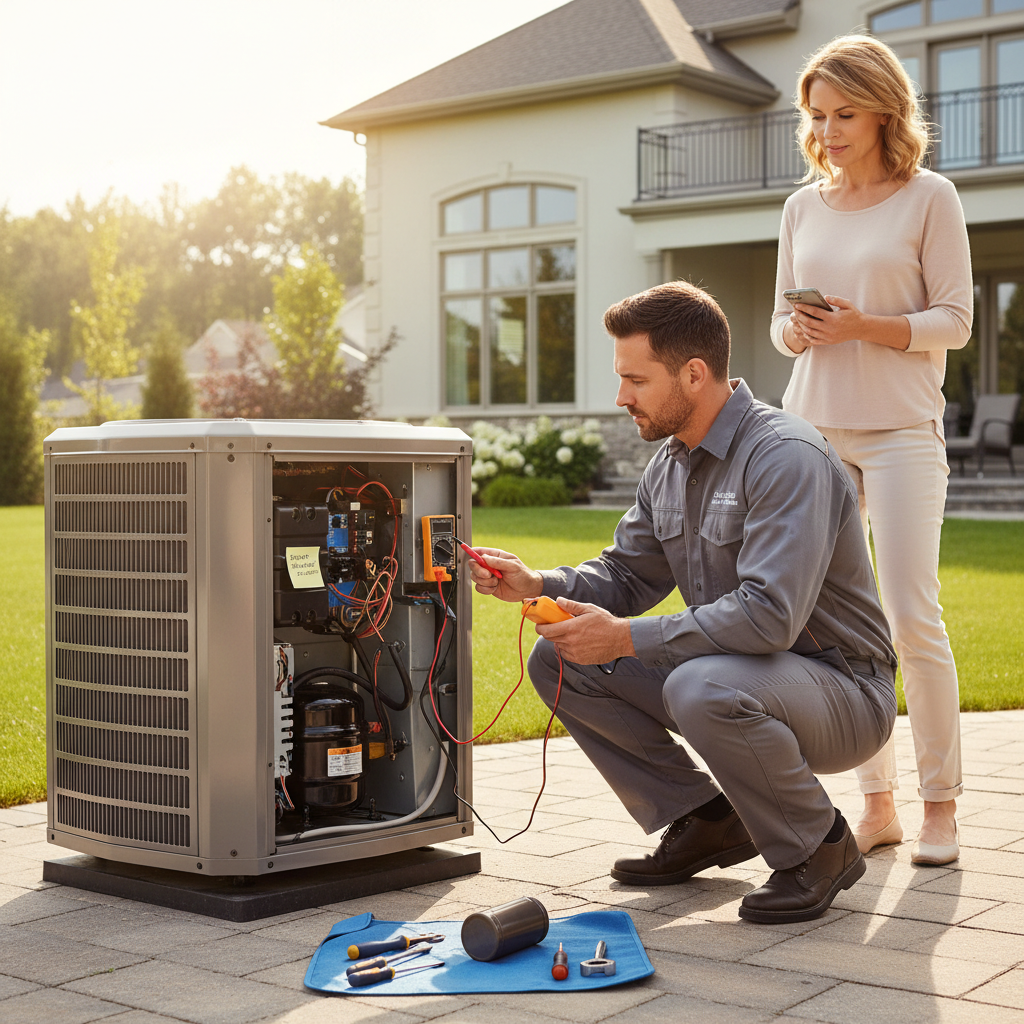
Remove the service panel on the outdoor unit and visually inspect the capacitor for bulging, leaks, or rust.
Step 3
SAFELY discharge the capacitor by bridging the terminals (C to HERM, then C to FAN) with an insulated screwdriver.
Step 4
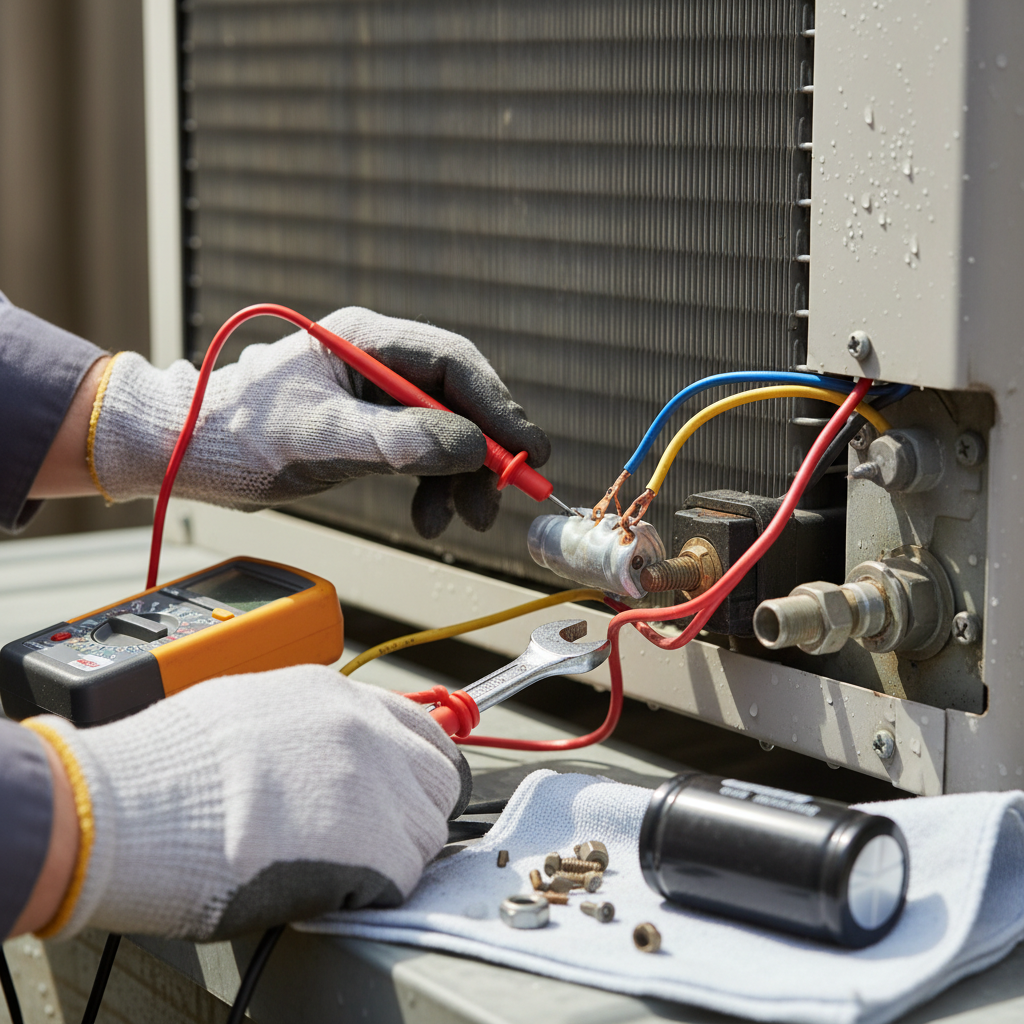
Take a picture of the wiring, then disconnect the wires from the capacitor terminals.
Step 5
Set a multimeter to the capacitance (µF) setting and test the terminals (C to HERM and C to FAN).
Step 6
Compare the multimeter readings to the ratings printed on the capacitor label. If the reading is outside the +/- 6% tolerance, the capacitor is bad and must be replaced.
DIY vs Professional Costs
| Repair Type | DIY Cost | Professional Cost | Time Required |
|---|---|---|---|
Run Capacitor Replacement | $15-50 | $150-400 | 30-60 minutes |
Emergency/After-Hours Replacement | $15-50 | $300-600+ | 30-60 minutes |
When to Call a Professional Hvac
- If you are at all uncomfortable or inexperienced with working on high-voltage electrical systems.
- If you replace the capacitor and the AC unit still does not work correctly.
- If you open the access panel and see widespread damage like burnt wires, melted plastic, or scorch marks.
- If your AC system is still under the manufacturer's warranty, as a DIY repair will likely void it.
Prevention Tips
- Keep the area around your outdoor AC unit clear of bushes, leaves, and debris to ensure proper airflow and prevent overheating.
- Schedule an annual professional AC tune-up in the spring to have components like the capacitor tested and cleaned.
- Gently rinse the outdoor unit's coils with a garden hose once or twice a year to remove dirt and cottonwood buildup.
- Consider having a dedicated HVAC surge protector installed to protect electronics from power spikes.
Frequently Asked Questions
Related Guides
Frozen AC Evaporator Coil (Troubleshooting & Fixes)
Seeing ice on your AC unit? Your AC probably isn't cooling right. A veteran tech explains why your evaporator coil is frozen and how to fix it fast.
Furnace Making Various Strange Noises? Troubleshooting & Fixes from a 25-Year Vet
Furnace making strange noises? A veteran HVAC tech explains what banging, whistling, or rattling means and how to fix it. DIY tips and when to call a pro.
Furnace Ignitor Not Glowing? Troubleshooting & Fixes from a 25-Year Pro
Furnace ignitor not glowing? An old pro with 25+ years in the field shows you why it's happening and how to fix it, from DIY replacement to a pro call.
Programmable thermostat fails to retain programmed temperature schedules or settings, resulting in improper HVAC system operation and inconsistent indoor temperatures. Troubleshooting & Fixes
Clogged HVAC condensate drain line, leading to water backup and potential system shutdown or water damage. Troubleshooting & Fixes
How to replace an HVAC air filter, including why it's important, signs it needs changing, and proper replacement procedures. Troubleshooting & Fixes
Need Professional Help?
Find top-rated hvac experts in your area