Quick Answer
Okay, so here's the quick version. Your furnace is blowing cold 'cause something's telling it to shut the fire off. Nine times out of ten, it's a simple fix. Could be a dumb thermostat setting, a dirty filter choking it out, or a filthy flame sensor. You can probably fix the first two for under fifty bucks yourself in about ten minutes. If it's more than that, you're looking at a part replacement, which might mean calling in a guy like me. But check the easy stuff first. Seriously.
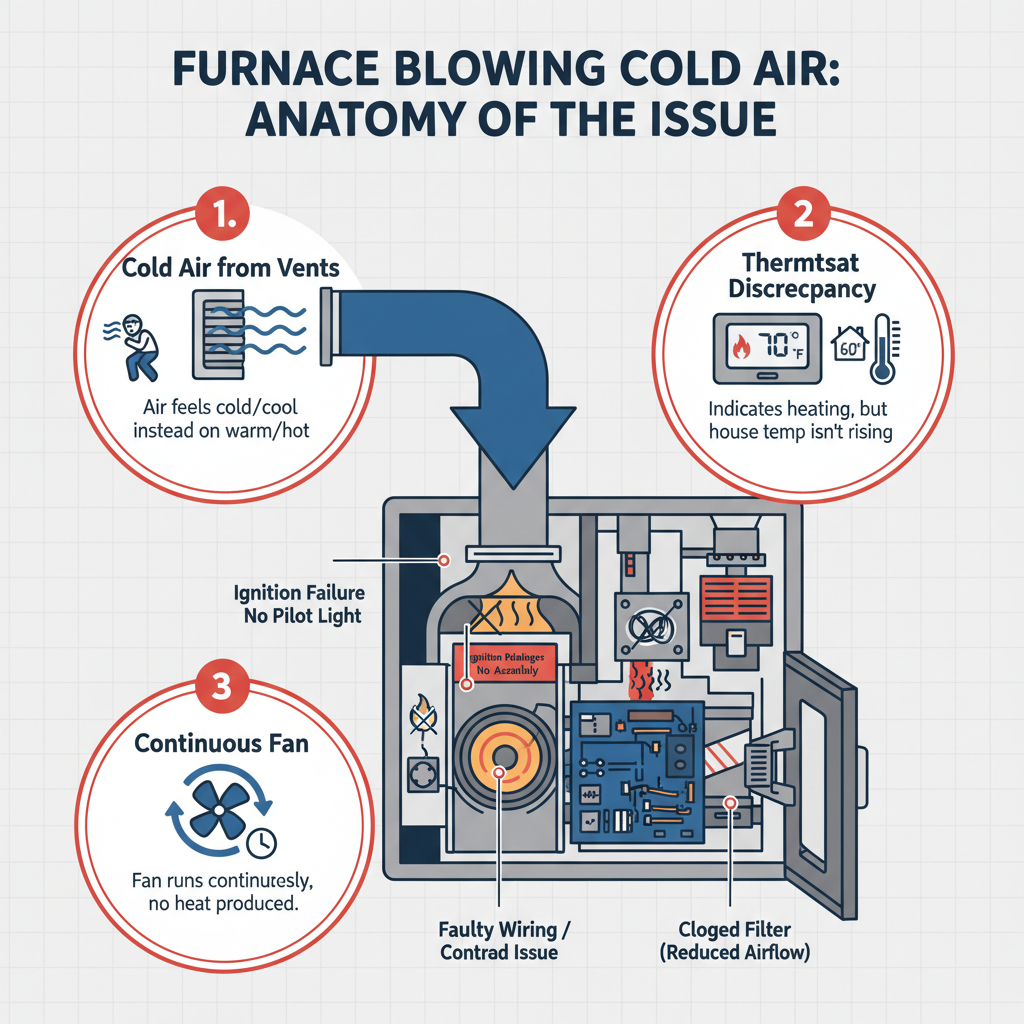
Common Symptoms
Possible Causes
Step-by-Step Diagnosis
Step 1
Check Thermostat Settings - Ensure it's in 'Heat' mode, 'Fan' is on 'Auto', and the set temperature is above the room temp. Change batteries if applicable.
Step 2
Inspect Furnace Power - Check the furnace's power switch (looks like a light switch) and the corresponding circuit breaker in your electrical panel.
Step 3
Check the Air Filter - Turn off the furnace and inspect the air filter. If you can't see light through it, replace it.
Step 4
Look for Diagnostic Error Codes - Observe the blinking LED light on the furnace control board and consult the chart (usually on the door) to see what it means.
Step 5
Inspect the Pilot Light (if applicable) - For older furnaces, check if the small pilot flame is lit. If not, follow manufacturer instructions to relight it.
Step 6
Clean the Flame Sensor - After turning off power, locate and gently clean the flame sensor rod with light steel wool or a clean cloth.
Step 7
Check the Condensate Drain Line - For high-efficiency furnaces, ensure the plastic drain tube is not clogged with debris or frozen solid.
Step 8
Listen for the Sequence of Operation - Listen for the inducer motor, the click of the gas valve, and the 'whoosh' of the burners. Note which sound is missing.
DIY vs Professional Costs
| Repair Type | DIY Cost | Professional Cost | Time Required |
|---|---|---|---|
Air Filter Replacement | $10-50 | $100-200 | 5 minutes |
Cleaning Flame Sensor | $0-10 | $150-300 | 30 minutes |
Igniter Replacement | $30-100 | $200-500 | 1 hour |
Limit Switch Replacement | $25-100 | $200-450 | 1-2 hours |
When to Call a Professional Hvac
- If you smell gas at any point, get out of the house immediately and call your gas company, then an HVAC professional.
- If the circuit breaker for the furnace repeatedly trips after being reset.
- If you're uncomfortable working with electrical components or gas lines.
- If the furnace is making loud banging, grinding, or high-pitched squealing noises.
- If your carbon monoxide detector goes off while the furnace is running.
- If you've tried all the basic DIY steps (filter, thermostat, sensor cleaning) and it still won't produce heat.
Prevention Tips
- Replace your furnace air filter every 1-3 months. It's the cheapest and most effective thing you can do.
- Schedule a professional furnace tune-up every fall before the heating season begins.
- Keep all air vents and return grilles in your home open and unblocked by furniture or rugs.
- For high-efficiency furnaces, check and clear the condensate drain line seasonally to prevent clogs.
- Keep the area immediately around your furnace clear of clutter to ensure proper airflow and for safety.
Frequently Asked Questions
Related Guides
Frozen AC Evaporator Coil (Troubleshooting & Fixes)
Seeing ice on your AC unit? Your AC probably isn't cooling right. A veteran tech explains why your evaporator coil is frozen and how to fix it fast.
Furnace Making Various Strange Noises? Troubleshooting & Fixes from a 25-Year Vet
Furnace making strange noises? A veteran HVAC tech explains what banging, whistling, or rattling means and how to fix it. DIY tips and when to call a pro.
Furnace Ignitor Not Glowing? Troubleshooting & Fixes from a 25-Year Pro
Furnace ignitor not glowing? An old pro with 25+ years in the field shows you why it's happening and how to fix it, from DIY replacement to a pro call.
Programmable thermostat fails to retain programmed temperature schedules or settings, resulting in improper HVAC system operation and inconsistent indoor temperatures. Troubleshooting & Fixes
Clogged HVAC condensate drain line, leading to water backup and potential system shutdown or water damage. Troubleshooting & Fixes
How to replace an HVAC air filter, including why it's important, signs it needs changing, and proper replacement procedures. Troubleshooting & Fixes
Need Professional Help?
Find top-rated hvac experts in your area