Quick Answer
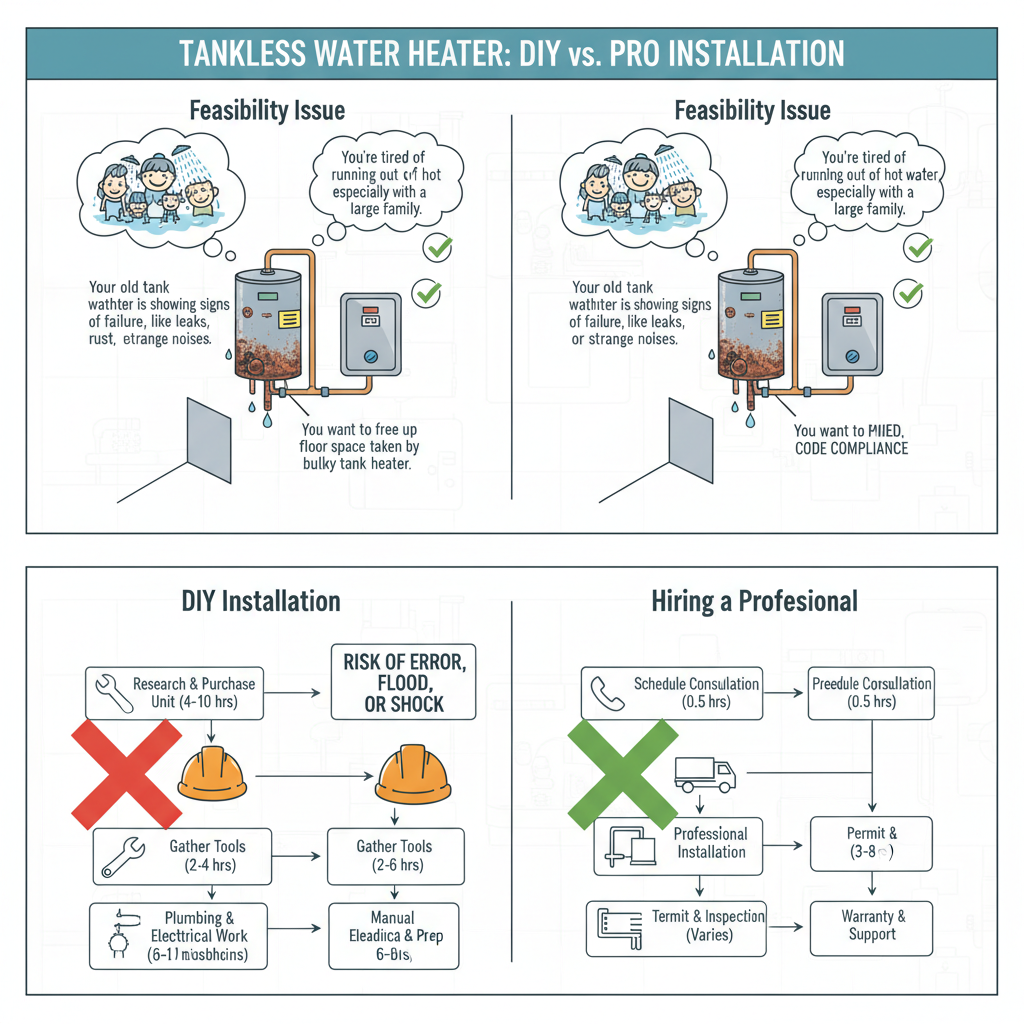
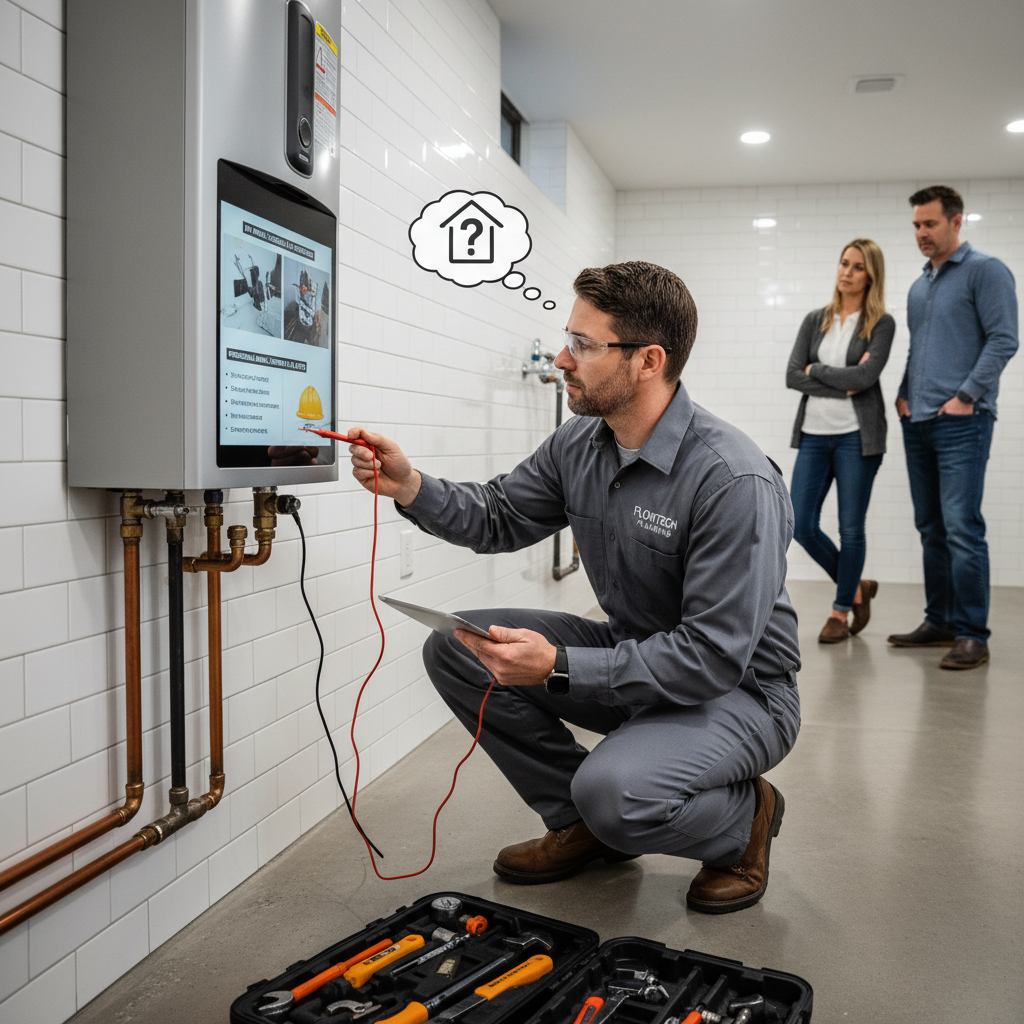
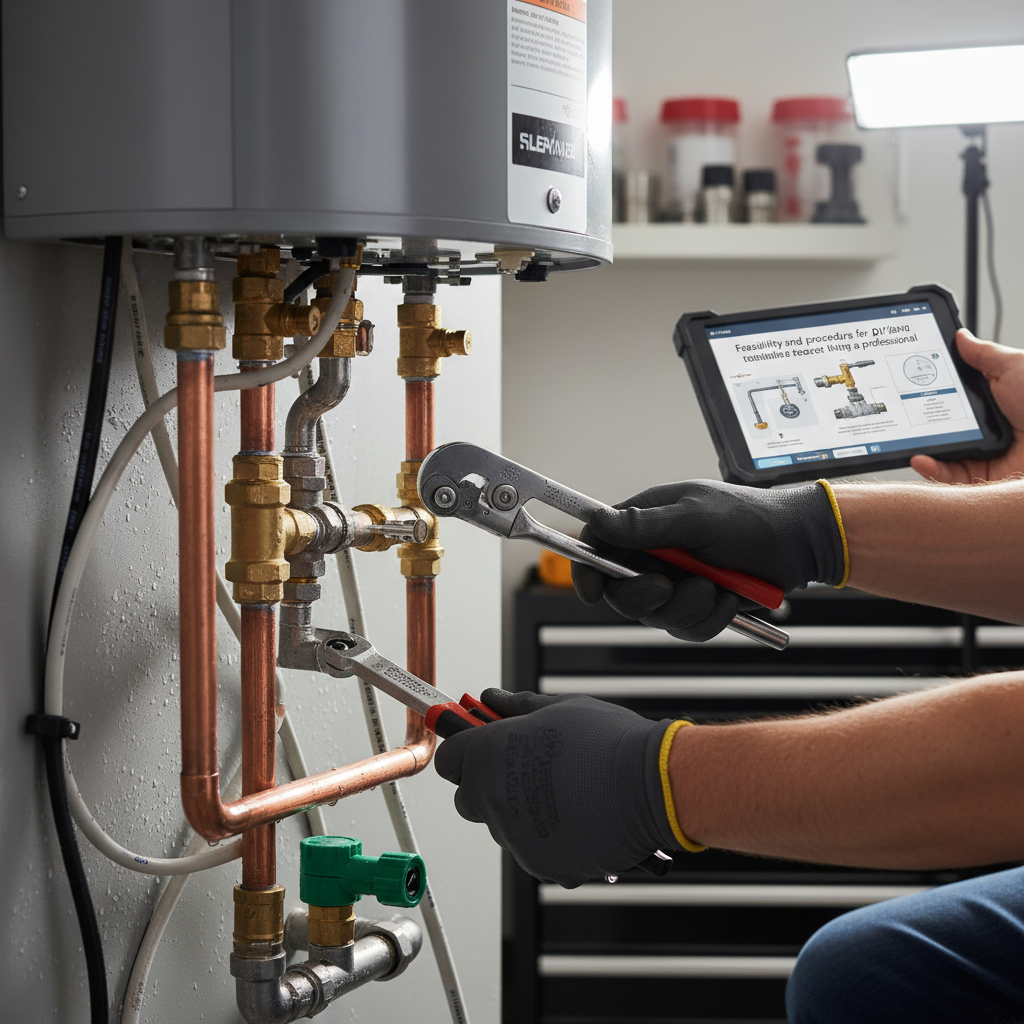
Installing a tankless water heater is a complex project involving gas, plumbing, electrical, and venting systems. Due to the significant safety risks and the necessity of specialized skills, tools, and adherence to local building codes, professional installation is almost always required. Attempting a DIY installation can lead to dangerous conditions, void warranties, and incur much higher costs for professional remediation.
Common Symptoms
Possible Causes
Step-by-Step Diagnosis
Step 1
Get down to your mechanical room and assess the existing utilities. Measure the diameter of your gas line from the meter to the heater and check the amp rating on your main electrical panel.
Step 2
Figure out a realistic location and venting path. You'll need an exterior wall with clear space to drill two or three holes for the intake and exhaust pipes, away from windows and other openings per code.
Step 3
Evaluate your plumbing. See what kind of pipes you have (copper, PEX) and determine if major re-routing is needed to connect to the new unit's location.
Step 4
Call your local building department. Don't guess. Ask them what the permit requirements and inspection process are for a tankless water heater installation.
Step 5
Be honest about your hot water usage. Count your showers and faucets, and figure out the max GPM you'd ever need at one time to size the unit correctly for your climate.
DIY vs Professional Costs
| Repair Type | DIY Cost | Professional Cost | Time Required |
|---|---|---|---|
Full Gas-to-Gas Tankless Conversion | $1,500 - $3,000+ | $3,500 - $8,000 | 1-2 days |
Gas Line Upgrade Only | $100 - $400 | $500 - $2,500 | 4-8 hours |
Electrical Upgrade for Electric Unit | $150 - $400 | $800 - $4,000+ | 1-2 days |
New Venting Installation | $100 - $300 | $400 - $1,800 | 3-6 hours |
When to Call a Professional Water Heater
- The moment you decide you want a tankless water heater. Call for quotes before you buy anything.
- Anytime a gas line needs to be run, modified, or connected.
- When a new high-amperage electrical circuit needs to be installed or your electrical panel needs to be upgraded.
- If you don't know the local building codes for venting and gas installation off the top of your head.
- When you lack professional-grade tools like a combustion analyzer, a gas leak detector, or pipe threading/pressing tools.
Prevention Tips
- Annually descale your tankless water heater using a pump and vinegar solution to remove mineral buildup from the heat exchanger.
- If you live in an area with hard water, install a whole-house water softener to protect your tankless unit and all other water-using appliances.
- Choose a reputable brand known for reliability and parts availability, like Rinnai, Navien, or Noritz, instead of a no-name online deal.
- Periodically clean the cold water inlet screen filter to prevent sediment from clogging the unit.
Frequently Asked Questions
Related Guides
Hot Water Smells Like Rotten Eggs? Here's How to Fix It (Troubleshooting & Fixes)
Stop the rotten egg smell in your hot water! This guide identifies the causes (bacteria, anode rod, water quality) and provides DIY fixes, from flushing and shock chlorination to anode rod replacement. Learn when to call a pro.
Water Heater Expansion Tank Problems: Diagnosis, Fixes & Prevention Guide
Is your water heater's T&P valve dripping or pipes banging? Our expert guide helps you diagnose and fix common water heater expansion tank problems, including waterlogging and pressure issues. Learn how to prevent leaks and significantly extend the life of your plumbing system.
Water Heater Inefficiency: Diagnosing and Fixing Poor Insulation for Lower Energy Bills
Stop energy waste and high utility bills! Learn to diagnose and fix inefficient water heater insulation with our expert guide. Discover easy DIY steps to insulate your tank and pipes for significant savings. Find out when to call a professional.
Tankless Water Heater Installation: DIY vs. Professional Guide (2024)
Considering a tankless water heater? This guide explains the significant challenges and dangers of DIY installation compared to hiring a professional, covering gas line upgrades, venting, electrical demands, and code compliance for safe and efficient operation.
Water Heater Not Hot Enough: Troubleshooting & Fixes (2024 Guide)
Tired of lukewarm showers? A veteran tech explains why your water heater isn't hot enough and how you can fix it. Troubleshooting tips for gas and electric.
Water Heater Leaking from Top: Troubleshooting & Fixes from a 25-Year Pro
Water heater leaking from the top? Learn to diagnose common culprits like T&P valves, loose connections, or the anode rod. Expert tips for DIY fixes and when to call a pro.
Need Professional Help?
Find top-rated water heater experts in your area