Quick Answer
A simple valve replacement might cost you $20-$50 for the part if you do it yourself, but a pro will charge you more like $200-$400. If it's high pressure, you're looking at a bigger job like adding an expansion tank or a pressure reducing valve, which will be significantly more expensive.
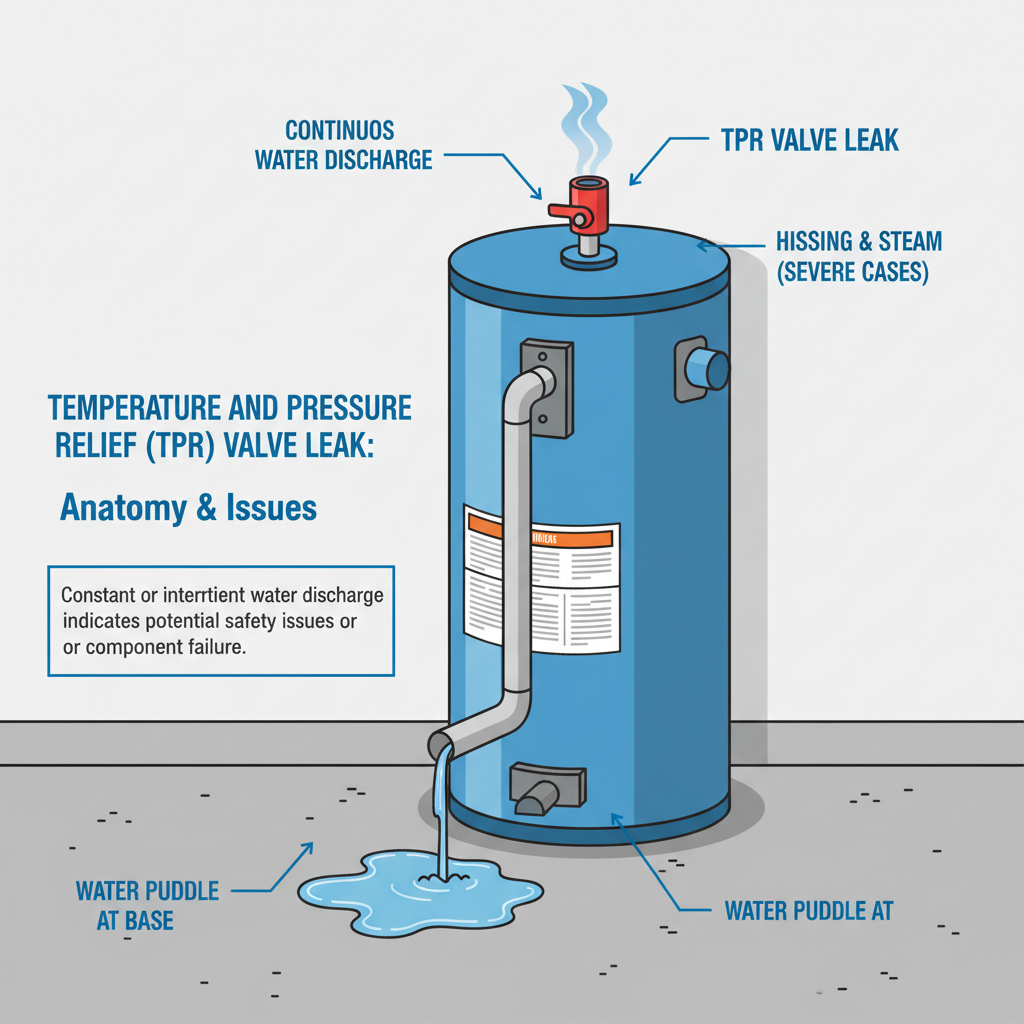
Common Symptoms
Possible Causes
Step-by-Step Diagnosis
Step 1
Observe the leak. Note if it's a constant drip, a stream, or if it only happens when the water heater is actively heating.
Step 2
Test your home's water pressure. Use a pressure gauge on an outdoor spigot to get a reading. Normal is 40-80 PSI; anything higher is a problem.
Step 3
Check the temperature setting on your water heater's thermostat. It should be set to 120-125°F, not maxed out.
Step 4
Carefully 'burp' the valve by lifting the lever for a few seconds to see if it clears any debris. Be prepared for it to leak more afterward if the seal is old.
Step 5
Check for the presence and function of a thermal expansion tank, which would be a small tank plumbed into the cold water line above the heater.
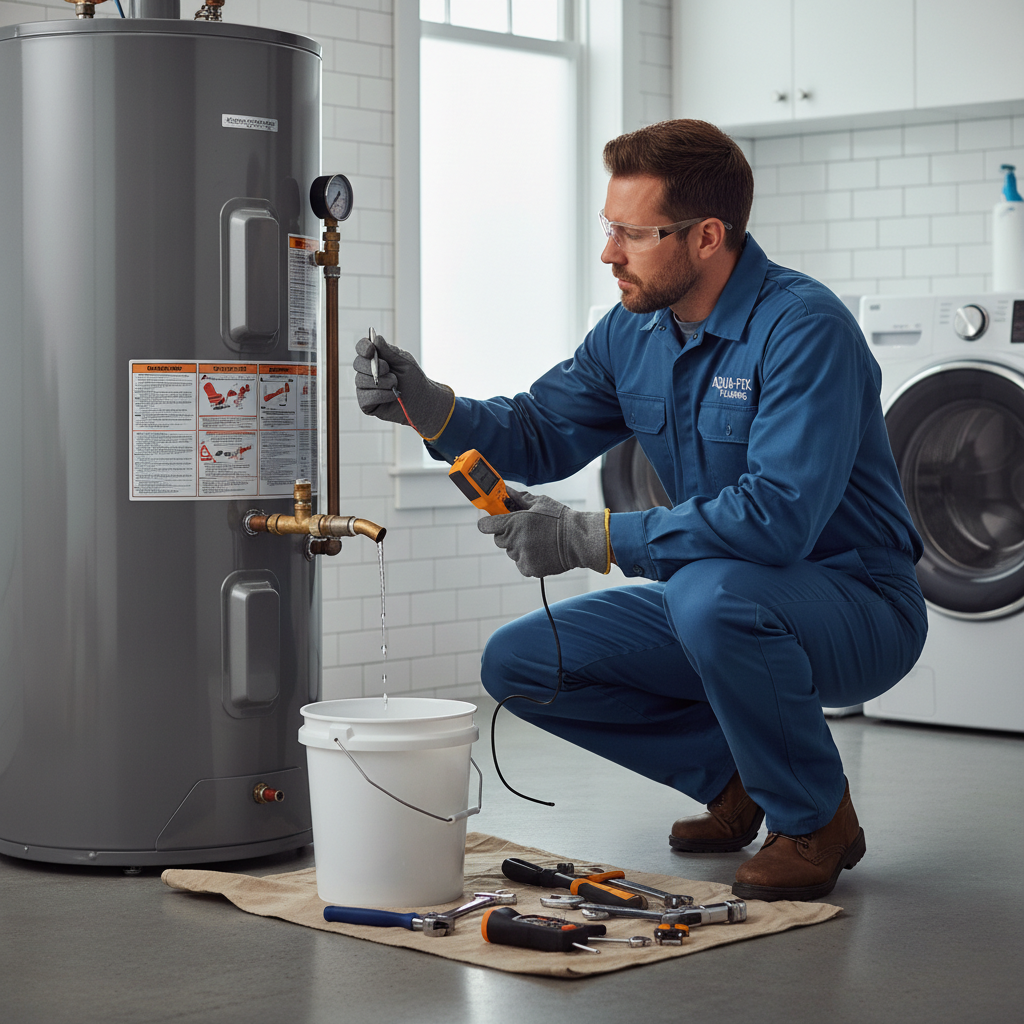
DIY vs Professional Costs
| Repair Type | DIY Cost | Professional Cost | Time Required |
|---|---|---|---|
Replacing the TPR Valve | $20-50 | $200-400 | 1-2 hours |
Installing a Thermal Expansion Tank | $50-150 | $350-650 | 2-3 hours |
Installing a Pressure Reducing Valve | $60-200 | $400-700 | 2-4 hours |
When to Call a Professional Water Heater
- If you see steam or scalding hot water actively discharging from the valve, shut down the system and call a pro immediately.
- If you've diagnosed high water pressure (over 80 PSI) as the cause, as this requires installing a pressure-reducing valve.
- If you are not comfortable or experienced with draining a large water tank and using pipe wrenches to replace the valve.
- If you replace the valve and it continues to leak, indicating a more complex issue like thermal expansion.
- If the leak is a strong, continuous stream, which could lead to flooding or significant water damage quickly.
Prevention Tips
- Keep your water heater temperature set at a safe and efficient 120-125°F.
- Test your home's water pressure annually with a cheap gauge to catch high pressure before it causes problems.
- If your pressure is high (over 80 PSI), have a Pressure Reducing Valve (PRV) installed.
- Ensure you have a functioning thermal expansion tank, especially if you have a PRV or other closed-loop system.
- Flush sediment from your water heater tank once a year by draining a few gallons from the bottom drain valve.
- Proactively replace your TPR valve every 5-7 years, especially if you have hard water.
Frequently Asked Questions
Related Guides
Lack of hot water heater maintenance leading to decreased efficiency, premature failure, and reduced lifespan Troubleshooting & Fixes
Inefficient water heater operation due to insufficient insulation, leading to higher energy consumption and increased utility bills. Troubleshooting & Fixes (2024 Guide)
Is your water heater bleeding heat and money? Our veteran tech's guide shows you how to troubleshoot and fix poor insulation for lower utility bills. Easy fixes inside.
Safely and effectively shutting down a water heater during an emergency or for maintenance to prevent further damage or hazards. Troubleshooting & Fixes
Water Heater TPR Valve Leaking: Troubleshooting & Fixes (2024 Guide)
Your water heater's TPR valve leaking? A veteran tech explains why it's happening, how to fix it, and when to call a pro. Learn the real causes and costs.
Noisy Water Heater (Popping, rumbling, hissing, whining, banging sounds) Troubleshooting & Fixes
Going Tankless: DIY Dream or Professional Necessity? Troubleshooting & Fixes (2024 Guide)
Thinking of swapping to a tankless water heater? A veteran tech breaks down the real costs and dangers of DIY vs. hiring a pro. Don't touch that gas line yet.
Need Professional Help?
Find top-rated water heater experts in your area