Quick Answer
If you're noticing excessive dust, persistent musty smells when your HVAC runs, or worsening allergy symptoms indoors, your air ducts likely need cleaning. Common causes include accumulated household dust, pet dander, mold from moisture issues, or construction debris. While you can maintain filters and vacuum vents, a thorough cleaning often requires professional equipment, especially if dealing with mold, pests, or significant debris. Expect to pay between $300-$700 for a reputable service.
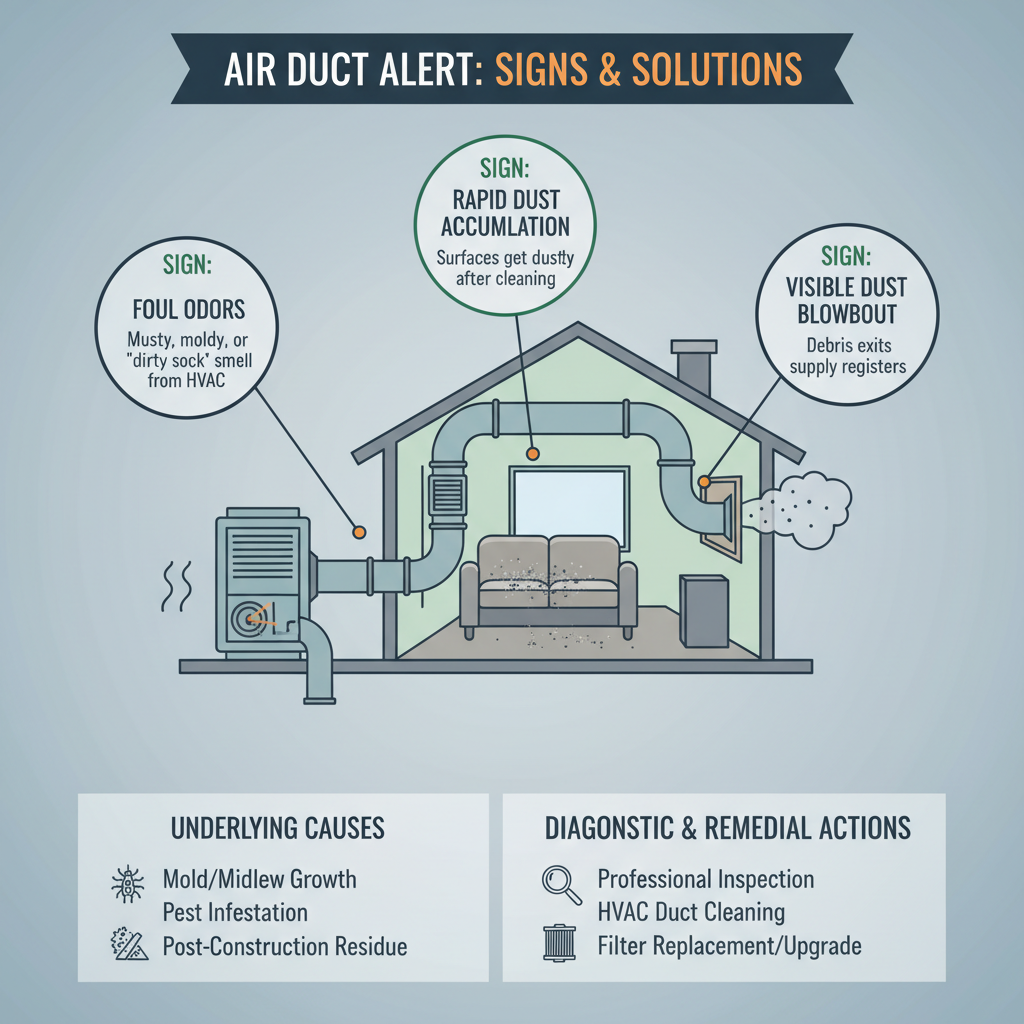
Common Symptoms
Possible Causes
Step-by-Step Diagnosis
Step 1
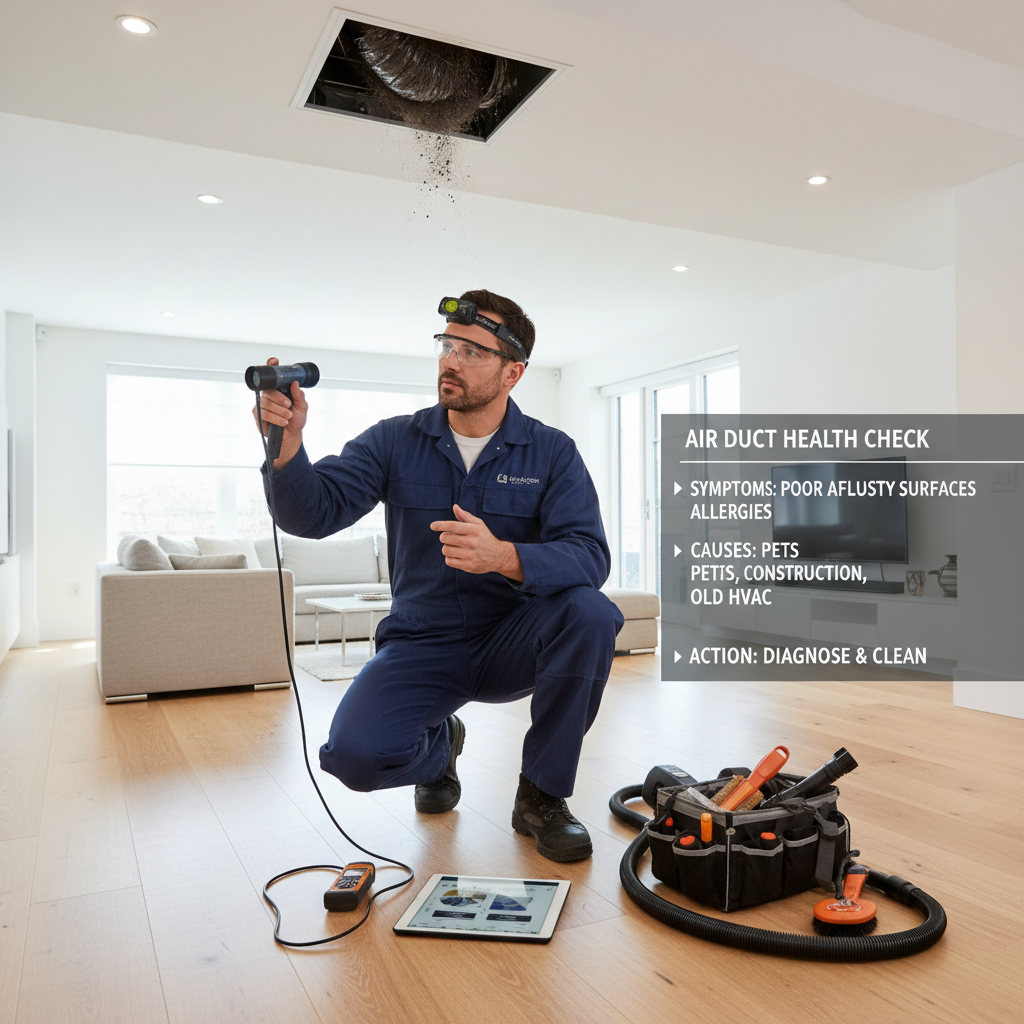
Conduct a visual inspection of several supply and return registers using a flashlight. Look for heavy dust, debris, mold, or signs of pest activity.
Step 2
Check your HVAC system's air filter for excessive clogging or signs of bypass (dirt around filter frame), indicating air is not being properly filtered.
Step 3
Carefully inspect the blower motor and fan (squirrel cage) within the HVAC unit for a heavy coating of dust or grime (ensure power is off).
Step 4
Turn on your HVAC fan and perform a 'smell test' at different registers throughout the house, noting any persistent musty, stale, or unusual odors.
Step 5
Observe how quickly dust accumulates on surfaces after a thorough cleaning; rapid resettlement suggests airborne contamination from the HVAC system.
Step 6
Consider using an HVAC inspection camera (if available or hiring a pro) to view inaccessible sections of ductwork for a more comprehensive assessment.
DIY vs Professional Costs
| Repair Type | DIY Cost | Professional Cost | Time Required |
|---|---|---|---|
Clean Registers & Grilles | $0-5 | Included in full service | 30-60 minutes |
Vacuum Accessible Duct Openings | $0 | Included in full service | 15-30 minutes |
Full System Duct Cleaning (Negative Air) | Not a DIY job | $300 - $700 | 2-4 hours |
Mold Remediation in Ducts | DON'T DIY THIS | $500 - $2000+ | 4-8+ hours |
Pest Removal & Sanitizing | Not recommended | $200 - $500+ | 1-3 hours |
When to Call a Professional Air Duct
- You discover visible mold growth inside your ductwork, as this requires specialized containment and removal.
- There is clear evidence of rodent, insect, or other pest infestations within the duct system.
- You've recently completed extensive home renovations (especially drywall work) leading to significant dust.
- Your ducts are visibly clogged with large amounts of debris, insulation, or construction materials.
- Family members are experiencing unexplained, persistent allergy, asthma, or respiratory symptoms linked to being indoors.
- You've moved into a new home and have no history of the HVAC system's maintenance or condition.
- A pervasive, unpleasant odor persists from your vents despite regular filter changes and basic cleaning.
Prevention Tips
- Change high-quality pleated HVAC air filters (MERV 8-11) every 1-3 months.
- Regularly vacuum and dust your home (including around vents) to minimize airborne particles.
- Maintain indoor humidity levels between 30-50% to inhibit mold and mildew growth.
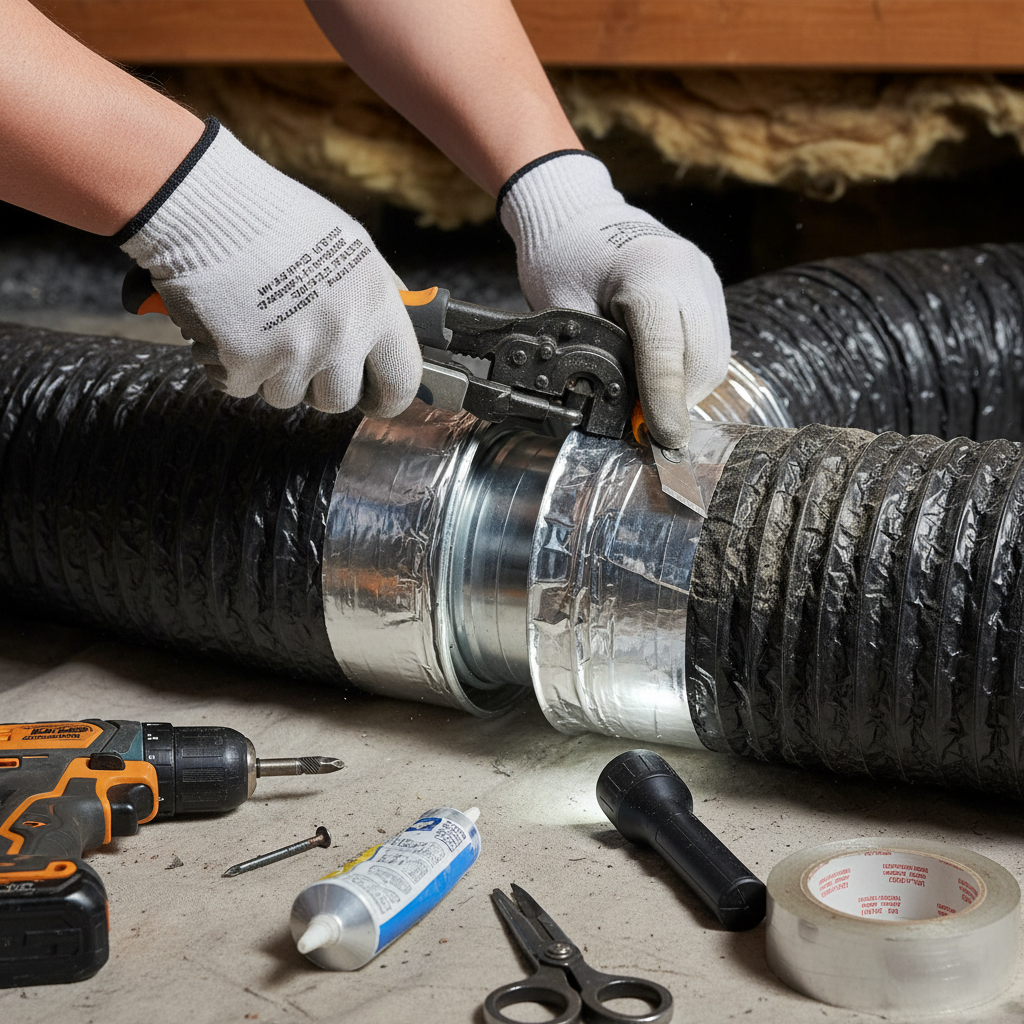
- Ensure all duct connections and register boots are properly sealed with mastic or foil tape.
- Use exhaust fans in kitchens and bathrooms to vent moisture and cooking fumes outside.
- Keep pets well-groomed and clean pet bedding regularly to reduce dander.
- Routinely clean observable portions of registers and the return air grille.
Frequently Asked Questions
Related Guides
How to Hire an Air Duct Cleaner That Won't Rip You Off (Troubleshooting & Fixes)
A veteran tech's guide to choosing an air duct cleaning company. Learn how to spot scams, what questions to ask, and avoid the 'blow-and-go' outfits.
Signs Your Home's Air Ducts Need Cleaning: A Troubleshooting Guide
Learn the definitive signs your home's air ducts need cleaning. This guide covers common symptoms, underlying causes, DIY diagnostic steps, practical prevention tips, and when to call a professional for a healthier home environment. Improve your indoor air quality and reduce allergens.
Fuzzy HVAC Vents? Here's How to Deal With That Nasty Buildup (Troubleshooting & Fixes)
Fuzzy HVAC vents indicate a dust problem. Learn how to clean your air vents yourself, improve indoor air quality, boost HVAC efficiency, and know when to call a pro.
Why Your House Is Always Dusty: A Guide to HVAC Duct Issues and Solutions
Stop the constant battle with dust! Discover how leaky HVAC ducts, poor filtration, and other common issues contribute to a dusty home. Learn practical DIY fixes and when to call a pro for cleaner air and a healthier living space.
DIY vs. Professional Air Duct Cleaning: What Homeowners Need to Know
A veteran tech's honest take on DIY air duct cleaning. Learn what you can actually do yourself, when you're wasting your time, and when to call a pro.
Mold in Your Air Ducts? (Here's How to Find It & Fix It)
Expert guide to identifying and fixing mold in HVAC air ducts. Learn common symptoms, underlying causes, effective prevention tips, and when to call a professional for mold remediation to protect your home's air quality.
Need Professional Help?
Find top-rated air duct experts in your area