Quick Answer
Okay, so your dishwasher's leaving standing water because it's clogged up somewhere. Nine times out of ten, it’s just food gunk in the filter at the bottom of the tub. Easy fix – just twist it out and clean it. Could also be the drain hose or your garbage disposal got plugged up (or the knockout plug was never removed). You can usually clear these yourself in under an hour for free. If it's humming but not draining, the pump might be jammed or dead. A replacement pump part will run you maybe $50-150, but calling a pro to install it will be more like $250-500, including parts and labor.
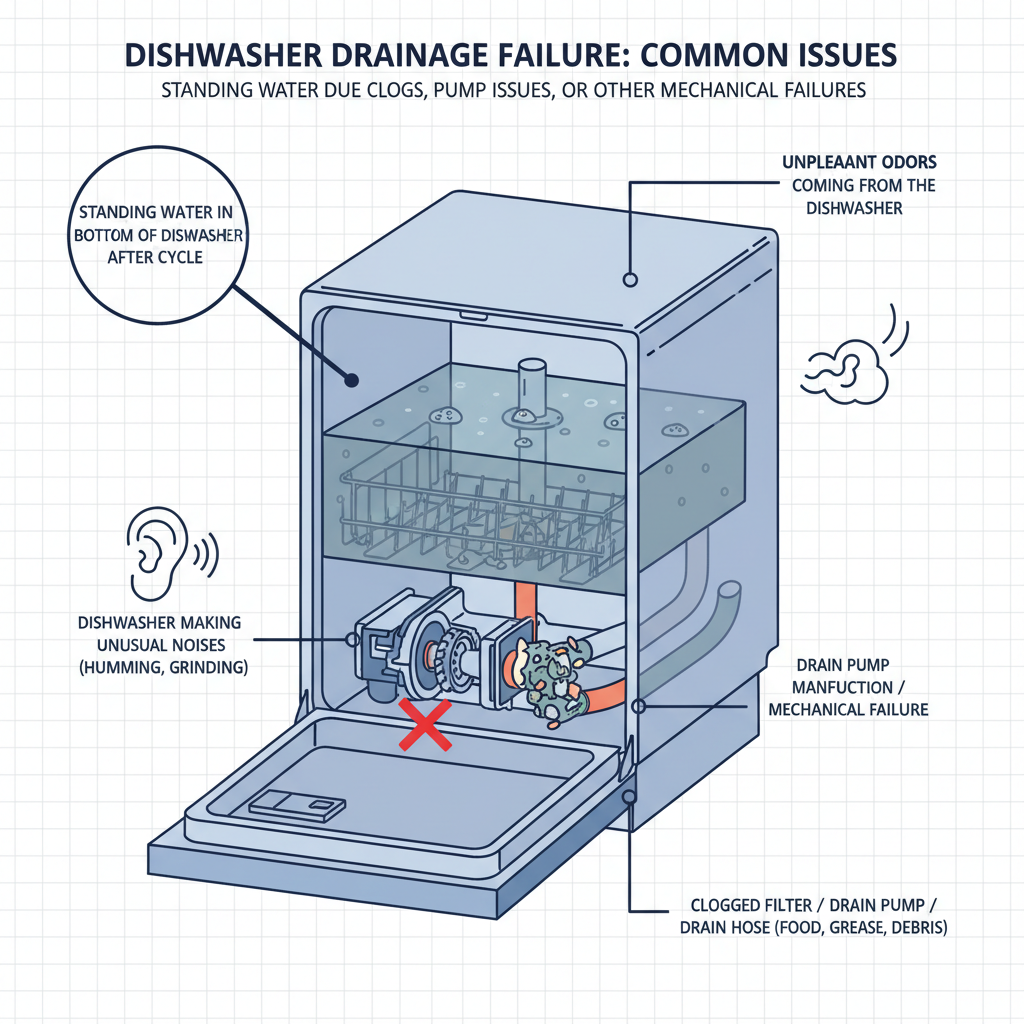
Common Symptoms
Possible Causes
Step-by-Step Diagnosis
Step 1
Check and thoroughly clean the dishwasher filter and the sump area it sits in.
Step 2
Run the kitchen sink's garbage disposal for 30 seconds with cold water to ensure the drain path is clear.
Step 3
Inspect and clean the air gap on the countertop if one is installed.
Step 4
Pull the dishwasher out slightly to inspect the drain hose for any visible kinks or pinches.
Step 5
Ensure the drain hose is installed with a 'high loop'—it should go up to the underside of the countertop before connecting to the drain.
Step 6
Perform a 'bucket test' by disconnecting the drain hose from the sink/disposal and draining into a bucket to isolate the problem to the dishwasher or the house plumbing.
Step 7
Cancel a cycle to initiate draining and listen for the drain pump. A hum with no drain indicates a jam/failure; silence indicates a possible electrical issue.
Step 8
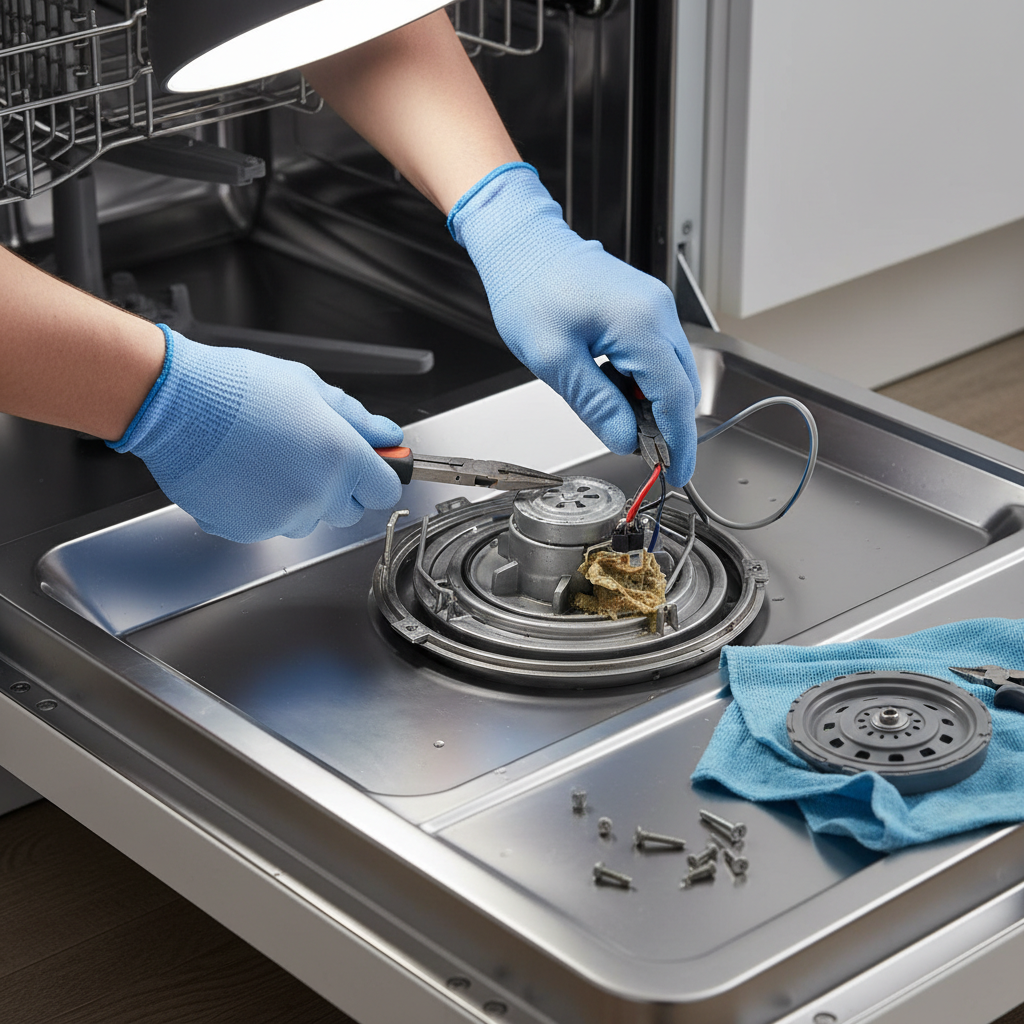
If comfortable, disconnect power and remove the drain pump to physically inspect the impeller for obstructions like glass or bones.
DIY vs Professional Costs
| Repair Type | DIY Cost | Professional Cost | Time Required |
|---|---|---|---|
Clean Filter, Air Gap, & Run Disposal | $0 | $100 - $175 | 15 minutes |
Clear Clogged Drain Hose / Fix High Loop | $0 - $20 | $175 - $275 | 1-2 hours |
Replace Drain Pump | $50 - $150 (part) | $250 - $500 | 2-4 hours |
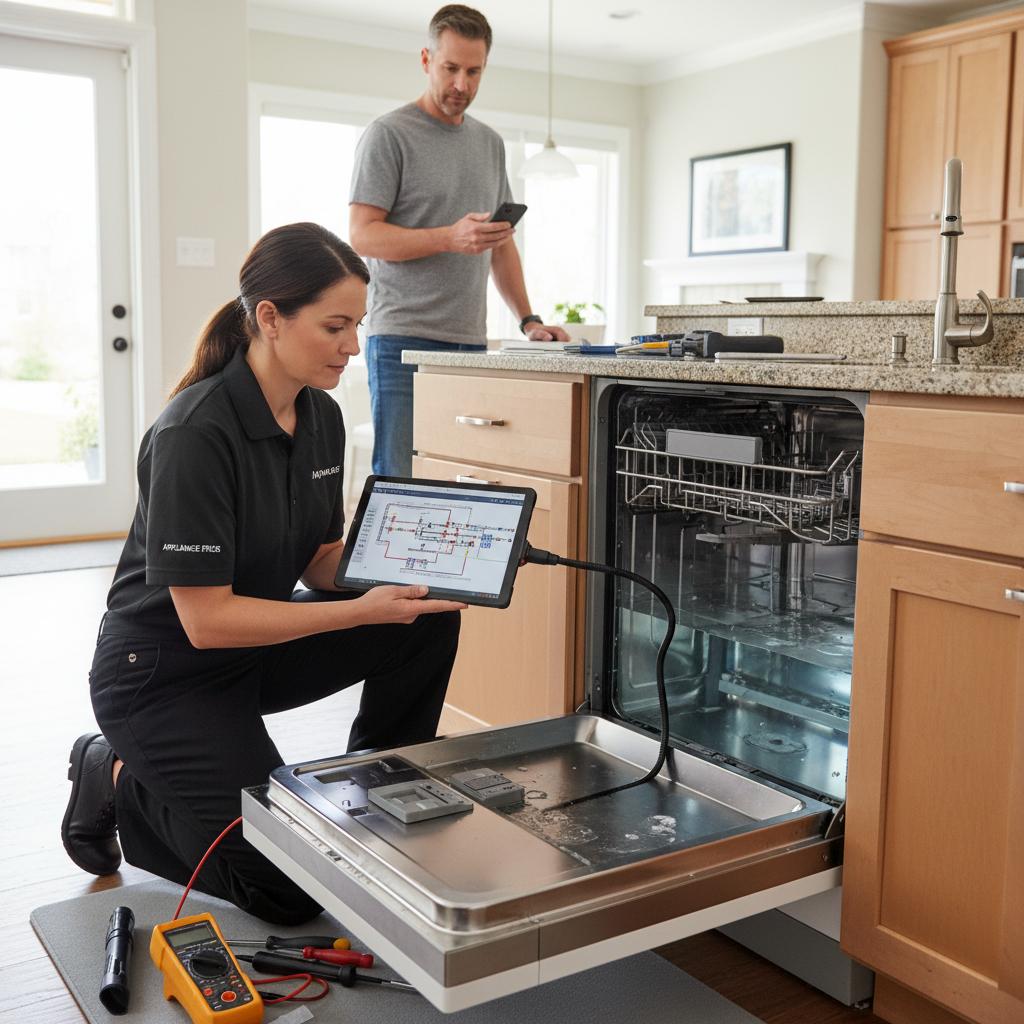
When to Call a Professional Appliance
- You have cleaned the filter, air gap, and checked the hose for kinks, but the water still won't drain.
- The drain pump is making no noise at all, suggesting an electrical problem you can't test with a multimeter.
- You hear loud grinding or crunching noises, which indicates a more serious mechanical failure.
- You are not comfortable with pulling the appliance out, taking hoses off, and potentially dealing with water spills.
- The problem is intermittent and you can't reliably diagnose the cause after checking the basics.
Prevention Tips
- Scrape food waste and debris off plates before loading them into the dishwasher. It's not a second garbage disposal.
- Clean the dishwasher filter at least once a month. Set a reminder on your phone.
- Always run your garbage disposal for 15-20 seconds immediately before starting a dishwasher cycle.
- Run an empty cleaning cycle every 1-2 months using a commercial cleaner or a bowl of white vinegar to dissolve grease and scale.
- Visually check that your drain hose has a proper high loop secured under the sink.
Frequently Asked Questions
Related Guides
DIY Appliance Repair vs. Hiring a Pro: A Technician's Honest Take (Troubleshooting & Fixes)
A veteran tech's guide on when to DIY appliance repair and when to call a pro. Learn the real risks, costs, and what YouTube won't tell you about fixing your stuff.
Oven Not Heating Evenly? Troubleshooting & Fixes from a 25-Year Tech
Is your oven not heating evenly or accurately? A veteran tech shares the most common causes and fixes, from bad heating elements to faulty sensors. Learn to troubleshoot it yourself.
Child-Proofing Kitchen & Laundry Room Appliances: A Comprehensive Safety Guide
Comprehensive guide to child-proofing kitchen and laundry appliances. Learn types of locks, anti-tip bracket installation, electrical safety, and hazardous storage to prevent burns, electrocution, and injuries for curious kids.
Dishwasher Not Draining? (A 25-Year Vet's Troubleshooting Guide)
Dishwasher not draining, leaving standing water? Learn how to fix common causes like clogged filters, drain hoses, and garbage disposal issues. A veteran technician's expert guide helps you troubleshoot and prevent a swampy dishwasher.
Preventing Appliance-Related Fires and Electrical Hazards in the Home: A Comprehensive Troubleshooting Guide
Don't let appliances become a fire hazard! Learn to identify warning signs like burning smells, sparks, or tripping breakers. This expert guide details causes, diagnosis, and prevention tips for common appliance and electrical fire risks, and advises when to call a professional.
Eco-Friendly Appliance Disposal: What to Do with Your Old Appliances (Beyond Just Trashing Them)
Don't just trash it! Learn how to responsibly dispose of old appliances like refrigerators, washers, and dryers. Explore eco-friendly recycling options, utility rebates, retailer haul-away programs, and safe removal tips.
Need Professional Help?
Find top-rated appliance experts in your area