Quick Answer
The direct answer is good, but for full accuracy, while a faulty sensor is a 'big culprit' for temperature inaccuracy, it might not always lead to *uneven* heating across the oven cavity in the same way a faulty element or igniter does. It's more about overall temperature being off. Clarifying this nuance could be helpful, but the current statement is generally acceptable for a quick answer.
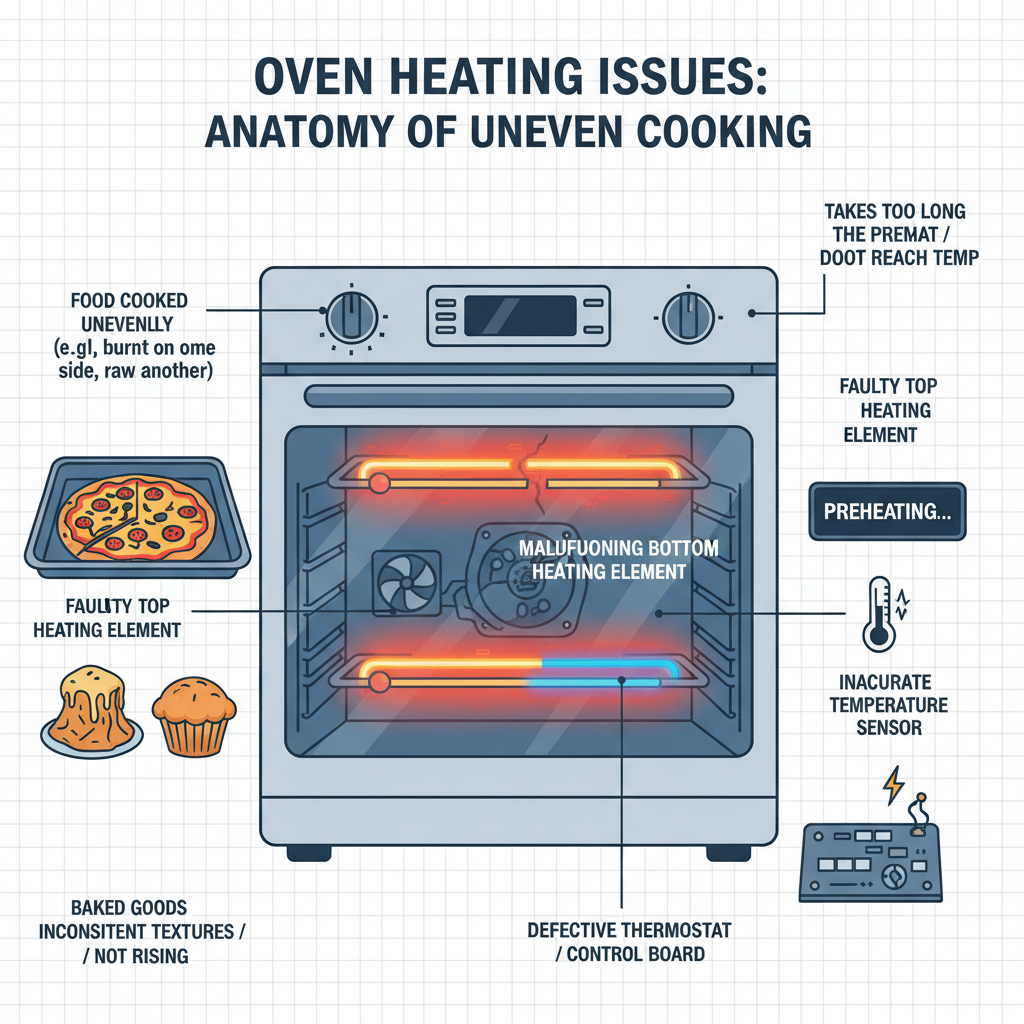
Common Symptoms
Possible Causes
Step-by-Step Diagnosis
Step 1
Verify Temperature Accuracy: Use a reliable oven thermometer placed in the center of the oven to compare with the set temperature.
Step 2
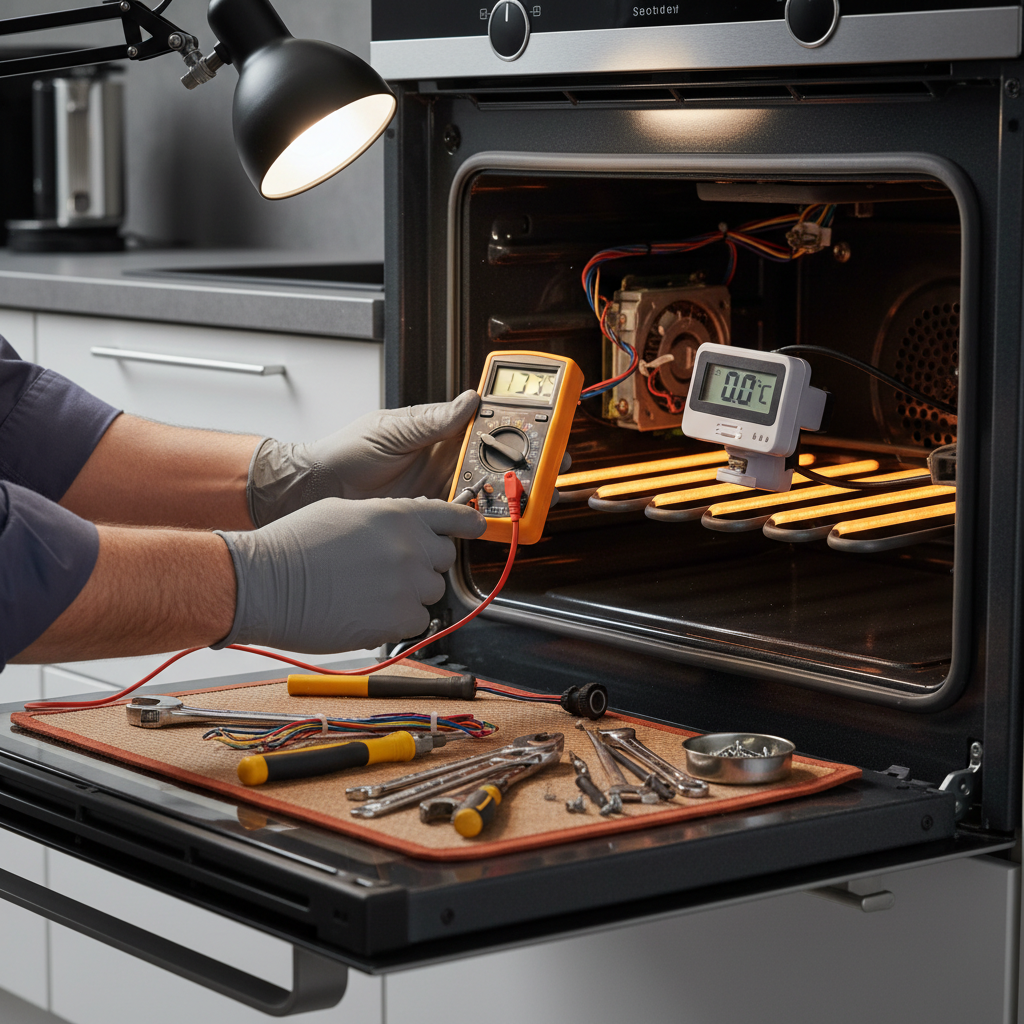
Inspect Heating Elements (Electric Oven): Turn off power, then visually inspect the top (broil) and bottom (bake) heating elements for breaks, blisters, or areas that don't glow when tested.
Step 3
Check Igniter (Gas Oven): Observe the igniter after turning on the bake function. It should glow bright orange-red within a minute and ignite the gas. If it glows weakly or not at all, it's likely faulty.
Step 4
Examine Door Seal (Gasket): Close the door on a piece of paper; if it slides out easily, the seal is compromised and leaking heat.
Step 5
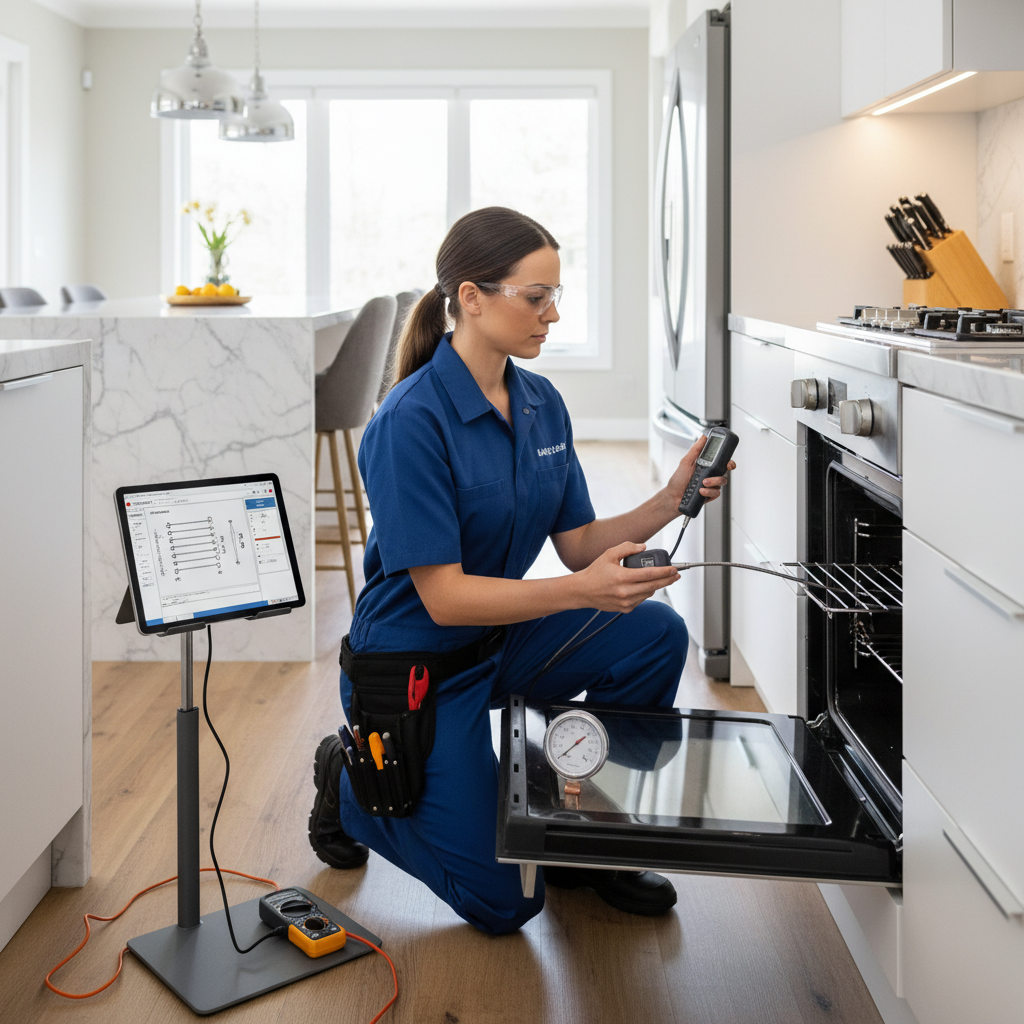
Test Temperature Sensor: Disconnect power and use a multimeter to check the resistance (ohms) of the sensor. Compare the reading to your oven's service manual specs.
Step 6
Reset Oven/Circuit Breaker: Turn off the oven's power at the circuit breaker for 10 minutes to reset the control board.
Step 7
Check Thermal Fuse: If the oven is completely dead, test the thermal fuse (usually at the back) with a multimeter for continuity.
DIY vs Professional Costs
| Repair Type | DIY Cost | Professional Cost | Time Required |
|---|---|---|---|
Replace Door Seal (Gasket) | $30 - $80 | $150 - $250 | 30 minutes |
Replace Temperature Sensor | $40 - $100 | $150 - $280 | 1 hour |
Replace Electric Bake Element | $50 - $150 | $180 - $350 | 45 minutes |
Replace Gas Oven Igniter | $70 - $200 | $200 - $400 | 1-2 hours |
Replace Control Board (ERC) | $200 - $500+ | $400 - $800+ | 1-2 hours |
When to Call a Professional Appliance
- If you have a gas oven and are uncomfortable working near gas lines.
- If you smell burning plastic or a strong electrical odor.
- If diagnostics point to a bad main control board (ERC), as it's an expensive and sensitive part.
- If you've already replaced a part (like a heating element) and the problem persists.
- If the repair requires pulling the oven out and you lack the tools or strength to do it safely.
Prevention Tips
- Avoid overusing the self-clean feature, as the extreme heat wears out electronic components.
- Clean up large spills from the oven floor and heating elements to prevent hot spots and burnouts.
- Do not place aluminum foil on the bottom of the oven; it can damage the element and disrupt airflow.
- Be gentle with the oven door to protect the hinges and the door seal from damage.
- Ensure the area around the oven is clear to maintain proper ventilation.
Frequently Asked Questions
Related Guides
DIY Appliance Repair vs. Hiring a Pro: A Technician's Honest Take (Troubleshooting & Fixes)
A veteran tech's guide on when to DIY appliance repair and when to call a pro. Learn the real risks, costs, and what YouTube won't tell you about fixing your stuff.
Oven Not Heating Evenly? Troubleshooting & Fixes from a 25-Year Tech
Is your oven not heating evenly or accurately? A veteran tech shares the most common causes and fixes, from bad heating elements to faulty sensors. Learn to troubleshoot it yourself.
Child-Proofing Kitchen & Laundry Room Appliances: A Comprehensive Safety Guide
Comprehensive guide to child-proofing kitchen and laundry appliances. Learn types of locks, anti-tip bracket installation, electrical safety, and hazardous storage to prevent burns, electrocution, and injuries for curious kids.
Dishwasher Not Draining? (A 25-Year Vet's Troubleshooting Guide)
Dishwasher not draining, leaving standing water? Learn how to fix common causes like clogged filters, drain hoses, and garbage disposal issues. A veteran technician's expert guide helps you troubleshoot and prevent a swampy dishwasher.
Preventing Appliance-Related Fires and Electrical Hazards in the Home: A Comprehensive Troubleshooting Guide
Don't let appliances become a fire hazard! Learn to identify warning signs like burning smells, sparks, or tripping breakers. This expert guide details causes, diagnosis, and prevention tips for common appliance and electrical fire risks, and advises when to call a professional.
Eco-Friendly Appliance Disposal: What to Do with Your Old Appliances (Beyond Just Trashing Them)
Don't just trash it! Learn how to responsibly dispose of old appliances like refrigerators, washers, and dryers. Explore eco-friendly recycling options, utility rebates, retailer haul-away programs, and safe removal tips.
Need Professional Help?
Find top-rated appliance experts in your area