Quick Answer
null
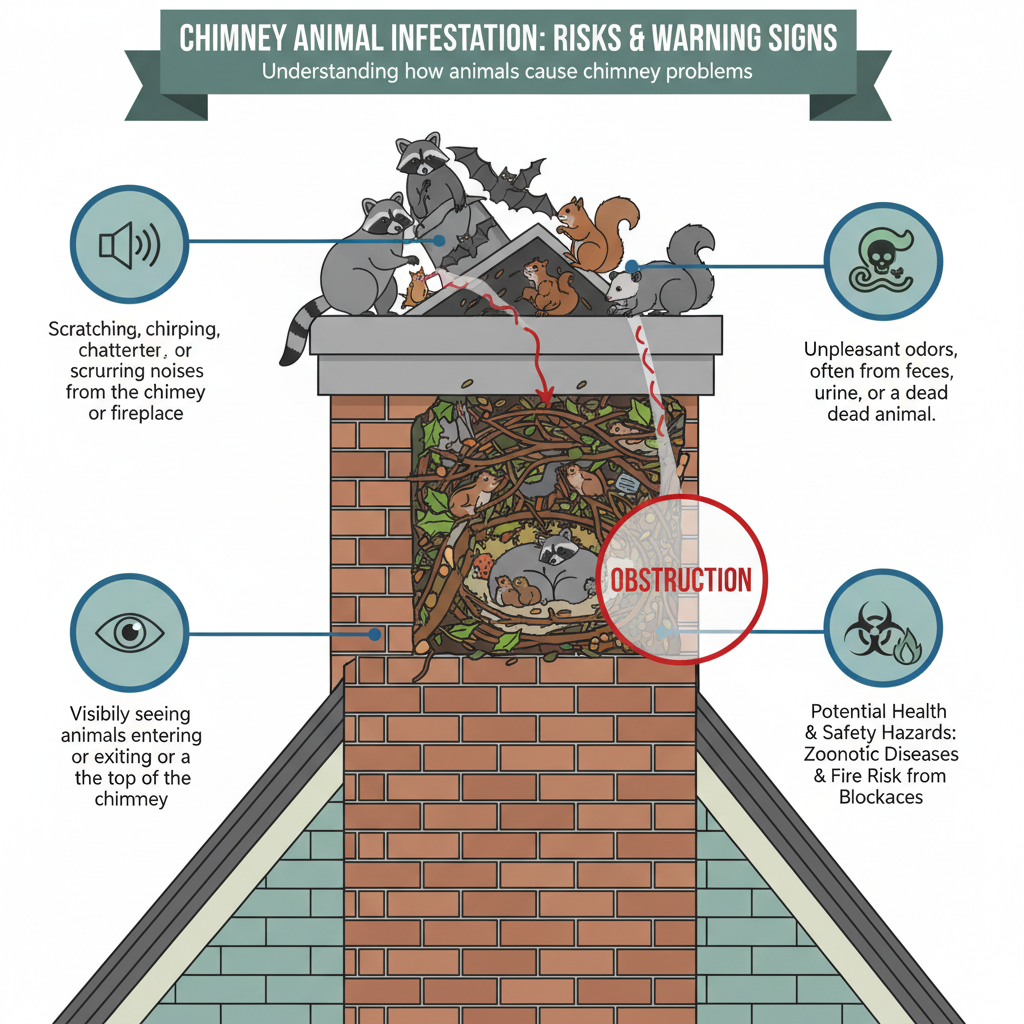
Common Symptoms
Possible Causes
Step-by-Step Diagnosis
Step 1
Listen carefully at different times of day to identify patterns in the noise (nesting vs. trapped).
Step 2
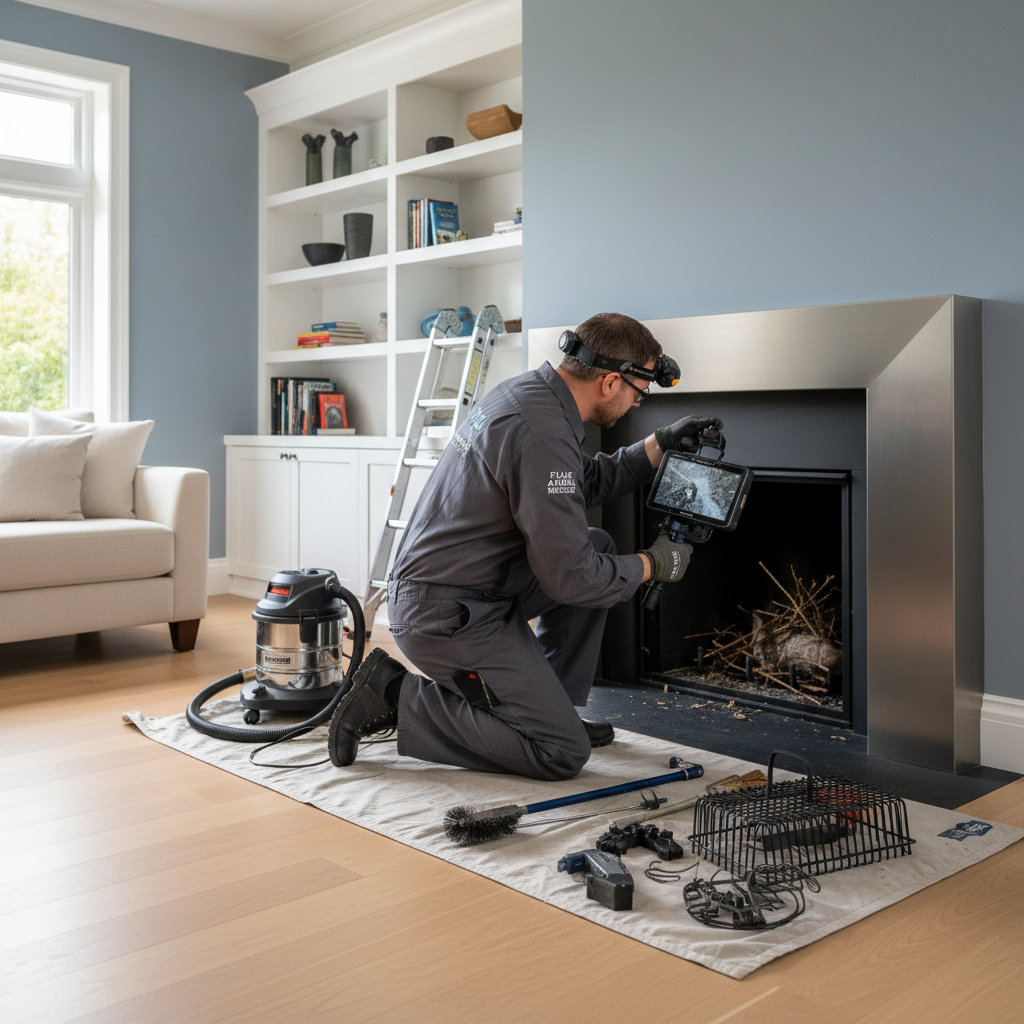
With the damper open and the fireplace cold, use a strong flashlight to look up the flue for obstructions or eyes.
Step 3
If it's safe to do so, visually inspect the top of the chimney from the outside for a missing cap, nesting material, or visible animals.
Step 4
Attempt to identify the animal by its specific sounds (chirping, chattering, growling) to determine the risk and removal method.
Step 5
If you've recently used the fireplace, note any issues with smoke drafting into the room, which signals a critical blockage.
DIY vs Professional Costs
| Repair Type | DIY Cost | Professional Cost | Time Required |
|---|---|---|---|
Encourage Birds/Squirrels to Leave | $0 - $20 | $200 - $450 | A few hours to a day |
Lowering a Rope for a Trapped Animal | $5 - $30 | $300 - $650 | A few hours |
Dead Animal Removal & Deodorizing | Not Recommended | $250 - $800 | 2-4 hours |
Post-Eviction Chimney & Debris Clean | $50 - $100 | $150 - $400 | 1-3 hours |
Install a Real Chimney Cap | $75 - $250 | $150 - $550 | 1-2 hours |
When to Call a Professional Chimney
- If you suspect the animal is a raccoon, bat, or anything potentially aggressive.
- If you hear high-pitched squeaking, which indicates the presence of babies.
- If there is a strong, foul odor, which almost certainly means the animal is dead.
- If you cannot safely access your roof to inspect the chimney top or perform a DIY removal.
- If smoke backs up into your home when you try to use the fireplace.
- If your attempts to encourage the animal to leave on its own have failed after 24 hours.
Prevention Tips
- Install a high-quality, professionally-secured chimney cap made of stainless steel on every flue.
- Trim tree limbs and branches so they are at least 10 feet away from your chimney.
- Schedule an annual professional chimney sweep and inspection to catch potential issues early.
- Keep the area around your home free of garbage or other food sources that might attract wildlife.

Frequently Asked Questions
Related Guides
Creosote Buildup (Troubleshooting & Fixes)
A veteran tech's guide to creosote buildup. Learn how to spot this chimney fire risk, what causes it, and when you can DIY vs. calling a pro. Don't get burned.
Preparing Your Chimney for Winter: Essential Seasonal Maintenance and Inspection Troubleshooting & Fixes (2024 Guide)
Essential guide to preparing your chimney for winter: learn DIY inspection tips, understand creosote dangers, and know when to call a CSIA-certified professional for annual maintenance and cleaning. Prevent creosote buildup and chimney fires.
Efflorescence on Chimney Masonry Troubleshooting & Fixes (2024 Guide)
Seeing white powder on your chimney brick? A veteran tech explains what that efflorescence is, why it's a warning sign for water damage, and how to effectively diagnose and fix it, including DIY and when to call a professional.
Chimney Cleaning Tools & Guide: DIY vs. Pro, When to Clean & Spot Dangers
Discover when to DIY chimney cleaning vs. hiring a professional. Learn about essential chimney cleaning tools, the dangers of creosote, how to spot warning signs, and critical safety tips to prevent chimney fires and maintain a safe home.
Animals in Your Chimney? (Troubleshooting & Fixes)
Hearing scratching in your chimney? A veteran tech explains how to figure out what's in there, get it out, and stop it from happening again.
Fireplace Smoking? Troubleshooting Poor Chimney Draft & When to Consider an Inducer Fan
Is your fireplace smoking up the house? Learn how to troubleshoot poor chimney draft, identify common causes, and discover if a chimney draft inducer fan is the right solution for your home.
Need Professional Help?
Find top-rated chimney experts in your area