Quick Answer
null
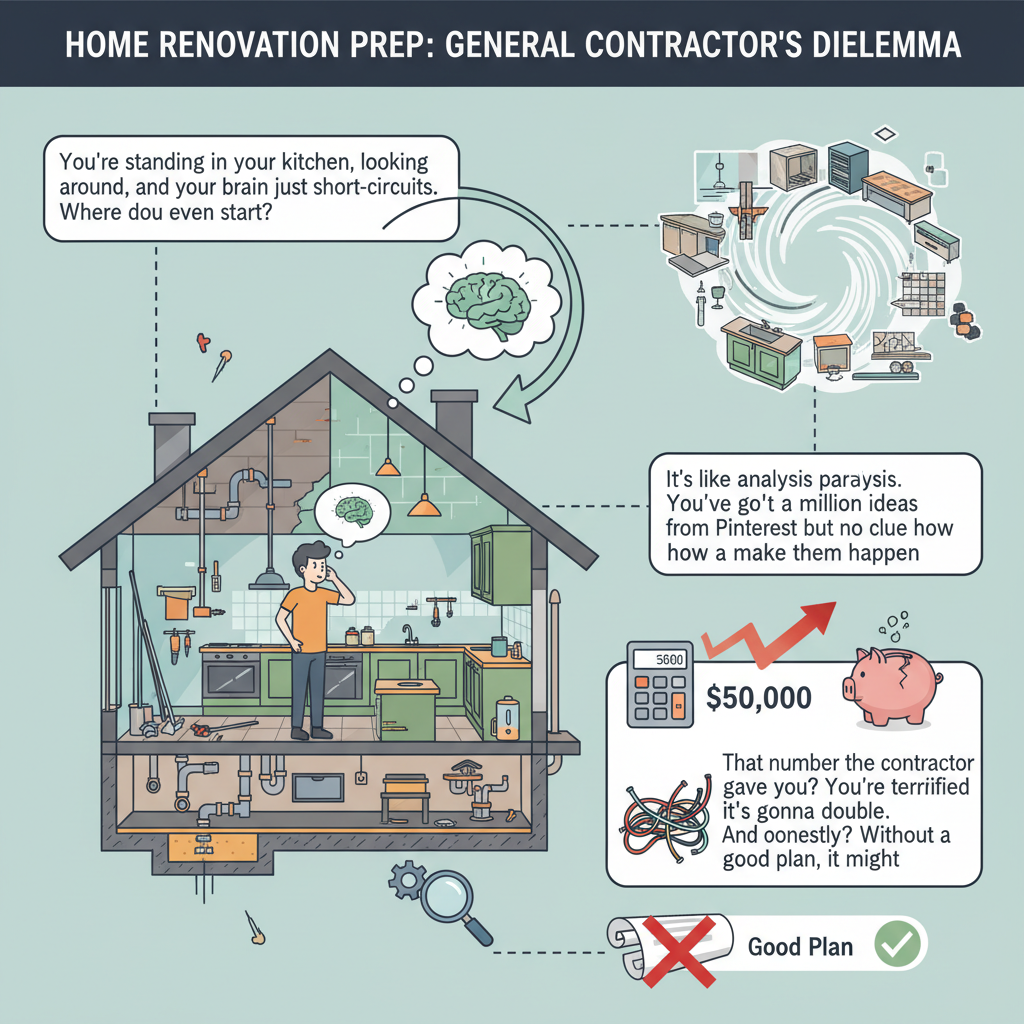
Common Symptoms
Possible Causes
Step-by-Step Diagnosis
Step 1
Define Your 'Why' - What do you actually WANT? Don't just say 'a new kitchen.' Get specific. Write down what's wrong with the current space and what your 'must-haves' are for the new one.
Step 2
Get Real About the Money - Determine your absolute max budget, then take 20% off the top for a contingency fund. Your real project budget is the remaining 80%.
Step 3
Interview Your Contractor - Get at least three bids. Don't just pick the cheapest. Call their references, check their license and insurance, and ask to see a job in progress.
Step 4
Understand the 'Scope of Work' - A good contract is detailed. It lists all the steps. Mentally add 25% to any timeline they give you. Reality happens.
Step 5
Finalize All Selections - Pick out EVERY material before work starts. Tile, faucets, paint, hardware, everything. Indecision is the #1 cause of delays.
Step 6
Plan for Temporary Living - Decide if you will stay in the home or move out. If staying, plan for a temporary kitchen and how to manage dust and noise with your contractor.

DIY vs Professional Costs
| Repair Type | DIY Cost | Professional Cost | Time Required |
|---|---|---|---|
Decluttering & Packing Up | $0 - $200 | $300 - $3000 | 1-3 days |
Material & Finish Selections (Planning) | $0 | $0 - $500/hr | 5-20 hours |
Pulling Permits | $50 - $2000+ | $250 - $3000+ | 2-10 hours |
When to Call a Professional General Contractor
- The minute you're talking about moving a wall, especially if it might be load-bearing. You call an engineer first, then a contractor.
- If your project involves multiple rooms and trades (plumbing, electrical, etc.). Managing that yourself is a full-time job.
- For any project that requires permits and specialized knowledge of local building codes. A pro knows the rules that keep you safe.
- When the budget is significant. A professional's oversight, while it costs money, is your best insurance against huge, costly mistakes.
Prevention Tips
- Start planning early, ideally 6-12 months in advance for major renovations to give yourself time to prepare.
- Create a detailed, line-item budget and ALWAYS include a 15-20% contingency fund that you don't touch.
- Thoroughly vet and communicate openly with your chosen general contractor. Set up a communication plan from day one.
- Finalize all design decisions, material selections, and finishes BEFORE construction begins to prevent costly delays.
- Take detailed 'before' photos and videos of your home and adjacent areas for your records.
- Establish clear expectations for timelines, communication, and living arrangements with your family and contractor.

Frequently Asked Questions
Related Guides
Unexpected renovation expenses and project delays: contingency planning and mitigation strategies Troubleshooting & Fixes
Basement Waterproofing During a Remodel (Troubleshooting & Fixes)
A veteran contractor's guide to fixing a wet basement during a remodel. Learn how to stop water intrusion, fix damage, and waterproof for good.
Homeowners need to ask the right questions during a general contractor interview to ensure a successful project and avoid potential issues. Troubleshooting & Fixes
Preparing Your Home for a Major Renovation (Troubleshooting & Fixes)
A veteran contractor's guide to preparing for a home renovation. Learn how to budget, hire, and plan to avoid delays and cost overruns. Real advice.
How to Choose Sustainable and Eco-Friendly Renovation Materials (A Pro's Guide)
A veteran contractor's guide to choosing sustainable renovation materials. Learn how to spot 'greenwashing,' find truly eco-friendly options, and fix your home right.
Change Orders Driving You Nuts? A Contractor's Guide to Understanding & Managing Them (2024)
A veteran contractor's no-nonsense guide to construction change orders. Learn why they happen, how to fight unfair costs, and when to call in the pros.
Need Professional Help?
Find top-rated general contractor experts in your area