Pro Insights
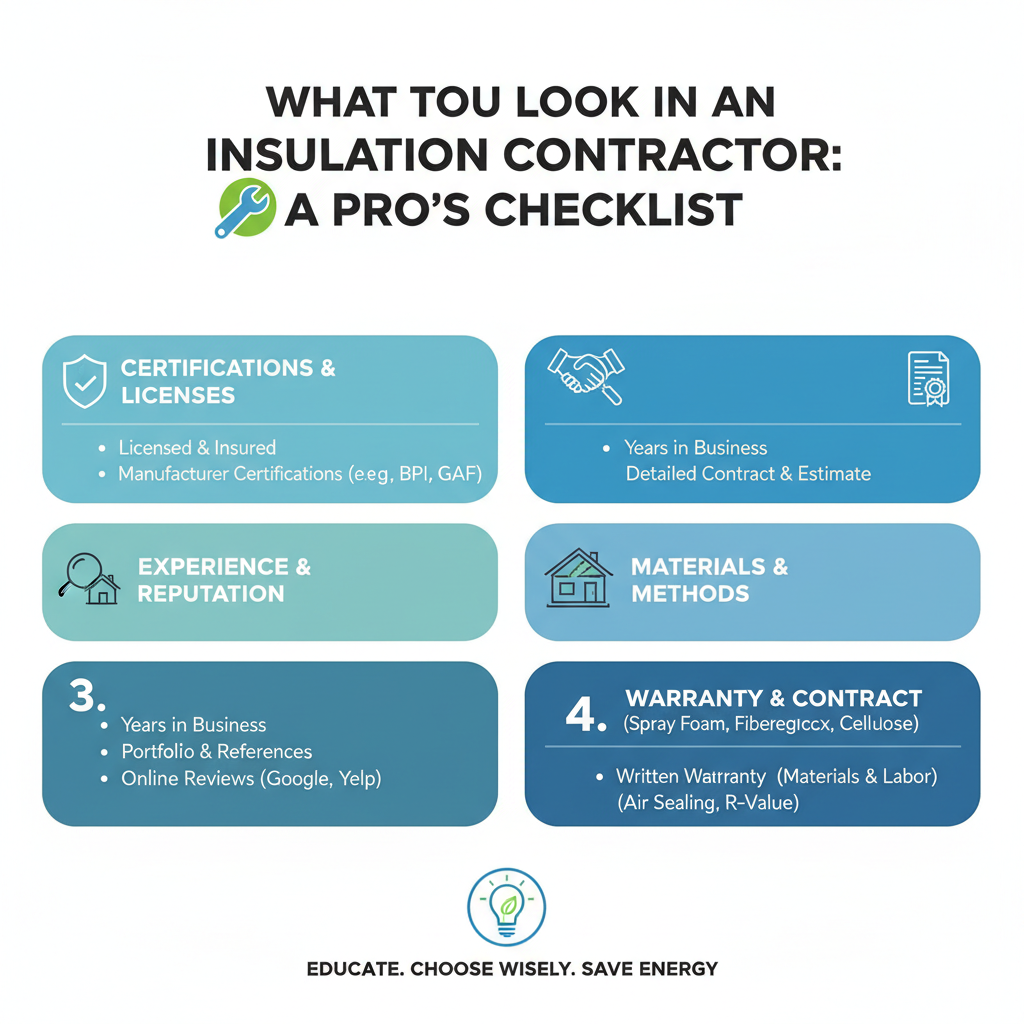
Key Criteria for Selecting a Qualified Insulation Contractor
We synthesized expert advice from industry associations and veteran installers to build the ultimate hiring checklist for homeowners.
6 Data Points Analyzed
Updated 1/11/2026
The Verdict
90% of Pros Recommend A Fully Licensed, Insured & Certified Contractor
A Fully Licensed, Insured & Certified Contractor
90%
Contractor with Extensive Experience & Verifiable References
7%
Lowest Bidder (Unverified)
3%
A Fully Licensed, Insured & Certified Contractor90%
The overwhelming industry consensus is that non-negotiable credentials are the most critical factor. Hiring a contractor with proper licensing, full liability insurance, and worker's compensation protects you from financial risk, ensures they meet legal standards, and provides a baseline of professionalism.
Runner-ups
#2Contractor with Extensive Experience & Verifiable References7%
#3Lowest Bidder (Unverified)3%
What the Pros Say
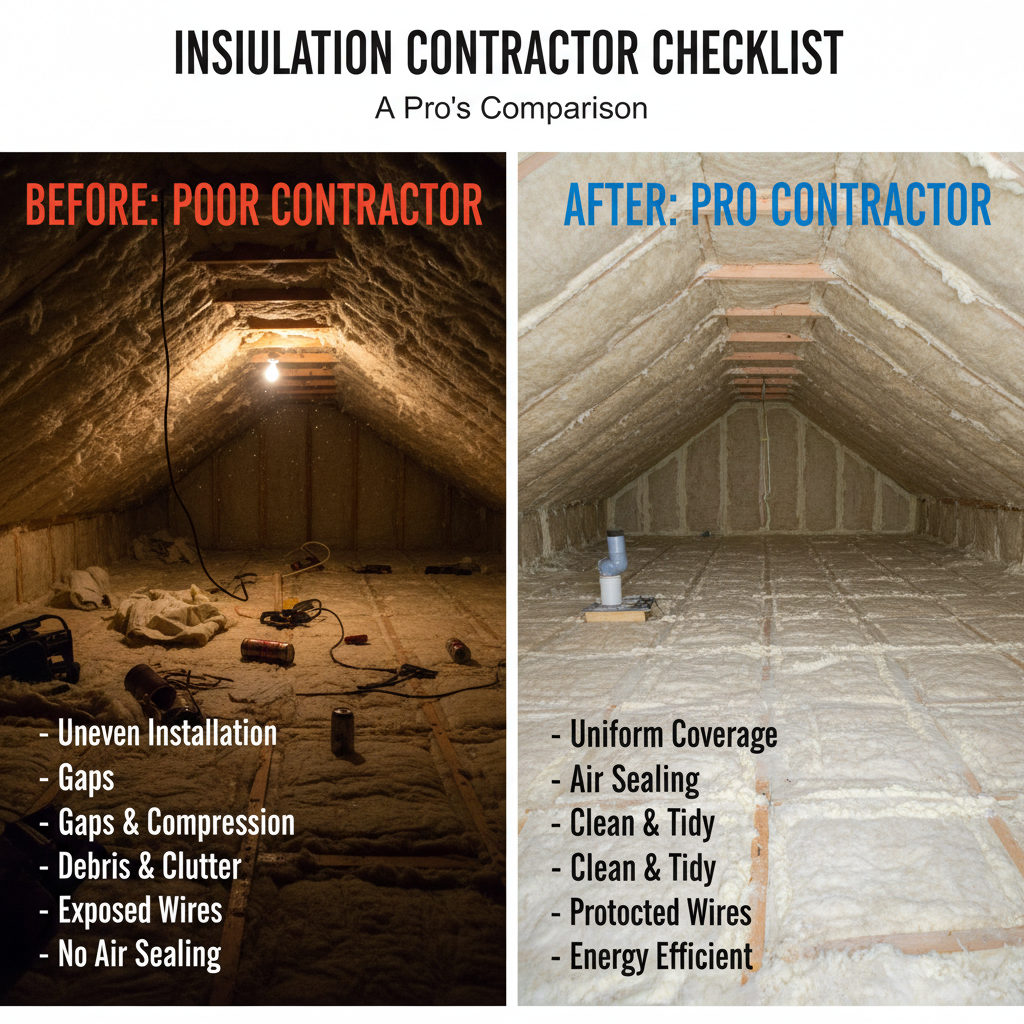
"Don't just ask about insulation; ask about air sealing. A top-tier contractor knows that stopping air leaks before you insulate is half the battle. If they don't mention it, they're not thinking about your house as a complete system."
J
Jesse Martin
Lead Insulation Installer, 15 years"The first thing I tell homeowners is to check for a license and a certificate of insurance. It's not about trust; it's about protection. A weekend warrior can't offer you that, and if someone gets hurt on your property without it, you're on the hook."
G
George Pilkington
Owner, Insulation Company"A good estimate isn't just a number. It should detail the type of insulation, the target R-value, the square footage, any prep work like removing old material, and the specific areas to be treated. Vague quotes lead to surprise costs."
U
Uri 'Ori' Pearl
Master Technician & Estimator"Always ask for references from the last year. A contractor should be proud to share names of recent, happy customers. Also, check their standing with the Better Business Bureau and industry groups like the ICAA."
J
Jennifer Williams
Service Manager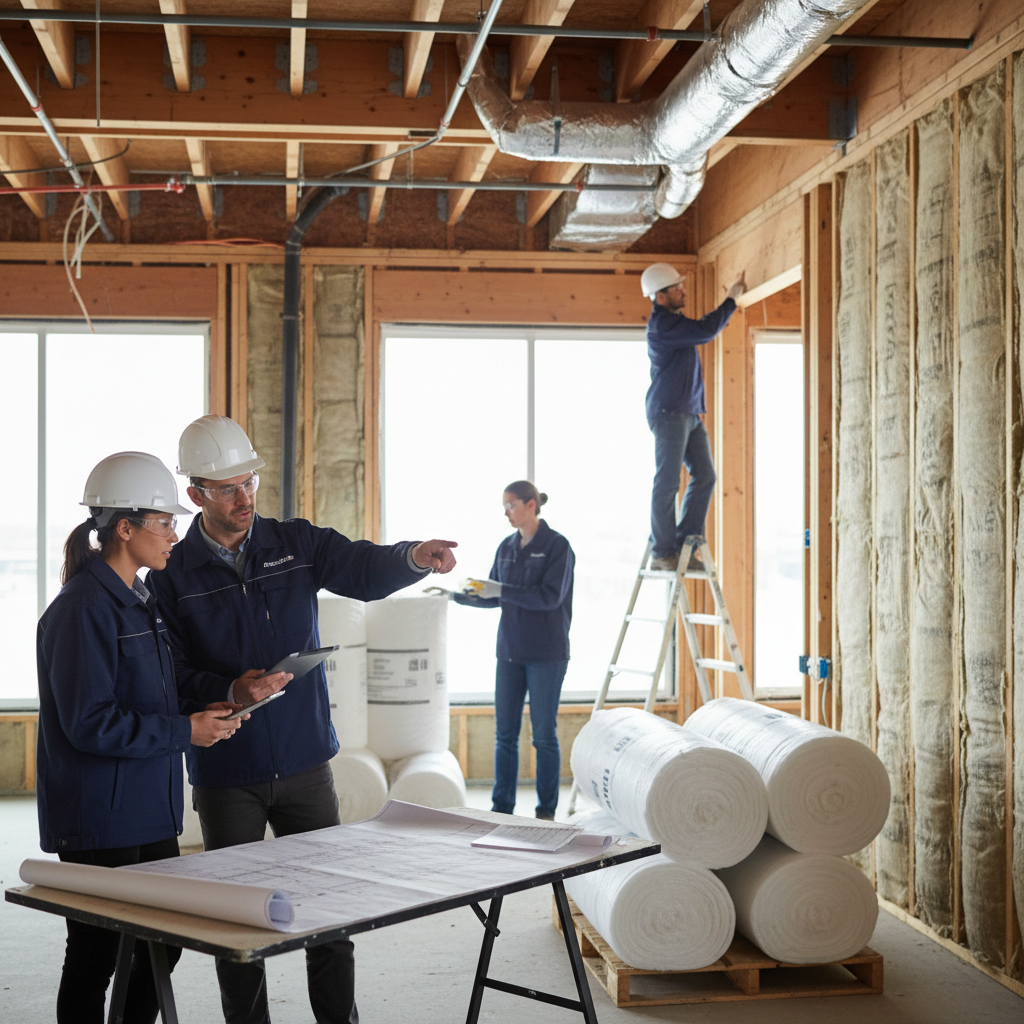
Detailed Breakdown
Advantages
- Ensures adherence to local building codes and safety standards.
- Provides homeowner protection through liability insurance and worker's compensation.
- Offers expertise in selecting the right insulation type (R-value) for your climate and home.
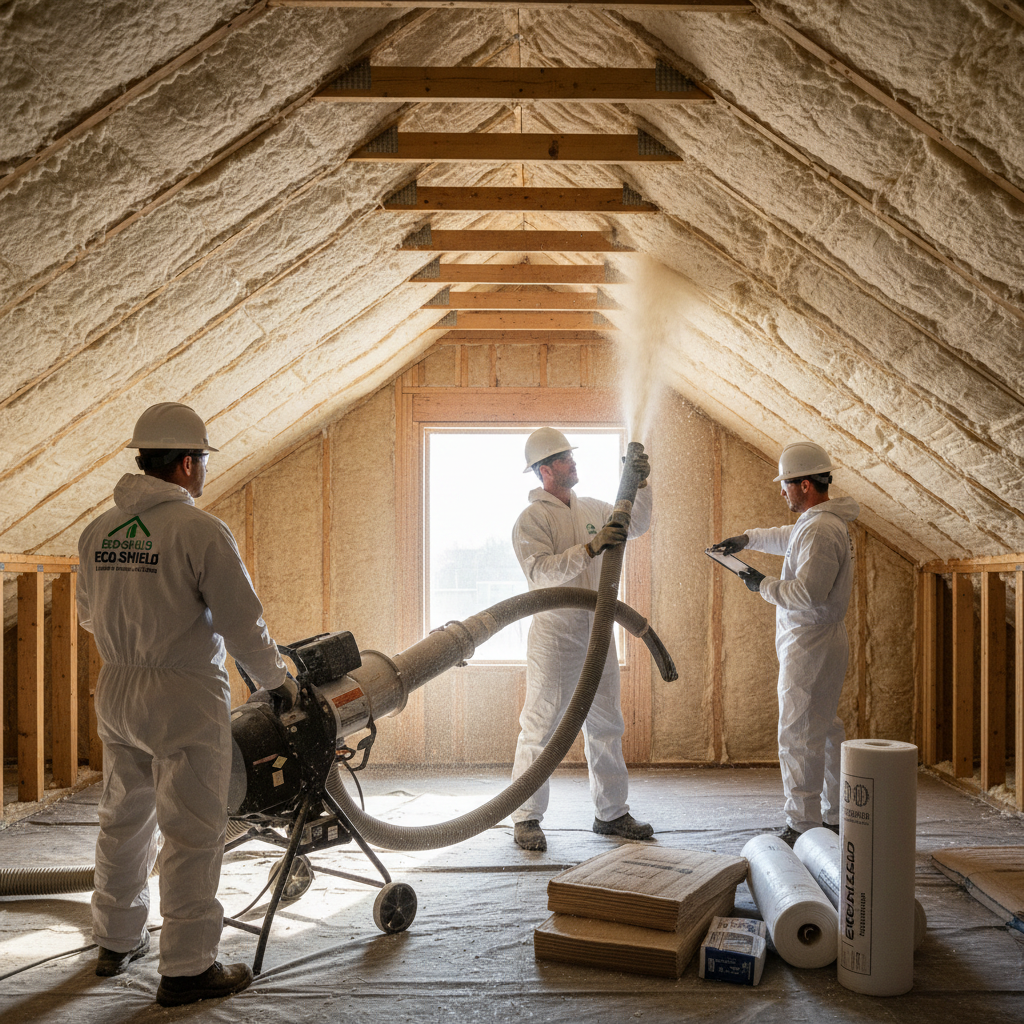
- Access to professional-grade equipment for proper installation (e.g., blowing machines, spray foam rigs).
- Knowledge of potential rebates and tax credits from utility companies or government programs.
- Properly air seals before insulating, which is critical for performance.
Considerations
- Higher upfront cost compared to an unlicensed handyman or general laborer.
- Top-rated contractors may have a waiting list, requiring you to schedule in advance.
- The vetting process requires more time and effort from the homeowner (checking licenses, calling references).
| Type | Price Range |
|---|---|
| Attic Top-Up (Blown-in Fiberglass/Cellulose) | $1.5 – $3.5 |
| Wall Insulation (Dense-Pack) | $2.5 – $5 |
| Spray Foam Insulation (Open & Closed Cell) | $2 – $7 |