Quick Answer
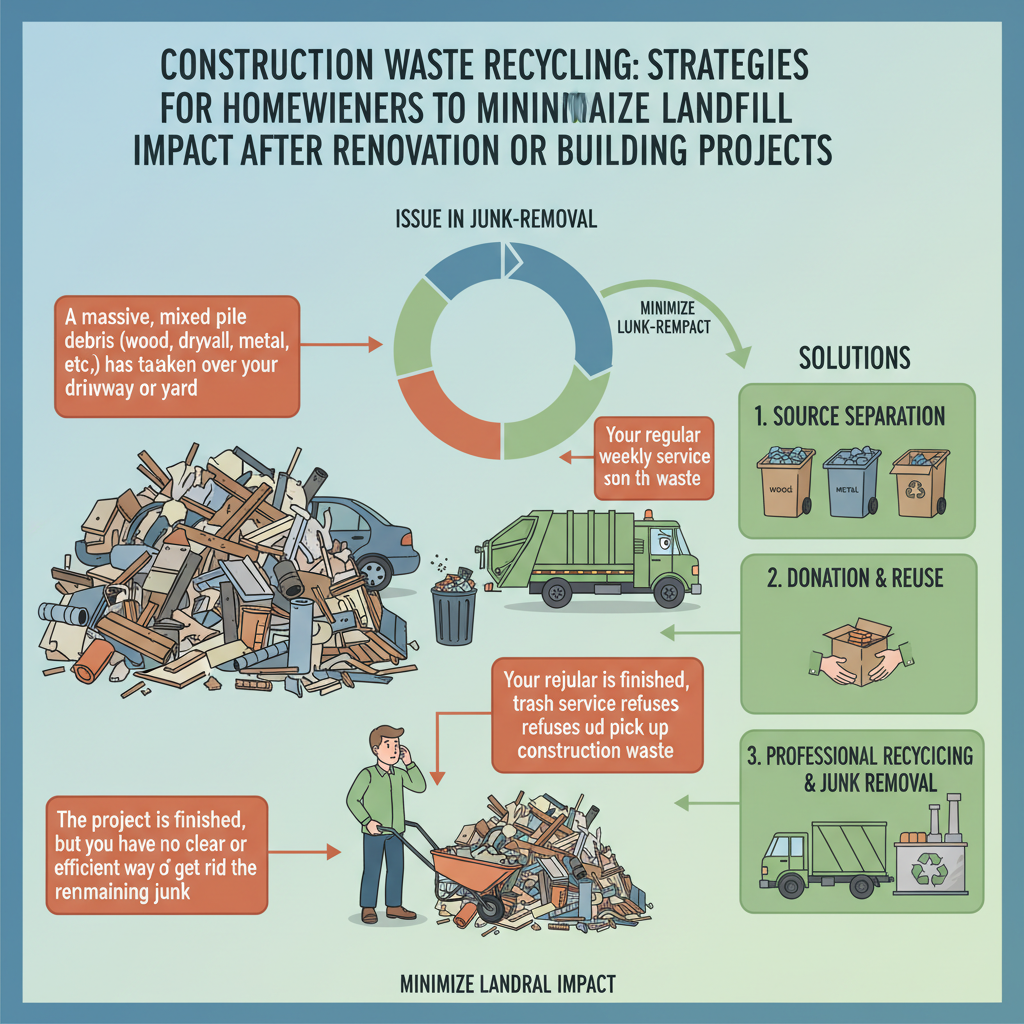
Okay, so here's the quick version. You've got a mountain of junk from your reno and your regular trash guy won't touch it. Nine times out of ten, the problem is no plan. The best fix is to sort your waste—wood, metal, drywall—into separate piles. You can haul it yourself to recycling centers, which'll cost you time, gas, and maybe $50-300 in fees. Or, you can rent a dumpster for $300-600, or hire a junk removal crew for a bit more. Honestly, for most folks, planning ahead and getting a dumpster is the easiest path.
Common Symptoms
Possible Causes
Step-by-Step Diagnosis
Step 1
Assess What You've Got - First, just stand back and identify the main categories in your pile. Don't dig yet. Just see what you're dealing with: wood, metal, concrete, drywall, cardboard, and potential junk.
Step 2
Find the Treasure in the Trash - Pull aside anything that can be salvaged, donated, or sold. I'm talking about old cabinets, doors, fixtures, or even nice long pieces of lumber. Habitat for Humanity ReStore is a great place for this stuff.
Step 3
Research Your Local Options - Get on the phone or Google and find out where to take things. Look up 'scrap metal yards,' 'C&D recycling,' and your county's transfer station. Ask them what materials they accept and what their 'tipping fees' (cost by weight) are.
Step 4
Figure Out if You Can Sort On-Site - Do you have enough space in your yard or driveway to create separate piles for different materials? You can use tarps to keep things organized. If not, you're probably looking at a dumpster rental.
Step 5
Identify the Dangerous Stuff - Be on the lookout for anything that needs special disposal. This includes potential asbestos, lead paint chips, old chemical cans, or treated wood. This stuff can't go to the regular dump and requires a call to your local hazardous waste facility.

DIY vs Professional Costs
| Repair Type | DIY Cost | Professional Cost | Time Required |
|---|---|---|---|
On-site Material Segregation | $10-50 (bins/tarps) | Included in service | 4-8 hours |
Donating/Selling Reusable Materials | $0-50 (your gas) | N/A | 2-5 hours |
Self-Hauling to Facilities | $75-450 (gas, fees, truck rental) | Included in service | 6-12 hours (multiple trips) |
Dumpster Rental (20-yard) | N/A | $350-600 | You load it (4-6 hours) |
Full-Service Junk Removal (Full Truck) | N/A | $450-800+ | They load it (1-3 hours) |
When to Call a Professional Junk Removal
- When the sheer volume of debris is way more than you can handle with a pickup truck. Just get the dumpster.
- If you suspect or confirm you're dealing with hazardous materials like asbestos or lead paint. Don't risk your health.
- When you physically can't do the heavy lifting or simply don't have the time to spend a weekend loading junk.
- If the debris is particularly dangerous, with lots of sharp metal, broken glass, or rusty nails. It's cheaper than a trip to the emergency room.
- You want to ensure the maximum amount of material is actually recycled and diverted from the landfill by a reputable company.
Prevention Tips
- Make a waste plan before you start the project. Decide if you're renting a dumpster or self-hauling and have the phone numbers ready.
- Be smart when ordering materials. Measure twice, order once. It's better to make a second small trip to the store than to have a huge amount of leftover material to dispose of.
- Set up separate bins or piles from day one. Have a spot for wood, a spot for metal, and a spot for real trash. It makes life so much easier.
- Try to deconstruct instead of just demolishing. Carefully removing fixtures, cabinets, and trim makes them salvageable for donation or reuse.
- When you hire a contractor, ask them about their waste plan. A pro who cares will already have a system for recycling and responsible disposal.
Frequently Asked Questions
Related Guides
That Cluttered Basement Disaster: A Veteran's Guide to Taking It Back (Troubleshooting & Fixes)
Tired of that cluttered basement? A 25-year veteran tech shows you how to declutter, organize, and haul away the junk to get your space back for good.
Optimizing Your Home for Junk Removal (Troubleshooting & Fixes)
A veteran tech's guide to prepping your home for junk removal. Learn how to sort, stage, and organize your stuff to save time and money on your next cleanout.
Construction Waste Recycling: Strategies for Homeowners to Minimize Landfill Impact After Renovation or Building Projects Troubleshooting & Fixes (2024 Guide)
A veteran technician's guide to handling construction waste. Learn how to recycle, what to sort, and when to call a pro to keep your reno debris out of the landfill.
Seasonal Clutter Overload & Junk Piles (Troubleshooting & Fixes)
A veteran tech's guide to tackling seasonal junk and clutter. Learn when to DIY your junk removal and when to call the pros to get your space back.
Yard Debris Piling Up? (A Veteran's Guide to Troubleshooting & Fixes)
Overwhelmed by piles of yard debris? A 25-year vet tech shares no-nonsense tips for managing and disposing of leaves, branches, and clippings. Learn when to DIY and when to call a pro.
Getting Rid of Old Bulky Furniture (Troubleshooting & Fixes)
A veteran's guide to getting rid of old furniture. Learn how to troubleshoot disposal, from DIY hauling and donation to calling a pro for couches and tables.
Need Professional Help?
Find top-rated junk removal experts in your area