Quick Answer
Okay so here's the quick version. Making a kitchen work for aging in place is all about safety, accessibility, and ease of use. We're talking about eliminating the need for excessive bending, reaching, or strenuous actions. Think pull-out shelves, lever-style or touchless faucet handles, and enhanced, layered lighting. For a few simple DIY fixes like swapping cabinet handles or installing under-cabinet lights, you might spend a few hundred dollars. But for a more comprehensive, functional remodel with a professional focusing on true accessibility, you're looking at anywhere from $15,000 to well over $100,000, depending on the scope of work, materials chosen, and extent of structural or layout changes.
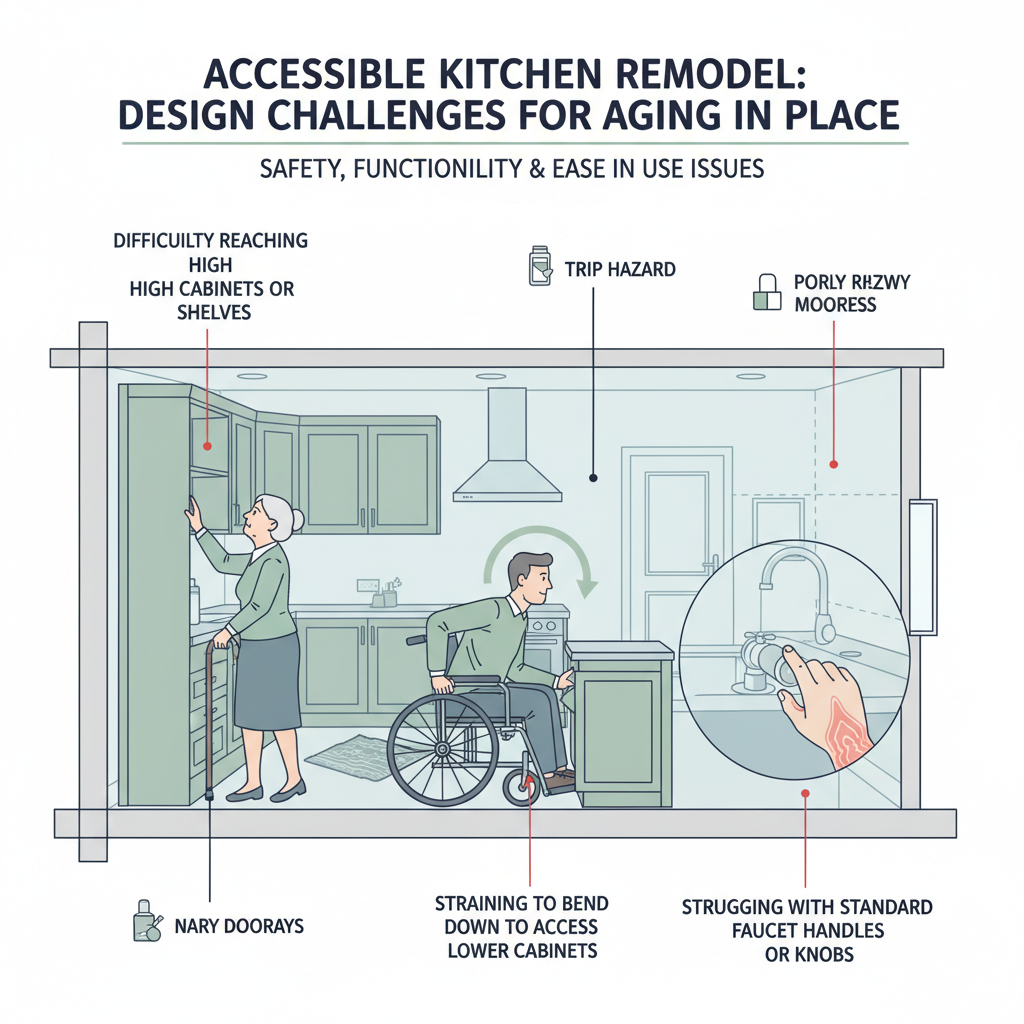
Common Symptoms
Possible Causes
Step-by-Step Diagnosis
Step 1
Assess current user's specific mobility, vision, and cognitive needs by observing them using the kitchen and asking about their biggest frustrations.
Step 2
Measure existing kitchen dimensions with a tape measure, focusing on aisle clearances, countertop heights, and cabinet reach distances.
Step 3
Evaluate current cabinet and drawer accessibility by opening all of them and checking for ease of use, smooth operation, and whether items are reachable without straining.
Step 4
Examine existing fixtures like faucets and handles to determine if they can be operated easily with limited grip strength, such as with a closed fist or elbow.
Step 5
Inspect flooring for slip resistance by checking the material type and finish, and identify potential trip hazards like rugs or high thresholds.
Step 6
Identify areas with insufficient lighting by turning on all lights and looking for shadows cast over key work areas like countertops and the sink.
Step 7
Test current appliance accessibility by examining the location, readability, and ease of use of controls, as well as the force required to open doors.
Step 8
Map out potential traffic patterns and wheelchair/walker turning radii to see if the current layout allows for safe and unhindered movement.
DIY vs Professional Costs
| Repair Type | DIY Cost | Professional Cost | Time Required |
|---|---|---|---|
Install pull-out shelves/drawers in existing cabinets | $50 - $400 per shelf/drawer | $200 - $700 per shelf/drawer | 2-4 hours |
Replace standard cabinet pulls with D-shaped or lever handles | $5 - $30 per handle | $20 - $50 per handle | 1-3 hours |
Add additional task lighting (e.g., under-cabinet LED strips) | $30 - $250 per strip/fixture | $250 - $600 | 1-2 hours |
Install a touchless or lever-style faucet | $150 - $600 | $350 - $850 | 2-4 hours |
When to Call a Professional Kitchen Remodel
- When undertaking a full kitchen remodel or moving walls, which requires permits and structural knowledge.
- If structural modifications are needed like widening doorways, lowering an entire countertop, or moving plumbing and electrical lines.
- For installing specialized appliances like side-opening wall ovens or drawer-style dishwashers, which have specific requirements.
- When you need professional advice on true universal design principles and ADA compliance to make sure you're doing it right the first time.
- If you need complex or custom cabinetry modifications that are beyond the scope of a simple hardware change.
- For ensuring the proper installation of slip-resistant flooring to meet safety standards and avoid future problems.
Prevention Tips
- Incorporate universal design principles from the get-go when planning any kitchen remodel, like wider aisles and varied counter heights.
- Choose low-maintenance, easy-to-clean, non-glare surfaces for countertops and flooring.
- Prioritize a layered lighting design with ambient, task, and accent lighting, and use dimmers.
- Select appliances with simple, accessible controls and consider user-friendly options like drawer microwaves or side-swing ovens.
- Always opt for lever-style handles on doors and faucets, and D-shaped pulls for cabinets.
- Favor deep drawers over base cabinets and install pull-out organizers to make everything easy to reach.
- Ensure clear floor space is at least 42-48 inches wide, with a 60-inch turning radius for wheelchair access.
- Use non-slip, low-glare flooring materials like LVT or matte-finish tile to reduce fall risks.
Frequently Asked Questions
Related Guides
Designing an Accessible Aging-in-Place Kitchen (Troubleshooting & Fixes)
Comprehensive guide to designing an accessible aging-in-place kitchen. Learn how to troubleshoot, fix, and prevent issues for safety, functionality, and ease of use in your home.
Kitchen Vent Hoods: Picking and Installing 'Em Right (Troubleshooting & Fixes)
A veteran tech's guide to kitchen vent hoods. If your kitchen is smoky or greasy, here's how to figure out what's wrong and how to fix it for good.
Revitalizing Your Cramped Kitchen: A Comprehensive Troubleshooting & Fixes Guide (2024)
A veteran tech's guide to fixing a cramped kitchen. Learn how to troubleshoot poor layouts, add storage, and optimize a small space without a full remodel.
Kitchen Remodel Prep: A Homeowner's Troubleshooting Guide to Success
Comprehensive guide to preparing for a kitchen remodel. Learn planning, budgeting, material selection, and execution steps to ensure a smooth, successful renovation from a seasoned pro.
Kitchen Lighting Troubleshooting: Fix Poor Functionality & Uninviting Ambiance
Troubleshoot common kitchen lighting issues like dimness, poor functionality, and uninviting ambiance. Learn to improve your kitchen's illumination with layered lighting design (ambient, task, accent), proper bulb selection (lumens, color temperature, CRI), and strategic fixture placement. Discover DIY fixes, smart lighting solutions, and when to call a professional electrician for a brighter, more functional kitchen.
Choosing & Installing Kitchen Sinks & Faucets: A Pro Plumber's Practical Guide
A veteran tech's no-nonsense guide to choosing the right kitchen sink and faucet for your remodel. Get honest advice on materials, styles, and when to DIY.
Need Professional Help?
Find top-rated kitchen remodel experts in your area