Quick Answer
Ineffective kitchen lighting is usually due to a lack of layered design, causing poor functionality, inadequate task illumination, and an uninviting ambiance. Fix this by implementing ambient (general), task (focused), and accent (decorative) lighting. Upgrade overhead fixtures, install under-cabinet lights, use pendants over work surfaces, and utilize dimmers. Choose LED bulbs with appropriate lumens and a color temperature between 3000K-4000K and a high CRI for optimal brightness, functionality, and atmosphere.
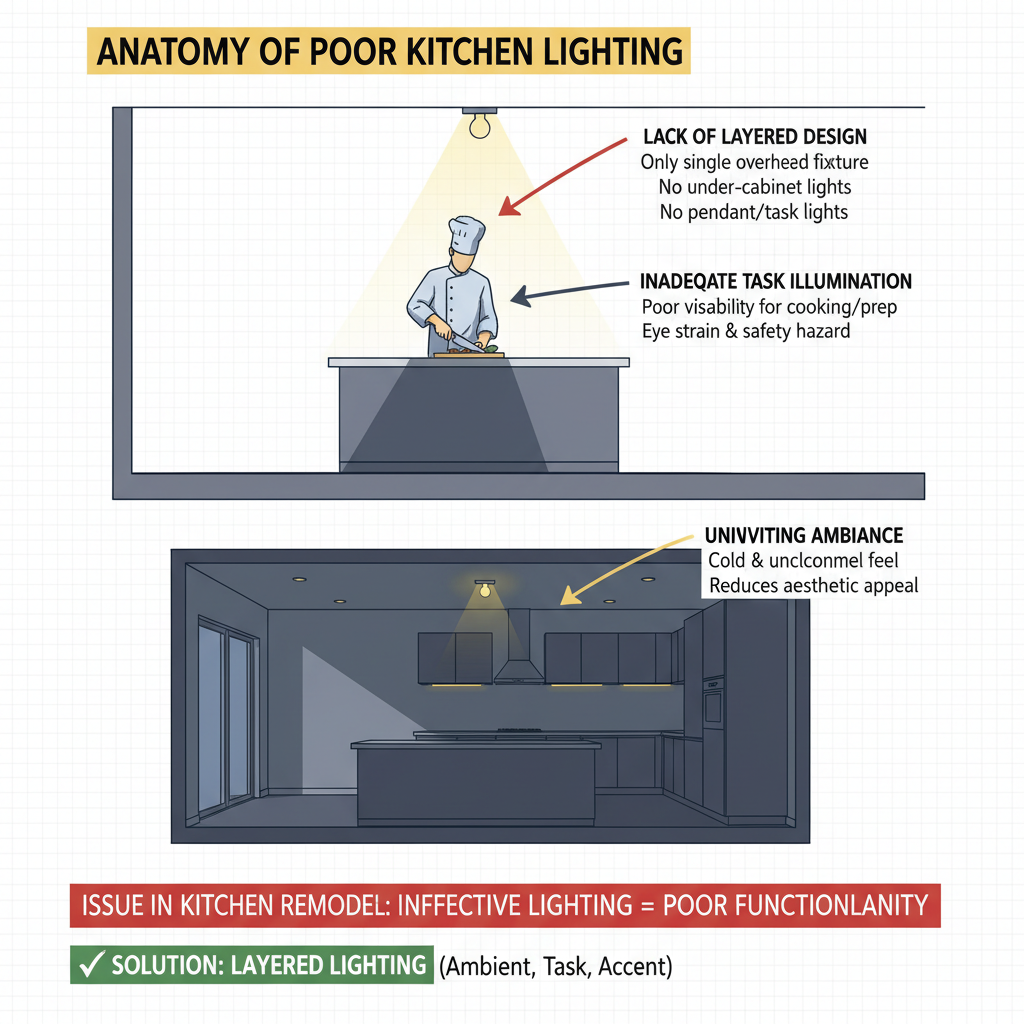
Common Symptoms
Possible Causes
Step-by-Step Diagnosis
Step 1
Observe kitchen lighting during different times of day to assess natural light integration and identify specific dim times.
Step 2
Test all existing lights individually to evaluate overall brightness and identify dark zones or insufficient light.
Step 3
Perform a 'task test' at key work areas (sink, stove, main prep counter) to check for adequate, shadow-free illumination.
Step 4
Evaluate the kitchen's mood and ambiance; check for adjustability (e.g., dimmers) and overall feel.
Step 5
Note the wattage, lumen output, and color temperature (Kelvin) of current light bulbs, comparing them to recommendations for kitchens.
Step 6
Use a light meter app (optional) to compare light levels (lux/foot-candles) across different kitchen zones and quantify dark spots.
Step 7
Assess fixture placement: Are lights directly above primary work zones, or are they positioned to cast shadows when working at the counter?
Step 8
Check for suitable bulb CRI (Color Rendering Index) to ensure decor and food colors appear accurate.
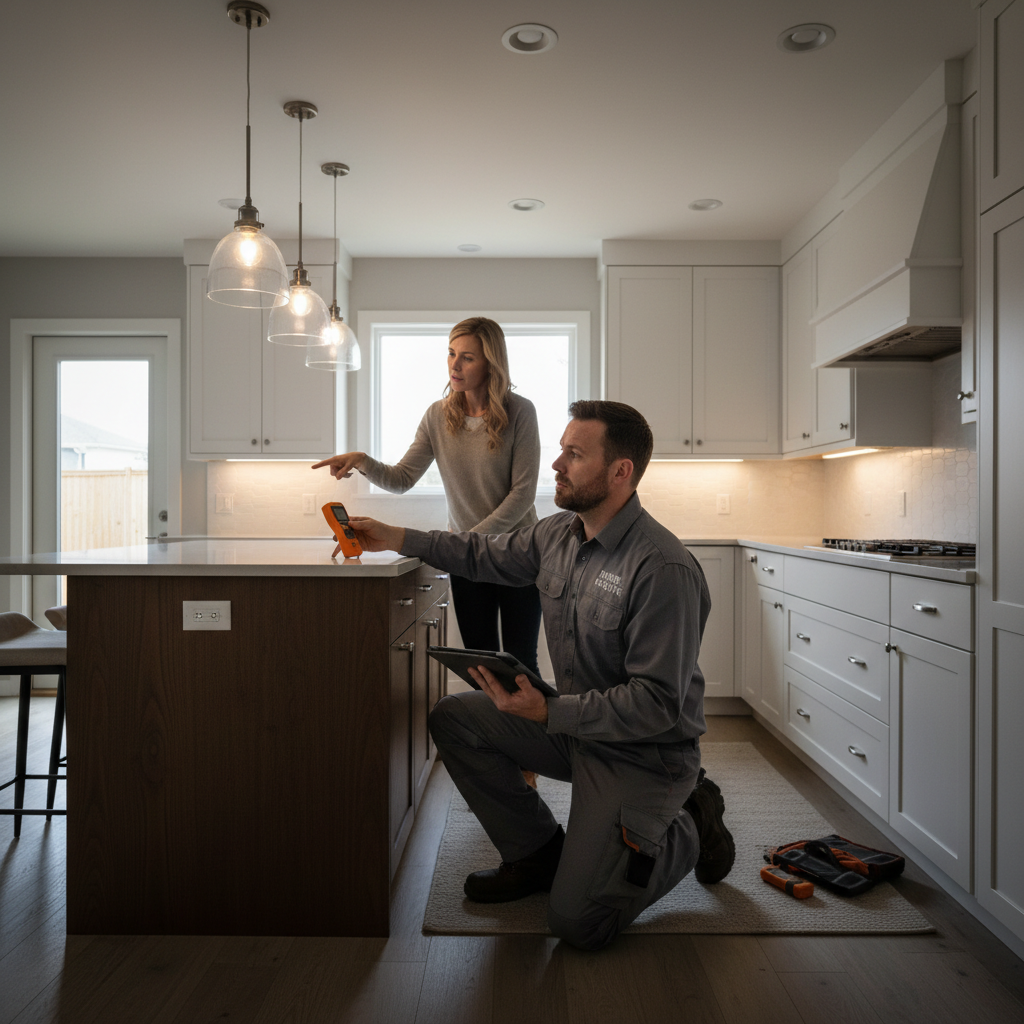
When to Call a Professional Kitchen Remodel
- When new wiring, dedicated circuits, or a complete electrical panel upgrade is required for new fixtures.
- If existing light fixtures need to be relocated or new outlets installed, requiring significant electrical work.
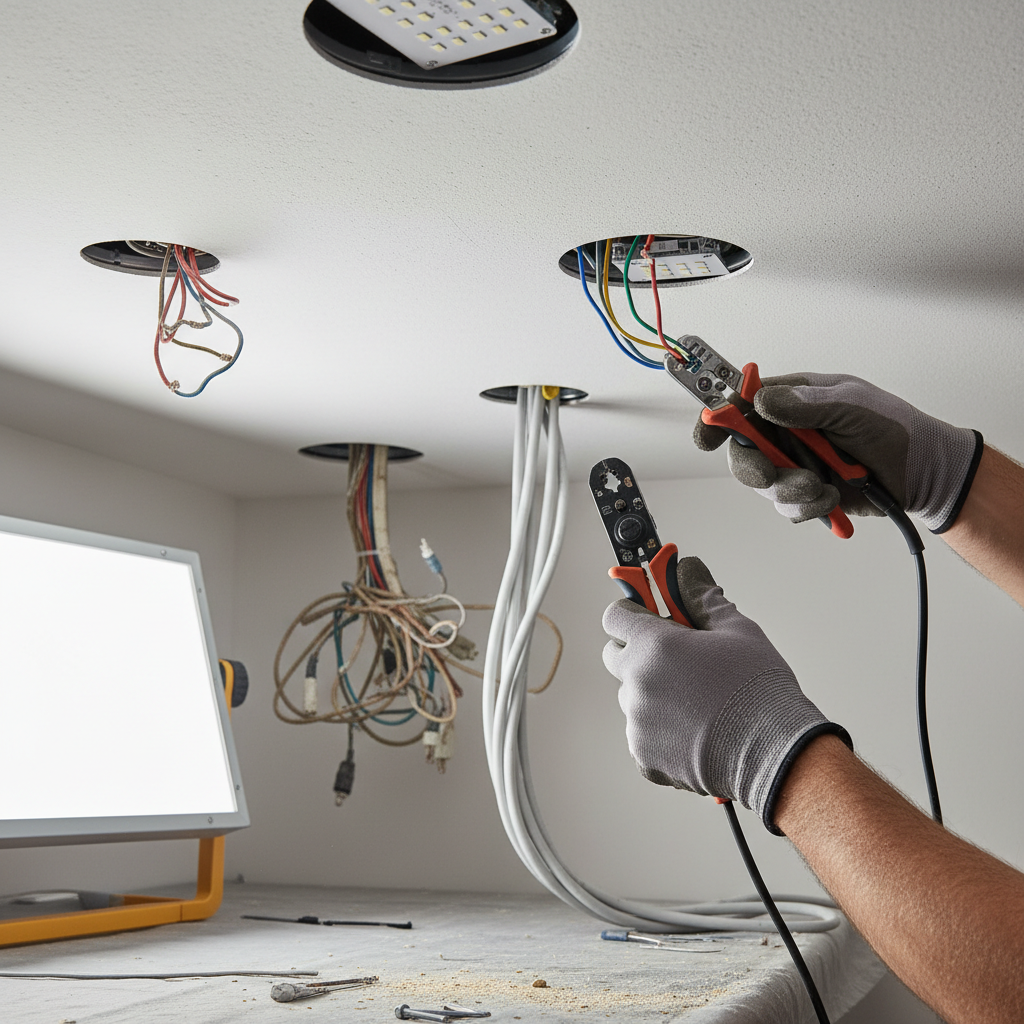
- For the installation of recessed lighting, especially involving ceiling modifications, structural considerations, or working in insulated attics.
- When integrating complex smart home lighting systems or advanced dimmer controls with multiple zones.
- If any electrical work seems unsafe, involves sparking, frayed wires, or you are unsure about the wiring process.
- For a professional, comprehensive lighting design for a high-end remodel or new kitchen construction to ensure optimal aesthetics and functionality.
Prevention Tips
- Integrate a layered lighting plan (ambient, task, accent) early in any kitchen renovation or design process.
- Consult a lighting designer for complex projects or comprehensive planning to ensure optimal light placement and type.
- Consider how future kitchen use might evolve when planning lighting (e.g., adding an island, dedicated coffee station).
- Use light-colored cabinets, countertops, and backsplashes to help reflect light and make the space feel brighter.
- Prioritize natural light by using easily adjustable, light-filtering window treatments.
- Install dimmer switches on all kitchen lighting circuits for maximum flexibility and mood control.
- Choose LED bulbs with at least 90 CRI (Color Rendering Index) for accurate color representation.
Frequently Asked Questions
Related Guides
Designing an Accessible Aging-in-Place Kitchen (Troubleshooting & Fixes)
Comprehensive guide to designing an accessible aging-in-place kitchen. Learn how to troubleshoot, fix, and prevent issues for safety, functionality, and ease of use in your home.
Kitchen Vent Hoods: Picking and Installing 'Em Right (Troubleshooting & Fixes)
A veteran tech's guide to kitchen vent hoods. If your kitchen is smoky or greasy, here's how to figure out what's wrong and how to fix it for good.
Revitalizing Your Cramped Kitchen: A Comprehensive Troubleshooting & Fixes Guide (2024)
A veteran tech's guide to fixing a cramped kitchen. Learn how to troubleshoot poor layouts, add storage, and optimize a small space without a full remodel.
Kitchen Remodel Prep: A Homeowner's Troubleshooting Guide to Success
Comprehensive guide to preparing for a kitchen remodel. Learn planning, budgeting, material selection, and execution steps to ensure a smooth, successful renovation from a seasoned pro.
Kitchen Lighting Troubleshooting: Fix Poor Functionality & Uninviting Ambiance
Troubleshoot common kitchen lighting issues like dimness, poor functionality, and uninviting ambiance. Learn to improve your kitchen's illumination with layered lighting design (ambient, task, accent), proper bulb selection (lumens, color temperature, CRI), and strategic fixture placement. Discover DIY fixes, smart lighting solutions, and when to call a professional electrician for a brighter, more functional kitchen.
Choosing & Installing Kitchen Sinks & Faucets: A Pro Plumber's Practical Guide
A veteran tech's no-nonsense guide to choosing the right kitchen sink and faucet for your remodel. Get honest advice on materials, styles, and when to DIY.
Need Professional Help?
Find top-rated kitchen remodel experts in your area