Quick Answer
Okay, so that white, chalky junk on your brick? That’s efflorescence. It’s basically salt left behind when water evaporates from the masonry. Nine times out of ten, you can scrub it off with a stiff brush and water. But here's the kicker: if you don’t find and fix the water source causing it, it’ll just come right back. Cleaning is cheap, maybe $50 in supplies for a DIY job. Finding and fixing a real water leak? That can run anywhere from a few hundred to thousands. The cleaning part is easy, but the detective work to find the water is the real job.
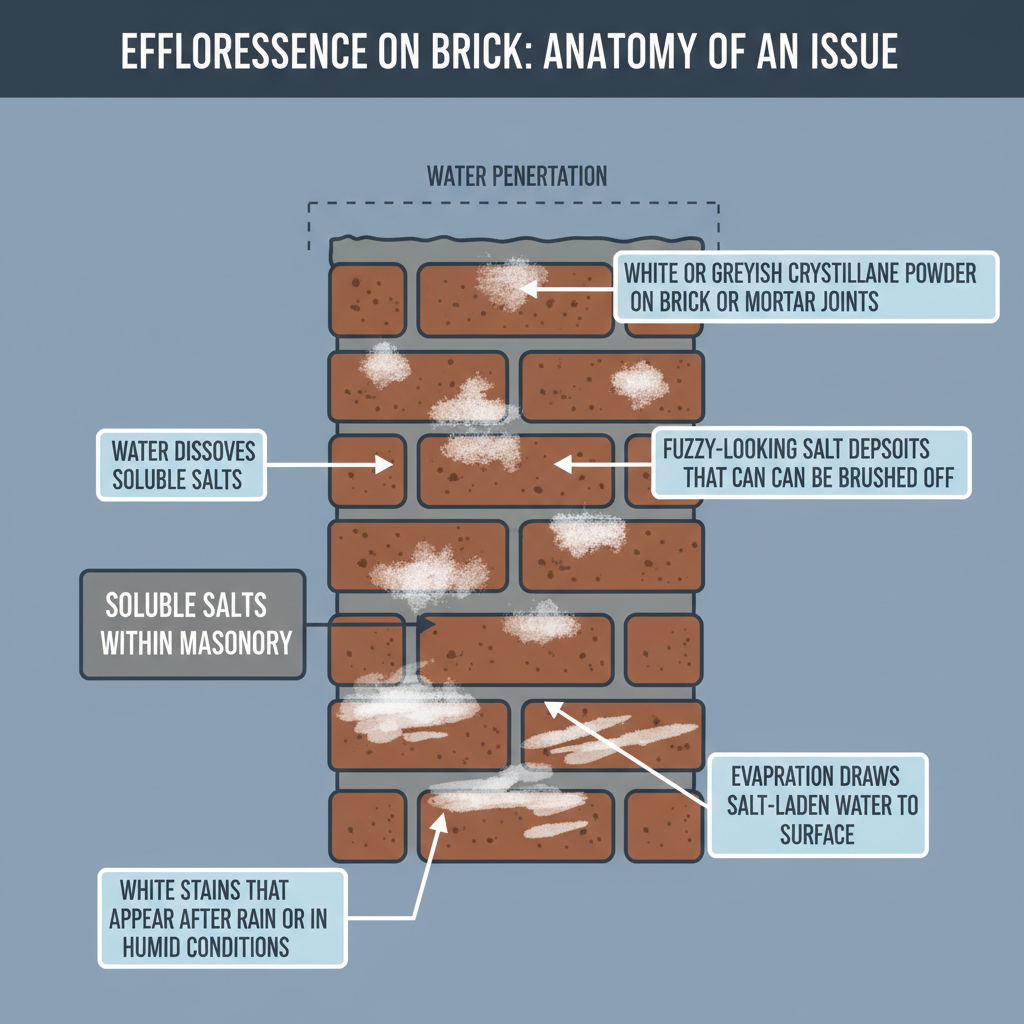
Common Symptoms
Possible Causes
Step-by-Step Diagnosis
Step 1
Spray the white deposit with water; if it dissolves, it's efflorescence.
Step 2
Inspect the roof, gutters, and downspouts directly above the affected area for clogs or damage.
Step 3
Check the caulking and seals around windows and doors for cracks or gaps.
Step 4
Examine the ground where the wall meets the soil for poor drainage, negative slope, or mulch piled against the brick.
Step 5
Look for cracks in the mortar joints or the bricks themselves that could be allowing water entry.

DIY vs Professional Costs
| Repair Type | DIY Cost | Professional Cost | Time Required |
|---|---|---|---|
Basic Efflorescence Cleaning | $20 - $75 | $300 - $800 | 2-4 hours |
Applying a Penetrating Sealer | $150 - $400 | $750 - $2,500+ | 1-2 days (inc. drying) |
Mortar Joint Repair (Tuckpointing) | $50 - $200 (small area) | $1,500 - $5,000+ | A whole weekend or more |
Fixing Water Source (Gutters, Grading) | $10 - $1,000+ | $300 - $10,000+ | Varies wildly |
When to Call a Professional Masonry
- The efflorescence returns quickly after you clean it, indicating a significant water leak.
- You see spalling, which is when the face of the brick is flaking, crumbling, or popping off.
- The affected area is too large or too high to safely access for a DIY cleaning and repair.
- After a thorough inspection, you are completely unable to identify the source of the water.
Prevention Tips
- Clean gutters and downspouts twice a year to prevent overflows.
- Ensure soil and landscaping grade slopes away from the foundation.
- Apply a high-quality, breathable, penetrating silane/siloxane sealer to clean, dry brick.
- Annually inspect and repair caulk around windows, doors, and other wall penetrations.
Frequently Asked Questions
Related Guides
Efflorescence on Brick Troubleshooting & Fixes (2024 Guide)
Got that ugly white powder on your brick? Here's a veteran mason's guide to what efflorescence is, how to get rid of it, and how to stop it for good.
Masonry Problems on Your House? (Troubleshooting & Fixes)
Seeing cracked bricks or crumbling mortar? A veteran tech shares 25+ years of experience on how to fix masonry issues and when to call a pro.
Masonry Repair (General) Troubleshooting & Fixes (2024 Guide)
Seeing cracked mortar or crumbling bricks? A 25-year vet explains the common causes of masonry fails and how to fix them before it gets expensive.
Masonry Repair for Crumbling Walls & Mortar Troubleshooting & Fixes (2024 Guide)
Seeing crumbling mortar or cracked bricks? A veteran tech of 25+ years shows you how to spot the real problem and when you can fix it yourself.
Masonry Damage: This refers to various forms of deterioration or structural compromises in building elements constructed from materials like brick, stone, or concrete blocks. This can include issues with the mortar, the individual units (bricks, stones), or the structural integrity of the masonry assembly. Troubleshooting & Fixes (2024 Guide)
Got crumbling brick or cracked mortar? A 25-year vet shows you how to spot serious masonry damage, what you can fix yourself, and when to call in a pro.
General Masonry Repair Troubleshooting & Fixes
Need Professional Help?
Find top-rated masonry experts in your area