Quick Answer
Okay, so here's the quick version. If your siding's acting up, it's usually one of three things: it's cracked, it's coming loose, or it's got some ugly mold or rot on it. Nine times out of ten, it’s from bad installation or just plain old age and weather. A small fix, like snapping a vinyl panel back in or patching a little hole, you can do yourself for under $50. But if you're seeing widespread issues, rot, or damage way up high, you're better off calling a pro. That's gonna run anywhere from $250 to a few grand depending on the mess.
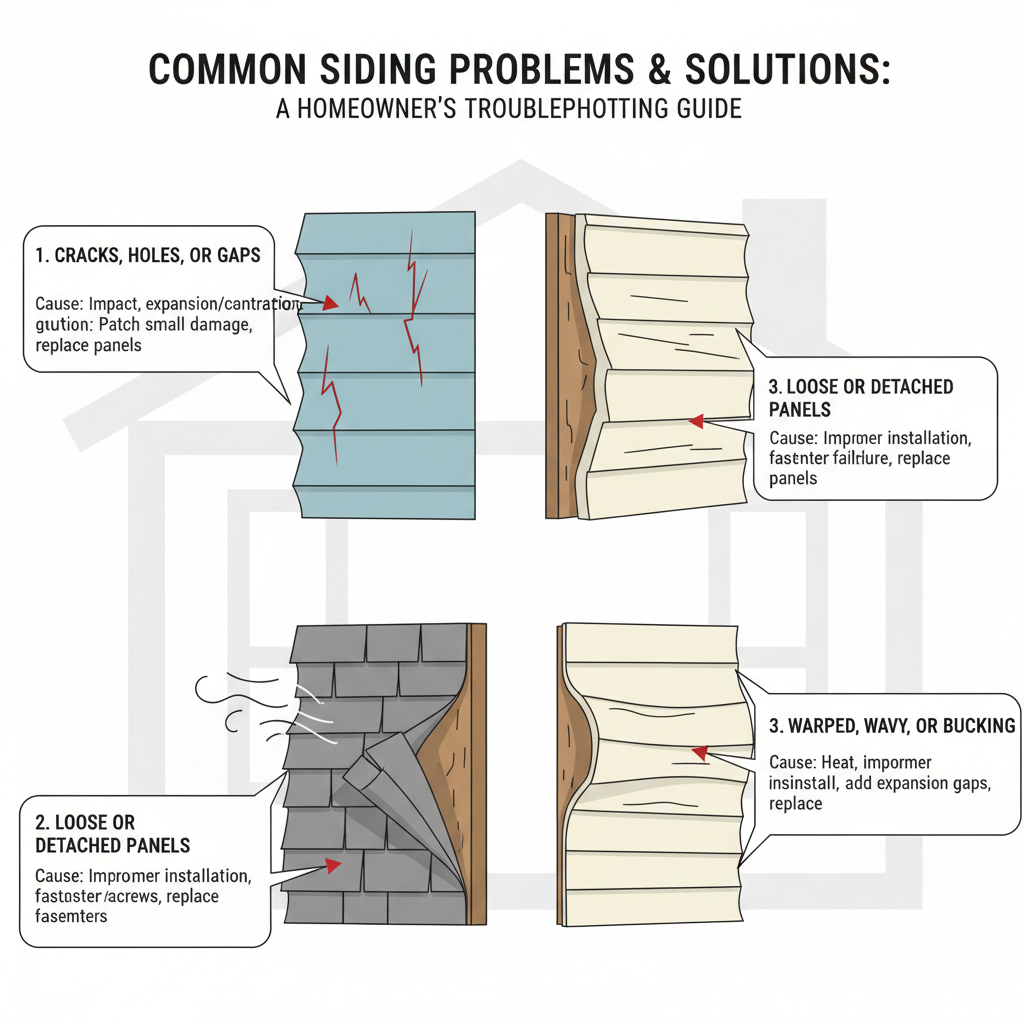
Common Symptoms
Possible Causes
Step-by-Step Diagnosis
Step 1
Perform a slow, deliberate walk-around of your entire house. Look for obvious issues like cracks, flapping panels, or discoloration. Do this in different lighting conditions (morning vs. afternoon).
Step 2
Get hands-on with vinyl siding. Gently try to slide a panel horizontally. It should move about a quarter-inch. If it's completely stuck, it was installed too tightly.
Step 3
If you have wood siding, use a screwdriver or an awl to gently poke any suspicious-looking dark or peeling spots, especially near the ground. If it’s soft and spongy, you've found rot.
Step 4
Inspect all seams, corners, and joints. Look for gaps, cracked caulk, or places where panels are separating.
Step 5
Check all penetrations—windows, doors, hose spigots, and vents. Ensure the sealant around them is intact and not letting water in.
Step 6
Look up at your gutters. If you can see leaves and debris spilling over the top, they are clogged and are a likely source of water problems.
Step 7
Check inside your home on the other side of any walls where you saw exterior damage. Look for water stains on the drywall or ceiling, a musty smell, or peeling paint.
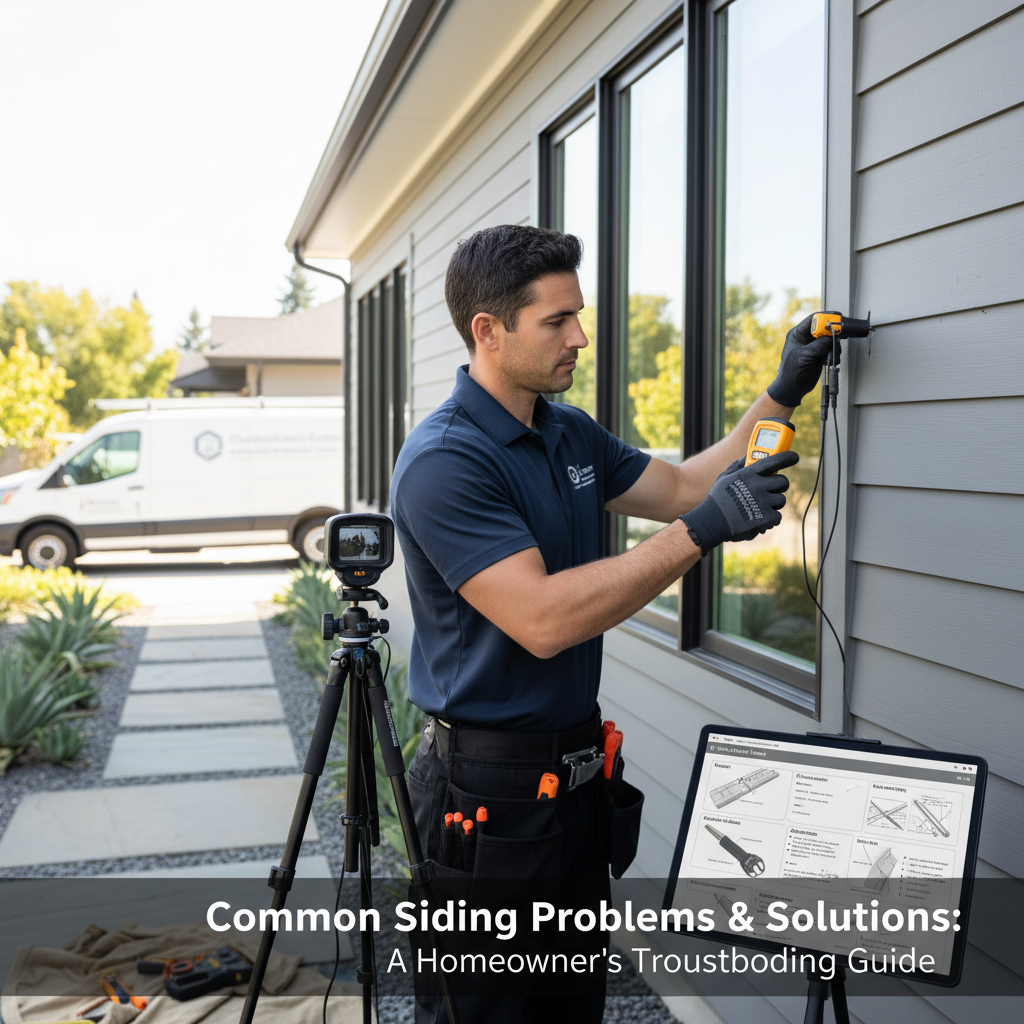
DIY vs Professional Costs
| Repair Type | DIY Cost | Professional Cost | Time Required |
|---|---|---|---|
Patching a Small Crack/Hole (Vinyl/Wood) | $15-40 | $150-300 | 1 hour |
Re-attaching a Loose Vinyl Panel | $10-25 | $150-250 | 30 mins |
Replacing One Damaged Vinyl Panel | $30-70 | $200-400 | 1-2 hours |
Replacing a Section of Rotted Wood Siding | $50-150 | $400-800 | 4-6 hours |
When to Call a Professional Siding
- If you discover soft, spongy siding, which indicates rot is present. This points to a deeper issue with the wall sheathing.
- When the damage is widespread, covering more than a few panels or multiple sections of the house.
- If the repair location is on the second story or higher and requires tall ladders or scaffolding.
- When you see signs of water intrusion inside your home, such as water stains or peeling paint on interior walls.
- After a severe weather event like a hail storm, as a professional can properly document damage for an insurance claim.
- If you've tried cleaning mold and mildew but it keeps coming back aggressively, pointing to a persistent moisture issue.
- When you simply lack the tools, time, or confidence to perform the repair correctly and safely.
Prevention Tips
- Clean your gutters and downspouts at least twice a year, in the late spring and late fall. This is the cheapest insurance for your siding.
- Trim trees and shrubs so they are at least one foot away from your siding. This improves airflow and prevents scratches.
- Gently wash your siding once a year with a soft brush and mild detergent to remove dirt and prevent mold growth.
- Perform a quick visual inspection of your siding after every major storm to catch any new damage early on.
- Maintain a proper grade around your foundation so that soil and mulch are not piled up against the bottom course of siding, which traps moisture.
- Annually check the caulking around windows, doors, and trim. Scrape out and replace any caulk that is cracked or failing.
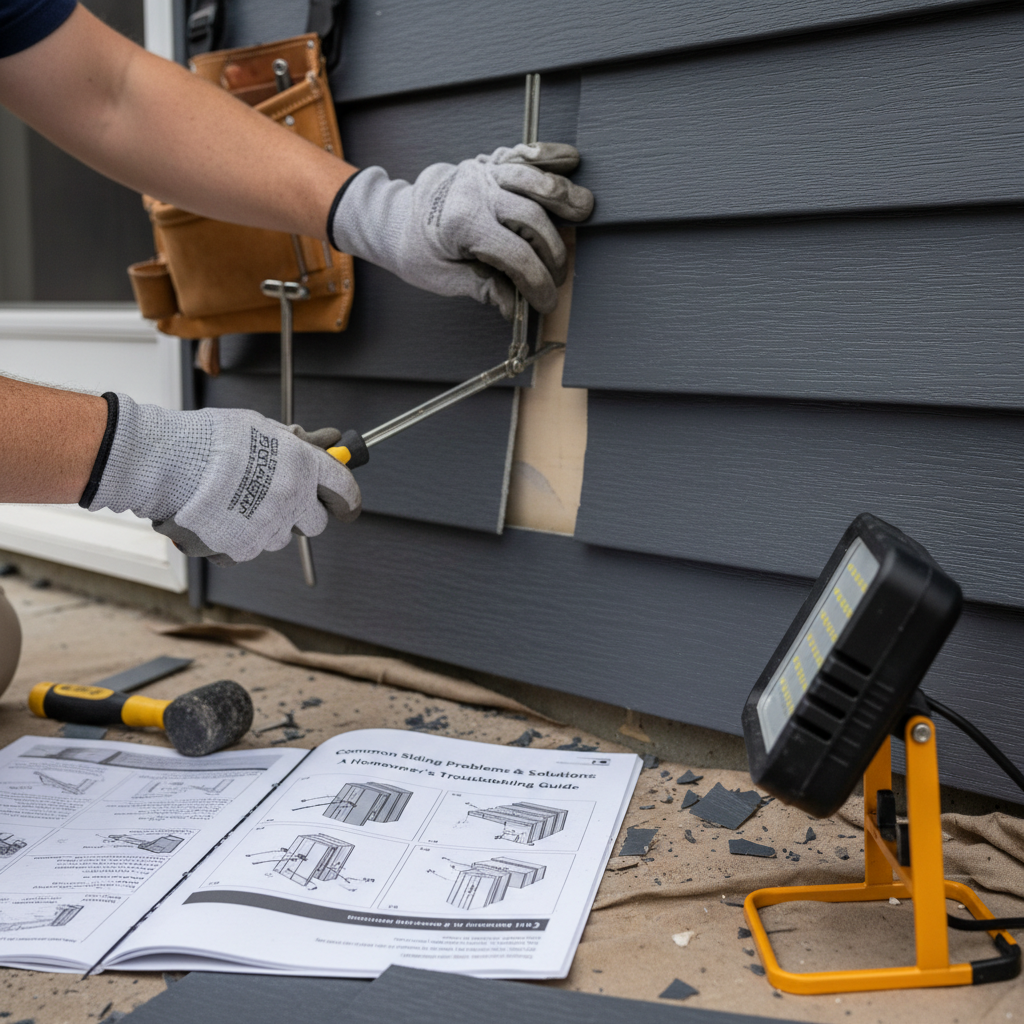
Frequently Asked Questions
Related Guides
Choosing a Qualified Siding Repair Contractor: A Guide for Homeowners Troubleshooting & Fixes (2024 Guide)
A veteran technician's guide to choosing a siding repair contractor. Learn how to spot scams, verify credentials, and get a fair price for quality work.
Annual Siding Inspection for Damage and Maintenance Needs Troubleshooting & Fixes (2024 Guide)
A veteran tech's guide to your annual siding inspection. Learn to spot damage, what causes it, and when you can DIY a fix versus when you need to call a pro.
Siding Leaks: Identifying and repairing water intrusion through exterior siding materials. Troubleshooting & Fixes (2024 Guide)
A veteran technician's guide to finding and fixing siding leaks. Learn the symptoms, causes, and when it's a DIY job versus when to call a pro.
Common Siding Problems & Solutions: A Homeowner's Troubleshooting Guide covering various types of siding damage, their causes, and repair options. Troubleshooting & Fixes (2024 Guide)
A veteran technician explains common siding problems like cracks, warping, and rot. Get real-world troubleshooting tips and repair costs for your home's siding.
Siding damage due to external impacts like trees or accidents, leading to visible defects and potential structural or moisture issues. Troubleshooting & Fixes
Siding Took a Beating from a Storm? Troubleshooting & Fixes from a Guy Who's Seen It All
Storms beat up your siding? Here's a veteran tech's guide on what to look for, how to fix vinyl and fiber cement, and when to call for backup.
Need Professional Help?
Find top-rated siding experts in your area