Quick Answer
Okay so here's the quick version. After a wreck, first make sure everyone's safe and call 911. The cops will usually call a tow truck from their list, but if circumstances allow, call your insurance *first*. They might have a preferred company that won't charge you an arm and a leg for storage. Your main job is to document everything—take pictures, get the tow driver's info, and know exactly where your car is going. Don't let some random 'vulture' tow driver hook up your car without your say-so. Initial towing and recovery can range from $100 to over $750, and that's before daily storage fees (typically $30-100/day) and administrative charges, which can significantly increase the total cost.
Common Symptoms
Possible Causes
Step-by-Step Diagnosis
Step 1
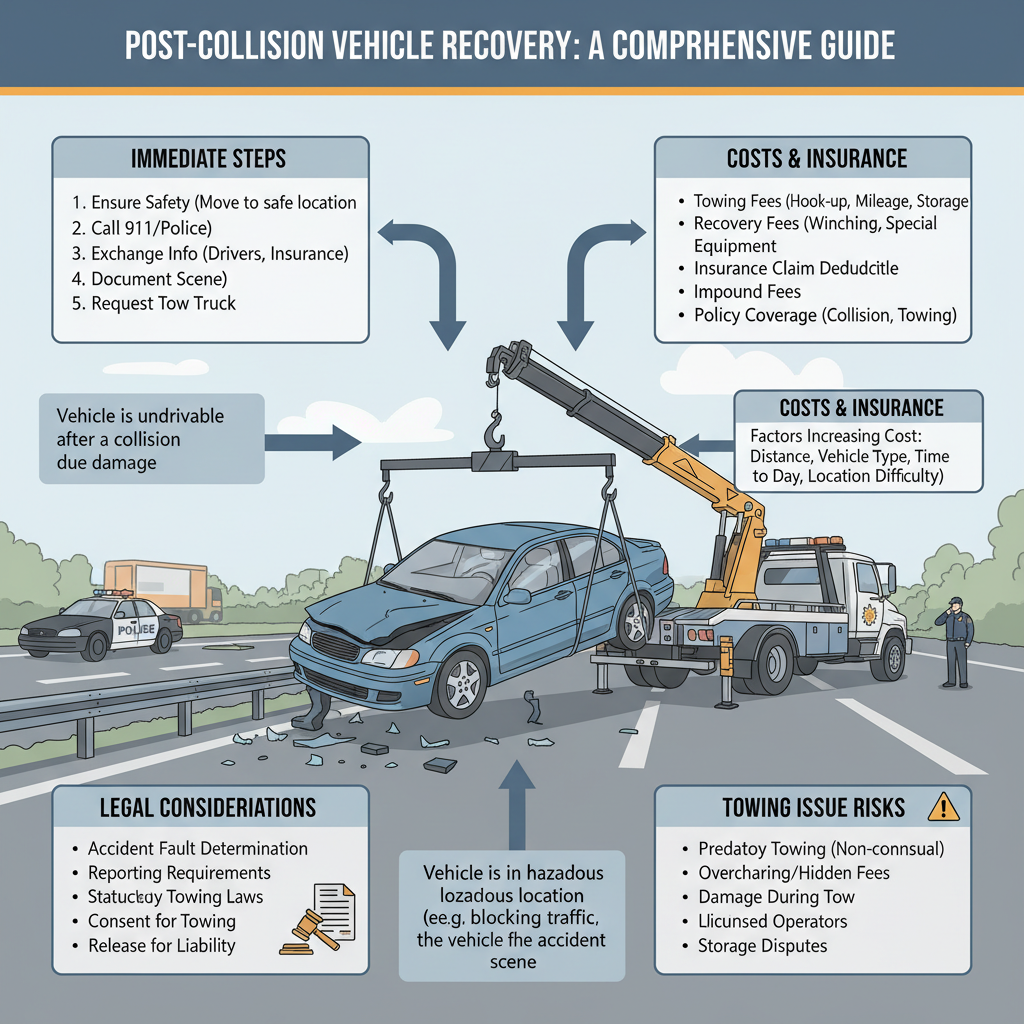
Ensure immediate safety for all parties and move to a secure location if possible. Turn on hazard lights.
Step 2
Contact emergency services (911) if there are injuries or significant traffic obstruction, or non-emergency police for a report.
Step 3
While waiting, gather necessary accident information: take photos of the scene and damage, get other driver's details and insurance.
Step 4
Contact your insurance company's 24/7 claims line to report the accident and inquire about their specific towing coverage and preferred tow services.
Step 5
When the tow truck arrives, confirm the company name, driver's name, and the exact address of the storage yard where the vehicle will be taken.
Step 6
Request to see a printed rate sheet for towing, storage, and any other fees before allowing them to hook up the vehicle.
Step 7
Carefully read any authorization paperwork before signing, ensuring it is not blank and that the destination and estimated costs are listed.
DIY vs Professional Costs
| Repair Type | DIY Cost | Professional Cost | Time Required |
|---|---|---|---|
Standard Accident Tow (local, non-complex) | N/A | $100-350 | 1-2 hours |
Accident Recovery (complex, winching, off-road) | N/A | $250-750+ | 2-4 hours |
Daily Vehicle Storage Fees (at tow yard) | N/A | $30-100 per day | Ongoing |
Administrative/Impound Release Fees | N/A | $25-75 | N/A |
When to Call a Professional Towing
- Your vehicle is rendered undrivable due to collision damage.
- Your vehicle is obstructing traffic or is in a hazardous location (e.g., on a highway, in a ditch).
- Law enforcement instructs you that the vehicle must be removed from the scene.
- You are injured or incapacitated and unable to arrange for vehicle removal yourself.
- Your vehicle requires specialized equipment for recovery due to its position or type, such as being overturned or down an embankment.
Prevention Tips
- Practice defensive driving, obey traffic laws, and avoid distractions like your phone to prevent accidents in the first place.
- Keep an 'accident checklist' in your vehicle with emergency contacts, your insurance company's 24/7 claims number, and a pen.
- Understand your auto insurance policy's towing and storage coverage *before* an accident occurs so you know what to expect.
- Consider enrolling in a roadside assistance program (via your insurance or an auto club) for potential towing coverage and options.
- Always have a fully charged cell phone and consider keeping a portable power bank in your vehicle for emergencies.
Frequently Asked Questions
Related Guides
How to Avoid Predatory Towing Companies: A Homeowner's Essential Guide to Safe Vehicle Recovery
Protect your vehicle and wallet from predatory towing companies. Learn to identify red flags, understand your consumer rights, and effectively vet towing services during a car breakdown, accident, or illegal tow. This essential guide provides homeowners with actionable tips to prevent excessive fees, illegal practices, and unethical behavior, ensuring a safe and fair towing experience.
Car Towed Illegally? Your Rights, Recovery Steps & How to Fight Predatory Towing
Car towed? Discover your rights, locate your vehicle, retrieve it efficiently, and learn how to effectively dispute unfair or predatory towing practices. Get essential steps and prevention tips, and understand common causes.
Car Won't Start? Expert Homeowner's Guide to Diagnosing and Fixing Common Issues
Car won't start? This troubleshooting guide helps you diagnose common causes like battery, starter, or alternator issues. Learn when a jump-start is appropriate and when to safely call for a tow.
How to Verify Tow Truck Operator Credentials: License and Insurance (2024 Guide)
Learn how to verify tow truck operator credentials, including license and 'on-hook' insurance, to protect yourself from predatory towing practices. This guide helps you identify red flags, understand your rights, and ensure a safe, legitimate tow.
Car Breakdown & Roadside Emergencies: What to Do When Your Vehicle Stops (Tow Guy's No-Nonsense Guide)
Car broke down? A 25-year veteran tow truck operator provides practical advice on what to do when your vehicle stops. Learn to diagnose symptoms, find DIY fixes, and know when to call for professional roadside assistance or a tow.
Car Accident Towing & Recovery: Your Complete Guide (Avoid Scams & High Costs)
Don't get scammed after a car accident. This expert guide covers immediate steps for towing & recovery, how to handle tow trucks, insurance coordination, managing costs, and legal rights to protect yourself and your vehicle.
Need Professional Help?
Find top-rated towing experts in your area