Quick Answer
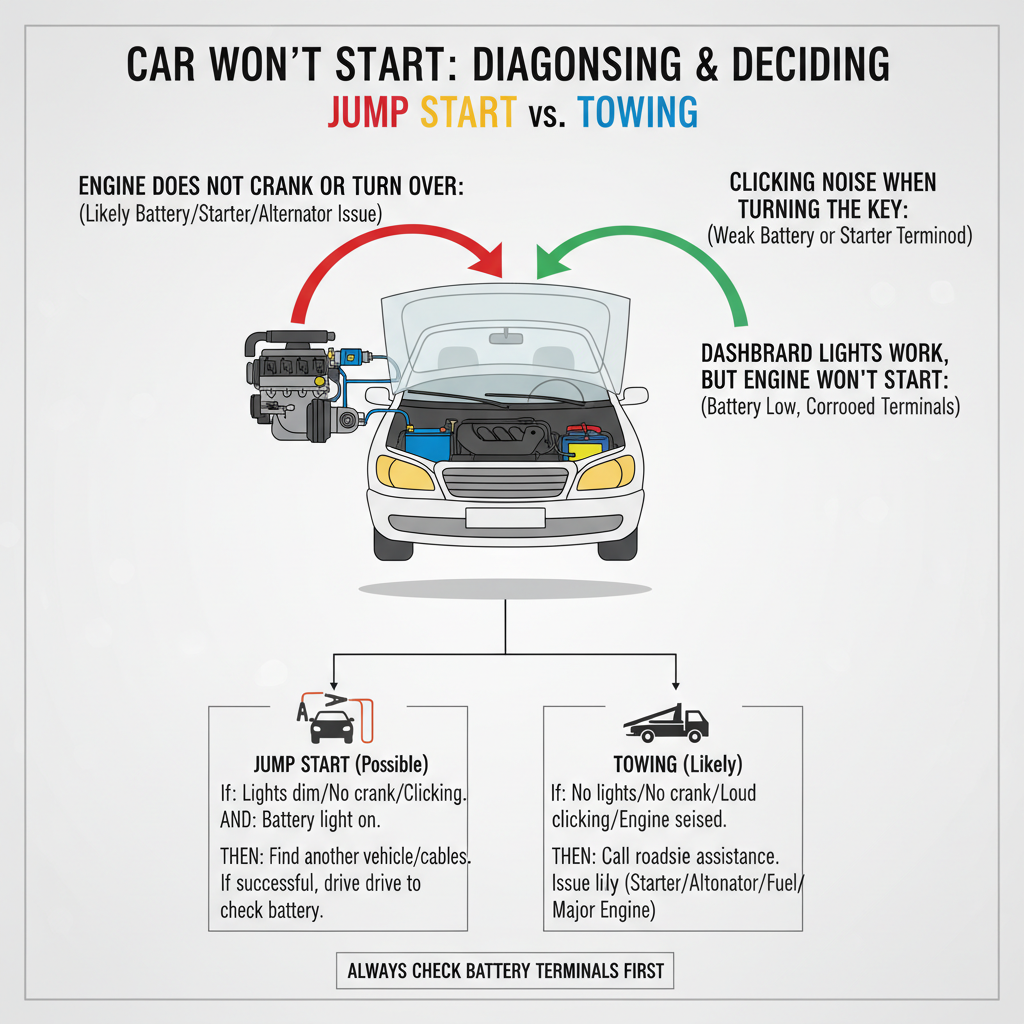
If your car won't start, the most common culprit is a dead battery. Listen for sounds: a rapid 'click-click-click' indicates a weak battery, suggesting a jump-start might work. A single 'clunk' or 'click' often points to a faulty starter motor. No sounds or lights usually means a completely dead battery or major electrical issue. If a jump-start fails, or you notice smoke, burning smells, or grinding, call for a tow to prevent further damage. Always prioritize safety and consult your owner's manual for specific instructions.
Common Symptoms
Possible Causes
Step-by-Step Diagnosis
Step 1
Ensure vehicle is in Park or Neutral (automatic) or clutch fully depressed (manual).
Step 2
Check dashboard lights and accessory function (headlights, radio) for power levels.
Step 3
Listen carefully to sounds when initiating start: rapid clicking, single clunk, grinding, or silence.
Step 4
Inspect battery terminals for corrosion or looseness; ensure connections are tight.
Step 5
Verify fuel level (if instrument panel works).
Step 6
Attempt a jump-start if a weak battery is suspected, following safety guidelines carefully.
Step 7
If a jump-start works, drive for 15-20 minutes to recharge battery, or have alternator checked.
DIY vs Professional Costs
| Repair Type | DIY Cost | Professional Cost | Time Required |
|---|---|---|---|
Jump-starting the car | $0-50 | $50-100 | 15 minutes |
Cleaning Battery Terminals Most Common | $5-10 | $20-40 | 20 minutes |
Replacing a Car Battery Most Common | $100-250 | $200-350 | 30-60 minutes |
Local Tow to a Shop | N/A | $100-250+ | 1-2 hours |
Replacing a Starter Motor | $150-300 | $400-800 | 2-4 hours |
When to Call a Professional Towing
- Jump-start attempt fails after following correct procedures.
- Car starts with a jump but quickly dies or repeatedly fails to start afterward.
- You hear grinding noises, see smoke, or smell burning when attempting to start.
- There are no lights or power at all, even after checking battery terminals.
- You suspect a fuel system, starter motor, or alternator failure.
- You are in an unsafe location, lack necessary tools, or are uncomfortable with DIY diagnostics.
- You experience recurring starting issues despite minor fixes.
Prevention Tips
- Get battery tested annually, especially before seasonal temperature extremes.
- Replace car battery every 3-5 years, depending on climate and usage.
- Ensure all lights and accessories are turned off when exiting the vehicle.
- Drive your car regularly to keep the battery charged; use a trickle charger for extended storage.
- Keep battery terminals clean and tight to ensure good electrical contact.
- Adhere to the manufacturer's recommended service schedule for overall vehicle health.
Frequently Asked Questions
Related Guides
How to Avoid Predatory Towing Companies: A Homeowner's Essential Guide to Safe Vehicle Recovery
Protect your vehicle and wallet from predatory towing companies. Learn to identify red flags, understand your consumer rights, and effectively vet towing services during a car breakdown, accident, or illegal tow. This essential guide provides homeowners with actionable tips to prevent excessive fees, illegal practices, and unethical behavior, ensuring a safe and fair towing experience.
Car Towed Illegally? Your Rights, Recovery Steps & How to Fight Predatory Towing
Car towed? Discover your rights, locate your vehicle, retrieve it efficiently, and learn how to effectively dispute unfair or predatory towing practices. Get essential steps and prevention tips, and understand common causes.
Car Won't Start? Expert Homeowner's Guide to Diagnosing and Fixing Common Issues
Car won't start? This troubleshooting guide helps you diagnose common causes like battery, starter, or alternator issues. Learn when a jump-start is appropriate and when to safely call for a tow.
How to Verify Tow Truck Operator Credentials: License and Insurance (2024 Guide)
Learn how to verify tow truck operator credentials, including license and 'on-hook' insurance, to protect yourself from predatory towing practices. This guide helps you identify red flags, understand your rights, and ensure a safe, legitimate tow.
Car Breakdown & Roadside Emergencies: What to Do When Your Vehicle Stops (Tow Guy's No-Nonsense Guide)
Car broke down? A 25-year veteran tow truck operator provides practical advice on what to do when your vehicle stops. Learn to diagnose symptoms, find DIY fixes, and know when to call for professional roadside assistance or a tow.
Car Accident Towing & Recovery: Your Complete Guide (Avoid Scams & High Costs)
Don't get scammed after a car accident. This expert guide covers immediate steps for towing & recovery, how to handle tow trucks, insurance coordination, managing costs, and legal rights to protect yourself and your vehicle.
Need Professional Help?
Find top-rated towing experts in your area