Quick Answer
Okay so here's the quick version. You wanna clean your air ducts yourself? Go for it, but know your limits. You can vacuum out the gunk you see at the registers and wash the vent covers. That's about it. Anything more, and you're just pushing dirt deeper into the system, which is a disaster. A real, deep cleaning that actually helps your air quality needs a pro with a truck-mounted vacuum. We're talking a $300-$700 job, but it's the only way to do it right. Don't fall for the cheapo scams.
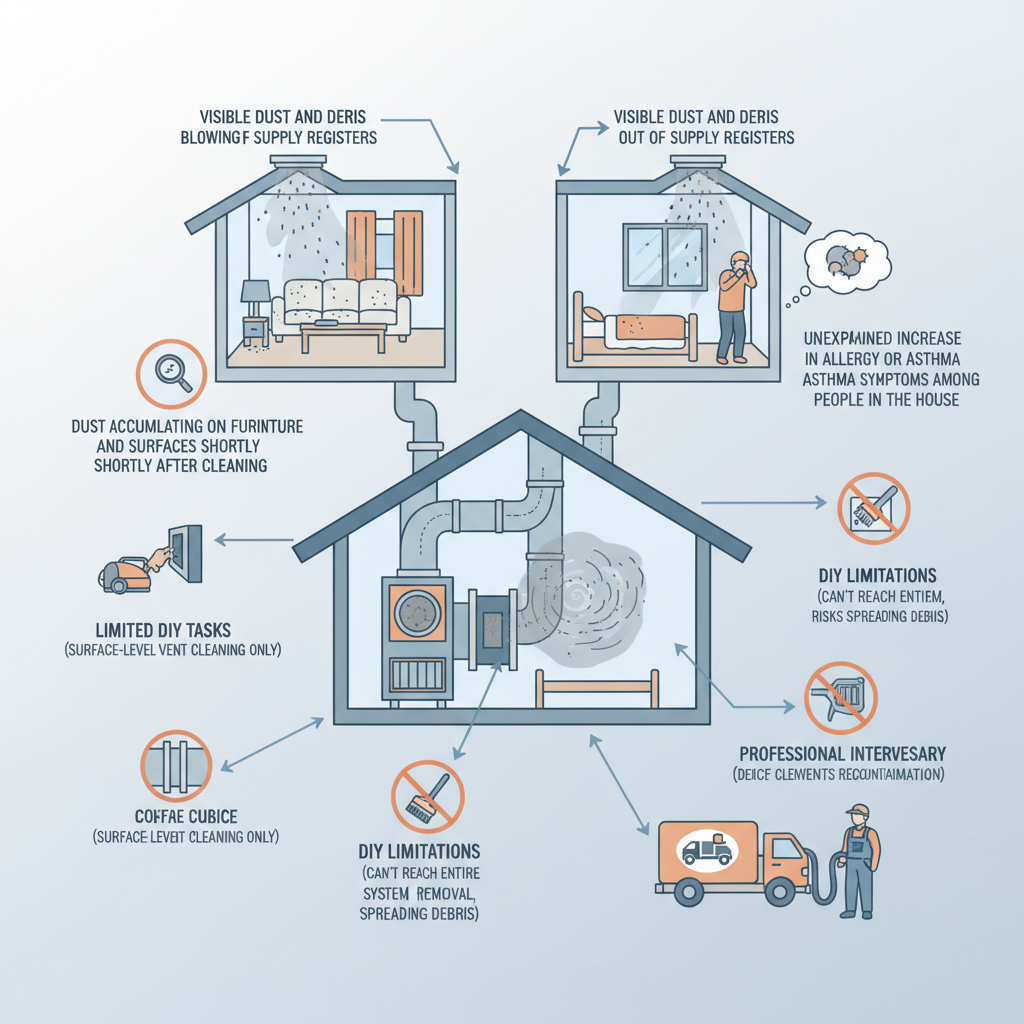
Common Symptoms
Possible Causes
Step-by-Step Diagnosis
Step 1
Perform a visual inspection by removing a few supply and return vent covers and looking inside with a strong flashlight for heavy buildup.
Step 2
Check the current HVAC air filter. If it's excessively clogged, it's a sign the system is overloaded with particulates.
Step 3
Pay close attention to any unusual odors when the HVAC system first kicks on, which can indicate moisture or pest issues.
Step 4
If you're comfortable, turn off all power to the HVAC unit and open the access panel to inspect the blower wheel for a thick coating of dust.
Step 5
Consider the home's history. Major renovations, new pets, or if it's been over 5-7 years since the last cleaning are all strong indicators.
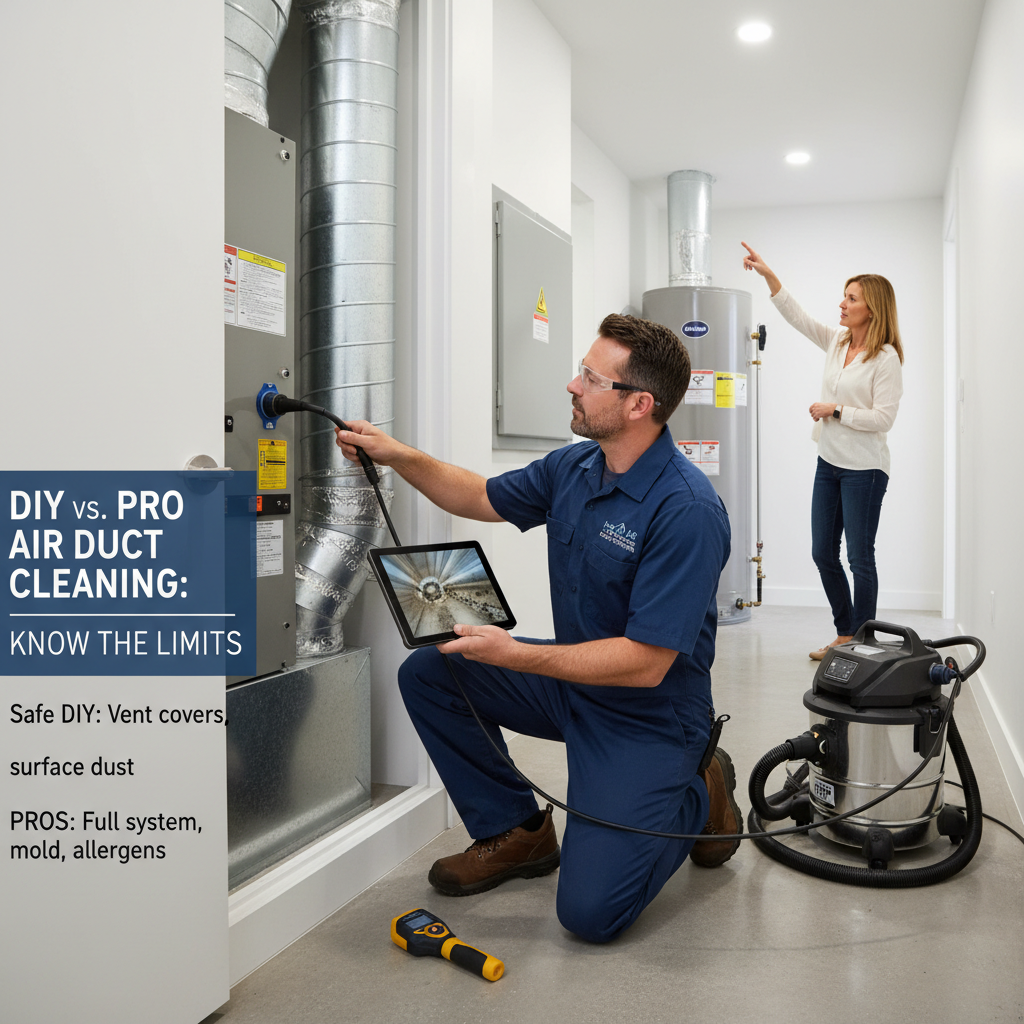
DIY vs Professional Costs
| Repair Type | DIY Cost | Professional Cost | Time Required |
|---|---|---|---|
DIY Surface "Cleaning" | $0 - $50 | N/A | 1-2 hours |
Professional Whole-System Cleaning | N/A | $300 - $700 | 3-5 hours |
Specialized Cleaning (Mold/Pests) | N/A | $500 - $3,000+ | 4-8+ hours |
When to Call a Professional Air Duct
- If you see or smell anything that resembles mold. Don't touch it; you can spread spores everywhere.
- If you find evidence of a pest infestation, like droppings or nesting materials. This requires sanitation.
- After any significant home renovation, especially if drywall dust was created.
- If a family member's allergies or respiratory issues are severe and you suspect the air quality is a factor.
- When you look inside the ducts and see heavy, caked-on debris that's clearly beyond the reach of a shop-vac.
- If you have an older home with ducts that might be fragile or contain materials you don't recognize.
Prevention Tips
- Change your HVAC air filter every 1-3 months without fail. Use a quality pleated filter with a MERV 8-11 rating.
- Have a professional inspect and seal any leaks in your ductwork to stop it from sucking in dirty air from attics or crawlspaces.
- Keep your home as clean as possible through regular vacuuming and dusting to reduce the overall dust load.
- Control indoor humidity to stay between 30-50% to prevent the conditions that allow mold and mildew to grow.
- Schedule annual professional maintenance for your furnace and air conditioner to keep the core components clean and running efficiently.
- If you're doing any renovations, seal off all your HVAC vents with plastic and turn the system off to prevent debris from getting in.
Frequently Asked Questions
Related Guides
How to Hire an Air Duct Cleaner That Won't Rip You Off (Troubleshooting & Fixes)
A veteran tech's guide to choosing an air duct cleaning company. Learn how to spot scams, what questions to ask, and avoid the 'blow-and-go' outfits.
Signs Your Home's Air Ducts Need Cleaning: A Troubleshooting Guide
Learn the definitive signs your home's air ducts need cleaning. This guide covers common symptoms, underlying causes, DIY diagnostic steps, practical prevention tips, and when to call a professional for a healthier home environment. Improve your indoor air quality and reduce allergens.
Fuzzy HVAC Vents? Here's How to Deal With That Nasty Buildup (Troubleshooting & Fixes)
Fuzzy HVAC vents indicate a dust problem. Learn how to clean your air vents yourself, improve indoor air quality, boost HVAC efficiency, and know when to call a pro.
Why Your House Is Always Dusty: A Guide to HVAC Duct Issues and Solutions
Stop the constant battle with dust! Discover how leaky HVAC ducts, poor filtration, and other common issues contribute to a dusty home. Learn practical DIY fixes and when to call a pro for cleaner air and a healthier living space.
DIY vs. Professional Air Duct Cleaning: What Homeowners Need to Know
A veteran tech's honest take on DIY air duct cleaning. Learn what you can actually do yourself, when you're wasting your time, and when to call a pro.
Mold in Your Air Ducts? (Here's How to Find It & Fix It)
Expert guide to identifying and fixing mold in HVAC air ducts. Learn common symptoms, underlying causes, effective prevention tips, and when to call a professional for mold remediation to protect your home's air quality.
Need Professional Help?
Find top-rated air duct experts in your area