Quick Answer
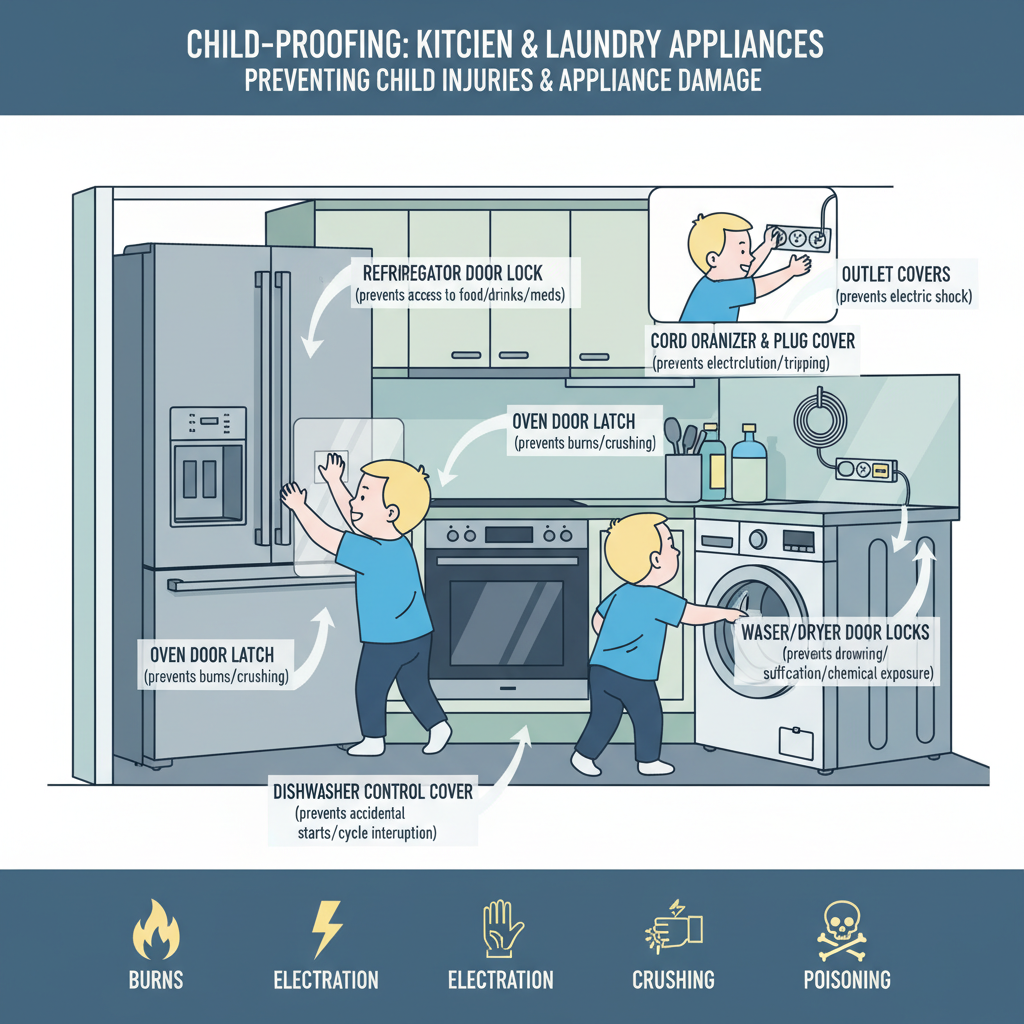
Okay, so here's the quick version. Child-proofing your appliances is mostly about buying the right locks and gadgets and having some common sense. You're looking at things like adhesive latches for refrigerators and dishwashers, knob covers for your stove, and the big one: an anti-tip bracket for your range. You can do most of this yourself for under $100. Don't cheap out. The only time you might need a pro is for that anti-tip bracket, which could run you $100-200, including parts and labor. And whatever you do, don't skip it; it's a critical safety device.
Common Symptoms
Possible Causes
Step-by-Step Diagnosis
Step 1
Get down to your child's eye level to identify potential hazards they can reach or see.
Step 2
Inspect all appliance doors (refrigerator, oven, dishwasher, washer, dryer) for ease of opening by a child.
Step 3
Check appliance controls and buttons for accessibility to small hands.
Step 4
Examine electrical outlets near appliances for exposed sockets; identify loose or dangling cords.
Step 5
Assess areas around appliances for sharp corners, pinch points, or unstable items a child might pull on.
Step 6
Locate all cleaning supplies, detergents, and other hazardous chemicals typically stored in kitchen or laundry areas and check their accessibility.
Step 7
Verify that large, freestanding appliances (e.g., range, refrigerator) are stable and cannot be easily tipped.
DIY vs Professional Costs
| Repair Type | DIY Cost | Professional Cost | Time Required |
|---|---|---|---|
Appliance Door Locks & Latches | $10-40 | N/A | 5-10 mins per lock |
Stove/Oven Knob Covers | $10-25 | N/A | 1 minute |
Outlet Covers & Cord Mgmt | $5-20 | N/A | 10 minutes |
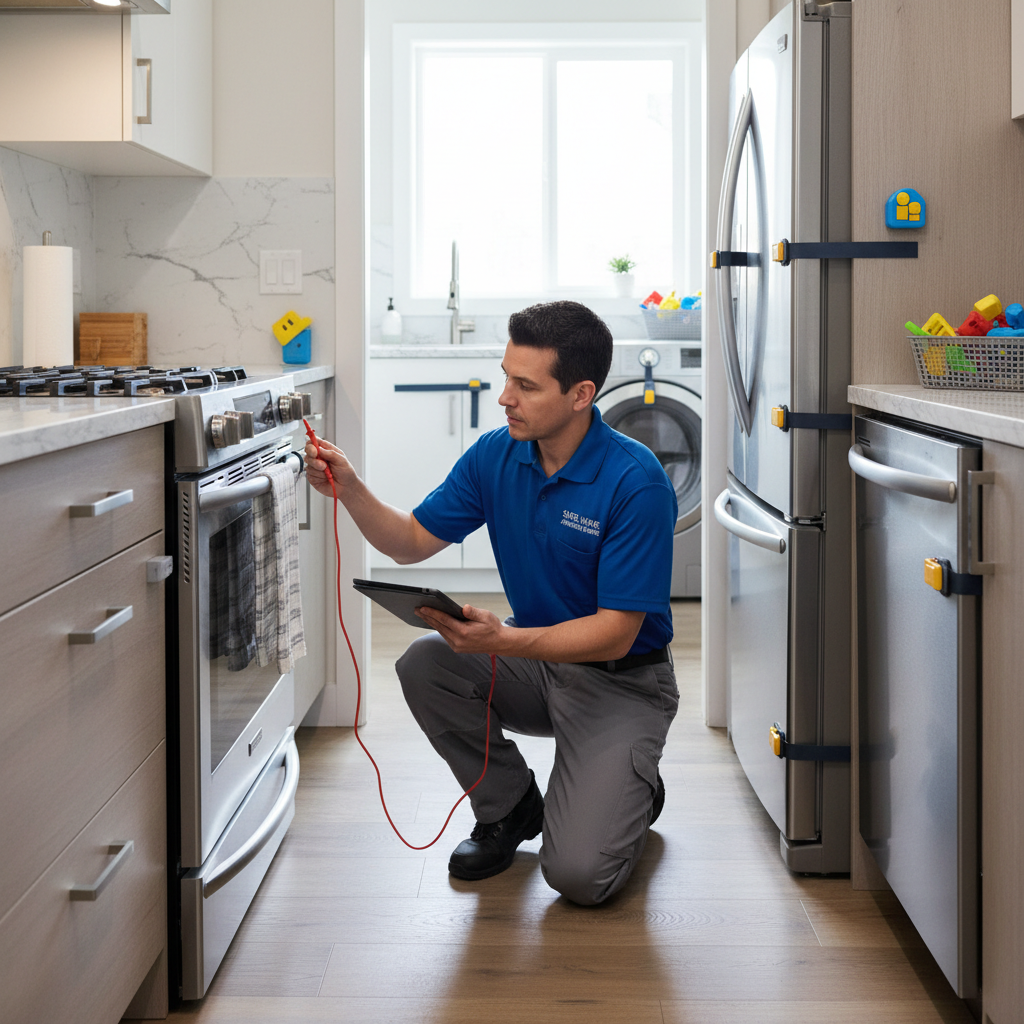
Anti-Tip Kit for Range | $10-30 | $100-200 | 30-60 minutes |
Cabinet Locks (for chemicals) | $15-50 | $100-300 | 20-40 minutes |
When to Call a Professional Appliance
- If you are unsure how to properly install anti-tip devices for heavy appliances like ranges. Don't guess, it's not worth the risk.
- If you want a comprehensive, professional assessment of all potential child hazards in your home, beyond just appliances.
- If you encounter complex installation scenarios or are unable to perform DIY tasks due to physical limitations or lack of tools.
- If you need to re-route electrical cords or address other electrical safety concerns beyond simple outlet covers, which requires a licensed electrician.
Prevention Tips
- Install appliance door locks (oven, dishwasher, refrigerator, washer, dryer) before your child becomes mobile.
- Use control knob covers on stoves and ovens to prevent accidental activation.
- Hide or secure all electrical cords and use outlet covers/plugs on unused outlets near appliances.
- Ensure all cleaning supplies, detergents, and other hazardous chemicals are stored in high, locked cabinets.
- Install anti-tip brackets for freestanding ranges and other heavy or tall appliances that could potentially tip over.
- Unplug small appliances when not in use and store them out of reach.
- Educate older children about appliance safety and the dangers of playing with appliances.
- Regularly check child-proofing devices for wear and tear and proper function.
Frequently Asked Questions
Related Guides
DIY Appliance Repair vs. Hiring a Pro: A Technician's Honest Take (Troubleshooting & Fixes)
A veteran tech's guide on when to DIY appliance repair and when to call a pro. Learn the real risks, costs, and what YouTube won't tell you about fixing your stuff.
Oven Not Heating Evenly? Troubleshooting & Fixes from a 25-Year Tech
Is your oven not heating evenly or accurately? A veteran tech shares the most common causes and fixes, from bad heating elements to faulty sensors. Learn to troubleshoot it yourself.
Child-Proofing Kitchen & Laundry Room Appliances: A Comprehensive Safety Guide
Comprehensive guide to child-proofing kitchen and laundry appliances. Learn types of locks, anti-tip bracket installation, electrical safety, and hazardous storage to prevent burns, electrocution, and injuries for curious kids.
Dishwasher Not Draining? (A 25-Year Vet's Troubleshooting Guide)
Dishwasher not draining, leaving standing water? Learn how to fix common causes like clogged filters, drain hoses, and garbage disposal issues. A veteran technician's expert guide helps you troubleshoot and prevent a swampy dishwasher.
Preventing Appliance-Related Fires and Electrical Hazards in the Home: A Comprehensive Troubleshooting Guide
Don't let appliances become a fire hazard! Learn to identify warning signs like burning smells, sparks, or tripping breakers. This expert guide details causes, diagnosis, and prevention tips for common appliance and electrical fire risks, and advises when to call a professional.
Eco-Friendly Appliance Disposal: What to Do with Your Old Appliances (Beyond Just Trashing Them)
Don't just trash it! Learn how to responsibly dispose of old appliances like refrigerators, washers, and dryers. Explore eco-friendly recycling options, utility rebates, retailer haul-away programs, and safe removal tips.
Need Professional Help?
Find top-rated appliance experts in your area