Quick Answer
Okay, here's the quick version. You hear scratching and chirping in your chimney? It’s almost certainly chimney swifts, and messing with their active nests is a federal crime. Seriously. You CAN'T remove the nest while they're in it. You have to wait for the baby birds to grow up and fly away, which usually happens by late summer (typically late July to mid-August). After they're gone, you call a pro to clean the mess and—this is the important part—install a proper chimney cap. That's the only way to stop this from becoming a yearly headache. Whatever you do, don't light a fire, and do not attempt DIY nest removal for active nests.
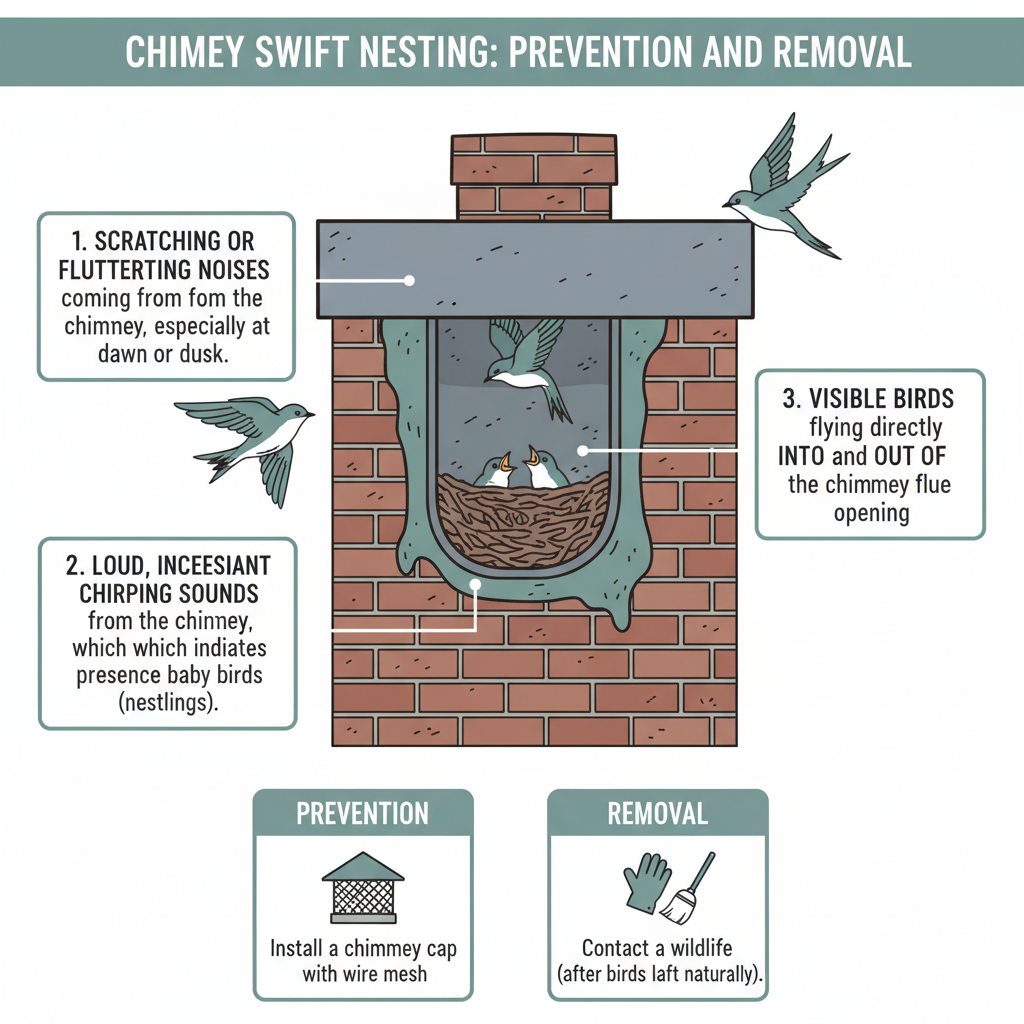
Common Symptoms
Possible Causes
Step-by-Step Diagnosis
Step 1
Listen carefully at the fireplace opening during quiet times of the day for scratching or chirping sounds. Chirping confirms the presence of baby birds and an active nest.
Step 2
Visually inspect the top of the chimney from the ground, using binoculars if possible, to see if birds are flying in and out.
Step 3
At night, with the damper open, shine a powerful flashlight up the flue from inside the fireplace to look for the physical nest, which typically looks like a small twig basket glued to the chimney wall.
Step 4
Check the firebox, damper, and smoke shelf for an accumulation of fallen twigs or bird droppings.
Step 5
Once you confirm birds are present during nesting season (spring/summer), assume it's an active, protected nest and do not attempt to remove it.

DIY vs Professional Costs
| Repair Type | DIY Cost | Professional Cost | Time Required |
|---|---|---|---|
Waiting for Birds to Fledge (Leave the Nest) | $0 | N/A | 4-6 weeks |
Old Nest Removal & Chimney Cleaning | $0 | $300-$750 | 2-4 hours |
Chimney Cap Installation (Stainless Steel) | $100-$300 | $300-$700 | 1-2 hours |
When to Call a Professional Chimney
- The moment you suspect you have chimney swifts, to get on the schedule for a cleaning and cap installation after they leave.
- If nesting material has created a flue obstruction, making it a fire hazard.
- If you are unable or uncomfortable with safely accessing your roof for inspection or cap installation.
- For the thorough and safe removal of old nests and hazardous droppings after the birds have migrated for the season.
- If you smell a strong odor of decay, which could indicate a dead bird or animal is trapped in the chimney.
Prevention Tips
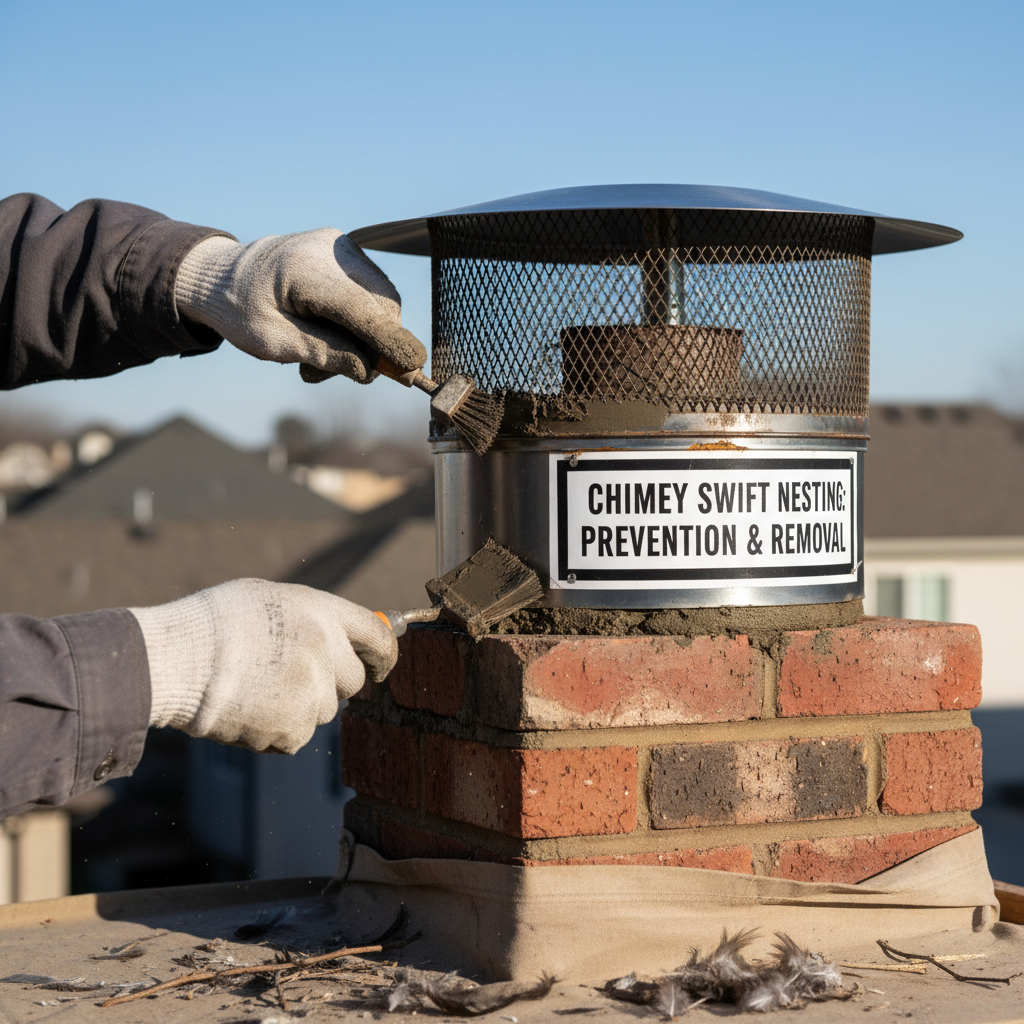
- Install a high-quality, durable chimney cap made of stainless steel or copper. Ensure it is securely bolted to the chimney crown.
- Schedule annual chimney inspections and cleanings in the late summer or early fall, after nesting season is over and before you begin using the fireplace.
- Keep the chimney damper closed when the fireplace is not in use, though this is only a secondary deterrent.
- Trim tree branches away from the chimney to make it less inviting for birds to perch and investigate.
Frequently Asked Questions
Related Guides
Comprehensive Chimney Inspection: What Professionals Look For & Homeowner Checklist Guidance Troubleshooting & Fixes (2024 Guide)
A veteran chimney tech explains what happens during an inspection, what to look for yourself, and when to call a pro. Get the real story on costs and safety.
Preparing Your Chimney for Winter: Essential Seasonal Maintenance and Inspection Troubleshooting & Fixes (2024 Guide)
Don't risk a chimney fire this winter. A vet tech explains how to inspect your chimney for dangerous creosote so you'll know when to call a pro for a sweep.
Why is my chimney smoking up the house? (Troubleshooting & Fixes)
Getting smoke in your house from your fireplace? A vet tech of 25+ years explains the common causes like a closed damper or cold flue and how to fix them.
Efflorescence on Chimney Masonry Troubleshooting & Fixes (2024 Guide)
Seeing white powder on your chimney brick? A veteran tech explains what that efflorescence is, why it's a warning sign for water damage, and how to actually fix it.
Your Chimney Damper Giving You Grief? (A Veteran's Guide to Fixing It)
Chimney damper stuck, leaking, or broken? An experienced technician explains how to troubleshoot smoke, drafts, and stuck handles for throat and top-sealing dampers.
Chimney Cleaning Tools: What Professionals Use & When to DIY (or Not) Troubleshooting & Fixes (2024 Guide)
A veteran technician explains chimney cleaning tools, the dangers of creosote, and tells you when to DIY vs. when to call a pro. Don't risk a fire.
Need Professional Help?
Find top-rated chimney experts in your area